 Clearwater Roofing
 Windows on Clearwater Beach Work Harder Than Windows Anywhere Else in the County
A window on Clearwater Beach isn't just glass and a frame — it's a barrier standing between your living room and some of the harshest exterior conditions in Pinellas County. Homes here sit close enough to the Gulf that salt air is a daily fact of life, not an occasional nuisance. Add in hurricane-force wind events, wind-driven rain that finds every weak seam, and near-constant UV exposure, and you have a set of conditions that ages a window fast if it wasn't built or installed for this exact environment.
We see the results of that wear regularly: hazy or fogged glass from failed seals, hardware that's pitted or seized from salt corrosion, frames that have gone soft or chalky, and sliders that stick because the track has warped. None of that is a knock on the homeowner — it's just what happens to a window that was never rated for barrier-island exposure, or one that was installed without the flashing and sealing details this climate demands.
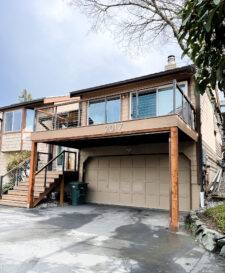
What Clearwater Beach's Climate Actually Does to a Window
Wind and Wind-Borne Debris
During tropical storms and hurricanes, wind pressure alone can flex or blow out a window that isn't rated for it, and airborne debris turns an ordinary pane into a serious risk in seconds. Once a window fails during a storm, the pressure change inside the house can do far more damage to the roof and walls than the broken glass itself.
Wind-Driven Rain
Rain on the beach rarely falls straight down — it comes in sideways, driven by onshore wind. That means water gets tested against seals, flashing, and sill details far more aggressively here than on an inland home. A window that would hold up fine a few miles inland can leak on Clearwater Beach if the installation details weren't built for wind-driven exposure.
Salt Air and Corrosion
Salt in the air settles on everything — frames, screens, hinges, locks, and fasteners. Over time it corrodes lesser hardware, pits aluminum that isn't properly finished, and can even work into seals and gaskets. This is why hardware and frame material selection matters more here than almost anywhere else in the region.
Year-Round UV
Florida sun is intense in every season, not just summer. UV breaks down vinyl, degrades seals, and fades interior finishes near windows that don't have adequate UV-rated glazing. Over years, that shows up as brittle weatherstripping and frames that discolor or warp.
Impact-Rated Windows vs. Standard Windows with Shutters
Homeowners on Clearwater Beach typically choose between two approaches to meeting Florida's wind-borne debris protection requirements: impact-rated windows, or standard windows paired with approved storm shutters. Both can satisfy code, but they behave very differently day to day.
| Factor | Impact-Rated Windows | Standard Windows + Shutters |
|---|---|---|
| Storm prep | None — always ready | Must deploy shutters before every storm |
| Daily UV & noise | Reduced UV transmission, noticeable noise reduction | No added benefit until shutters are up |
| Upfront cost | Higher per opening | Lower window cost, added shutter cost |
| Long-term maintenance | Laminated glass and heavier frames hold up well | Shutter hardware needs its own upkeep |
| Insurance | Often qualifies for windstorm mitigation credits | May qualify depending on shutter type and rating |
| Away-from-home protection | Full-time, no action needed | Only protects if shutters are closed in time |
Neither option is wrong, and the right call depends on your budget, how the home is used, and whether you want one less thing to manage before a storm. We'll walk through both honestly rather than pushing whichever is more profitable for us.
What a Correct Installation Involves
The window itself only does half the job — the installation does the rest. On a barrier-island home, the details that get skipped on a rushed job are exactly the ones that cause leaks and failures later:
- Removing the old window and inspecting the rough opening and sheathing for hidden water damage or rot before anything new goes in
- Correct flashing sequencing so water is always directed outward, layer over layer, not trapped behind the new frame
- Sealants and flashing tapes rated for coastal UV and salt exposure, not generic interior-grade products
- Proper shimming and fastening so the frame is square and can transfer wind load into the structure the way it's engineered to
- Verified, Florida product-approved windows installed per their approval requirements — the approval only holds if the install matches the tested method
- Interior and exterior trim finished cleanly, with no gaps left for water or pests
Skip any one of these steps and you can end up with a window that's technically "impact-rated" on paper but still leaks or under-performs in a real storm, because the installation — not just the product — is what was tested and approved together.
Frame and Hardware Choices That Matter on the Beach
Not every window on the market is a good fit for salt-air exposure. We steer homeowners toward frame materials and hardware finishes that are known to hold up under coastal conditions rather than ones that look fine in a showroom but degrade quickly a block from the Gulf. This isn't about brand-bashing — it's about matching the product to the environment. A window that performs beautifully in a dry inland climate can fail early here simply because it wasn't specified for salt exposure, and we'd rather have that conversation up front than let a homeowner find out the hard way.
Stainless or corrosion-resistant fasteners and hardware, marine-grade or coastal-rated finishes, and glazing systems designed for high-UV, high-humidity climates all factor into what we recommend for a Clearwater Beach home specifically — as opposed to what we might recommend a few miles inland.
Signs Your Clearwater Beach Home Needs Window Replacement
Some window problems are obvious; others build slowly enough that homeowners get used to them. Worth checking for:
- Fogging or a permanent haze between panes (a failed insulated glass seal)
- Frames that feel soft, chalky, or show visible pitting and corrosion
- Windows that are difficult to open, close, or lock, or that rattle in the wind
- Visible daylight or drafts around the frame when the window is closed
- Water staining on interior trim or sills after wind-driven rain
- Noticeably higher cooling bills without another clear explanation
- Windows that predate current Florida wind-borne debris requirements for your area
Any one of these on its own might just need a repair. Several together, especially on an older home, usually point to replacement being the more sensible long-term move.
Our Process for Clearwater Beach Window Replacement
We keep the process straightforward and try to minimize disruption to a home that's often occupied year-round or used as a rental:
- On-site assessment — we look at each opening, the current window condition, and any signs of water intrusion or structural concern before recommending anything
- Product selection — we go over impact-rated and standard options, frame materials, and hardware suited to your specific exposure on the beach
- Permitting — window replacement in Pinellas County generally requires a permit, and we handle that process rather than leaving it to the homeowner
- Removal and inspection — old windows come out carefully so we can check the opening for hidden damage before it's covered back up
- Installation — flashing, sealing, shimming, and fastening done to match the product's tested approval
- Final inspection and cleanup — including any required municipal inspection, plus a walkthrough so you know exactly what was done
Permitting and Code Compliance in Pinellas County
Window replacement on Clearwater Beach isn't a swap-it-yourself weekend project if you want it done to code. Pinellas County and the City of Clearwater have permitting requirements for window replacement, and homes in coastal wind zones need to meet Florida Building Code wind-borne debris protection requirements — either through impact-rated glazing or approved shutter systems. We pull the appropriate permits and make sure the finished work is ready to pass inspection, so you're not left holding an unpermitted job if you ever sell the home or file an insurance claim.
Why It Matters to Hire a Crew That Already Works This Neighborhood
A contractor who mainly works inland jobs may not think twice about flashing details, hardware corrosion resistance, or how aggressively wind-driven rain tests a seal — because their typical job site doesn't demand it. A crew that regularly works Clearwater Beach specifically has already seen what fails here and why, and builds that knowledge into every installation by default rather than learning it on your house.
That familiarity also shows up in smaller, practical ways: knowing the local permitting process, understanding typical construction on beach-area homes, and being realistic with you about what a barrier-island environment will and won't tolerate over the long run.
Get a Free, No-Pressure Estimate
If your windows on Clearwater Beach are showing their age, letting in drafts or water, or you simply want to understand your options before the next storm season, we're happy to take a look. The estimate is free, there's no pressure to move forward, and you'll get a straight answer about what your home actually needs. Fill out the form below to get started.