 Clearwater Roofing
 Exterior Work Built for Island Estates
Island Estates sits on its own piece of land connected to the rest of Clearwater by causeway, with water on multiple sides of nearly every block. That waterfront position is exactly what makes the neighborhood desirable, and it's also exactly why homes here go through exterior materials faster than homes just a few miles inland. Salt-laden air moves freely across the island with no buffer of trees or buildings to slow it down, and it settles on roofs, siding, window hardware, and railings every single day, rain or shine.
We work throughout Clearwater and Pinellas County, and Island Estates gets a specific kind of attention from us because the failure patterns here are different from what we see in the older inland neighborhoods. Fasteners corrode sooner. Metal flashing pits faster. Even quality vinyl and fiber cement siding can chalk and fade ahead of schedule if it wasn't rated or installed with the coastal exposure in mind. None of that means the neighborhood is a bad place to own a home — it just means the exterior needs to be chosen and installed with the environment in mind, not treated like a generic Florida install.
What the Climate Actually Does to Homes Here
Salt Air and Corrosion
Airborne salt is the single biggest difference between a waterfront property and one set back a few miles from the coast. It accelerates rust on exposed fasteners, corrodes cheaper flashing, and can pit uncoated metal components over a period of years rather than decades. On Island Estates specifically, homes on the water side of a block typically see this faster than homes set slightly further from open water, but the whole island is close enough to be affected to some degree.
Wind and Wind-Driven Rain
Pinellas County sits in a hurricane-prone stretch of the Gulf Coast, and Island Estates' exposure means wind isn't a once-a-year concern — it's a factor in every roofing and siding decision we make out here. Wind doesn't just tear at loose materials, it drives rain sideways under poorly sealed edges, around window frames, and up under siding laps that weren't fastened to spec. Most water intrusion problems we find on the island didn't start as a leak — they started as a wind-driven rain event that found a weak seam.
UV Exposure
Florida sun is intense year-round, and with less shade coverage on many island lots compared to mature inland neighborhoods, roofing and siding materials take a steady beating from UV. This shows up as premature granule loss on shingles, brittleness in lower-grade trim materials, and fading that happens faster than the manufacturer's marketing photos would suggest.
Roofing for Island Estates Homes
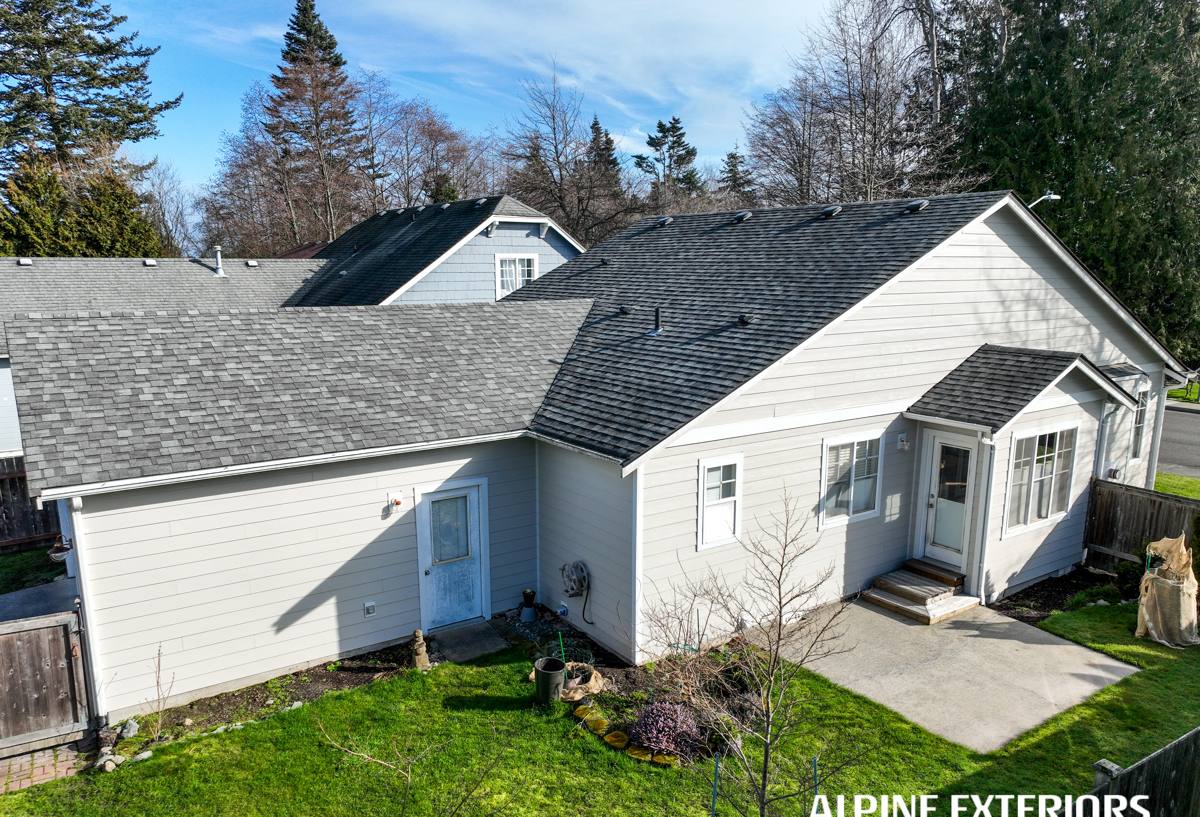
When we assess a roof on the island, we're looking at more than whether shingles are still intact. We check fastener condition, flashing integrity around penetrations, and how well the underlayment and edge details are holding up to wind-driven moisture — because on a property this exposed, those details matter more than the shingle brand.
- Inspect flashing at chimneys, vents, and roof-to-wall transitions for corrosion or lifted edges
- Check fastener condition — coastal exposure accelerates corrosion on standard fasteners
- Evaluate underlayment and sealed-deck details, which matter more here than almost anywhere inland
- Look for wind uplift damage at ridges, edges, and hips after storm events
- Assess granule loss and UV wear on shingle roofs to gauge remaining service life
We install and repair asphalt shingle and metal roofing systems, and for island properties we lean toward corrosion-resistant fastener packages and flashing details rated for coastal exposure, even when that's a step beyond the baseline code requirement. It costs a little more upfront and saves a homeowner a service call in five years instead of ten.
Siding That Holds Up to Salt Air
Siding on Island Estates has to do two jobs at once: keep wind-driven rain out and survive constant salt exposure without chalking, warping, or fading out of proportion to its age. We install fiber cement and vinyl siding, and the honest trade-offs are worth laying out plainly:
| Material | Coastal Durability | Maintenance | Typical Lifespan |
|---|---|---|---|
| Fiber Cement | Strong resistance to salt, moisture, and UV | Periodic repainting/caulking | 30-50 years |
| Vinyl (coastal-rated) | Good, if rated for wind and UV exposure | Low — occasional washing | 20-40 years |
| Standard Vinyl | Prone to premature fading/warping in direct salt exposure | Low, but shorter service life | 15-25 years |
We don't install standard-grade vinyl on properties with heavy direct salt exposure as a matter of professional standard — it's not that the product is defective, it's that it wasn't engineered for this specific environment, and we'd rather tell a homeowner that upfront than have them replace it twice as often. Fiber cement carries a higher install cost but tends to be the better long-term value on the more exposed lots on the island.
Windows and Doors in a High-Wind, High-Salt Environment
Window and door failures on the island are rarely about the glass — they're almost always about the seal, the frame material, and the hardware. Salt air corrodes cheap hardware and hinges faster than most homeowners expect, and wind-driven rain finds its way in through degraded weatherstripping and improperly flashed frames long before the window itself fails.
We install impact-rated and hurricane-rated windows and doors sized to Florida Building Code wind requirements for this region, with attention paid to flashing and sealing details around the frame — because an impact-rated window installed with a poor seal will still leak in a wind-driven rain event. For an island property, we also recommend corrosion-resistant hardware over standard hardware, since the difference in cost is small compared to the cost of replacing pitted hinges and latches a few years in.
Decks: Built for Water, Sun, and Salt
A lot of Island Estates properties are built around outdoor living — decks, waterfront patios, and covered outdoor spaces that get used year-round given the climate. That also means decks here are exposed to the same trio of stressors as everything else: constant UV, salt air, and humidity that keeps wood-based materials damp longer than they'd like to be.
- Composite decking resists rot, splintering, and salt-driven degradation better than untreated wood
- Fastener and hardware selection matters as much as the decking material itself in this environment
- Proper spacing and ventilation underneath the deck reduces moisture buildup between boards
- Railings and structural connectors should be corrosion-resistant, not just the visible decking surface
We build and repair both wood and composite decks, and for island properties we generally steer homeowners toward composite decking with corrosion-resistant fasteners and hardware, simply because it holds up with less maintenance in a salt-air environment. Wood decks can absolutely be done right here too — it just requires a more disciplined maintenance schedule to keep sealing and fastener condition ahead of the weather.
Why a Local Crew Matters on the Island
Island Estates isn't a typical inland subdivision, and a crew that mostly works inland neighborhoods can miss things that are obvious to someone who works the coastal properties regularly — how far salt spray actually travels inland on a given block, which flashing details fail first in wind-driven rain, or which fastener grade is worth the upcharge versus which one isn't. We work throughout Clearwater and Pinellas County, and that regional experience is what lets us make a recommendation based on how a material actually performs here, not just how it's rated on a spec sheet.
Being local also means faster response after a wind event. When a storm rolls through the Gulf Coast and a homeowner needs a tarp on a roof or a quick assessment of wind damage, proximity is the difference between a same-week response and a multi-week wait behind contractors who have to drive in from out of the area.
What to Look for When Hiring an Exterior Contractor Here
- Florida state licensing and proof of insurance, verifiable before any work begins
- Familiarity with Florida Building Code wind and impact requirements for this region
- A written scope that specifies fastener and flashing details, not just "replace roof" or "install siding"
- Willingness to explain material trade-offs honestly, including why a cheaper option might cost more over time
- Local references and a track record of work in Pinellas County's coastal neighborhoods
Get a Free, No-Pressure Estimate
Whether it's a roof inspection after a windy season, siding that's starting to chalk and fade, windows that let in more air than they should, or a deck that needs a fresh look, we're happy to come take a look and give you a straight answer — no pressure, no upsell. Use the form below to request a free estimate for your Island Estates property.