 Clearwater Roofing
 Every roof replacement in Clearwater eventually comes down to the same fork in the road: stick with asphalt shingles, the roof most of the neighborhood already has, or step up to metal. Both are legitimate choices. Both are installed successfully on homes across Pinellas County every year. The right answer depends less on which material is "better" in the abstract and more on your budget, how long you plan to stay in the home, your roof's shape, and how much of the sun, wind, and salt air off the Gulf you're asking that roof to shoulder for the next few decades.
This guide walks through the real differences — cost, wind performance, heat, maintenance, insurance, and resale — so you can have an informed conversation with any contractor you're considering, us included.
Why This Decision Is Different Here Than Almost Anywhere Else
A roof in Ohio or the Pacific Northwest deals with snow load and freeze-thaw cycles. A roof in Clearwater deals with a completely different set of stresses, often at the same time: hurricane-force wind loads during storm season, some of the most intense year-round UV exposure in the country, wind-driven rain that gets pushed sideways and upward under edges and flashing, and salt air drifting in off the Gulf that accelerates corrosion on anything metal that isn't properly coated or fastened. None of that makes one material automatically "right" — but it does mean the differences between shingles and metal show up faster and more visibly here than they would in a milder climate.
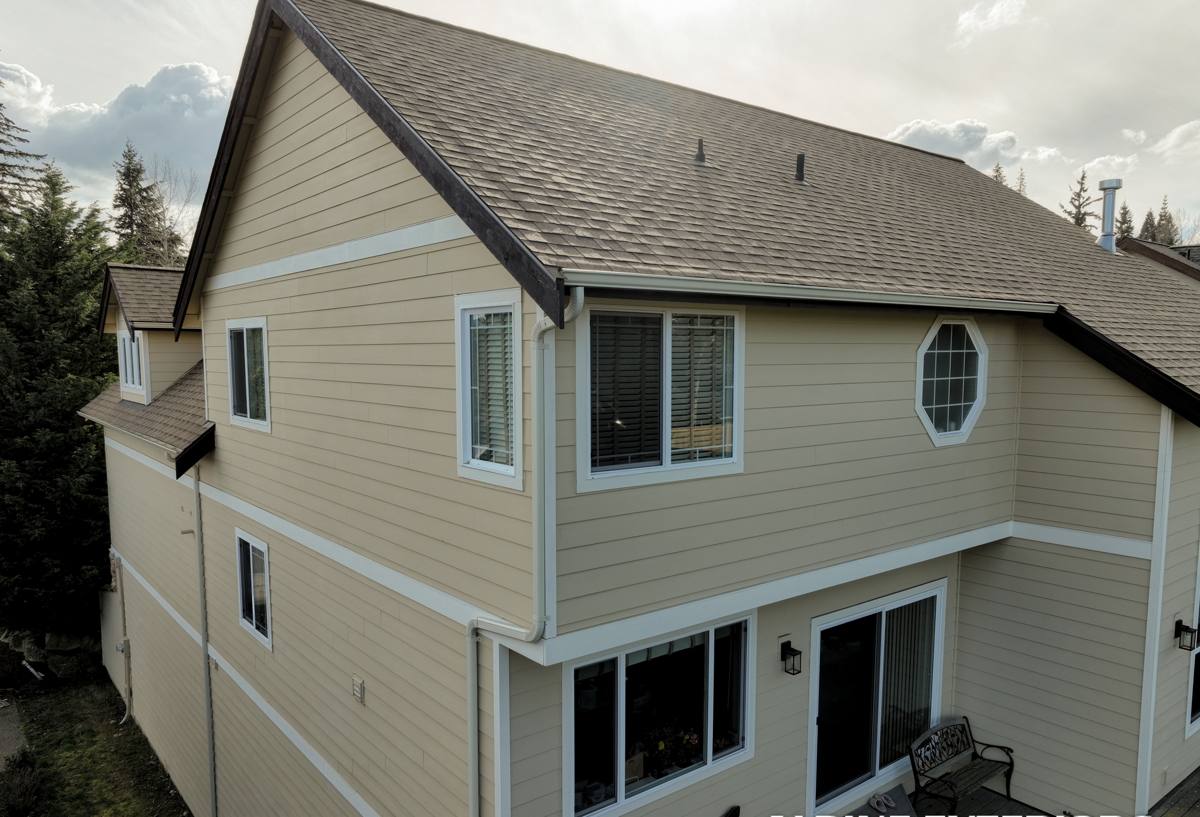
How the Two Materials Actually Compare
Wind Performance
This is usually the first question homeowners ask, and for good reason. Properly installed asphalt shingles rated for high-wind zones can perform well in Florida — the rating and the installation matter as much as the material itself. Metal roofing, particularly standing seam systems with concealed fasteners, generally has a higher wind uplift rating and fewer individual pieces for wind to get underneath in the first place. Shingles are installed as hundreds of individual tabs; metal panels are installed as continuous runs with far fewer seams and edges for wind to exploit.
The honest caveat: a poorly installed metal roof and a well-installed shingle roof can perform closer to each other than the marketing suggests. Installation quality — proper fastening pattern, correct underlayment, sealed penetrations — affects wind performance on both systems more than most homeowners realize.
UV and Heat
Pinellas County sun is relentless, and UV exposure is one of the main things that ages a roof from the top down. Asphalt shingles rely on granules embedded in the asphalt to block UV; over time those granules wear thin, the asphalt underneath becomes brittle, and the shingle loses flexibility and impact resistance. Metal roofing doesn't have that same degradation pathway — the finish can fade gradually over many years, but the panel itself isn't breaking down chemically the way asphalt does. Metal also reflects more solar heat than shingles absorb, which can measurably reduce attic temperatures and, in turn, cooling load — though the size of that benefit depends on your attic insulation and ventilation, not the roof material alone.
Salt Air and Coastal Exposure
This is where material selection within each category matters as much as the shingle-vs-metal choice itself. Standard fasteners and lower-grade metal coatings can corrode faster near the Gulf and Tampa Bay than they would inland. A metal roof installed in a coastal-rated finish (like a quality Kynar-based paint system) with stainless or coated fasteners is built for this environment; a metal roof installed with the cheapest available components is not, and salt air will find that weakness. Shingles don't corrode, but the metal flashing, valleys, and fasteners integrated into any shingle roof are subject to the same salt-air consideration — so "shingles avoid the corrosion issue" isn't quite accurate either.
Wind-Driven Rain
Both systems can leak if flashing, underlayment, and penetration details are done poorly — that's true of every roof material ever made. Metal's continuous panel runs give water fewer entry points along the field of the roof, but valleys, wall transitions, and roof penetrations (vents, chimneys, skylights) are where both systems are most vulnerable, and that's almost entirely a workmanship issue rather than a material one.
Upfront Cost vs. Long-Term Cost
Metal costs more upfront than asphalt shingles — that's the trade-off nobody disputes. Where it gets more nuanced is what you're paying for over the life of the roof.
| Factor | Asphalt Shingles | Metal Roofing |
|---|---|---|
| Typical installed cost | Lower upfront cost per square | Roughly two to four times the upfront cost per square, depending on panel type |
| Expected lifespan | Roughly 15-25 years in this climate, depending on shingle grade and installation quality | Roughly 40-70 years, depending on panel type, coating, and installation |
| Mid-life maintenance | Periodic repairs as granules wear and seals age; more vulnerable after repeated storm seasons | Minimal routine maintenance; occasional fastener or sealant checks at penetrations |
| Replacement cycle over 40 years | Likely two full replacements | Likely zero to one replacement |
| Insurance considerations | Wind mitigation credits available with high-wind-rated shingle installations | Often eligible for additional wind mitigation and impact-resistance credits, insurer-dependent |
Whether metal "pays for itself" depends heavily on how long you plan to own the home. If you're planning to sell within five to seven years, the upfront cost gap is harder to recover. If you're staying long-term, the math shifts because you're comparing one roof purchase against two.
Lifespan and Maintenance Realities
Asphalt shingles are a known, well-understood product with a predictable maintenance rhythm: periodic inspections, occasional repairs after storms, and a replacement somewhere in the fifteen-to-twenty-five-year range depending on shingle grade, attic ventilation, and how many direct storm hits the roof has taken. That's not a knock on shingles — it's simply the honest lifespan range for the product in a climate this demanding.
Metal roofing's maintenance burden is generally lower once it's installed correctly — no granule loss, no algae streaking the way some shingles get in humid climates, and a coating system designed to hold up for decades. The trade-off is that metal roofing is far less forgiving of installation shortcuts. A rushed or inexperienced metal install shows up as fastener back-out, panel oil-canning, or leaks at improperly flashed penetrations years before it should. The quality of the installer matters more with metal than it does with shingles, simply because there's less margin for error built into the system.
Insurance and Wind Mitigation in Pinellas County
Florida's wind mitigation inspection process can affect your homeowner's insurance premium regardless of which material you choose, but the specifics matter. High-wind-rated shingle installations, secondary water barriers, and proper roof-to-wall connections can all earn credits. Metal roofs, particularly those with an impact-resistance rating, are often eligible for additional credits with some insurers — but coverage and credit structures vary by carrier and change over time, so any specific premium impact should be confirmed directly with your insurance agent rather than assumed from the roofing material alone. What we can tell you with confidence: a properly documented, code-compliant installation of either material puts you in the best position for whatever credits your policy offers.
Appearance and Resale
Shingles remain the visual norm in most Clearwater neighborhoods, which matters if you're weighing resale and want the home to blend in with comparable properties. Metal roofing has shifted from a purely utilitarian look to a range of profiles and colors that read as upscale in many markets, and standing seam in particular has become a sought-after feature in some coastal and higher-end segments. Neither choice is a resale mistake — but if your neighborhood is uniformly shingle roofs, that's worth factoring into the decision alongside the performance differences.
Noise and Comfort
The idea that metal roofs are loud in rain is mostly a myth once a proper solid decking and underlayment assembly is in place — the noise concern applies far more to older open-batten metal installations over exposed rafters, which isn't how a residential metal roof over solid decking is built today. With correct decking and underlayment, the difference in rain noise between a metal roof and a shingle roof is minor.
Which Homeowners Tend to Lean Which Way
There's no universal right answer, but a few patterns show up consistently in conversations with homeowners deciding between the two:
- Staying in the home 15+ years, or building this as a forever home — the long-term cost math tends to favor metal
- Selling within the next several years — the lower upfront cost of shingles is harder to argue against
- Wanting the lowest possible maintenance burden over the roof's life — metal, installed correctly, generally delivers that
- Matching a specific neighborhood aesthetic where shingles are the norm — shingles keep the home visually consistent
- Prioritizing the lowest possible upfront cost for a roof that still meets Florida's current wind code — a quality high-wind-rated shingle system is a sound, legitimate choice
- Wanting the strongest wind and impact performance the budget allows, and comfortable with the higher initial investment — metal, particularly standing seam, is built for that priority
Questions Worth Asking Any Contractor Before You Decide
Whichever direction you're leaning, the quality of the installation determines how well either material actually performs here. Before signing anything, it's worth asking:
- What wind rating is being installed, and does it meet or exceed current Pinellas County code requirements?
- What underlayment and secondary water barrier are included, not just the visible top layer?
- For metal: what fastener type and coating system is being used, and is it rated for coastal, salt-air exposure?
- For shingles: what is the actual shingle grade and wind rating, not just the brand name?
- How are valleys, penetrations, and wall transitions being flashed?
- What does the manufacturer's warranty actually cover, and what does it exclude for coastal installations?
- Is the contractor licensed and insured to work in Florida, and can they provide proof before work begins?
The Honest Bottom Line
Metal and shingles are both proven, legitimate roofing materials for a Clearwater home — this isn't a case where one option is secretly the wrong choice. Metal generally wins on lifespan, wind performance, and long-term maintenance; shingles generally win on upfront cost and neighborhood consistency. The material you choose matters less than making sure whichever one you pick is installed correctly, with the right components for a Gulf Coast climate, by a crew that treats flashing and fastening details as seriously as the material itself.
If you're weighing this decision for your own roof, we're glad to walk your specific situation — roof shape, age, budget, and how long you're planning to stay — and give you a straight, no-pressure estimate on both options so you can compare real numbers instead of guesswork.