 Clearwater Roofing
 Why the Lifespan Number on the Shingle Wrapper Doesn't Apply Here
Every roofing product comes with a manufacturer-rated lifespan printed on the packaging or buried in the warranty paperwork. A "30-year shingle" or a "50-year metal roof" is tested and rated under fairly controlled conditions, not under a Pinellas County sun in July or a tropical system rolling off the Gulf in September. Those numbers are a starting point, not a promise.
In Clearwater, four things work against a roof at the same time: intense, nearly year-round UV exposure that breaks down asphalt and sealants faster than in northern climates; wind-driven rain that finds its way into fastener holes, flashing seams, and aging underlayment; salt air drifting in off the Gulf that accelerates corrosion on metal fasteners, flashing, and vents; and periodic hurricane-force wind events that stress every seam, nail, and adhesive strip a roof has. None of these are hypothetical — they're the baseline conditions any roof on this coast lives under every single year.
The honest answer to "how long will my roof last" is always a range, and that range depends on the material, the installation quality, the roof's slope and exposure, and how well it's been maintained — not just what the brochure says.
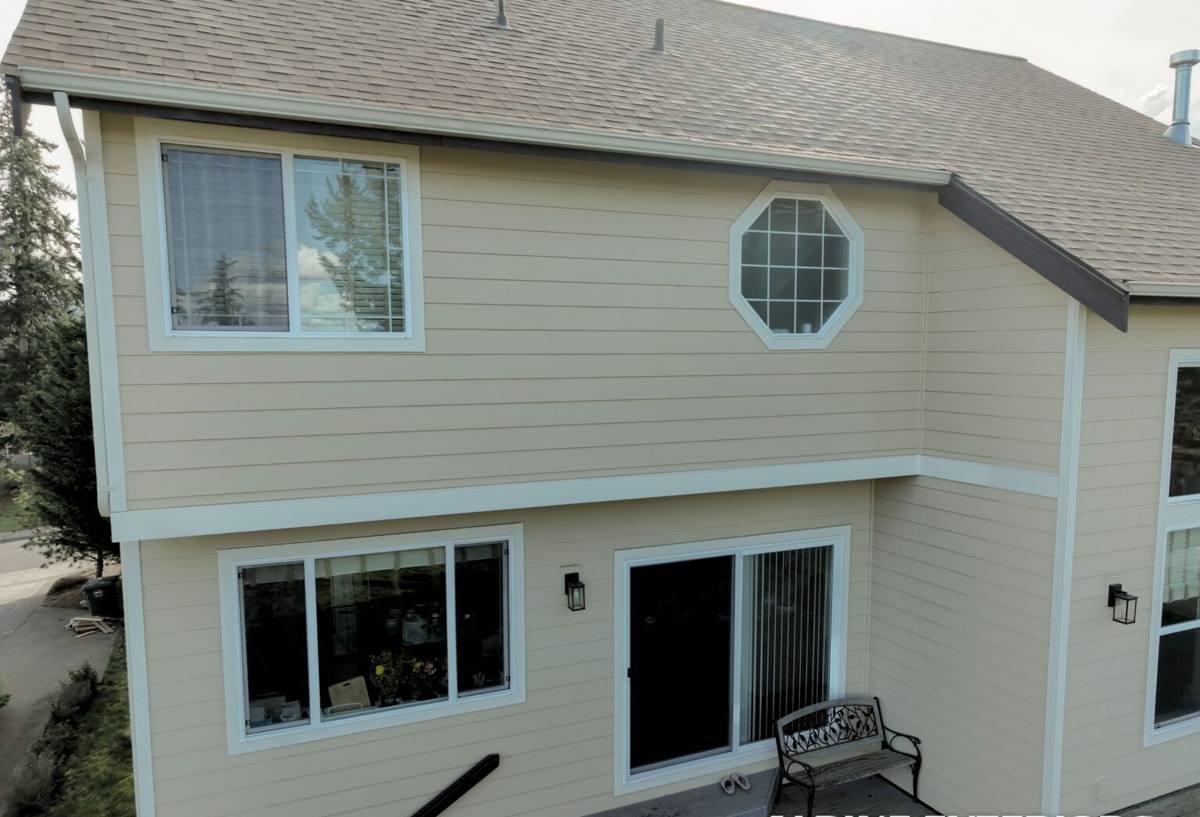
Realistic Lifespans by Roofing Material in This Climate
Below is a comparison of common roofing materials and what we typically see them actually deliver in this region, versus the manufacturer's rated lifespan.
| Material | Manufacturer-Rated Lifespan | Realistic Local Lifespan | Local Notes |
|---|---|---|---|
| 3-tab asphalt shingle | 20-25 years | 12-18 years | Lowest wind rating of common shingle types; UV and heat cycling age the asphalt faster here |
| Architectural (dimensional) shingle | 25-30 years | 18-25 years | Better wind resistance and thicker mat; still sensitive to attic heat and ventilation |
| Concrete or clay tile | 50+ years (tile itself) | 25-35 years before underlayment fails | The tile often outlives the underlayment beneath it — failure usually shows up as leaks, not broken tiles |
| Standing seam metal | 40-50 years | 30-45 years | Strong wind performance; fastener and flashing corrosion from salt air is the main long-term concern |
| Flat / low-slope (modified bitumen, TPO) | 15-20 years | 10-18 years | Common on additions, porches, and older Florida homes; ponding water and seam integrity drive lifespan |
These are ranges, not guarantees in either direction. We've seen well-installed, well-ventilated architectural shingle roofs get close to 25 years, and we've seen poorly ventilated ones need replacement well before 15.
Why Tile Roofs Are a Special Case
Tile is genuinely durable — the tiles themselves can outlast the house. But a tile roof isn't waterproof because of the tile; it's waterproof because of the underlayment beneath it. That underlayment takes decades of heat cycling and, on this side of the state, the added stress of salt-laden humidity. When a tile roof "fails," it's almost always the underlayment giving out, not the tile breaking. That's why a tile roof inspection needs to look under the tile, not just at it.
What Actually Shortens a Roof's Life Around Clearwater
UV and Heat
Asphalt shingles are petroleum-based products, and heat plus UV is what dries them out, causing granule loss and brittleness. A west- or south-facing slope with full sun exposure will age noticeably faster than a shaded north-facing slope on the same house.
Wind-Driven Rain
Straight-down rain is rarely the problem. Wind-driven rain — the kind that comes in sideways during a Gulf storm — gets pushed up under shingle tabs, through worn flashing, and around vent boots. Roofs with marginal flashing detail or aging pipe boots often leak specifically during wind events, not during ordinary rain.
Salt Air and Coastal Humidity
Being close to the coast means metal components — nails, flashing, vent stacks, screws holding down ridge caps — corrode faster than they would inland. Corrosion at a fastener is a small problem until it isn't; a corroded nail loses its grip strength right when a roof needs it most, during high wind.
Hurricane and Tropical Storm Wind Loads
Even when a roof survives a storm without visible damage, repeated wind loading can loosen shingle seals, stress flashing, and create small entry points for water that don't show up as an active leak for months. This is one reason a post-storm roof inspection is worth doing even when nothing looks obviously wrong from the ground.
Attic Ventilation
An under-ventilated attic traps heat, and that heat radiates upward into the underside of the roof deck and shingles, aging them from below as well as above. Proper ridge and soffit ventilation is one of the few lifespan factors a homeowner can control after the roof is already installed.
Installation Quality Matters More Than the Brand on the Wrapper
Two roofs using the identical shingle product from the same manufacturer can have very different lifespans depending on how they were installed. Nail placement and nail count, proper starter strip and drip edge installation, correctly lapped underlayment, and flashing detail at every penetration and valley all matter more, over time, than which brand name is on the shingle. A premium shingle installed with shortcuts will underperform a mid-grade shingle installed correctly. This is why we talk about installation standards as much as we talk about product selection — the product is only half of the lifespan equation.
Signs Your Roof Is Approaching the End of Its Useful Life
Most roofs give warning signs well before a full failure. Worth checking for, or having a contractor check for, periodically:
- Granules collecting in gutters or at downspout outlets (a sign of asphalt shingle wear)
- Shingles that are curling, cupping, or lifting at the edges
- Visible cracked, slipped, or missing tiles, or exposed underlayment beneath tile
- Streaking, dark stains, or soft spots on the roof deck visible from the attic
- Rusted, lifted, or separated flashing around chimneys, skylights, or wall intersections
- Daylight visible through the roof deck from inside the attic
- Ceiling stains, especially ones that appear or worsen after a windy rain event
- A roof age approaching or past the upper end of its material's realistic local lifespan
Any one of these alone isn't necessarily an emergency, but several appearing together usually means it's time for a real inspection rather than a wait-and-see approach.
Maintenance That Actually Extends Roof Life Here
Roofs in this climate benefit from being checked more often than the industry-standard "once a year" advice suggests, particularly after any named storm or unusually high-wind event. Practical maintenance that makes a measurable difference:
- Keeping gutters and valleys clear so water doesn't pool or back up under shingles
- Trimming back tree limbs that scrape shingles or drop debris onto the roof surface
- Re-sealing or replacing pipe boots and penetration flashing before they crack, not after
- Checking attic ventilation isn't blocked by insulation at the soffits
- Having flashing and fastener corrosion checked periodically given the salt-air exposure
- A post-storm visual check after any tropical system, even without an obvious leak
Roof Age, Insurance, and Replacement Timing in Florida
In Florida, roof age has become a major factor in homeowners insurance, independent of whether the roof is actually leaking. Many insurers now require roof inspections at renewal for roofs over a certain age, and some will decline to renew or will require replacement before continuing coverage, based on age alone rather than condition. This means the practical replacement decision for a lot of Pinellas County homeowners isn't purely "is it leaking yet" — it's also "will my insurer keep covering this roof." Worth factoring in when deciding whether to repair a roof that's getting up in years versus starting to plan for replacement on your own timeline rather than the insurer's.
Repair vs. Replace: How to Think About It
A single isolated issue — a damaged section after a storm, one failed flashing point, a handful of cracked tiles — is usually a repair. Widespread granule loss, multiple leak points, underlayment failure across large areas, or a roof already past its realistic local lifespan range is usually a sign that repairs are becoming a pattern rather than a solution. The general rule we use: if a roof would need multiple significant repairs within the next few years to keep functioning, and it's already in the back half of its expected local lifespan, replacement is usually the more cost-effective path over time compared to repeated patch repairs.
Getting a Straight Answer About Your Roof
Every roof's actual remaining life depends on its material, age, slope, sun exposure, ventilation, and maintenance history — there's no substitute for someone actually getting up there and looking. If you're trying to figure out where your roof stands, whether it's a repair situation or something to start planning for, we're glad to come take a look and give you an honest, no-pressure assessment using the form below.