 Clearwater Roofing
 Board & Batten Siding in Coachman Ridge: A Look That Has to Earn Its Keep
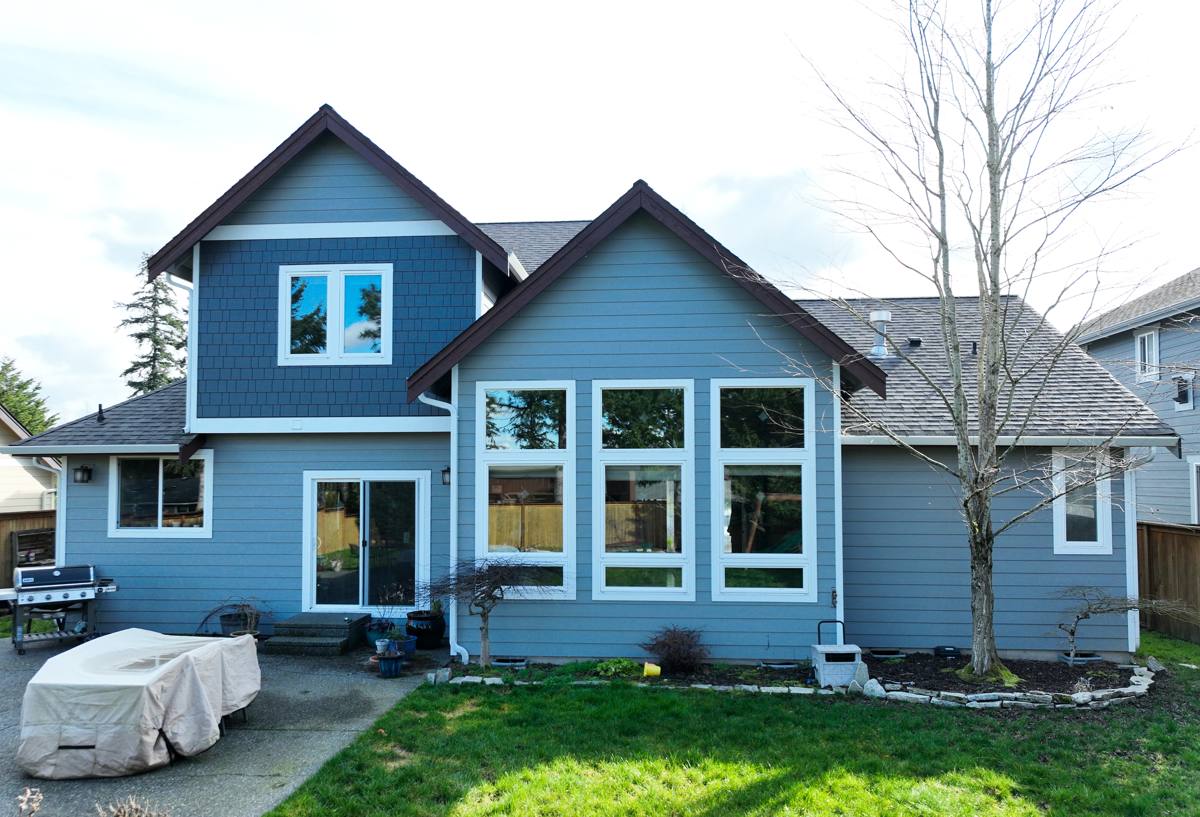
Board and batten siding has a distinct, vertical-line look that a lot of Coachman Ridge homeowners are drawn to — it dresses up a plain elevation, adds architectural interest to a porch gable or accent wall, and works whether a house is going for a farmhouse feel, a coastal cottage look, or just a clean, modern update on an older ranch or bungalow. Coachman Ridge, like most established neighborhoods in this part of Clearwater, is a mix of home ages and styles, which means board and batten often gets used as an accent — a garage face, a second-story wall, a gable end — as much as a full-house treatment.
Here's the part that matters more than the look: in Pinellas County, siding isn't just decorative. It's a weather system. Board and batten has more seams and more vertical joints than a standard lap profile, and every one of those seams is a place water can try to get in if the material and the installation aren't right for this climate. We install board and batten because it looks great when it's done correctly — but "correctly" is doing a lot of work in that sentence, and it's the whole reason this page exists.
What Clearwater's Climate Actually Demands From This Siding
Coachman Ridge sits well within the stretch of Pinellas County that takes the full brunt of what Gulf Coast weather has to offer. Any siding job here — and board and batten especially — has to be engineered around four things:
- Hurricane-force wind: Vertical board and batten has more edges catching wind-driven pressure than horizontal lap siding. Fastening pattern, panel width, and batten spacing all affect how well it holds up in a storm.
- Intense, year-round UV: Central Florida sun bakes paint and finishes far faster than it does in most of the country. A finish that isn't formulated for this exposure will chalk, fade, or crack years ahead of schedule.
- Wind-driven rain: Rain here doesn't fall straight down — it comes in sideways during storms, which pushes water into every vertical seam and batten joint that isn't flashed and sealed correctly.
- Salt air: Even away from the immediate coastline, Pinellas County's air carries enough salt to accelerate corrosion on fasteners and metal trim, and to break down materials that aren't rated for a marine-influenced climate.
Board and batten siding that isn't specified and installed with all four of those in mind will look fine for a year or two and then start showing problems — cupping, seam separation, fastener bleed-through, or soft spots at the bottom of boards. We've seen it enough times on other people's work to know it's almost always a materials or installation shortcut, not bad luck.
Why We Only Install This in James Hardie Fiber Cement
Board and batten is available in vinyl, engineered wood (like LP SmartSide), primed spruce or cedar, and fiber cement. We install fiber cement — specifically James Hardie — and nothing else, and it's worth explaining why rather than just asserting it.
Vinyl board and batten
Vinyl is affordable and low-maintenance in the sense that it doesn't need paint, but it's a thin plastic product that expands and contracts significantly with Florida's heat swings. In wind events, vinyl board and batten panels are more prone to popping loose or cracking at the fasteners than a heavier, rigid material. It also fades under sustained UV exposure — a real problem given how much direct sun Clearwater gets most of the year.
Wood-based and engineered wood options
Primed spruce, cedar, and engineered wood products like LP SmartSide are wood at their core. Wood is naturally more vulnerable to moisture intrusion, and board and batten's vertical seams give water more opportunities to find a way in. Once moisture gets behind a wood-based batten, it can swell, delaminate at the edges, or invite rot — problems that are much harder to catch early on a vertical profile than on a horizontal one where water sheds more predictably. In a humid, storm-prone climate like ours, that's a maintenance burden we don't think is worth taking on.
James Hardie fiber cement
Hardie's board and batten products are engineered specifically for climates like Florida's — the company makes an HZ5 line formulated for high-humidity, high-moisture regions. It's non-combustible, doesn't swell or rot the way wood-based sidings can, and comes with a factory-applied ColorPlus finish that's baked on and warranted against fading — a real advantage against Pinellas County's UV load. It's heavier and more rigid than vinyl, which matters when wind is pulling at every seam on a board and batten wall. That combination of moisture resistance, UV-stable finish, and structural rigidity is why this is the only board and batten product we put on Coachman Ridge homes.
What a Correctly Installed Board & Batten Job Involves
The look of board and batten is simple. The installation, done right, is not — and this is the profile where corners get cut most often, because a rushed job can look nearly identical to a proper one on day one.
The details that separate a job that lasts from one that doesn't
- Proper drainage plane: A weather-resistant barrier behind the siding, installed continuously and lapped correctly, so any moisture that does get past the boards has somewhere to go besides your wall sheathing.
- Correct fastening: Hardie specifies fastener type, spacing, and placement for board and batten assemblies. Nailing too close to an edge, using the wrong fastener, or skipping studs to save time all shorten the life of the installation.
- Batten spacing and seam treatment: Battens need consistent spacing and correct overlap onto the vertical boards beneath, with the right gap and sealant approach at seams so the assembly can move slightly with temperature changes without cracking.
- Flashing at every penetration: Windows, doors, hose bibs, light fixtures, and the bottom termination at the foundation all need proper flashing and clearance — the single most common failure point we find on other contractors' board and batten work is a missing or undersized kick-out flashing or a starter course installed too close to grade.
- Caulking discipline: Used correctly, not as a substitute for proper flashing and overlap — caulk should be the backup, not the primary defense against water.
None of this is exotic. It's manufacturer specification, followed carefully, by people who've done it enough times to know where problems actually show up in this climate.
Board & Batten Compared to Other Siding Profiles
Homeowners in Coachman Ridge often ask how board and batten stacks up against the horizontal lap siding that's more common on most of the block. Both hold up well in Hardie fiber cement — the difference is mostly about appearance, installation complexity, and where each makes the most sense.
| Factor | Board & Batten | Horizontal Lap |
|---|---|---|
| Visual style | Vertical lines, farmhouse/coastal/craftsman feel | Traditional, most common look in this area |
| Water shedding | Relies more on flashing and seam detail | Overlap naturally sheds water downward |
| Wind exposure | More seams; fastening pattern is critical | Fewer vertical joints; long track record in hurricane areas |
| Best used as | Full elevations or accent walls/gables | Full-house siding |
| Installation sensitivity | Higher — more places to get wrong | Lower, but still spec-dependent |
Neither option is objectively better — it comes down to what look you want and making sure whoever installs it treats the details with the seriousness the profile requires.
Our Process for Board & Batten Projects in Coachman Ridge
- On-site assessment: We walk the home, check existing sheathing and framing condition, and identify moisture-prone areas — gable ends, areas near sprinklers or shaded by trees, and low clearance points near grade.
- Scope and product selection: We talk through board width, batten spacing, and color options within Hardie's board and batten line, matched to the home's style and the rest of the exterior.
- Prep and drainage plane installation: Removal of failing material, correction of any sheathing issues found underneath, and installation of a continuous weather-resistant barrier.
- Installation to manufacturer spec: Fastening, batten alignment, and seam treatment following Hardie's published installation requirements — not shortcuts that happen to look fine at handoff.
- Flashing and detail work: Every window, door, and penetration gets proper flashing before the final boards go on around it.
- Final walkthrough: We go over the finished work with the homeowner before calling the job done.
What Drives Cost on a Board & Batten Project
Board and batten pricing varies more than lap siding because so much depends on the substrate condition and how much detail work the elevation requires. Rather than quote a number that won't mean much without seeing the house, here's what actually moves the price:
| Cost Factor | Why It Matters |
|---|---|
| Substrate condition | Rotted or water-damaged sheathing found during tear-off adds repair scope |
| Full elevation vs. accent area | A single gable or garage face costs far less than a full-house application |
| Number of openings and penetrations | Each window, door, and fixture needs individual flashing detail |
| Trim and corner detail complexity | Custom corner boards and trim profiles take more labor than standard runs |
| Access and height | Second-story gables and steep rooflines increase labor and equipment needs |
We give a firm, itemized quote after seeing the actual home — not a phone estimate — because board and batten pricing without that context is just a guess.
Living With Board & Batten Siding in This Climate
Once it's installed correctly, James Hardie board and batten is genuinely low-maintenance — but "low" isn't "none." A rinse with a garden hose a few times a year knocks off salt residue and airborne grime before it builds up. It's worth walking the exterior after major storms to check that no boards or battens were loosened by wind, and to keep an eye on caulking at seams and trim over the years, since sealants age faster under constant Florida sun than the siding itself does. Keeping sprinklers from hitting the wall directly and trimming back vegetation that holds moisture against the siding both go a long way toward getting the full lifespan out of the installation.
Why Local, Coachman Ridge-Specific Experience Matters
Board and batten done wrong doesn't usually fail in year one — it fails in year three or four, after a couple of hurricane seasons and a lot of Florida sun have found every weak seam and every skipped flashing detail. A crew that's worked this specific pocket of Clearwater knows what the salt air and wind exposure here actually do to a wall assembly over time, and installs accordingly instead of treating every job like it's going up in a landlocked climate. That local track record is the difference between siding that still looks sharp in year ten and siding that's already showing seam trouble.
If you're considering board and batten siding for a home in Coachman Ridge, we're happy to take a look and walk you through what it would actually involve for your house — no pressure, no obligation. Use the form below to request a free estimate.