 Clearwater Roofing
 Oldsmar's Climate Is Hard on Siding — Here's Why
Sitting at the north end of Old Tampa Bay, Oldsmar homes deal with a combination of stresses that most siding products simply weren't built to handle over the long term. Salt-laden air drifts in off the bay and settles on exterior surfaces year-round, accelerating corrosion of fasteners and trim and breaking down finishes that aren't formulated to resist it. Add in Pinellas County's intense, near-constant UV exposure, and you get siding that fades, chalks, or becomes brittle years before a homeowner expects to think about replacement.
Then there's wind. Oldsmar isn't immune to the hurricane-force gusts and wind-driven rain that come through the Tampa Bay area during storm season. Wind-driven rain doesn't just fall on a wall — it gets forced sideways and upward into any gap, seam, or improperly lapped joint. Siding that isn't installed with the right clearances and flashing details will let moisture behind the wall assembly long before the surface itself shows any visible damage. By the time a homeowner notices soft spots or staining, the underlying sheathing has often already been compromised.
This combination — salt air, UV, humidity, and wind-driven rain — is exactly why the choice of siding material and the quality of the installation matter more here than in a drier, inland climate.
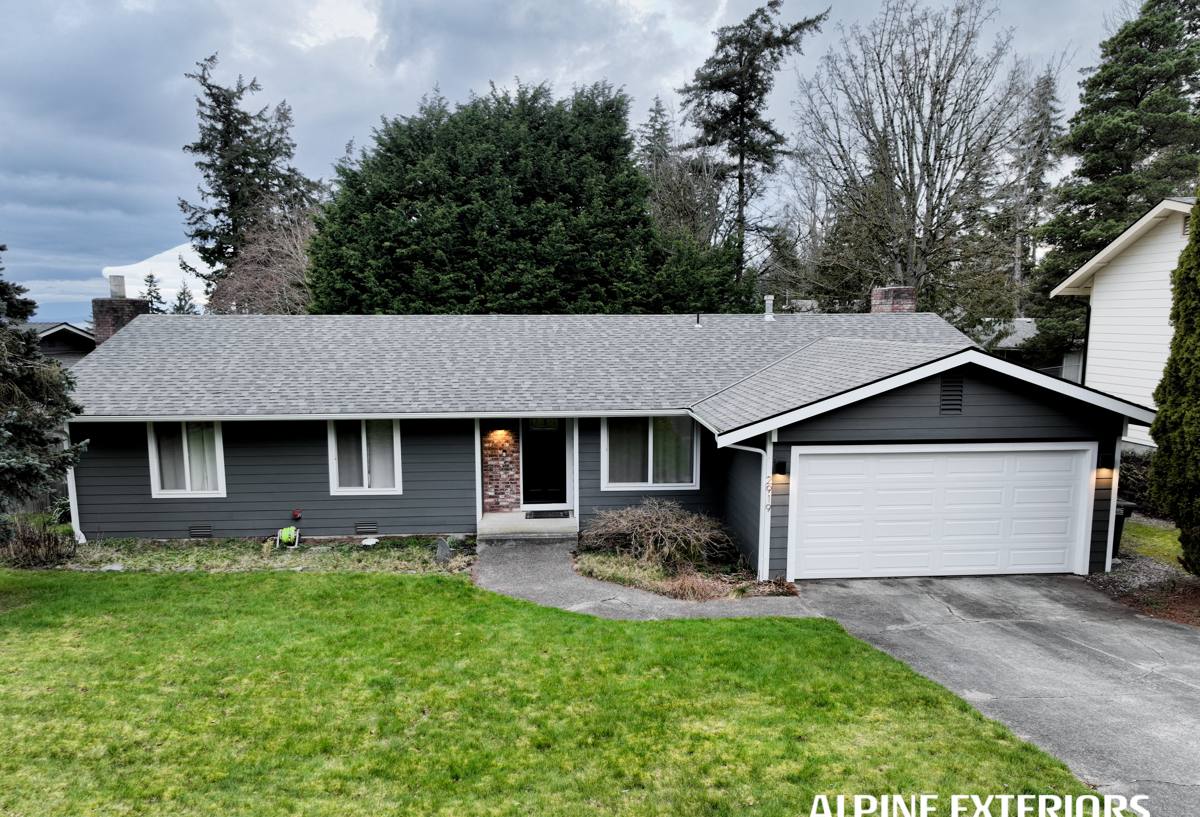
Why We Install Only James Hardie Fiber Cement
We standardized on James Hardie fiber cement siding for every home we side, including here in Oldsmar. That's not a marketing preference — it's a decision based on how the product is engineered and how it performs against the specific conditions Pinellas County homes face.
Non-Combustible Core
Fiber cement is made primarily from cement, sand, and cellulose fibers, which means it won't ignite or contribute fuel to a fire the way wood-based or foam-backed products can. That's a meaningful difference in a region where lightning strikes are common during summer storm season.
ColorPlus Factory Finish
James Hardie's ColorPlus finish is baked on in a controlled factory environment rather than sprayed or brushed on site. That process produces a more consistent, UV-resistant, and fade-resistant finish than field-applied paint, which matters directly given how much sun Oldsmar siding takes year-round.
Climate-Engineered HZ5 Formulation
James Hardie makes region-specific HZ ("HardieZone") product formulations, and the HZ5 line is engineered for hot, humid, storm-prone climates like ours — with moisture and impact performance tuned for exactly the conditions Pinellas County throws at exterior walls.
We don't install LP SmartSide, vinyl siding, Cemplank, Allura, or primed wood products like spruce or cedar. Each of those has its place in the broader market, but between moisture sensitivity, maintenance burden, warranty structure, or performance limits in coastal, high-UV conditions, none of them meet the standard we've set for what goes on a home we're putting our name behind.
What a Correct Fiber Cement Installation Actually Involves
Fiber cement siding is only as good as its installation. The material itself is durable, but almost every real-world fiber cement failure we're called out to inspect traces back to installation shortcuts, not the product.
Clearances and Moisture Management
Fiber cement siding needs proper clearance from grade, roof lines, decks, and other horizontal surfaces so water has somewhere to go instead of wicking up into the bottom edge of the boards. A weather-resistant barrier behind the siding, installed and lapped correctly, gives the wall assembly a second line of defense if any moisture does get past the cladding — which matters a great deal during a wind-driven Gulf storm.
Fastening and Flashing
James Hardie specifies fastener type, spacing, and placement for a reason — under-driven or over-driven nails, wrong fastener material, or incorrect spacing all create weak points. Flashing at windows, doors, and any wall penetration has to be layered correctly so water sheds outward at every transition, not just at the field of the wall.
Joints and Caulking
Butt joints, corners, and trim transitions are where a lot of siding jobs quietly fail. Manufacturer-approved joint treatment and quality sealant at the right locations — not everywhere, and not nowhere — keep those seams from becoming entry points for moisture over the years.
Our Process for Oldsmar Homeowners
- Inspection and assessment — We look at your current siding, sheathing condition, and any problem areas (typically around windows, low clearance points, and roof transitions) before recommending a scope of work.
- Product and color selection — We walk you through the applicable James Hardie product lines and ColorPlus color options so the finished look fits your home and the neighborhood.
- Prep and removal — Old siding comes off, and we assess the sheathing underneath for any moisture damage that needs to be addressed before new material goes up.
- Weather barrier and flashing installation — This step happens before a single piece of visible siding goes on, and it's the part that determines whether the wall stays dry for the next several decades.
- Siding installation to manufacturer spec — Correct fastening, clearances, and joint treatment throughout, not just on the parts that are easy to see.
- Final walkthrough and cleanup — We review the finished work with you and make sure the job site is left clean.
What Affects the Cost of Your Siding Project
Every home is different, so we don't quote fiber cement projects off a flat rate. These are the main factors that move the number up or down:
| Factor | Why It Matters |
|---|---|
| Total wall square footage | More surface area means more material and more labor hours |
| Number of stories and roof lines | Complex rooflines and second-story work require more staging, flashing detail, and time |
| Condition of existing sheathing | Rot or moisture damage found during tear-off adds repair scope before new siding can go on |
| Product line and trim selection | Different James Hardie lines and trim profiles carry different material costs |
| Number of windows, doors, and penetrations | Each opening needs individual flashing and trim work, which adds labor |
| Access and site conditions | Tight lot lines, landscaping, or limited equipment access can affect labor time |
We give you a firm, itemized quote after seeing the actual condition of your home — not a rough estimate that changes once we start pulling old siding off.
Repair, Recoat, or Replace? Making the Right Call for an Older Oldsmar Home
Not every home needs a full tear-off. If your existing siding is fiber cement in reasonably good condition, isolated repairs or a fresh factory-matched finish may be enough. If you're dealing with older wood, aging vinyl, or fiber cement that was installed without proper clearances or flashing years ago, a full replacement is usually the more honest recommendation — patching over an installation defect just delays the same moisture problem rather than solving it.
During our inspection, we'll tell you plainly which category your home falls into. If a repair genuinely solves the problem, that's what we'll recommend — a full replacement isn't the right call for every situation.
Why Local Installation Experience Matters in Oldsmar
Pinellas County's building code sets specific wind-load and fastening requirements for exterior wall systems, and those requirements are enforced through permitting and inspection. A crew that regularly works in this county already knows how those requirements translate into fastener schedules, clearance details, and flashing sequences on an actual wall — not just what a general installation manual says.
Familiarity with Oldsmar specifically also means we understand what bay-adjacent, high-humidity, high-salt-air exposure does to a home over time, and we install and detail accordingly rather than treating every job the same way we would inland.
Caring for Your Siding After Installation
Fiber cement is low-maintenance compared to wood, but "low-maintenance" isn't "no-maintenance," especially in this climate. A few habits go a long way:
- Rinse siding periodically with a garden hose to clear salt residue and airborne grime — a soft wash, not a high-pressure blast that can force water behind seams
- Keep gutters clean and downspouts directed away from the foundation so water doesn't pool against the bottom of the siding
- Trim back landscaping and irrigation so sprinklers and plant growth aren't keeping siding constantly wet
- Walk the exterior after major storms and check for loose trim, cracked caulking, or impact damage
- Address any small caulking gaps or nail pops early, before wind-driven rain finds them
If you're weighing your siding options in Oldsmar and want a straight answer about what your home actually needs, we're glad to take a look. Fill out the form below for a free, no-pressure estimate.