 Clearwater Roofing
 Siding on a Barrier Island Has a Harder Job Than Siding Inland
Indian Rocks Beach sits on a narrow strip of land between the Intracoastal Waterway and the Gulf of Mexico, which means every home here takes on weather that inland Pinellas County properties simply don't see as often or as intensely. Salt-laden air moves through the neighborhood constantly, not just during storms. Add in Florida's year-round UV exposure, wind-driven rain that gets pushed sideways into wall assemblies during summer storms and hurricane season, and gusts that can arrive with little warning off open water, and it's clear that exterior cladding on a barrier island property is being asked to do more than look good. It's a weather barrier working overtime, every day of the year.
That's the lens we bring to every siding job in Indian Rocks Beach. This page focuses on one product, in one place: James Hardie fiber cement siding, installed correctly on Indian Rocks Beach homes. We're not going to give you a generic siding overview — we want to walk through what this specific climate demands, what a correct installation actually involves out here, and why hiring a crew that already understands barrier island conditions changes the outcome.
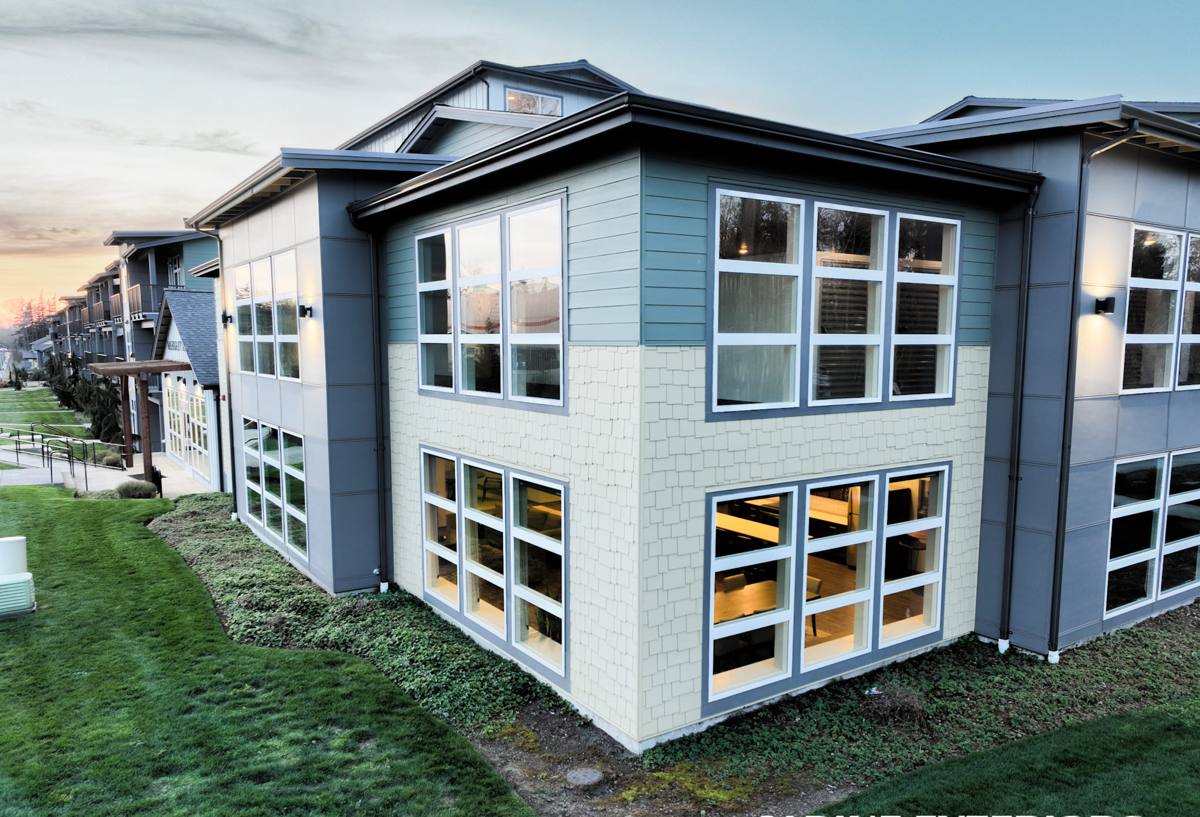
What Coastal Exposure Actually Does to Siding Over Time
Homeowners often assume the biggest threat is a single named storm. In reality, the slower, constant exposure does more cumulative damage to the wrong siding material than any one event.
Salt Air and Corrosion
Airborne salt settles on every exterior surface near the Gulf, not just the ones facing the water. It accelerates corrosion of fasteners, trim, and any metal accessories tied into the siding system, and it can degrade lower-grade coatings and finishes faster than manufacturers' standard warranties anticipate for inland climates.
UV Breakdown
Florida sun is intense and constant. Paint films and lower-cost coatings chalk, fade, and lose adhesion faster under this UV load than they would in a more moderate climate, which means repainting cycles come around sooner than homeowners expect — an ongoing cost that's easy to underestimate when comparing siding products up front.
Wind-Driven Rain and Moisture Intrusion
During a tropical system or even a strong summer thunderstorm, rain doesn't just fall on Indian Rocks Beach homes — it's driven sideways into seams, laps, and penetrations by sustained coastal wind. If a siding system's laps, flashing, and joints aren't detailed correctly, water finds its way behind the cladding and into the wall assembly, where it causes damage long before it's visible from the curb.
Hurricane-Force Wind Loads
Pinellas County's wind zone requirements exist because this coastline experiences real hurricane risk. Siding on a barrier island property needs to be rated, fastened, and installed to hold up under sustained high wind — not just resist an average storm.
Why We Install Only James Hardie Fiber Cement
We made a deliberate decision as a company to install James Hardie fiber cement siding exclusively, and nowhere does that decision matter more than on a barrier island street in Indian Rocks Beach. Fiber cement is non-combustible, dimensionally stable in humidity swings, and engineered specifically to resist the moisture and UV stress that coastal Florida homes are under continuously. James Hardie's HardieZone system includes an HZ5 product line engineered specifically for climates like ours — hot, humid, and storm-exposed — which is a meaningful difference from siding products designed around a national average climate.
ColorPlus Factory Finish
Rather than relying on a job-site paint job that has to fight Florida UV and salt exposure from day one, James Hardie's ColorPlus finish is baked on in a controlled factory environment, giving it stronger fade and wear resistance than field-applied paint — and it comes backed by its own finish warranty, separate from the product warranty.
Why We Don't Install the Alternatives
We don't install vinyl, LP SmartSide, Cemplank, Allura, or primed wood species like spruce or cedar on any home we work on, including here in Indian Rocks Beach. Vinyl can warp and become brittle under intense, sustained UV and heat. Engineered wood products carry moisture-sensitivity concerns that we're not comfortable putting on a home with this much humidity and storm exposure. Wood siding demands a maintenance commitment — regular repainting, sealing, and rot inspection — that most homeowners underestimate until they're several years in. None of these are products we consider "bad" outright; they're products with real trade-offs that we don't think hold up to this specific climate as well as engineered fiber cement does. That's the standard we hold every job to, and it's why James Hardie is the only product line we put our name behind.
What a Correct Installation Involves Out Here
The product is only half of the equation. Fiber cement siding performs exactly as well as the installation behind it, and in a wind-driven-rain climate, installation detail is where jobs succeed or fail.
- Proper starter strip and flashing at every penetration, window, and door — this is the single most common failure point we see in poorly installed siding jobs
- Correct fastener type, spacing, and embedment, sized to the local wind zone rather than a generic national spec
- Manufacturer-specified gaps and clearances at trim, corners, and butt joints to allow for expansion without forcing water paths
- Weather-resistant barrier installed and lapped correctly behind the siding, not just under it
- Caulking and sealant used only where James Hardie's installation instructions call for it — over-caulking traps moisture instead of shedding it
- Ground clearance maintained per manufacturer spec to keep the bottom edge of the siding out of standing water and irrigation overspray
Skipping or rushing any one of these steps doesn't usually show up as a problem in year one. It shows up in year five or six, as staining, soft spots, or trim failure — after the installer is long gone. That's why we install strictly to James Hardie's published specifications on every Indian Rocks Beach project, not to a shortcut version of them.
Our Process, Start to Finish
1. On-Site Assessment
We walk the exterior with you, look at the current siding or substrate condition, check for existing moisture damage, and talk through your goals — whether that's a full replacement, storm repair, or an addition that needs to match existing siding.
2. Product and Color Selection
We go over the relevant James Hardie product line and ColorPlus color options for your home, factoring in HOA or neighborhood expectations where applicable and how different colors perform under direct Gulf-facing sun exposure.
3. Written Estimate
You get a clear, itemized estimate before any work begins — no verbal-only pricing, no surprise add-ons once the crew is on site.
4. Tear-Off and Substrate Check
If we're removing existing siding, we inspect the sheathing underneath for hidden moisture or rot before anything new goes up. This step matters more on coastal homes, where prior water intrusion is common and not always visible from outside.
5. Installation to Manufacturer Spec
Flashing, weather barrier, fastening, and clearances are installed to James Hardie's published specifications for our wind zone — not shortcuts.
6. Final Walkthrough
We walk the finished job with you, point out the details of what was done, and make sure you're satisfied before we consider the project complete.
What Affects the Cost of a Hardie Siding Job in Indian Rocks Beach
Every home is different, and we don't publish fixed prices because doing so would be misleading. The factors below are the ones that most commonly move a project's cost up or down.
| Factor | Why It Matters |
|---|---|
| Home size and wall complexity | More square footage, corners, and architectural detail mean more material and labor time |
| Tear-off vs. new construction | Removing and disposing of existing siding, and repairing any substrate damage found underneath, adds time and cost |
| Siding profile and trim package | Lap width, shake accents, and trim detailing affect both material cost and installation complexity |
| Color and finish | Factory ColorPlus finishes vary by product line and color depth |
| Site access | Narrow lots, close-set neighboring homes, and limited staging space common on barrier island lots can affect labor efficiency |
| Wind zone fastening requirements | Proper fastener spacing and type for coastal wind loads is a code requirement, not an optional upgrade |
Why Hiring a Crew That Already Works Indian Rocks Beach Matters
Barrier island jobs come with logistics that inland Pinellas County jobs don't. Staging equipment and material on a narrow lot, coordinating around bridge and causeway access, and being familiar with how local wind zone and coastal construction requirements apply to siding work all make a real difference in how smoothly a project runs. A crew that's worked this specific stretch of coastline knows what correct flashing and fastening look like on homes facing sustained salt air and wind exposure, because they've already done it here — not just in a training manual.
Local experience also means fewer surprises during permitting and inspection, since the work is being done to the standard that Pinellas County's coastal wind zone actually requires, the first time.
Signs Your Current Siding Needs Attention
If you're not sure whether your Indian Rocks Beach home's siding needs replacement or just repair, these are the signs worth a professional look:
- Visible warping, buckling, or gaps at seams and corners
- Soft or spongy spots when pressed, which can indicate moisture behind the siding
- Peeling or bubbling paint that keeps returning after repainting
- Staining or dark streaking near seams, trim, or the base of the wall
- Visible fastener corrosion or rust streaks running down the siding face
- Rising cooling costs that may point to a compromised weather barrier
Some of these are cosmetic; others point to moisture that's already working its way into the wall assembly. An honest assessment up front tells you which one you're dealing with before you commit to a full replacement.
Maintaining James Hardie Siding on a Coastal Home
Fiber cement is low-maintenance compared to wood or vinyl, but "low-maintenance" isn't "no-maintenance," especially this close to the Gulf. A rinse-down of accumulated salt and airborne grime a few times a year, prompt attention to any caulking that starts to fail at trim joints, and periodic visual checks after major storms are enough to keep a correctly installed Hardie system performing for the long haul. Because the color is factory-applied through ColorPlus, you're not on a repainting schedule the way you would be with field-painted siding — which is one of the more overlooked cost savings over the life of the product.
If your Indian Rocks Beach home is due for new siding, or you want a second opinion on storm damage or a maintenance issue, we're happy to walk the property with you and give you a straight answer — no pressure, no obligation. Reach out using the form below to schedule a free estimate.