 Clearwater Roofing
 Palm Harbor Roofs Take a Different Kind of Beating
Palm Harbor sits close enough to the Gulf that its homes deal with a rougher mix of weather than roofs further inland. Hurricane-force winds during tropical systems, wind-driven rain that gets pushed sideways under normal flashing lines, intense year-round UV that breaks down shingle asphalt faster than in cooler climates, and salt-laden air working on metal fasteners and flashing — all of it adds up over the life of a roof. Any one of these on its own is manageable. Together, over years of Pinellas County summers and storm seasons, they shorten the useful life of a roof and turn small storm events into real damage if a roof was already worn down.
That's the context that matters for storm damage repair here. A roof that took a hard hit in Palm Harbor isn't just "damaged in one spot" — it's usually a roof that was already aging under UV and salt exposure, and the storm found the weak point first. A repair that only patches the visible hole without accounting for that broader wear pattern tends to fail again at the next storm.
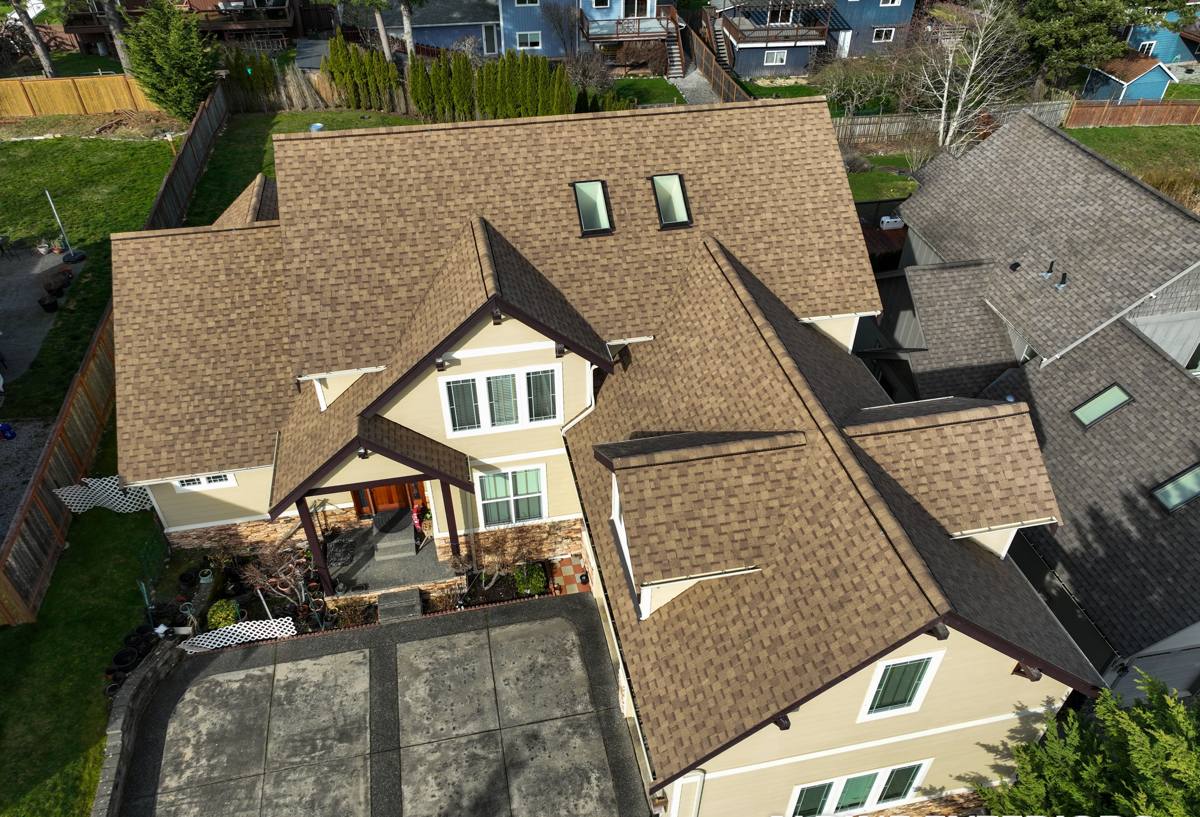
How Storm Damage Actually Shows Up on a Roof
Not all storm damage announces itself with a hole in the ceiling. Some of the most costly damage is the kind homeowners don't notice until it's already caused a secondary problem — a slow leak, rotted decking, or mold in the attic. Here's what we look for:
- Shingles that are lifted, curled, or missing entirely, especially along ridges and edges where wind uplift is strongest
- Granule loss that shows up as dark streaking in gutters or downspout runoff after a storm
- Exposed or backed-out nail heads, which let water in even when the shingle itself looks fine
- Soft or spongy spots underfoot, a sign the decking underneath has absorbed water
- Flashing that's separated or bent around chimneys, vents, and skylights — one of the most common leak points after wind events
- Damaged soffit, fascia, or gutters, which are often the first things to fail in high wind and are easy to miss from the ground
- Water stains, bubbling paint, or musty smells inside the attic or on ceilings
Wind-driven rain is worth calling out specifically, because it doesn't behave like a normal rainstorm. It can push moisture up and under shingle edges and flashing that would keep a roof dry in a typical downpour. That's why a roof can pass a casual visual check after a storm and still be actively leaking into the decking.
What a Correct Storm Damage Repair Actually Involves
A repair that's done right starts below the surface, not at it. Replacing a few shingles without checking what's underneath is the most common shortcut we see, and it's the reason some "repaired" roofs leak again during the next storm. A proper repair covers:
The Decking
Wet or soft decking has to be identified and replaced, not just covered over. Nailing new shingles over compromised plywood doesn't hold and doesn't stop the water problem underneath.
The Underlayment
This is the roof's real waterproofing layer, sitting under the shingles. If it's torn, displaced, or saturated in the damaged area, it needs to be replaced along with the shingles above it — not left in place.
Flashing and Valleys
Flashing around penetrations and valleys where two roof planes meet are where storm damage repairs most often go wrong, because they're more time-consuming to do correctly than a straight shingle run. Bent, lifted, or improperly resealed flashing is one of the leading causes of repeat leaks.
Fastening for Wind
Given how much wind this area sees, repairs need to be fastened to hold up to the next event, not just to look finished. That means correct nail placement and count, not the minimum.
Cutting any of these corners produces a repair that looks fine from the driveway and fails at the next storm — which usually costs more in the long run than doing it right the first time.
Our Process for Palm Harbor Storm Repairs
- Inspection. We get on the roof (not just a ground-level look) and check decking, underlayment, flashing, and the full shingle field for damage related to the storm, not just the obvious spot.
- Documentation. We photograph and note every area of damage in detail. This record matters for your own file and, if you're filing a claim, for your insurance adjuster.
- Temporary protection. If there's active exposure — a hole, missing section, or compromised flashing — we get it tarped or covered so the interior of the home stays protected while repair work is scheduled.
- Scope and estimate. You get a clear, written explanation of what's damaged, what needs to be done, and why — not just a number.
- Repair. Decking, underlayment, flashing, and shingles are addressed as a system, matched to the existing roof as closely as possible.
- Final check. We walk the completed repair with you so you know exactly what was done and what to keep an eye on going forward.
Repair or Replace? Weighing the Cost Factors
Not every storm-damaged roof needs full replacement, and not every roof is a good candidate for another repair. The right call depends on the roof's age, how much of it is affected, and its overall condition going into the storm.
| Factor | Leans Toward Repair | Leans Toward Replacement |
|---|---|---|
| Roof age | Under 10-12 years, still within typical shingle lifespan | Nearing or past the shingle's rated life expectancy |
| Extent of damage | Isolated to one section or slope | Spread across multiple slopes or widespread granule loss |
| Decking condition | Dry, solid decking found during inspection | Multiple areas of soft or water-damaged decking |
| Prior repair history | First significant repair on this roof | Roof has needed repeated patchwork over recent years |
| Insurance scope | Adjuster's scope matches a repair-level claim | Adjuster's scope or damage extent supports full replacement |
We'll always give you an honest read on which side of that line your roof falls on. A repair that's likely to need redoing again in a year or two isn't a good use of your money, and we'll say so rather than sell you a patch job.
Working With Insurance After a Storm
Most storm damage repairs in this area involve an insurance claim, and having documentation from a contractor who inspected the roof promptly makes that process smoother. A few things worth knowing:
Adjusters are working from a scope of damage, and a detailed photo record from an actual roof inspection — not just a drive-by — gives them (and you) a clearer basis for that scope. We can provide that documentation and walk through it with you. We don't handle the claim itself or promise a particular outcome from your insurer, but we'll make sure the roof's actual condition is accurately represented so you're working from good information.
Timing matters too. Filing promptly after a storm and getting a professional inspection on record helps avoid disputes later about whether damage was storm-related or pre-existing.
Why Hiring a Crew That Already Works in Palm Harbor Matters
Storm damage repair isn't generic work. A crew that regularly works Pinellas County roofs knows the wind-rating and building code requirements that apply here, has a working relationship with local permitting, and understands how the area's mix of older and newer roofing systems tend to fail under wind and rain — which speeds up both the diagnosis and the fix. Just as important, a local crew can typically respond faster after a storm, when timing matters most for limiting secondary water damage. That local familiarity is the difference between a repair that's built to hold up here and one that's built to a generic standard that doesn't account for what this area's roofs actually go through.
After the Storm: What to Do First
If your roof took a hit, a few early steps protect both the home and your ability to document the damage properly:
- Photograph visible damage from the ground if it's safe to do so — don't get on the roof yourself
- Check the attic and ceilings for water stains, dampness, or light coming through the decking
- Note the date and approximate time of the storm for your records and any insurance filing
- Cover any obvious openings temporarily if you can do so safely, to limit interior water damage
- Avoid signing anything or authorizing major work from door-to-door storm chasers before getting a local inspection
- Schedule a professional inspection as soon as reasonably possible — damage tends to get worse, not better, if left exposed
Get a Straight Answer on Your Roof
If your Palm Harbor home has visible storm damage, or you just want a professional set of eyes on the roof after a rough weather event, we're glad to take a look. The estimate is free, there's no pressure, and you'll get a clear explanation of what we find — use the form below to get started.