 Clearwater Roofing
 Oldsmar's Climate Is Hard on Siding — Here's What That Means for Your Home
Oldsmar sits on the Pinellas County side of Tampa Bay, which means homes here deal with a specific combination of stresses that inland Florida towns simply don't see as often. You've got long stretches of intense UV exposure nearly year-round, humidity that never really lets up, wind-driven rain during summer storms, and salt-laden air rolling in off the bay that finds its way into every seam, fastener, and joint on the exterior of a house. Add hurricane-force wind events to that list, and you have a climate that will find every weakness in a siding system within a few years if the material or the installation wasn't built to handle it.
This isn't a reason to panic about your siding — it's a reason to be deliberate about what goes on your walls and how it's installed. A lot of siding failures we see in this area aren't really material failures. They're installation failures: gaps where moisture gets behind the cladding, fasteners driven wrong, flashing details skipped to save time, or a product that was never engineered for a humid coastal climate in the first place.
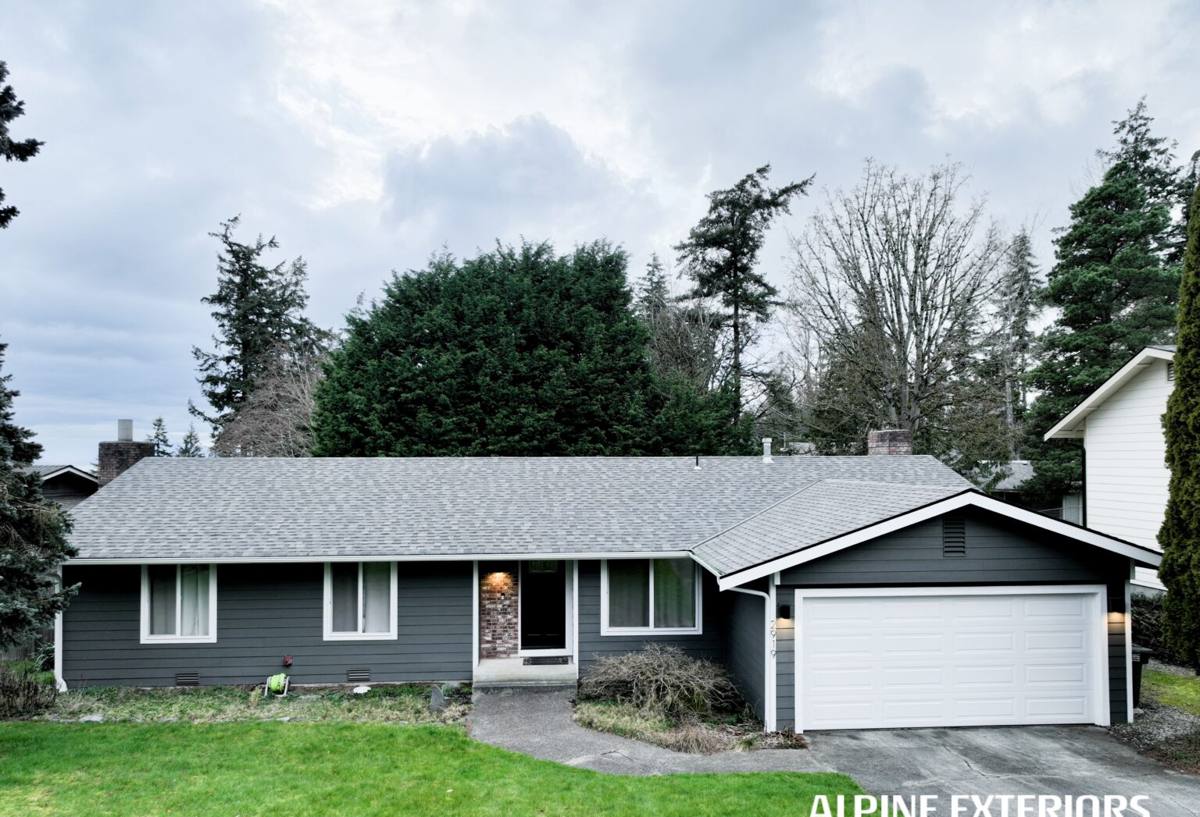
What Oldsmar Homes Actually Need From Their Siding
Given the conditions above, siding on an Oldsmar home has to do several jobs at once, all year, without much of a break:
- Hold color and finish under constant UV — Florida sun fades and chalks a lot of exterior finishes faster than manufacturers' national averages suggest.
- Resist moisture intrusion, not just repel it — humidity means materials are frequently damp; siding needs to manage that without swelling, delaminating, or feeding rot in the substrate behind it.
- Stay dimensionally stable — expansion and contraction from heat cycles will telegraph through as buckling, warping, or popped fasteners if the material isn't stable.
- Take a direct hit from wind-driven rain — water doesn't just fall in a Gulf coast storm, it's driven sideways into every lap and seam.
- Meet wind-load requirements — Pinellas County building code reflects the real risk of tropical storm and hurricane winds, and siding attachment has to be installed to spec, not just to "looks right."
- Shrug off salt air corrosion — fasteners, trim, and finish all need to tolerate a coastal atmosphere even a few miles inland from open water.
Any siding job that doesn't address all six of these is a job that's going to show problems early — sometimes within a single storm season, more often within three to five years.
Why We Install James Hardie Fiber Cement — and Nothing Else
We made a decision as a company to install only James Hardie fiber cement siding. We don't install vinyl, LP SmartSide, Cemplank, Allura, or primed wood siding like spruce or cedar. That's not a marketing angle — it's a standard we hold ourselves to because of what we've seen these products do (and not do) in exactly the kind of climate Oldsmar sits in.
Where other products fall short here
Vinyl siding is affordable and easy to install, and for a lot of the country it's a perfectly reasonable choice. In this climate, though, it softens and can distort under sustained heat, and its wind ratings depend heavily on installation detail — a marginal install that would be forgiving in a milder climate becomes a liability here. It's also a petroleum-based product, so it's combustible, which matters more in a state where wildfire risk and insurance scrutiny of exterior materials are both rising.
LP SmartSide, Cemplank, and Allura are all reasonable products in the right application. LP SmartSide is an engineered wood product — wood, even engineered and treated, is more moisture-sensitive than fiber cement, and Gulf coast humidity is not a forgiving environment for wood-based siding over a 20- or 30-year horizon. Cemplank and Allura are fiber cement competitors to Hardie, and the core material chemistry is similar — but we've standardized on one manufacturer so our crews install one system, know its tolerances cold, and can back the workmanship with a single, well-documented warranty structure instead of juggling multiple products' specs.
Primed spruce or cedar is a traditional, attractive option, but it's also the most maintenance-intensive. In this humidity, primed wood needs a disciplined repainting and caulking schedule to keep moisture out, and a missed cycle can let rot start behind the finish where you won't see it until it's advanced.
What Hardie gets right for this specific climate
James Hardie fiber cement is non-combustible, dimensionally stable in heat and humidity, and manufactured with HZ5 product lines specifically engineered for high-moisture, high-humidity climate zones like ours. The factory-applied ColorPlus finish is baked on and warrantied against fading in a way field-applied paint can't match, which matters a great deal under Florida UV. It holds up to wind-driven rain without the seam and joint vulnerabilities of lap-style vinyl, and it carries a strong, transferable limited warranty — which matters if you ever sell the home. None of that guarantees a good outcome by itself; installation to spec is what makes the material perform the way it's engineered to. That's the other half of the equation, and it's the half a lot of siding jobs skip.
Siding Material Comparison for a Coastal Pinellas County Climate
| Factor | James Hardie Fiber Cement | Vinyl | Engineered Wood (LP) | Primed Cedar/Spruce |
|---|---|---|---|---|
| Combustibility | Non-combustible | Combustible | Combustible | Combustible |
| Moisture tolerance | High (HZ5 climate-engineered) | Moderate | Moderate — wood-based | Low without upkeep |
| UV/fade resistance | Factory-baked ColorPlus finish | Can chalk/fade, heat distortion risk | Field-applied finish fades | Field-applied finish fades |
| Maintenance cycle | Low — periodic wash and caulk check | Low, but brittle over time | Moderate — finish upkeep | High — regular repaint/reseal |
| Wind performance | Strong when installed to spec | Sensitive to install quality | Moderate | Moderate |
| Warranty structure | Strong, transferable | Varies by manufacturer | Varies by manufacturer | Typically none beyond product |
What Correct Installation Actually Involves
Fiber cement siding is only as good as the installation behind it. A correct James Hardie install on an Oldsmar home is a sequence of details, and skipping any one of them is where moisture problems and warranty voids start:
Before the siding goes up
We start by evaluating what's currently on the wall — its condition, whatever's happening with the substrate underneath, and whether there's existing moisture damage that needs to be addressed before new material goes over it. Covering a moisture problem instead of fixing it just hides it for a while.
Weather barrier and flashing
A correctly installed weather-resistant barrier and properly integrated flashing at every window, door, and penetration is what actually keeps wind-driven rain out of the wall assembly — this is the step that matters most in a climate like ours and the one that gets rushed most often on cut-rate jobs.
Fastening and clearances
James Hardie specifies exact fastener types, spacing, and clearances — including ground clearance and roof-line clearance — that are designed around moisture management and wind performance. Following the manufacturer's installation instructions to the letter is also what keeps the product warranty intact; deviating from spec is one of the most common ways homeowners unknowingly void coverage.
Joints, caulking, and finish work
Properly treated cut edges, correctly caulked joints, and clean trim work aren't cosmetic extras — they're the final line of defense against the humidity and salt air working their way into seams over time.
Signs Your Oldsmar Home's Siding Needs Attention
- Visible warping, buckling, or waviness across a wall plane
- Soft spots or a "give" when you press on the siding, which often signals moisture behind it
- Persistent staining, streaking, or discoloration that doesn't wash off
- Cracked, chalky, or peeling finish, especially on sun-exposed elevations
- Gaps opening up at seams, corners, or trim boards
- Rising energy bills that may point to a compromised building envelope
- Visible fastener heads, rust streaks, or popped nails
If you're seeing more than one of these, it's worth having someone take a real look rather than waiting for the next named storm to make the decision for you.
Our Process for Oldsmar Siding Installation Projects
- On-site assessment — we walk the exterior, check the substrate, and talk through what your home actually needs.
- Written scope and product selection — you'll know exactly which James Hardie product line, profile, and color is going on your home before work starts.
- Prep and removal — old siding comes off, the substrate gets inspected and repaired as needed, and the weather barrier goes on correctly.
- Installation to manufacturer spec — flashing, fastening, clearances, and joint treatment all follow James Hardie's published requirements, not shortcuts.
- Final inspection and walkthrough — we go over the finished work with you before calling the job done.
Why Hiring a Crew That Already Works in Oldsmar Matters
Siding installation is a permitted trade governed by Pinellas County building codes, and wind-load and attachment requirements here reflect the real hurricane risk this part of Florida faces. A crew that regularly works Oldsmar and the surrounding Clearwater area already understands the local permitting process, knows how homes here are typically built, and has seen firsthand how different siding systems hold up (or don't) through actual Gulf coast storm seasons. That's a different level of judgment than a crew that installs siding occasionally or primarily works inland climates where humidity and salt air aren't daily factors.
When you're vetting a contractor for a project like this, a few things are worth confirming directly:
- Proper licensing and insurance for exterior contracting work in Florida
- Manufacturer familiarity — ask specifically how they handle James Hardie's fastening and clearance requirements
- A written scope of work, not a verbal estimate
- Whether they're a factory-certified or manufacturer-preferred installer
- References or a track record of similar work in Pinellas County
- A clear explanation of warranty coverage — both material and workmanship
Let's Talk About Your Home
If your Oldsmar home's siding is showing its age, or you're planning ahead of the next storm season, we're happy to walk the exterior with you, answer questions honestly, and put together a straightforward estimate — no pressure, no upsell games. Reach out using the form below to get started.