 Clearwater Roofing
 Roofing Built for Sunset Point's Specific Conditions
Sunset Point sits close to Clearwater Harbor, which means homes here take on a mix of stresses that inland Pinellas County properties don't deal with in the same combination. You've got salt-laden air moving off the water, long stretches of intense subtropical sun, wind-driven rain that finds every weak seam, and the real possibility of hurricane-force gusts during storm season. An asphalt shingle roof that's installed correctly for this environment can hold up well for decades. One that's installed to a generic, one-size-fits-all standard tends to show its age early — granule loss, curling edges, streaking, and leaks that show up years before they should.
This page is about one job done right in one place: asphalt shingle roofing for Sunset Point homes. Not a general overview of roofing services, but what actually matters when you're deciding on a shingle roof for a house in this specific pocket of Clearwater.
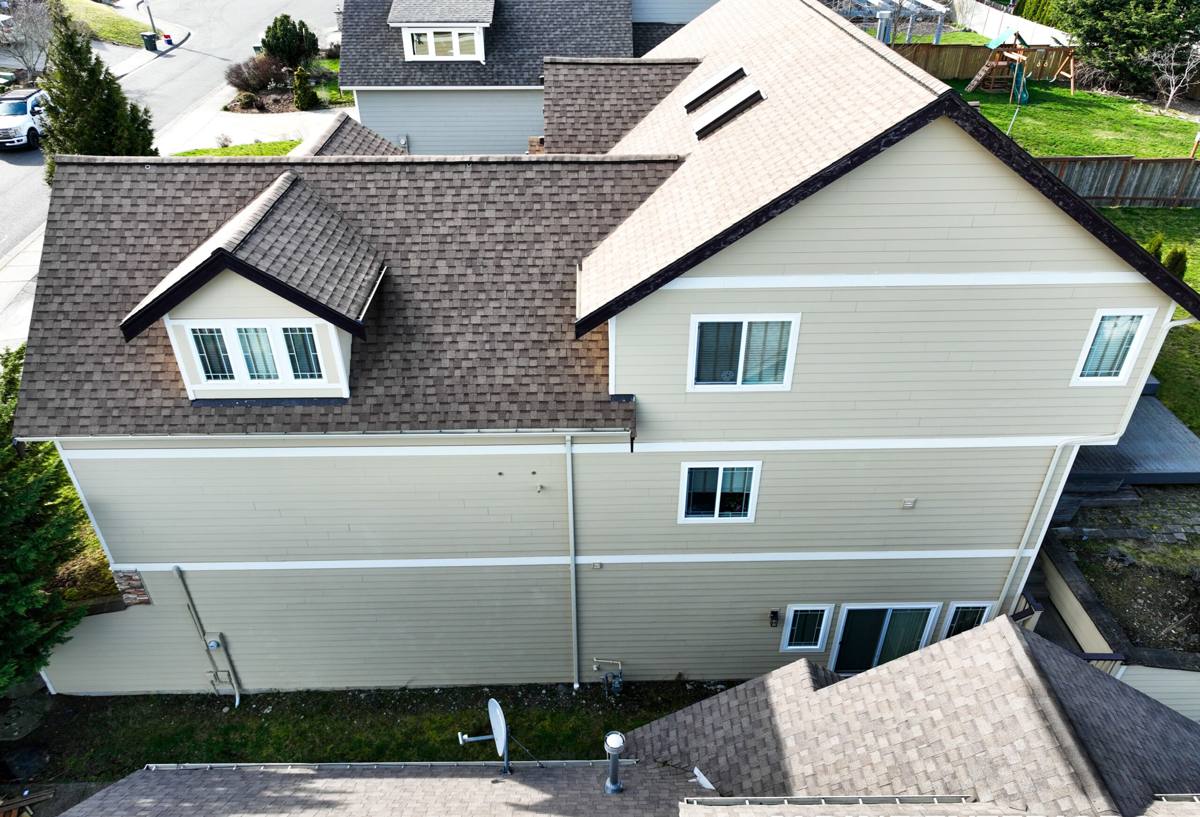
What Local Conditions Actually Do to a Shingle Roof
Wind
Pinellas County sits in a high-wind zone, and Florida Building Code reflects that with specific requirements for shingle attachment, nailing patterns, and starter strip installation. A roof that isn't fastened to code doesn't just risk full failure in a hurricane — it's also more likely to lose individual shingles or tabs in the kind of routine 40-50 mph gusts that come through with a strong summer storm.
UV Exposure
Florida gets more direct sun, more days a year, than almost anywhere else in the country. UV breaks down the asphalt and oils in a shingle over time, which is why granule loss and brittleness tend to show up faster here than in northern climates. Shingle quality and proper attic ventilation both play a direct role in how well a roof resists this.
Wind-Driven Rain
It's rarely straight-down rain that causes leaks here — it's rain pushed sideways under wind pressure, which finds its way through undersized flashing, poorly lapped underlayment, or nail heads that were never properly sealed. Correct installation at every edge, valley, and penetration matters more in Clearwater than it does somewhere with calmer weather.
Salt Air
Proximity to Clearwater Harbor and the Gulf means airborne salt settles on roofing materials and accelerates corrosion of exposed metal — flashing, fasteners, vent stacks, and drip edge. Material choice and metal gauge matter more for homes in Sunset Point than for roofs further inland.
What a Correct Installation Looks Like Here
A shingle roof is a system, not just a layer of shingles nailed to plywood. Skipping or shortcutting any one component undermines the rest. For Sunset Point homes, we treat the following as non-negotiable:
- Full deck inspection and repair of any soft, delaminated, or water-damaged sheathing before anything new goes down
- Self-adhering waterproof underlayment at eaves, valleys, and any low-slope transitions, with synthetic underlayment across the rest of the field
- Corrosion-resistant drip edge and flashing rated for coastal exposure, not standard-grade metal
- Nailing pattern and fastener count that meets Florida's high-wind code for our specific wind zone, not the manufacturer's minimum for calmer climates
- Proper step and counter-flashing at every wall intersection, chimney, and roof-to-roof transition
- Balanced intake and exhaust ventilation so the attic isn't trapping heat and moisture under the new roof
- Manufacturer-approved starter strip and hip/ridge shingles installed to spec, not cut from field shingles
None of this is exotic. It's what the product manufacturers and the building code actually call for. The difference between a roof that performs and one that fails early usually comes down to whether these steps were followed carefully or rushed.
Choosing the Right Shingle for This Environment
Not every asphalt shingle product is a good fit for a coastal, high-UV, high-wind location. We steer homeowners toward shingles with a documented high-wind rating and algae resistance built into the granules, since airborne salt and humidity both encourage the dark streaking that shows up on lower-grade products over time. Below is a general comparison of the shingle classes we typically discuss with Sunset Point homeowners.
| Shingle Type | Typical Wind Rating | Best Fit For | Tradeoffs |
|---|---|---|---|
| 3-tab (economy) | Lower wind rating, varies by product | Budget-conscious rehabs, secondary structures | Shorter lifespan in coastal UV and wind exposure |
| Architectural/laminate | Higher wind rating with proper fastening | Most primary Sunset Point homes | Higher material cost, but better durability and appearance |
| Impact-resistant architectural | Highest wind and impact rating | Homes seeking possible insurance premium credits | Highest upfront material cost |
We don't push a single brand as "the only option." What we do is walk you through wind rating, warranty structure, and algae-resistance for the specific products available at the time of your estimate, and explain the honest tradeoffs so you're deciding with real information instead of a sales pitch.
A Note on Impact-Resistant Shingles
Some homeowners in wind-exposed, coastal-adjacent neighborhoods like Sunset Point ask about impact-rated shingles specifically because some insurers offer premium discounts for them. Whether that discount offsets the added material cost depends on your policy and carrier — that's a conversation worth having with your insurance agent alongside your roofing estimate.
Ventilation and Moisture: The Part You Don't See
A shingle roof can be installed perfectly on the surface and still fail early if the attic underneath isn't ventilating correctly. Trapped heat cooks the underside of the deck and shingles from below, while trapped moisture from humid Gulf-coast air condenses and encourages wood rot and mold. Before we replace or repair a roof, we check existing intake (soffit) and exhaust (ridge or box vents) and correct any imbalance. This isn't an upsell — it's the difference between a shingle warranty that holds up and one that gets voided by a manufacturer inspection down the road.
Signs Your Sunset Point Roof May Need Attention
Because of the sun and salt exposure here, shingle roofs can show wear earlier than the "20-year" rating on the package might suggest. Worth checking for, or having a professional check for:
- Granules collecting in gutters or at downspout outlets
- Shingles that look curled, cupped, or are lifting at the edges
- Dark streaking or discoloration across large sections of the roof
- Missing or visibly cracked shingles after a windy stretch of weather
- Soft spots underfoot in the attic decking, or daylight visible through the roof deck
- Water stains on interior ceilings, especially near chimneys, skylights, or wall intersections
- Rusting or lifting flashing around vents, chimneys, or roof-to-wall transitions
Any one of these on its own isn't necessarily an emergency, but catching them early is almost always cheaper than waiting for an interior leak to show up.
Our Process, Start to Finish
- On-site inspection — we look at the deck, existing ventilation, flashing condition, and overall roof geometry, not just the shingles on top.
- Honest scope and estimate — repair versus full replacement, explained plainly, with the reasoning behind the recommendation.
- Permitting — pulled through the appropriate local jurisdiction before work begins, as required for roofing work in Pinellas County.
- Tear-off and deck assessment — old material removed, deck inspected and repaired as needed before anything new goes down.
- Installation — underlayment, flashing, ventilation, and shingles installed to code and manufacturer spec.
- Final walkthrough and cleanup — site cleared, magnetic sweep for stray fasteners, and a final review with the homeowner.
Why Local Experience in Sunset Point Matters
Roofing crews who regularly work in Clearwater and the surrounding Pinellas County coastal neighborhoods understand the wind zone requirements, the local permitting process, and how salt air and humidity actually behave on a roof over time — not just in a manufacturer's general climate chart. That local familiarity shows up in small decisions: which fastener grade to spec for a home three streets from the water, how to sequence work around Florida's afternoon storm patterns, and which flashing details tend to fail first on homes in this area. It's the difference between a roof that's technically installed correctly and one that's installed correctly for Sunset Point specifically.
What Influences Your Project's Cost
| Factor | Why It Matters |
|---|---|
| Roof size and pitch | More area and steeper slopes mean more material and labor time |
| Deck condition | Rotted or delaminated sheathing found during tear-off adds repair cost |
| Shingle class chosen | Economy, architectural, and impact-rated products differ significantly in material price |
| Number of penetrations | Chimneys, skylights, and multiple vent stacks each require additional flashing work |
| Existing ventilation | Adding or correcting intake/exhaust vents adds scope but protects the new roof |
| Layers of old roofing | Removing multiple existing layers takes more labor than a single-layer tear-off |
We don't quote a number without seeing the roof — anyone who does is guessing. What we can tell you upfront is that every one of these factors gets discussed openly during your estimate, so there are no surprises once work starts.
Ready to Talk About Your Roof?
If you're in Sunset Point and dealing with an aging shingle roof, storm damage, or just want an honest read on how much life is left in what you've got, we're glad to take a look. Reach out for a free, no-pressure estimate using the form below — we'll walk the roof, explain what we find, and give you a straight answer either way.