 Clearwater Roofing
 Belleair Bluffs Decks Face a Different Set of Problems
Belleair Bluffs sits in one of the more exposed pockets of Pinellas County — close enough to the Intracoastal Waterway and the Gulf that salt-laden air moves through the neighborhood daily, not just during storms. Add in Florida's year-round UV load, long stretches of high humidity, and the wind-driven rain that comes with almost every summer thunderstorm and named storm, and you have a climate that is genuinely harder on outdoor structures than most of the country ever deals with. A deck built with the same materials and details you'd use in Ohio or Georgia will show it within a couple of seasons here — fasteners bleed rust, wood grays and splits, and fastener heads back out as the substrate swells and shrinks with humidity swings.
None of that means a custom deck is a bad investment in this area — it just means the build has to account for the environment from the design stage forward, not patch around it later with extra coats of sealer.
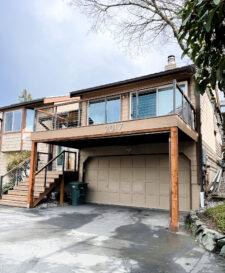
What a Coastal Pinellas Deck Actually Needs to Get Right
Wind Resistance, Not Just Weight Capacity
Most homeowners think about deck strength in terms of how much weight it can hold — furniture, a grill, a crowd of people. In this part of Florida, uplift matters just as much as load. Hurricane-force wind gusts don't just push down on a structure, they pull up on it, and that changes how ledger boards, joist hangers, and railing posts need to be fastened. A deck that's structurally sound for everyday use can still fail in a wind event if the attachment hardware wasn't sized and spaced for uplift.
Moisture Management at Every Connection
Wind-driven rain finds its way into places a light afternoon shower never would. Every point where the deck meets the house — the ledger board, any stairs landing near siding, post bases set in or near soil that stays damp — needs proper flashing and drainage detailing. Skipping this is one of the most common ways a deck causes hidden rot damage to the house itself, not just the deck structure.
UV and Heat, Not Just Rain
It's easy to plan for rain and forget that Florida sun is doing damage on the clear days too. UV breaks down the lignin in wood fibers, fades composite decking color over time, and can make dark-colored decking surfaces genuinely uncomfortable to walk on barefoot by midday. Material choice and finish selection both need to account for sun exposure specific to the deck's orientation on the lot, not just a generic recommendation.
Choosing the Right Decking Material for This Climate
There's no single "best" decking material — the right choice depends on budget, how much upkeep you're willing to do, and how close the lot sits to the water. Here's an honest comparison of the main options we work with for coastal Pinellas homes:
| Material | Upfront Cost | Maintenance | Coastal Durability |
|---|---|---|---|
| Pressure-treated pine | Lowest | Annual sealing/staining recommended | Good if maintained; vulnerable if neglected |
| Composite decking | Mid to high | Occasional washing, no staining | Very good; color fade varies by brand and pigment |
| PVC/cellular decking | High | Lowest — no sealing ever needed | Excellent moisture and salt resistance |
| Tropical hardwood (e.g., ipe) | High | Periodic oiling to maintain color | Excellent naturally, but installation is unforgiving |
For homeowners who want the lowest long-term maintenance and don't mind the higher upfront cost, PVC and quality composite boards tend to be the better fit this close to the water. For homeowners comfortable with annual upkeep, pressure-treated wood still performs well and costs less to start — the tradeoff is discipline about resealing before the wood dries out and checks.
Framing, Fasteners, and Hardware: Where Coastal Decks Actually Fail
The decking surface is the part everyone sees, but the framing and hardware underneath are what determine whether a deck lasts eight years or twenty-five. This is also where corner-cutting is hardest to spot after the fact — a deck can look great and still be fastened with the wrong hardware.
- Stainless steel or heavy hot-dip galvanized fasteners, matched to the decking material to avoid galvanic corrosion between dissimilar metals
- Joist tape or a flashing membrane on top of framing lumber to keep standing water out of end grain and screw holes
- Structural screws or approved hardware at ledger and post connections, sized for uplift resistance, not just standard deck screws
- Post bases that keep wood off grade and out of standing water, especially on lots with poor drainage
- Proper joist spacing for the specific decking product, since composite and PVC boards often require tighter spans than lumber
None of this is visible once the deck is finished, which is exactly why it matters who builds it. A deck that looks identical from the surface can have a completely different service life depending on what's under the boards.
Permitting and Code Requirements
Decks attached to a home in Belleair Bluffs and the surrounding Pinellas County jurisdictions generally require a building permit, and inspectors will look closely at ledger attachment, footing depth and size, and railing height and baluster spacing. Florida's building code also factors in wind exposure for structural attachment, which is one more reason a generic national deck plan doesn't always transfer directly to a coastal Florida lot.
Skipping the permit process might save time upfront, but it creates real problems later — unpermitted structural work can complicate a home sale, cause issues with insurance claims after storm damage, and in some cases require a deck to be modified or removed. Part of what a local crew provides is knowing what the inspector in this jurisdiction will want to see before the framing is closed in, so there aren't surprises at inspection.
Design Considerations for Water-Adjacent Lots
Elevation and Drainage
Many lots in and around Belleair Bluffs sit close to sea level, and some homes have decks that need to clear flood elevation requirements or tie into an existing seawall or bulkhead. Getting the deck height, drainage slope, and post footing design right on these lots takes more planning than a standard backyard deck on higher, well-drained ground.
Railings and Guards
Any elevated deck needs code-compliant railing height and baluster spacing, and near open water that guardrail also has to handle wind loading, not just lean-on-it loading from people. Cable rail and glass panel systems look great for water views but need hardware rated for the exposure — not every railing product sold as "coastal" actually performs that way in salt air over years, not months.
Stairs and Access Points
Stair stringers and landings near grade see more moisture exposure than the main deck surface, since they're closer to irrigation overspray, splashback, and standing water after heavy rain. These areas often need slightly different material or fastening choices than the rest of the structure.
How Our Process Works
Building a deck that holds up in this environment starts before the first board is cut.
- Site visit and assessment — we look at sun exposure, drainage, proximity to water, and how the deck will attach to your home before recommending materials.
- Design and material selection — we walk through the tradeoffs in the table above based on your budget and how much maintenance you actually want to do.
- Permitting — we prepare the structural details the local building department needs and handle the permit application and inspection scheduling.
- Framing and flashing — the structural work that determines the deck's real lifespan, done to code minimums or better, not code minimums as a ceiling.
- Decking, railing, and finish work — the visible layer, installed to the manufacturer's coastal exposure specifications.
- Final walkthrough — we review maintenance expectations for the specific material you chose so there are no surprises a year in.
Maintenance Checklist for Homeowners
Whatever material you choose, a small amount of regular attention goes a long way in this climate:
- Rinse salt residue and pollen film off the deck surface every few weeks, especially after dry windy stretches
- Inspect fastener heads and hardware once or twice a year for rust bleed or backing out
- Reseal or restain pressure-treated wood before it visibly grays and dries out, not after
- Keep gutters and downspouts clear so runoff isn't dumping extra water onto deck framing or footings
- Check railing posts and stair stringers for movement after any significant storm
- Trim back landscaping that holds moisture against framing or footings
Why Hiring a Crew That Already Works This Area Matters
A deck builder who mostly works inland doesn't run into salt air corrosion, water-adjacent elevation questions, or Pinellas County's coastal wind-attachment expectations often enough to have strong opinions about them. A crew that regularly works Belleair Bluffs and the surrounding Clearwater-area communities has already seen which hardware holds up, which decking colors handle the sun without chalking, and what the local building department wants documented before it will sign off on an inspection. That familiarity shows up as fewer change orders, fewer inspection delays, and a deck that's built for the lot it's actually sitting on.
If you're weighing options for a custom deck in Belleair Bluffs, we're happy to walk the property, talk through material tradeoffs honestly, and give you a clear, no-pressure estimate — just fill out the form below to get started.