 Clearwater Roofing
 Why Belleair Siding Takes a Different Kind of Beating
Belleair sits close to the water in Pinellas County, and that proximity to the Intracoastal and the Gulf shapes what happens to a home's exterior over time. Salt-laden air drifts inland on the breeze, humidity stays high most of the year, and the same sun that draws people to this stretch of Florida coastline is also quietly breaking down paint, caulk, and siding surfaces year-round. Add in wind-driven rain and the occasional hurricane-force gusts that come with living near the Gulf, and siding here works harder than siding almost anywhere inland.
Most of what we repair on Belleair homes isn't dramatic storm damage — it's the slow accumulation of small failures: a seam that opened up a couple of summers ago, a corner post that's been quietly absorbing water behind the paint, fasteners that have started to corrode. By the time a homeowner notices a visible problem, there's often more going on behind the surface than the crack or gap suggests.
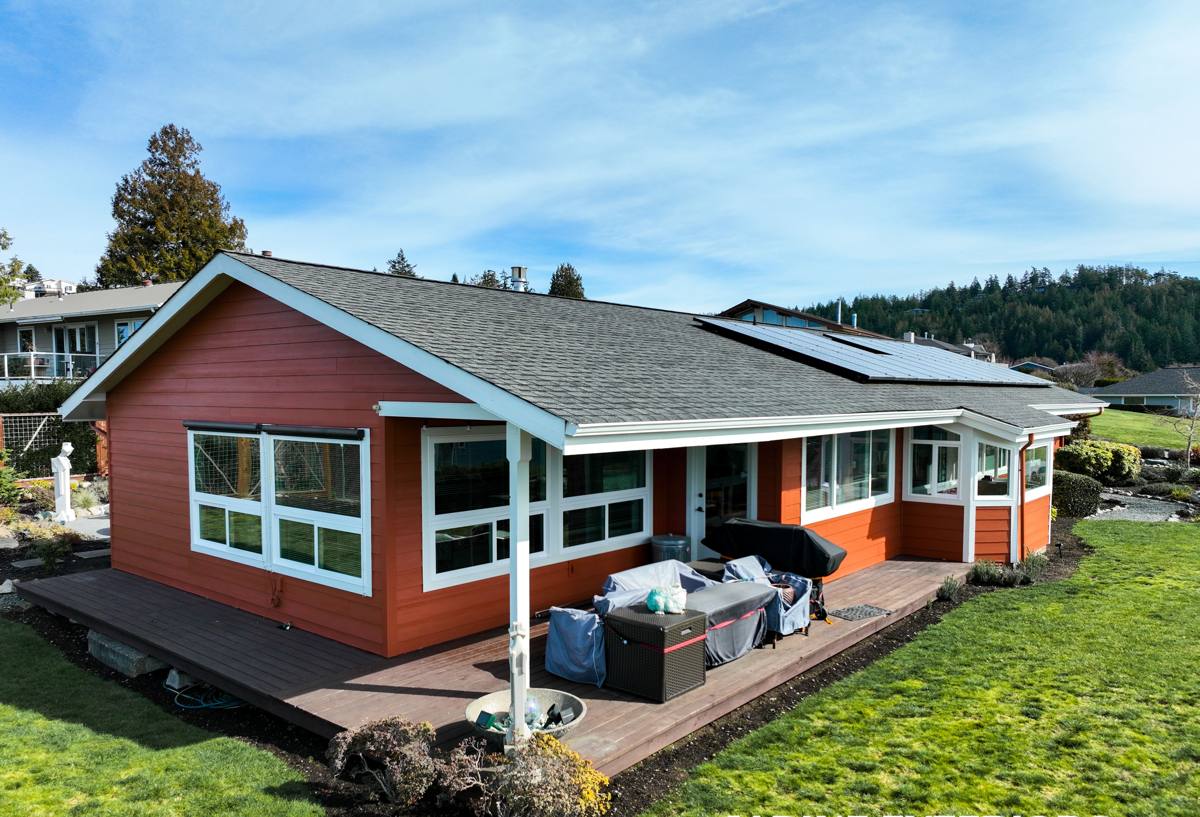
Common Siding Damage We See on Belleair Homes
Storm and Wind Damage
Wind-driven rain during tropical storms and hurricane season doesn't just soak siding from the front — it drives moisture up and under panels, around trim, and into any gap that's opened over time. Loose or lifted panels, cracked corner boards, and pulled or bent fasteners are common after a season of strong wind events, even on homes that never took a direct hit.
Moisture Intrusion and Hidden Rot
This is the damage that worries us most, because homeowners usually can't see it coming. Once water finds a way behind siding — through a failed seam, a poorly sealed penetration, or a gap where trim meets a window or door — it can sit against the sheathing and framing for months before anything shows on the surface. In a humid coastal climate like Clearwater's, that moisture doesn't dry out on its own, and rot can spread well past the original point of entry.
Sun Fading and Surface Breakdown
Florida's UV exposure is intense and constant, not seasonal. Paint films chalk and fade, caulk joints dry out and crack, and lower-grade siding materials can lose their surface integrity years before they fail structurally. On homes with additions or past repairs, sun fading is often what makes color and texture mismatches most obvious.
Salt Air and Fastener Corrosion
Homes closer to the water deal with an added factor: salt in the air accelerates corrosion of fasteners, flashing, and any exposed metal trim. Rusted or failing fasteners are a common reason siding panels work loose long before the siding material itself is actually worn out — the fix is often about the hardware as much as the panel.
What a Correct Siding Repair Actually Involves
A quality repair isn't just patching what's visible. It starts with figuring out why the damage happened in the first place — otherwise the same failure shows up again in a year or two, usually worse.
Diagnosing the Real Problem
We look past the obvious crack or gap to trace the actual path water or wind took to cause it. That might mean checking flashing above a window, examining a seam that's been caulked over multiple times without ever being properly repaired, or tracing a stain back to its real source instead of just repainting over it.
Checking What's Behind the Siding
Any time there's evidence of moisture intrusion, we check the sheathing and framing underneath before closing anything back up. Repairing the visible siding over hidden rot doesn't solve the problem — it just hides it again until it's bigger and more expensive to address.
Matching Existing Material
Repairs should blend in, not stand out. That means matching profile, reveal, and finish as closely as possible, and being upfront with the homeowner when an exact match isn't realistic — for example, on older siding that's faded unevenly or uses a discontinued profile.
Sealing and Flashing Done Right
Most siding failures near the coast trace back to a detail, not the material itself: missing flashing, a joint that was caulked instead of properly lapped, or a fastener pattern that didn't account for wind uplift. Correct repair means fixing those details, not just covering them back up.
Repair or Replace? How We Help You Decide
Not every damaged section needs full replacement, and not every homeowner needs to hear that more siding work is coming. We assess honestly and explain the reasoning either way, before any work starts.
| Factor | Repair Often Makes Sense | Replacement Usually Makes Sense |
|---|---|---|
| Extent of damage | Isolated to one or two areas | Spread across multiple elevations |
| Moisture behind siding | None found on inspection | Rot found in sheathing or framing |
| Age of existing siding | Well within its service life | Nearing or past expected lifespan |
| Material match | Close match available | Discontinued or badly faded overall |
| Underlying material | Sound fiber cement or comparable product | Deteriorated or failure-prone material |
When a home's existing siding is a material we don't install ourselves, or when damage is spread widely enough that patch repairs won't hold up through another storm season, we'll say so plainly and walk through what replacing it with James Hardie fiber cement siding would look like, including realistic timelines and honest cost ranges. We won't push a replacement when a targeted repair will genuinely do the job.
Our Siding Repair Process in Belleair
We keep the process straightforward, because homeowners deserve to know what's happening to their house and why.
- Inspection. We examine the damaged area and the surrounding siding, checking for signs of moisture behind the surface, not just what's visible from the ground.
- Assessment and estimate. We explain what we found, what likely caused it, and give an honest recommendation and price range before any work begins.
- Repair work. We remove and replace only what actually needs it, address the underlying cause — flashing, sealant, fasteners — and match material and finish as closely as possible.
- Final walkthrough. We review the repair with the homeowner, confirm it addresses the original problem, and flag anything nearby that's worth watching.
Why We Recommend James Hardie When Replacement Is the Right Call
When a repair isn't enough and full replacement is the honest answer, James Hardie fiber cement siding is the only product we install. It isn't the only siding on the market, but it's the one we've standardized on because it holds up to Gulf Coast conditions — humidity, intense UV, wind-driven rain, and salt air — better than the alternatives we've chosen not to carry. Hardie's HZ5 product line is engineered specifically for humid climates like ours, its ColorPlus factory finish resists the fading that field-applied paint struggles with under near-constant Florida sun, and the material itself is non-combustible. We'd rather tell a Belleair homeowner honestly that full replacement is the right move and do it once, correctly, than keep re-patching a material that's fighting this climate every single year.
Why a Crew That Already Works in Belleair Matters
Siding repair in a coastal Pinellas County community isn't quite the same job as siding repair inland. A crew that regularly works in Belleair and the surrounding Clearwater area already understands how quickly moisture problems develop in this humidity, what salt-driven corrosion does to fasteners and trim near the water, and how the intense, near-constant UV here shortens the useful life of a low-quality repair. That local experience shows up in small decisions — which sealants actually hold up on the coast, how tight a fastener pattern needs to be for wind resistance, when a partial repair is genuinely enough versus when it's a stopgap — that a crew unfamiliar with this climate is more likely to get wrong.
It also matters on the practical side: knowing local permitting expectations, being reachable for a follow-up visit if something needs a second look, and standing behind the work because we're not driving in from three counties away.
Signs Your Belleair Home Needs a Siding Inspection
- Visible cracks, gaps, or warping in one or more siding panels
- Soft or spongy spots when you press on the siding near the bottom edge
- Paint that's peeling, bubbling, or fading unevenly in specific spots
- Staining or discoloration that keeps returning shortly after cleaning
- Rust streaks running from fasteners or metal trim
- Gaps opening up around windows, doors, or corner trim
- A musty smell or new staining on an interior wall backing an exterior wall
If any of these sound familiar, it's worth having someone take a closer look before the next storm season adds to the problem — small issues caught early are almost always cheaper and simpler to fix than the same issue a year later.
If your Belleair home has siding damage you've been putting off, we're happy to take a look. The estimate is free, there's no pressure to book anything, and you'll get a straight answer about whether you're looking at a repair or something bigger.