 Clearwater Roofing
 Clearwater Beach Puts Real Stress on a House's Exterior
Clearwater Beach sits on a barrier island, which means every home here takes on weather that inland Pinellas County properties simply don't see as often or as intensely. Salt-laden air blows in off the Gulf of Mexico around the clock, the sun beats down at near-tropical intensity most of the year, and when storms roll through, wind-driven rain gets forced sideways into every seam, joint, and fastener point on a home's exterior. Add in the periodic threat of hurricane-force wind gusts, and you have a combination of conditions that ages cladding materials faster than almost anywhere else in the state.
That's not a scare tactic — it's just physics. Salt is corrosive, UV breaks down polymers and pigments, and wind-driven moisture finds any gap in a weather barrier that isn't installed correctly. Siding on Clearwater Beach isn't just a cosmetic layer; it's the first and most exposed line of defense between that environment and the structure underneath it. Get the material or the installation wrong here, and problems show up years earlier than they would on a home a few miles inland.
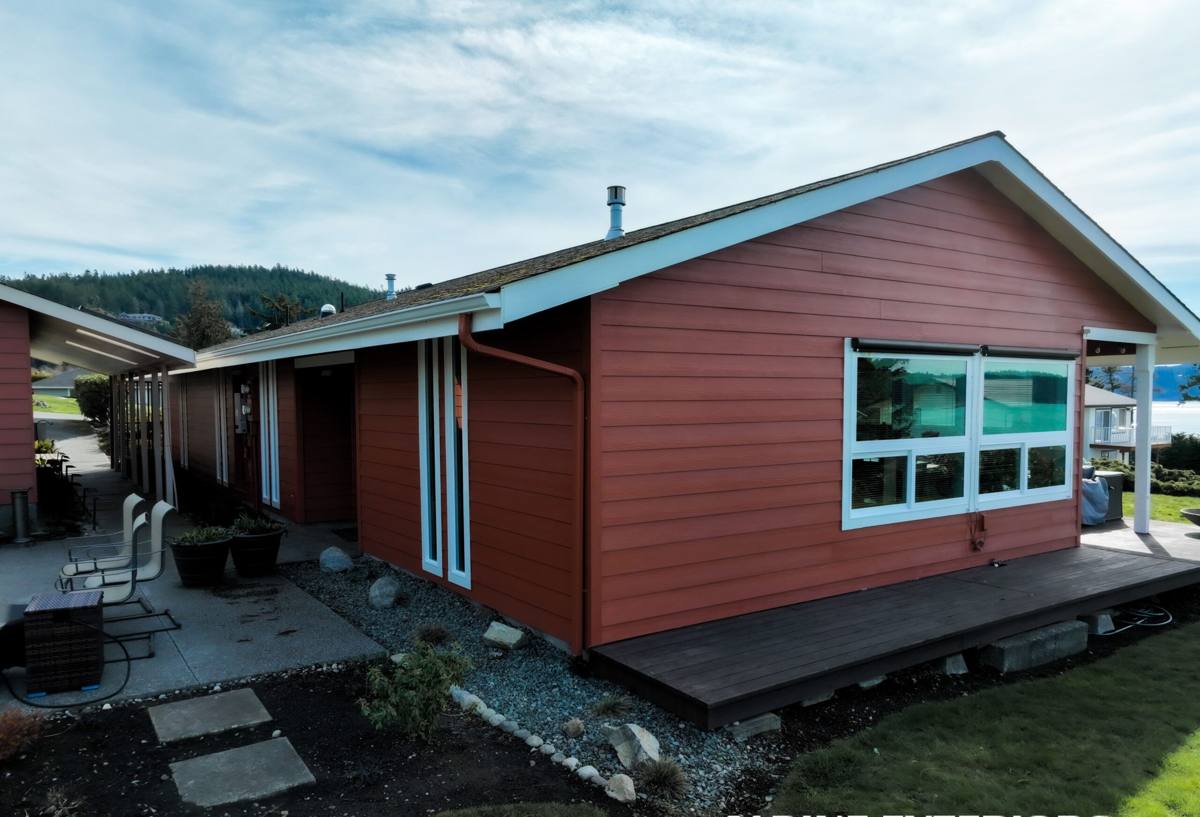
What Siding Has to Handle on the Beach
Salt Air and Humidity
Airborne salt settles on every exterior surface and accelerates corrosion of fasteners, trim, and any material that isn't formulated to resist it. Combined with Florida's high year-round humidity, siding on the beach also has to manage constant moisture exposure without trapping water behind the cladding, where it can rot sheathing or frame structure that's hidden from view.
Intense, Near-Constant UV
Clearwater gets strong sun exposure most days of the year. Paint and coatings that aren't engineered for that level of UV load will chalk, fade, and break down well ahead of schedule, especially on south- and west-facing elevations that take direct afternoon sun.
Wind-Driven Rain and Storm Wind Loads
During tropical storms and hurricanes, rain doesn't just fall — it's driven horizontally into wall assemblies under significant pressure. At the same time, siding and its fastening system have to resist uplift and lateral wind loads that inland homes rarely experience. Both of these are installation issues as much as they are material issues: even a good product performs poorly if it isn't fastened, flashed, and sealed to handle those forces.
Why We Install Only James Hardie Fiber Cement Siding
We standardized on James Hardie fiber cement for every siding job we do, including here on Clearwater Beach, and we don't install vinyl, LP SmartSide, Cemplank, Allura, or unfinished wood siding. That's a deliberate professional decision, not a sales preference. Fiber cement is non-combustible, dimensionally stable in heat and humidity swings, and resistant to the kind of moisture-driven rot and pest damage that wood-based and engineered-wood products can be more vulnerable to over time in a coastal environment.
James Hardie also makes an HZ5 product line specifically engineered for high-humidity, storm-prone climates like ours — it's formulated and tested for exactly the salt air, moisture cycling, and weather exposure a barrier island home deals with. Combined with the factory-applied ColorPlus finish, which is baked on under controlled conditions rather than field-painted, you get a finish that holds color and resists UV fading and moisture intrusion far better than a site-applied coating. James Hardie backs the product with a strong, transferable warranty when it's installed to their specifications — which is exactly why correct installation matters as much as the material choice itself.
We're not going to tell you competing products are junk. Vinyl, engineered wood, and other fiber cement brands all have legitimate uses. But for the specific combination of salt exposure, UV load, humidity, and wind risk that Clearwater Beach homes face, we've made James Hardie our standard because it's the product we're confident holding up our own workmanship warranty behind.
What a Correct Installation Actually Involves
Substrate and Moisture Barrier Prep
Before a single piece of siding goes up, the wall sheathing needs to be sound and a proper weather-resistive barrier installed and lapped correctly — upper courses over lower courses, seams sealed, and penetrations properly flashed. On a barrier island, this step is non-negotiable; it's the layer that protects the structure if wind-driven rain gets past the cladding.
Fastening and Clearances
James Hardie specifies exact fastener types, spacing, and embedment depth, and those specs get more conservative in high-wind zones. Siding also needs proper clearance from grade, roof lines, and decks to avoid wicking moisture. Skipping or fudging these details is one of the most common ways a fiber cement installation fails early, and it's exactly the kind of shortcut that voids a manufacturer warranty.
Flashing and Sealant Details
Windows, doors, and any wall penetration are where water intrusion problems start. Correct step flashing, head flashing, and compatible sealants at every transition point are what actually keep wind-driven rain out — not caulk alone.
Expansion Gaps and Trim Details
Fiber cement moves slightly with temperature and moisture changes, so panel joints, corners, and trim need the gaps and sealant joints James Hardie's installation guide calls for. Done right, these details are barely noticeable and keep the siding performing as a system, not just a stack of individual boards.
Our Process for a Clearwater Beach Project
- On-site assessment — we walk the home, check existing siding and sheathing condition, and note anything storm or moisture damage related that needs to be addressed before new siding goes on.
- Product and color selection — we help you choose the right Hardie panel or lap profile and ColorPlus finish for your home's style and sun exposure.
- Permitting — siding work on Clearwater Beach falls under Pinellas County and City of Clearwater permitting and wind-load requirements; we handle that paperwork so it's built to code, not just to look right.
- Removal and prep — old siding comes off, sheathing is inspected and repaired as needed, and the weather barrier goes on correctly before any new siding is installed.
- Installation — siding, trim, and flashing go in to James Hardie's fastening and clearance specifications for our wind zone.
- Final walkthrough — we go over the finished job with you before we consider it done.
Cost Factors for a Clearwater Beach Siding Job
Every home is different, so we won't quote a number without seeing the property, but these are the factors that most commonly move the price up or down on a beach-area installation:
| Factor | Why It Matters |
|---|---|
| Home size and wall complexity | More square footage and more corners, gables, and trim details mean more material and labor time. |
| Condition of existing sheathing | Moisture or storm damage found during tear-off can require repair before new siding goes on. |
| Siding profile and finish selected | Lap siding, panel systems, and different ColorPlus finishes carry different material costs. |
| Site access and staging | Barrier island lots, limited driveway space, and elevated homes can affect equipment staging and labor time. |
| Trim, soffit, and fascia scope | Full exterior packages cost more than siding alone but often make sense to do together. |
| Permitting and inspection requirements | Wind-zone compliance documentation adds administrative time but is required for a legal, warrantable installation. |
Signs Your Current Siding Needs Replacing
Coastal exposure tends to bring these issues on faster than homeowners expect. Worth checking for:
- Visible warping, buckling, or gaps between siding boards
- Soft spots or discoloration that suggest moisture behind the siding
- Chalky, faded, or peeling paint that keeps needing repainting
- Cracked or crumbling caulk joints around windows, doors, and trim
- Visible rust streaking from fasteners or trim hardware
- Rising energy bills that may point to a failing wall assembly
- Siding damage after the last named storm that was never fully repaired
If any of these sound familiar, it's worth having someone take a real look rather than waiting for a small problem to become a structural one.
Why Hiring a Crew That Already Works Clearwater Beach Matters
A contractor who works this specific area regularly already understands the practical realities of the job — how Pinellas County and City of Clearwater permitting works for barrier island properties, what wind-zone fastening schedules apply, and how to plan around tight lot access and limited staging space that's common on the beach. That experience shows up in fewer surprises during the project and a finished installation that's actually built for what this location throws at it, not a generic install done the same way it would be twenty miles inland.
It also matters after the job is done. A crew that's local and familiar with the area is easier to reach if a warranty question comes up or a storm passes through and you want a damage check. That kind of accountability is hard to get from a contractor working outside their usual territory.
If your Clearwater Beach home needs new siding or you're not sure whether your current siding is holding up the way it should, we're happy to take a look and give you a free, no-pressure estimate using the form below.