 Clearwater Roofing
 Clearwater Beach Sits at the Front Line of Florida's Weather
Homes on Clearwater Beach take a different kind of beating than homes even a few miles inland. Sitting directly on the Gulf, the barrier island gets the full effect of salt-laden air, near-constant UV exposure, wind-driven rain, and the periodic threat of hurricane-force winds coming straight off the water. Siding here isn't just a cosmetic surface — it's the primary barrier protecting the wall structure from water intrusion, and it ages faster than siding does anywhere else in Pinellas County.
Salt air is corrosive to fasteners, flashing, and metal trim in ways inland homeowners rarely have to think about. Constant sun bakes caulk joints and paint finishes until they crack and lose their seal years before a manufacturer's stated lifespan would suggest. And when wind-driven rain hits a home sideways during a squall or a tropical system, it finds every gap, seam, and loose panel edge that a calmer climate would never expose. Repairing siding correctly on Clearwater Beach means accounting for all of this, not just patching what's visibly broken.
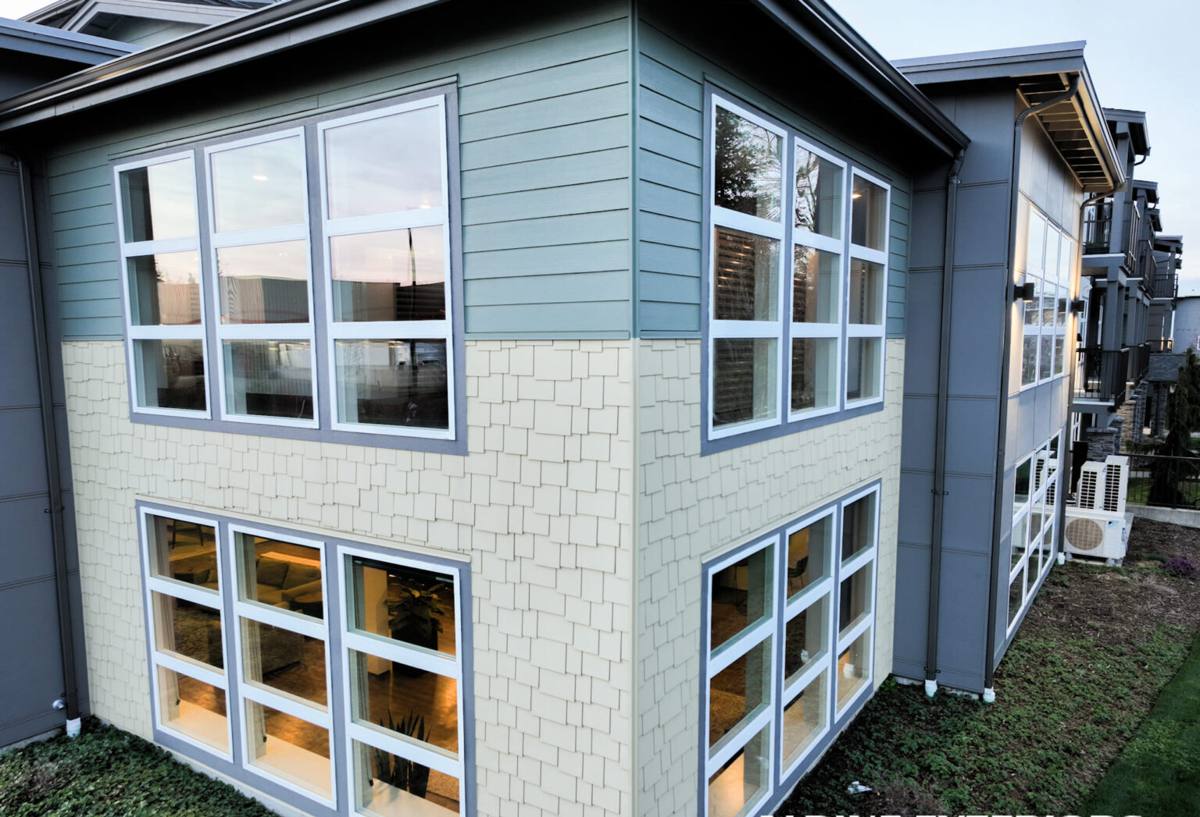
Signs Your Siding Needs Repair, Not Just a Fresh Coat of Paint
A lot of siding problems on the beach get mistaken for simple cosmetic wear. Paint or caulk touch-ups can mask a problem for a season, but they don't fix what's actually happening at the wall. Here's what we look for, and what it usually means:
- Soft or spongy panels when pressed — usually means moisture has gotten behind the siding and is affecting the substrate or the wall sheathing behind it.
- Dark staining or streaking at seams, corners, or under windows — a sign water is tracking somewhere it shouldn't and drying in place repeatedly.
- Panels pulling away from the wall or visible gaps at laps — often fastener failure, corroded nails, or wind stress that's loosened the attachment.
- Cracked, chalky, or missing caulk at trim boards, window casings, and butt joints — the UV here breaks down sealants faster than in shadier, inland locations.
- Corner trim or fascia damage — these edges take the brunt of wind-driven rain and are usually the first place damage shows up.
- Buckling or waviness across a wall plane — can indicate moisture-related expansion or a fastening problem, not just a cosmetic issue.
Any one of these is worth a real inspection. On a barrier island, small issues don't stay small for long — they get worse every time salt air and rain get another pass at an open seam.
What a Correct Siding Repair Actually Involves
A repair that only addresses what's visible from the ground is a repair that's likely to fail again. Doing it right on Clearwater Beach means looking past the surface:
Checking What's Behind the Panel
Before we replace or patch anything, we check for moisture behind the affected section. If water has been getting behind the siding, the repair has to address the water-resistive barrier and flashing detail, not just the visible plank. Patching over a moisture problem without fixing the path water is taking just delays the next repair call.
Matching Material and Profile
Siding repairs stand out badly when the replacement piece doesn't match the existing plank width, exposure, or texture. We match to the original James Hardie profile and color whenever possible so the repair blends in rather than becoming a visible patch.
Fasteners and Hardware Built for Salt Air
Standard fasteners corrode fast this close to the water. Correct coastal repair work uses fasteners and flashing hardware rated for the exposure, not whatever happens to be on the truck. This is one of the most common shortcuts we see in prior repair work when we're called out to fix something that failed again.
Sealant That Can Actually Move
Florida's heat cycles cause real expansion and contraction. We use sealants rated for exterior movement and UV exposure at butt joints and trim intersections — not a generic caulk that will crack out again within a year or two.
Repair or Replace? How We Make the Call
Not every damaged section needs to become a full re-side. But on a barrier island, the math shifts sooner than it would inland, because damage that looks isolated is often a sign of a wider moisture problem working its way across a wall.
| Factor | Usually Points to Repair | Usually Points to Replacement |
|---|---|---|
| Extent of damage | Isolated to one or two panels/sections | Spread across multiple walls or elevations |
| Moisture behind siding | Localized, source identified and fixable | Widespread moisture affecting sheathing |
| Age of existing siding | Newer installation, otherwise sound | Siding near or past its expected service life |
| Material match available | Profile and color still obtainable | Discontinued profile, obvious patch mismatch |
| Underlying cause | One-time storm or impact damage | Chronic exposure issue (wind, sun, salt) affecting whole home |
We'll always tell you honestly which side of that line your home falls on. If a repair is the right call, we do the repair. We don't push a full replacement on a homeowner who just needs a section fixed.
Why Our Repair Work Is James Hardie Fiber Cement Only
We install and repair with James Hardie fiber cement exclusively — we don't work with vinyl, LP SmartSide, cedar, or primed spruce siding. That's not a marketing position, it's a standard we hold because of what we've seen this climate do to alternative materials over time.
Vinyl softens and can distort in intense, sustained heat, and its seams and clips are a common entry point for wind-driven rain when panels flex in high wind. Wood-based products, including engineered wood siding, are vulnerable to moisture absorption at cut edges and joints, and in a humid, salt-air environment that moisture exposure adds up faster than it would in a drier climate. None of these are automatically bad products everywhere — they're simply trade-offs we're not willing to build our repair and installation work around on a barrier island where the environment is actively working against the material every day.
James Hardie fiber cement is non-combustible, holds its factory-applied ColorPlus finish far longer under constant UV than field-applied paint typically does, and Hardie's HZ5 product line is engineered specifically for hot, humid climates like ours. When a repair calls for new material, this is what we use — and it's backed by a manufacturer warranty that's transferable if you sell the home.
Our Siding Repair Process for Clearwater Beach Homes
- Inspection first. We walk the exterior, check suspect areas by hand, and look behind accessible sections for moisture — not just a visual scan from the driveway.
- Honest assessment. We tell you what we found, what's causing it, and whether it's a repair or something bigger. No inflated scope, no scare tactics.
- Written scope and estimate. You get a clear breakdown of what's being repaired and why before any work starts.
- Material sourcing and color match. We source matching James Hardie profile and ColorPlus color so the repair blends with the rest of the home.
- The repair itself. Damaged sections removed, underlying water-resistive barrier and flashing inspected and corrected as needed, new material installed with coastal-rated fasteners and proper sealant.
- Final walkthrough. We check the finished work with you before we consider the job done, and clean up the site fully.
What's Different About Repair Work on a Barrier Island
Working on Clearwater Beach isn't the same as working a subdivision a few miles east. Access can be tighter, parking and staging space is limited on many beach properties, and homes here fall under wind-borne debris region requirements that inland Pinellas County construction doesn't always carry. Permitting and inspection expectations for exterior work on the island reflect that higher wind exposure, and repairs need to be done in a way that would hold up to the same scrutiny as new construction, not just cosmetically patched.
Salt air also accelerates corrosion on anything metal faster here than almost anywhere else in the county — flashing, fasteners, and trim hardware all need to be spec'd for that exposure, or a repair that looks fine on day one starts failing again within a couple of years.
Why Hiring a Crew That Already Works Clearwater Beach Matters
A contractor who works this island regularly already understands its wind exposure category, its permitting expectations, and the specific ways salt air and sun degrade siding here faster than the manufacturer's general guidance assumes. That familiarity shows up in small but important ways: knowing which fastener and flashing specs actually hold up, recognizing early signs of moisture intrusion before they become a bigger repair, and giving you a straight answer about whether a section needs a repair or the whole wall needs attention.
It also means faster, more informed response when storm damage happens. A crew that's already worked properties on the beach isn't learning the access, the exposure, or the permitting process for the first time on your home.
Questions Worth Asking Before You Hire
- Will you check behind the damaged panels for moisture, or just patch what's visible?
- What fastener and flashing materials do you use for coastal exposure?
- Can you match the existing siding profile and color, or will the repair be visibly different?
- Do you handle the permitting requirements for exterior work on the island?
- What's covered under warranty, and for how long?
Keeping Your Siding in Shape After the Repair
Once a repair is done right, a little routine attention keeps it that way. Rinse salt spray off exterior walls periodically, especially after windy weeks off the Gulf — built-up salt residue accelerates wear on caulk and finishes. Take a look at caulk lines at trim and joints once or twice a year, since Florida's heat and UV cycle will eventually crack even a good sealant job. And after any named storm or significant wind event, a quick visual check for lifted panels, loose trim, or new staining can catch a small problem before the next storm turns it into a bigger one.
If you're noticing any of the signs above, or just want a second opinion on siding that's showing its age, we're happy to take a look. The estimate is free, there's no pressure, and you'll get a straight answer about what your home actually needs.