 Clearwater Roofing
 Why Clearwater Beach Siding Wears Out Faster Than Inland Homes
A home a few blocks from the Gulf lives a harder life than one ten miles inland, even in the same city. Clearwater Beach properties sit directly in the path of salt-laden air, near-constant humidity, and whatever a Gulf storm system decides to send ashore. Siding on these homes isn't just a weather barrier — it's the first line of defense against conditions that most siding products were never designed to handle for the long haul.
Four factors do most of the damage over time:
- Salt air corrosion — airborne salt settles on siding, fasteners, and trim, accelerating rust on exposed metal and breaking down materials that aren't formulated to resist it.
- Year-round UV exposure — Florida's sun is intense in every season, not just summer, which fades color and dries out organic and vinyl materials faster than in most of the country.
- Wind-driven rain — storms here don't just get siding wet, they drive water sideways and upward under laps and around trim, testing every seam and flashing detail.
- Hurricane-force wind loads — even a near-miss storm subjects siding to sustained pressure and gusts that push panels, fasteners, and seams to their limits.
None of this means siding on Clearwater Beach is a losing battle. It means the material choice and the installation details matter more here than almost anywhere else in Pinellas County.
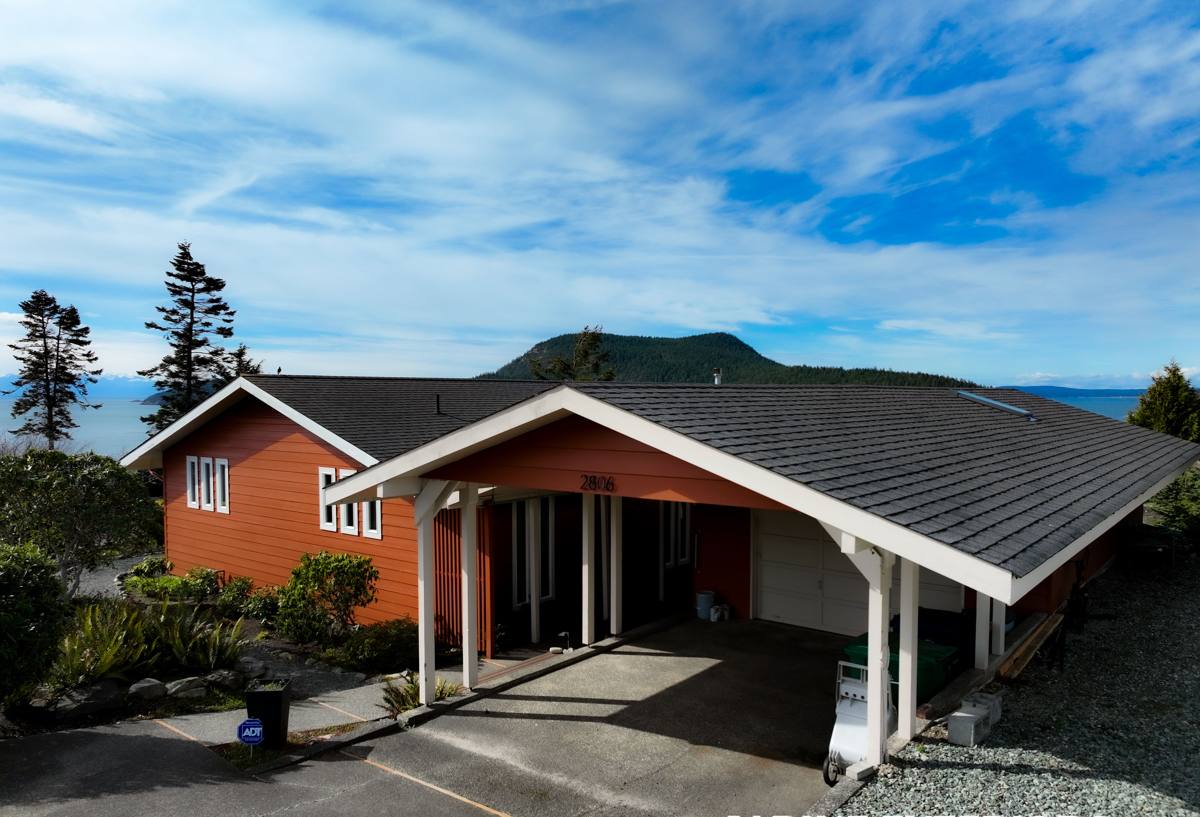
Signs Your Clearwater Beach Home's Siding Needs Replacing
Coastal siding failure is often gradual and easy to miss until it's a real problem. Homeowners near the beach should watch for:
- Soft or spongy spots when you press on the siding, especially near the bottom courses and around windows
- Visible warping, bowing, or panels that no longer sit flat against the wall
- Paint or finish that's chalking, peeling, or fading unevenly, particularly on the sides facing the water
- Cracking or splitting at butt joints and corners, where wind-driven rain concentrates
- Rust streaking from fasteners or trim, a sign moisture is reaching metal components
- Rising energy bills or interior humidity issues, which can point to moisture getting behind the siding
Any one of these can be isolated repair. Several at once, or damage that keeps recurring in the same spots after storms, usually means the siding system itself has reached the end of what it can handle in this environment.
Why We Install Only James Hardie Fiber Cement on Clearwater Beach Homes
We don't offer vinyl, LP SmartSide, primed wood, cedar, or other fiber cement brands. That's a deliberate standard, not a limitation of what we're capable of installing. James Hardie is the one product system we've found holds up consistently to salt air, UV, humidity, and wind without the maintenance headaches or moisture risks we see in alternatives over time.
What Makes It Suited to This Climate
Fiber cement is made from cellulose fiber, sand, and cement — it doesn't rot, it isn't a food source for pests, and it's non-combustible. James Hardie's ColorPlus factory-applied finish is baked on under controlled conditions and backed by its own finish warranty, which matters directly here: painted or stained siding in an intense-UV, salt-air environment is exactly where field-applied finishes fail fastest. A factory finish engineered to resist fading and moisture intrusion is a real advantage, not a marketing point.
Climate-Engineered for the Gulf Coast
James Hardie makes region-specific product formulations rather than one board for the whole country. For Florida and the greater Gulf Coast, that means their HZ5 line, engineered for hot, humid, storm-prone climates — as opposed to the freeze-thaw formulation used farther north. Installing the version actually engineered for our conditions, rather than a generic board, is part of why correct material selection matters as much as correct installation.
Backed by a Real Warranty
James Hardie backs its siding with a transferable limited warranty, which matters for resale on the beach where buyers are often specifically asking about storm and moisture history. A warranty is only as good as the installation behind it, which is why we install to Hardie's published specifications, not shortcuts that would void coverage.
What a Correct Siding Replacement Actually Involves
Siding replacement done right is mostly invisible work — the parts nobody sees are what determine whether the job lasts fifteen years or fifty.
Tear-Off and Substrate Inspection
We remove the existing siding down to the sheathing and inspect for hidden rot, soft spots, or prior water damage before anything new goes up. On coastal homes, this step regularly turns up moisture damage that wasn't visible from the outside — replacing siding over a compromised substrate just locks the problem in.
Weather-Resistive Barrier and Flashing
A correctly installed weather-resistive barrier, along with proper flashing at windows, doors, and every horizontal trim break, is what actually keeps wind-driven rain out. This is the single most common place we see prior installations cut corners, and it's the detail that matters most a few blocks from the Gulf.
Fastening for Wind and Moisture Performance
James Hardie specifies fastener type, spacing, and placement for a reason — get it wrong and you undermine both the wind performance and the warranty. We follow manufacturer fastening schedules rather than generic nail patterns, and we account for the higher wind exposure a beachfront or near-beach property faces compared to an inland home in the same city.
Trim, Caulking, and Finish Details
Corners, butt joints, and trim intersections are where most siding failures start. We finish these details to manufacturer spec so seams stay sealed against the kind of sideways, wind-driven rain that's routine here rather than occasional.
| Material | Salt Air / Moisture Resistance | Wind & Impact Resistance | UV / Fade Resistance | Typical Maintenance |
|---|---|---|---|---|
| James Hardie Fiber Cement | Strong — non-organic core, doesn't rot | Strong when installed to spec | Strong — factory ColorPlus finish | Low — periodic cleaning, no repainting for years |
| Vinyl Siding | Moderate — can warp or become brittle with heat and age | Moderate — prone to cracking or blow-off in high wind | Moderate — color can fade and become chalky over time | Low, but limited repair options once damaged or discontinued |
| Wood / Engineered Wood (e.g., LP SmartSide) | Lower — organic materials are moisture-sensitive | Moderate — depends heavily on installation and sealing | Lower — field-applied finishes fade and need recoating | Higher — regular inspection, caulking, and repainting |
This isn't a claim that other materials can't work anywhere — it's why, specifically for the conditions a block or two from the Gulf, we've standardized on one system we can install correctly and stand behind.
Our Process on Clearwater Beach, Start to Finish
Working this close to the water changes a few things about how a siding job runs, and we plan around them rather than treating a beach property like any other job.
- On-site assessment: we walk the exterior, check current siding condition, and look at exposure — which sides take the most direct wind and salt spray.
- Written estimate and product plan: we specify the Hardie product line, profile, and color, along with the flashing and trim approach for your home's specific exposure.
- Scheduling around weather: Florida's storm season and daily rain patterns mean we plan tear-off and dry-in carefully so your home isn't left exposed longer than necessary.
- Tear-off, inspection, and repair: old siding comes off, substrate gets inspected, and any hidden damage gets addressed before new material goes up.
- Installation to manufacturer spec: barrier, flashing, fastening, and trim work follow James Hardie's published installation requirements.
- Final walkthrough: we go over the finished job with you before calling it done.
What to Ask Before Hiring a Siding Contractor Near the Beach
Coastal siding work punishes bad installation faster than inland work does, so vetting a contractor matters more here. Before you hire anyone:
- Ask if they're licensed and insured in Florida, and ask to see it — don't just take their word for it
- Ask specifically how they handle flashing at windows, doors, and horizontal trim breaks
- Ask what fastening schedule they follow and whether it matches manufacturer specifications
- Ask whether they've worked on homes in your specific area before, since exposure varies block by block near the water
- Ask what warranty applies — both material and workmanship — and get it in writing
- Be cautious of any bid that skips a substrate inspection or doesn't mention a weather-resistive barrier at all
Permitting and Wind Requirements for Pinellas County Coastal Homes
Siding replacement in Pinellas County is subject to Florida's building code requirements for wind resistance, which are more stringent than in much of the country given the state's hurricane exposure. Permitting and inspection requirements apply, and manufacturer-tested fastening and installation methods matter for both code compliance and insurance purposes. We handle the permitting process as part of the job so you're not left figuring out code requirements on your own — and installing to spec matters just as much for passing inspection as it does for the siding actually performing in the next storm.
If your home is scheduled for a wind-mitigation or insurance inspection, documentation of code-compliant siding replacement can also factor into your coverage and premiums, which is one more reason correct installation, not just correct material, is worth insisting on.
Get a Free Estimate for Your Clearwater Beach Home
If your siding is showing wear, or you're planning ahead before the next storm season, we're happy to take a look and give you an honest assessment — no pressure, no obligation. Use the form below to request a free estimate, and we'll walk you through what your home actually needs.