 Clearwater Roofing
 Composite Decking in Coachman Ridge
Coachman Ridge sits inland enough from the Gulf to feel a little separated from the beach crowd, but it's still Pinellas County — which means the same humidity, UV load, and hurricane season that every neighborhood in Clearwater deals with. A deck here has to survive long stretches of full sun, sudden downpours, and the occasional tropical system, all while staying comfortable enough to actually use. Composite decking has become the default choice for homeowners in this area who are tired of refinishing wood every year or replacing boards that cupped and split after a couple of Florida summers.
This page covers what composite decking actually needs to hold up in Coachman Ridge specifically, what a correct installation involves, and why local install experience matters more than most homeowners expect.
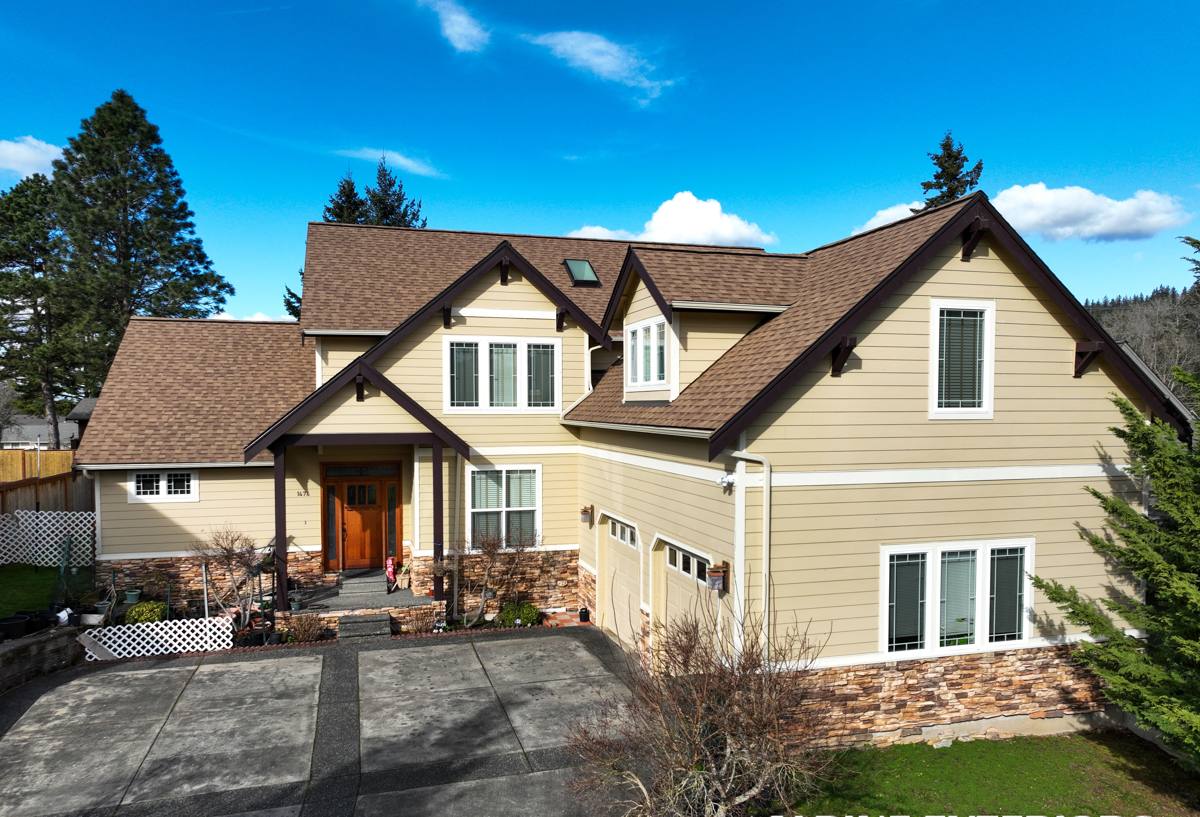
Why Coachman Ridge's Climate Is Hard on Decks
It's easy to assume decking just needs to be "waterproof," but the real stress on a Clearwater deck comes from several things happening at once, year-round:
Constant UV Exposure
Florida gets far more direct sun hours per year than most of the country. On wood decking, UV breaks down lignin in the fibers, which is why untreated or poorly sealed boards gray, roughen, and start splintering within a few seasons. Composite boards with a capped outer layer resist this fading and surface breakdown far longer, though even composite will shift slightly in color over many years of full sun.
Wind-Driven Rain and Standing Moisture
Clearwater's rain doesn't just fall straight down — summer storms and outer bands from tropical systems push rain sideways under railings and into board gaps. Decking that isn't installed with the right spacing and slope for drainage will trap moisture at the joist level, which is where rot, mold, and fastener corrosion actually start, even on a composite surface.
Salt Air, Even Inland
Coachman Ridge isn't beachfront, but Pinellas County as a whole sits in a salt-air environment carried in off the Gulf. Salt-laden air accelerates corrosion on exposed metal fasteners, brackets, and railing hardware faster than it would inland in a non-coastal state. This is one of the most overlooked failure points on otherwise good decks.
Hurricane-Force Wind Loads
Deck attachment to the house — the ledger board connection — and railing post anchoring both need to be built to handle real wind uplift and lateral load, not just carry static weight. A deck that looks solid in calm weather can still have an undersized or corroding ledger connection that becomes a real problem in a named storm.
What a Correct Composite Deck Build Involves
The composite boards themselves get most of the attention, but they're actually the last thing installed. The structure underneath is what determines whether the deck lasts 25 years or needs major repair in 8.
Substructure and Framing
In our climate, we treat the substructure as the priority, not an afterthought:
- Ledger board flashed and fastened correctly where the deck attaches to the house, sealed against wind-driven rain intrusion
- Joists spaced to the composite manufacturer's spec — composite typically needs tighter joist spacing than wood, especially at angles or stair treads
- Corrosion-resistant, coated fasteners and hardware rated for coastal/humid exposure, not standard interior-grade hardware
- Proper slope away from the house for drainage, and joist tape or protection to keep moisture off the framing lumber itself
- Post footings sized and set to local frost-free, high-wind-zone requirements
Composite Board Installation
Composite boards need consistent gapping for expansion and contraction — Florida's heat swings cause more board movement than people expect, and gaps that are too tight will buckle while gaps that are too wide look sloppy and catch debris. Hidden fastener clip systems are worth using where the product supports them, both for a cleaner look and because they reduce the number of surface penetrations where water and heat can work into the board over time.
Railings and Edge Details
Railing posts are a common weak point if they're not through-bolted into properly blocked framing. Given the wind exposure here, we don't rely on toe-screwed posts or manufacturer minimums alone — we build railing attachment to handle the load Pinellas County code and real storm conditions actually demand.
Comparing Composite to Wood for This Area
| Factor | Composite Decking | Pressure-Treated Wood |
|---|---|---|
| UV/fading resistance | High with capped boards; slow, even fade | Grays and roughens without regular sealing |
| Moisture/rot risk | Low if substructure is built correctly | Higher; needs annual sealing to resist rot |
| Maintenance | Occasional wash; no staining or sealing | Sanding, staining, or sealing every 1-2 years |
| Upfront cost | Higher material cost | Lower material cost |
| Long-term cost | Lower over 15-20 years due to low upkeep | Higher over time from repeated maintenance |
| Heat underfoot | Can run hot in direct sun; lighter colors help | Runs cooler but splinters as it ages |
| Warranty structure | Typically 25-50 year limited warranty | Limited to wood treatment only, not workmanship |
Neither product is wrong in every situation — some homeowners genuinely prefer the feel and repairability of real wood and are willing to keep up with maintenance. Our standard recommendation for full-sun, high-humidity Clearwater lots is composite with a properly built substructure, because it removes the maintenance cycle that wood decking demands in this climate.
Our Process for a Coachman Ridge Deck Project
- On-site assessment — we look at sun exposure, drainage slope, existing structure (for replacements), and how the deck will actually be used
- Design and material selection — board style, color, railing type, and layout, sized to your home and budget
- Permitting — deck permits and inspections are handled through Pinellas County/City of Clearwater requirements, which we manage as part of the job
- Demolition (if replacing an old deck) — including a check of the ledger and framing condition before we build back over it
- Framing and substructure build — the part that determines long-term performance
- Composite board and railing installation — finish carpentry level attention to gapping, fastening, and edge details
- Final walkthrough — we go over care basics and answer questions before we consider the job done
Composite Options and Honest Trade-Offs
There's a range of composite products on the market, generally split between capped composite (a protective outer shell over a wood-plastic core) and PVC/cellular decking (fully synthetic, no wood content). Capped composite tends to look and feel closer to natural wood and is a strong fit for most Coachman Ridge homes. Fully synthetic PVC decking resists moisture absorption completely, which can be worth the added cost right at the waterline on docks or very low, poorly ventilated decks — though it typically costs more and some homeowners find the look and feel less natural.
We don't push a specific brand as "the only option" — the right product depends on your budget, how the deck will be used, and how much ventilation the substructure gets. What we won't do is install composite boards over an undersized or improperly protected frame just to hit a lower price, because that's where premature failures actually happen, regardless of which composite brand is on top.
Maintaining a Composite Deck in Clearwater
Composite is low-maintenance, not no-maintenance. A simple seasonal routine keeps it performing as designed:
- Rinse or wash the surface periodically to clear pollen, algae film, and salt residue before it builds up
- Keep gaps between boards clear of leaves and debris so water can drain instead of pooling
- Check railing hardware and fasteners annually for corrosion, especially after storm season
- Trim back landscaping that shades the deck constantly, since constant damp shade is where mold and algae take hold fastest
- Avoid dragging heavy furniture or grills across the surface, which can scuff the cap layer over time
Why Local Install Experience Matters
Anyone can order composite boards. The difference in outcome comes down to whether the crew building your deck understands how Pinellas County's climate actually stresses a structure — where wind-driven rain gets in, how much board movement to plan for in our heat swings, and how corrosion-resistant hardware needs to be to hold up near the Gulf. A crew that regularly works in and around Clearwater neighborhoods like Coachman Ridge has already seen which shortcuts fail here and builds around them from the start, rather than learning it on your project.
If you're planning a new composite deck or replacing an aging wood deck in Coachman Ridge, we're happy to take a look and give you a straightforward, no-pressure estimate — just fill out the form below.