 Clearwater Roofing
 Skycrest Decks Face a Tougher Set of Conditions Than Most of the Country
Skycrest is one of Clearwater's established residential neighborhoods, with a mix of home ages and styles, many of which have outdoor living spaces that see hard daily use from spring through fall. A deck here doesn't just have to look good — it has to survive a climate that is genuinely rough on building materials. Pinellas County sits in a zone of intense year-round UV exposure, high humidity, frequent wind-driven rain, and salt-laden air pulled in off the Gulf. On top of that, this part of Florida gets tested by tropical storms and hurricane-force wind events almost every season.
Wood decking struggles under that combination. UV bleaches and dries out the surface fibers, humidity and standing moisture invite rot and fungal growth, and salt air accelerates corrosion in any exposed metal fasteners or hardware. Composite decking, when it's specified and installed correctly, is built to handle exactly this kind of exposure — but "correctly" is doing a lot of work in that sentence. A composite deck installed the same way you'd frame one in a dry, low-humidity climate will still fail early here. The material matters, but the build matters more.
What "Composite Decking" Actually Means
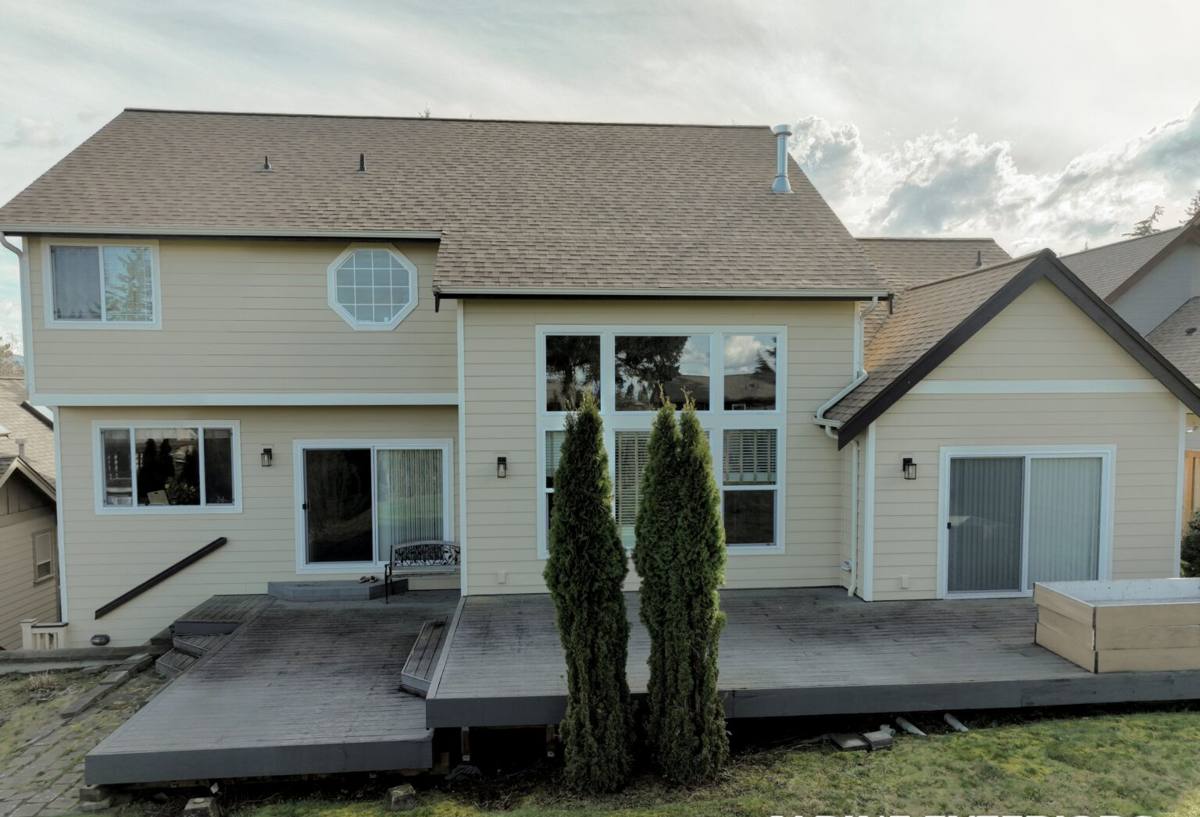
Composite decking is a blended material, typically made from wood fibers and recycled or virgin plastic, engineered into a board that resists rot, doesn't need staining or sealing, and holds its color and shape far longer than solid wood under sun and moisture exposure. It's not one single product — quality and construction vary a lot between manufacturers and product tiers, and that variation matters even more in a coastal Florida climate than it would somewhere drier.
Capped Composite vs. Older Composite Boards
Most composite decking sold today is "capped," meaning the structural composite core is wrapped in a protective polymer shell on some or all sides. That cap is what actually resists fading, staining, mold growth, and moisture absorption. Older, uncapped composite boards — and some lower-tier products still on the market — don't have this protective layer and are more prone to surface wear, moss and mildew growth, and gradual color loss under constant Florida sun. For a Skycrest project, we specify fully capped boards, because a partially protected board in this climate is a maintenance headache waiting to happen.
Board profile matters too. Grooved-edge boards paired with a hidden fastener clip system give a clean, screw-free surface and let the board expand and contract with temperature changes without visible fastener damage. Face-screwed boards are more affordable but leave exposed fastener heads that, unless they're a marine-grade or coated stainless option, can streak or corrode over time in salt air.
What a Correct Installation Involves in This Climate
Substructure and Fasteners
The framing underneath a composite deck does more work than most homeowners realize, and it's the part that's completely hidden once the boards go down — which is exactly why it's the part that gets cut corners on cheap jobs. Joists, beams, and ledger boards need to be sized and spaced for both the live load of the deck and the wind uplift forces common to this part of Pinellas County. Every fastener in that structure — joist hangers, hurricane ties, ledger bolts, screws — should be stainless steel or a coated fastener rated for coastal and treated-lumber contact. Standard galvanized hardware corrodes faster here than it would inland, and a corroded hanger or tie is a structural problem, not a cosmetic one.
Moisture Management and Airflow
Composite boards themselves resist moisture, but the framing underneath them is usually still wood, and wood framing under a solid composite deck surface can trap humidity if it isn't detailed properly. A correct build includes flashing tape over the top of joists to keep water off end grain and fastener penetrations, proper drainage slope away from the house, and enough ventilation under the deck for air to actually move. Skip this, and you can end up with a deck surface that looks fine while the structure underneath is quietly rotting — a problem we see more often in humid coastal climates than almost anywhere else.
Wind Resistance and Attachment
Ledger board attachment to the house is one of the most safety-critical parts of any deck, and it's also one of the most common places we find shortcuts on older or poorly built decks in this area. Composite boards also need proper expansion gaps at every butt joint and against any fixed object — Florida's heat swings mean these boards expand and contract more than people expect, and undersized gaps lead to buckling. Railings and guards need to meet local height and baluster-spacing requirements, and in a storm-prone county like this one, railing posts need to be attached with the same seriousness as the deck framing itself.
Composite vs. Wood: A Straight Comparison for Clearwater Homeowners
Both materials can work in Skycrest. The right choice depends on how much ongoing maintenance you want to take on and how the deck will be used. Here's an honest side-by-side based on how each material actually performs in this specific climate:
| Factor | Composite Decking | Pressure-Treated Wood |
|---|---|---|
| UV and fading | Capped boards resist fading for years | Grays and dries out without regular staining |
| Moisture and rot resistance | Core and cap resist rot and mold growth | Prone to rot without diligent sealing |
| Salt air impact | Board surface unaffected; hardware still needs coastal-rated fasteners | Accelerates splitting and fastener corrosion |
| Maintenance | Occasional washing, no staining or sealing | Sealing or staining every one to two years |
| Surface heat underfoot | Can run hotter than wood in direct summer sun; lighter colors help | Stays cooler but rougher underfoot over time |
| Upfront cost | Higher material cost | Lower material cost |
| Long-term cost | Lower over the life of the deck due to minimal upkeep | Higher once repeated sealing and board replacement are factored in |
What Affects the Cost of a Skycrest Composite Deck
Every property is different, so we don't quote a flat per-square-foot number without seeing the site, but the same handful of factors drive cost on nearly every project we look at in this neighborhood:
| Cost Factor | Why It Matters |
|---|---|
| Deck size and shape | Complex shapes, curves, and multiple levels require more framing and cutting |
| Board tier | Capped composite lines vary by warranty length, color range, and cap thickness |
| Existing substructure condition | Rotted or undersized framing needs repair or replacement before new decking goes down |
| Railing and stair design | Cable, glass, or custom rail systems cost more than standard composite balusters |
| Fastener and hardware grade | Coastal-rated stainless hardware costs more than standard galvanized but lasts longer |
| Permit and inspection fees | Set by the local permitting authority based on project scope and value |
| Tear-out of an old deck | Removing and disposing of an existing structure adds labor before the new build starts |
Our Process, Start to Finish
We keep the process straightforward so you know what's happening at each stage:
- On-site evaluation of the space, existing structure (if any), drainage, and how you plan to use the deck
- Material and layout recommendations based on your home's style and budget, with honest trade-offs explained up front
- Permit drawings and submission through the appropriate local building department
- Demolition and disposal of any existing deck, and inspection of the ledger attachment point on the house
- Framing build-out or repair, using coated or stainless fasteners and hurricane-rated connectors throughout
- Flashing and moisture detailing before a single composite board goes down
- Composite board installation with proper expansion gaps, hidden or coastal-rated fasteners, and clean board transitions
- Railing, stair, and skirting installation to current code
- Final walkthrough and local inspection sign-off before we consider the job finished
Permitting and Code Requirements in Pinellas County
Decks in Clearwater and throughout Pinellas County require a building permit, and inspections check structural attachment, framing, railing height and spacing, and stair geometry, among other items. Because this area falls within a high-wind design zone, framing and connection requirements are stricter than they'd be in much of the country — undersized ledger bolts or missing hurricane ties are common findings on decks that were never permitted or were built by someone unfamiliar with local wind load rules. Some Skycrest properties are also close enough to the coast that flood zone designation can affect footing depth or elevation requirements; if that applies to your lot, it needs to be addressed at the design stage, not discovered mid-build. We handle the permit submission and inspection scheduling as part of the job so nothing gets built that won't pass.
Maintenance: What Composite Decking Actually Needs Here
One of the real advantages of composite decking in this climate is how little upkeep it demands compared to wood — but "low maintenance" doesn't mean "no maintenance." A periodic wash with mild soap and water keeps pollen, salt residue, and organic buildup from dulling the surface or feeding mildew growth in shaded, humid spots. Furniture pads help prevent surface scuffing, and it's worth checking railing posts and fastener points once or twice a year for any looseness, since that's a structural issue rather than a cosmetic one. Beyond that, a well-built composite deck in Clearwater shouldn't need staining, sealing, or board replacement for a very long time.
Signs Your Current Deck Needs Attention
If you already have a deck in Skycrest, a few warning signs are worth taking seriously before they become bigger problems:
- Soft, spongy, or springy spots when you walk across the boards
- Visible rust staining running down from screws, nails, or metal connectors
- Gaps or movement where the ledger board meets the house
- Wobbly or loose railing posts
- Boards that have visibly cupped, warped, or pulled away from fasteners
- Standing water or slow drainage after rain instead of water running off cleanly
- Mold, mildew, or dark staining that keeps coming back no matter how often it's cleaned
Any one of these is worth a professional look. Several of them together usually mean the structure, not just the surface, needs work.
Why a Crew That Already Works in Skycrest Matters
A lot of what makes a composite deck last in this climate isn't visible once the project is done — it's in the fastener grade, the flashing detail, the ledger attachment, and the framing spec, all chosen for Pinellas County's wind and moisture conditions rather than a generic national build standard. A crew that already works in and around Skycrest has been through the local permitting process, understands the wind design requirements specific to this part of the coast, and has seen firsthand how decks built to lower standards fail here — usually at the fasteners or the framing, well before the composite boards themselves show any wear. That local track record shows up in fewer surprises during permitting, fewer callbacks after the first storm season, and a deck that's actually built for where it stands.
If you're weighing a new composite deck or wondering whether an existing one is holding up the way it should, we're happy to take a look and give you a straightforward, no-pressure estimate — just fill out the form below to get started.