 Clearwater Roofing
 Composite Decking Built for How Countryside Actually Lives Outdoors
Countryside is one of Clearwater's most established residential areas, and most of the homes here were built with a backyard that's meant to be used — a patio, a pool deck, or a spot for a deck that extends the living space outside. When homeowners in this neighborhood start looking at deck options, they're usually replacing an old pressure-treated wood deck that's cupping, splintering, or has gone gray and rough despite years of staining. Composite decking solves that specific problem. It's a manufactured board — a blend of wood fiber and recycled plastic, capped with a protective outer layer on most modern products — engineered to hold its color and shape without the yearly sanding, staining, and sealing that wood demands.
This page is about one thing: composite decking installed correctly for a Countryside, Clearwater property, in Pinellas County's specific climate. That distinction matters more than most homeowners realize, because a deck built to a generic national spec doesn't hold up the same way here as it does in a drier, cooler part of the country.
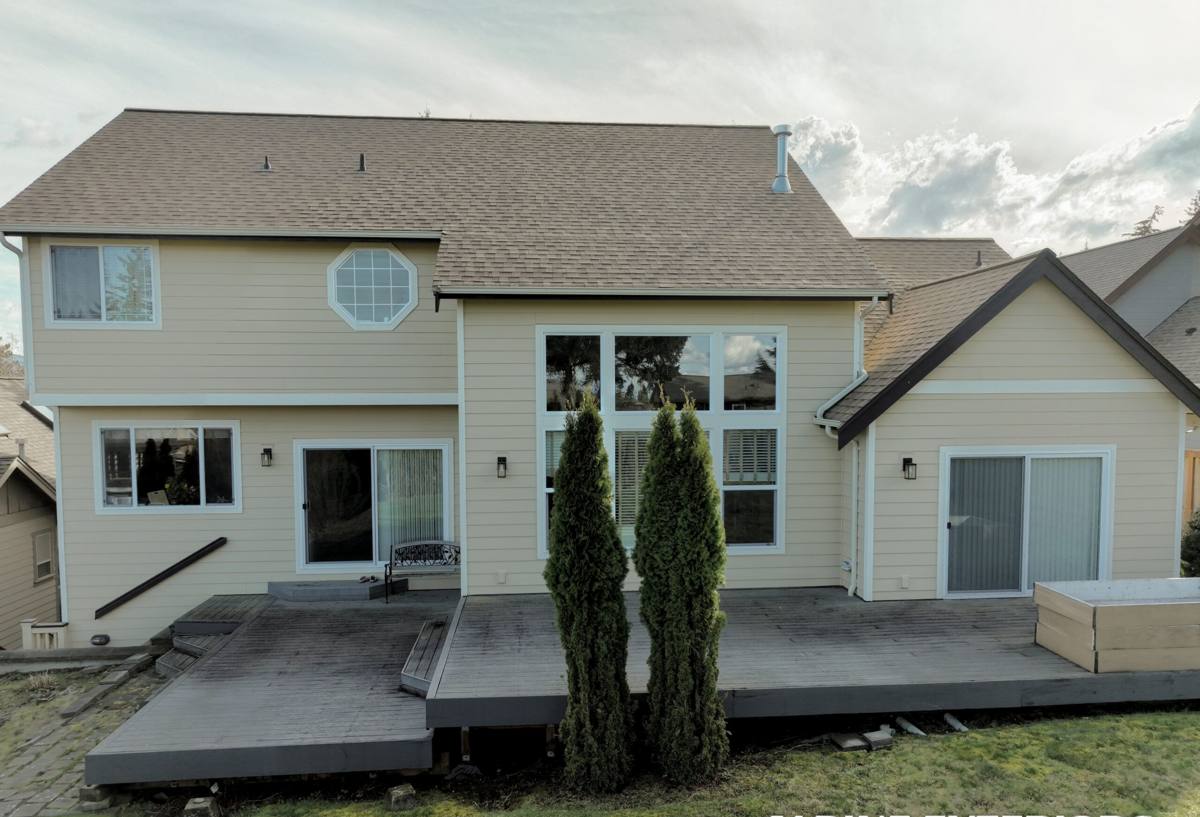
What Clearwater's Climate Actually Does to a Deck
Pinellas County sits in a subtropical climate with a long list of stressors that hit a deck simultaneously, not one at a time. Understanding each one is the difference between a deck that looks good for five years and one that looks good for twenty.
Intense, Year-Round UV
Florida's UV index runs high nearly every month of the year, not just in summer. Wood decking loses its finish and starts graying within a season or two under this kind of sun exposure. Lower-quality composite or capped-composite products can fade or chalk if the cap layer isn't formulated for this level of UV load — this is one of the reasons product selection matters as much as installation.
Wind-Driven Rain and Standing Moisture
Clearwater's rain rarely falls straight down. Afternoon storms come in sideways, driven by Gulf breezes, and that means water gets forced into joints, fastener holes, and the underside of a deck in ways a calm-weather rain never would. Composite boards themselves resist water absorption far better than wood, but the substructure underneath — joists, ledger boards, framing connectors — is just as vulnerable to moisture damage as it would be under any other decking material. A deck is only as good as what's holding the boards up.
Hurricane-Force Wind Loads
Pinellas County structures, including exterior additions like decks, are built to Florida Building Code wind provisions. A deck isn't just a surface to walk on — it's a structure that has to stay attached to the house and stay standing under real wind pressure. That means post connections, joist hangers, and ledger attachment all need to be engineered for uplift and lateral load, not just downward weight.
Salt Air
Countryside sits inland from the immediate coastline, but Clearwater as a whole sits close enough to the Gulf that salt-laden air moves through the county on the prevailing sea breeze. Salt air accelerates corrosion in fasteners, brackets, and any exposed metal hardware. Composite boards don't corrode, but the screws and structural connectors holding the deck together will, if they're not rated for it.
Composite vs. Wood vs. PVC — An Honest Comparison for This Climate
There's no single "best" decking material for every homeowner — it depends on budget, how much upkeep you're willing to do, and how the deck will be used. Here's how the three main options actually compare under Clearwater conditions.
| Factor | Pressure-Treated Wood | Composite | PVC / Cellular Vinyl |
|---|---|---|---|
| Upfront Cost | Lowest | Mid-range | Highest |
| Maintenance | Annual staining/sealing | Occasional cleaning | Minimal cleaning |
| UV/Fade Resistance | Poor without upkeep | Good to very good (capped) | Very good |
| Moisture Resistance | Fair — prone to warping/rot | Very good | Excellent |
| Heat Underfoot (direct sun) | Moderate | Can run warm in dark colors | Similar to composite |
| Typical Lifespan | 10-15 yrs w/ upkeep | 25-30 yrs | 25-30+ yrs |
| Feel/Appearance | Natural wood grain | Wood-look, wide color range | More uniform, less wood-like |
For most Countryside homeowners, composite hits the sweet spot: substantially less maintenance than wood, a more natural wood-look appearance than PVC, and a price point that sits between the two. We install composite as our standard recommendation for exactly this reason — it's the option that best balances upfront cost, long-term maintenance burden, and how the material actually behaves in Gulf Coast humidity and sun.
Why We Steer Away From Lower-Grade Boards
Not all composite decking is built the same. Older or budget-tier composite formulations (uncapped or thinly capped boards) can absorb moisture at the edges and are more prone to mold staining in humid climates like ours. Our standard is to install fully capped composite from established manufacturers — brands like Trex, TimberTech, and Fiberon are common examples in this category — because the cap layer is what actually does the work of resisting Florida's UV and moisture. It's a trade-off worth knowing about upfront: capped boards cost more than uncapped ones, but in this climate, the maintenance and longevity difference is significant enough that we don't recommend cutting that corner.
What a Correct Composite Deck Installation Actually Involves
The boards get the attention because they're what you see, but most of what determines whether a deck lasts happens underneath them.
Substructure and Framing
Joists need to be sized and spaced according to the composite manufacturer's specifications — composite boards typically require tighter joist spacing than wood, especially on diagonal or picture-frame layouts. We use joists and framing hardware rated for exterior, high-moisture use, not standard interior-grade lumber or fasteners.
Ledger Attachment and Flashing
Where the deck attaches to the house is the single most common failure point on decks nationwide, and it's a bigger risk here because of wind-driven rain. Proper flashing at the ledger board keeps water from tracking behind the siding and into the house structure. This step gets skipped or done poorly more often than any other part of a deck build — it's not visible once the deck is finished, so it's tempting to rush.
Fasteners and Hardware
We use stainless steel or coated fasteners and structural connectors rated for coastal/corrosive environments, not standard galvanized hardware that will rust prematurely in Pinellas County's salt-influenced air. Hidden fastener clip systems are standard on most modern composite installs, which also means fewer surface penetrations for water to find.
Ventilation and Drainage
Composite decks need airflow underneath to manage humidity and prevent moisture from sitting against the joists. Low-clearance or ground-level decks need extra attention to grading and ventilation gaps so water has somewhere to go after a storm.
Post and Footing Connections
For elevated decks or those attached to a structure, post bases and footings need to meet local wind uplift requirements. This is engineering, not guesswork — it's the part of the job that keeps a deck attached to its footings during a tropical storm or hurricane rather than becoming debris.
Our Process, Start to Finish
- On-site assessment — we look at your existing structure (or the space for a new deck), house attachment point, drainage, and sun exposure.
- Design and material selection — board color, pattern (picture-frame borders, diagonal layouts), railing style, and any built-ins like stairs or benches.
- Written estimate — a clear scope of work and cost, with material and labor broken out so you know what you're paying for.
- Permitting — we handle the permit application through the appropriate local building department and make sure the design meets Florida Building Code wind and structural requirements.
- Demolition (if replacing an old deck) — old material removed and disposed of, substructure inspected for reuse or replacement.
- Framing and structural work — ledger flashing, joists, footings, and post connections installed to code.
- Decking installation — boards, hidden fasteners, picture-framing, and railing installed per manufacturer spec.
- Final walkthrough and inspection — we review the finished deck with you and coordinate any required final building inspection.
Permitting and Code Considerations in Clearwater
Deck additions and replacements typically require a permit, and inspections are part of that process — this isn't optional paperwork, it's what confirms the structure meets Florida's wind and structural standards. Depending on your lot, there may also be setback requirements from property lines or easements to account for in the design. We handle this process as part of the job rather than leaving it to the homeowner to navigate, because a deck built without a permit can create real problems later — at resale, with insurance, or if the structure ever needs repair work tied back to code compliance.
Maintenance: What Composite Decking Actually Needs in This Climate
Composite decking is low-maintenance, not no-maintenance. Here's the realistic upkeep list for a Clearwater property:
- Sweep or rinse off debris, pollen, and organic buildup regularly — leaves and mildew can dull the surface if left sitting in humidity.
- Wash with mild soap and water (or a manufacturer-approved composite deck cleaner) once or twice a year to prevent mildew staining, which is more common here than in drier climates.
- Rinse salt residue off after storms if the deck is exposed to wind-driven spray, especially on hardware and railing posts.
- Check railing posts, stair connections, and fasteners annually for any looseness — wind and humidity cycles can work hardware loose over time.
- Keep gutters and downspouts near the deck clear so runoff isn't dumping extra water onto or under the structure.
- Trim back landscaping that shades the deck constantly, since persistent damp shade is the main driver of mildew growth on composite surfaces.
- Avoid dragging metal furniture or grills directly on the surface — composite resists scratching well but isn't scratch-proof.
What Drives the Cost of a Composite Deck
Every deck is different, but the same handful of factors move the price up or down. As a broad, honest range, composite deck installation often falls somewhere in the neighborhood of $25 to $45 per square foot installed, with the final number depending on the items below — we'll give you an exact figure after seeing the site.
| Cost Factor | Why It Matters |
|---|---|
| Deck size and shape | Complex shapes, curves, and picture-framing use more material and labor than a simple rectangle |
| Height off the ground | Elevated decks need more substantial framing, railing, and stair work |
| Board tier | Entry-level capped composite vs. premium lines varies significantly in material cost |
| Railing type | Composite or aluminum railing costs more than basic options but matches the deck's low-maintenance profile |
| Substructure condition | Replacing rotted or undersized framing adds cost but isn't optional for a safe deck |
| Site access | Difficult access for material delivery or equipment can add labor time |
Why Hiring a Crew That Already Works in Countryside Matters
A deck contractor who works regularly in Clearwater and Pinellas County already knows the local permitting process, the wind and structural requirements that apply here, and what actually fails on decks in this specific climate versus what fails in a cooler, drier market. That's not something you get from a national franchise crew rotating through on a general schedule, or a contractor who mostly builds in a different climate and treats Florida jobs the same as anywhere else.
We also know how fast Florida weather can turn during a build — afternoon storms, sudden humidity swings, and the practical scheduling adjustments that come with working outdoors here. A local crew builds that reality into the timeline instead of getting caught off guard by it. And if a warranty issue or a hardware question comes up two years down the road, you're calling a company that's still local and still doing this work in your neighborhood, not chasing down a call center.
If you're considering a new composite deck or replacing an aging wood deck in Countryside, we're happy to walk the property, talk through material options, and put together a straightforward written estimate — no pressure, no obligation. Use the form below to get started.