 Clearwater Roofing
 Why Decks in Island Estates Take a Different Kind of Beating
Island Estates sits close to the water, and that proximity is exactly what makes it a beautiful place to add outdoor living space — and exactly why a deck built here needs to be engineered differently than one going up ten miles inland. Homes in this part of Clearwater deal with near-constant salt-laden air, direct Gulf Coast sun almost every day of the year, and the real possibility of hurricane-force wind and wind-driven rain during storm season. A deck that would hold up fine in a drier, more sheltered part of Pinellas County can start showing corrosion, fastener failure, or surface breakdown within a few seasons here if it wasn't built with this specific environment in mind.
This page is about one thing: custom deck construction for Island Estates homes, and what it actually takes to get it right in this location. Not a generic overview of decks in general — the specific decisions that matter when the job site is a few blocks from saltwater and exposed to full Florida sun and Gulf weather systems.
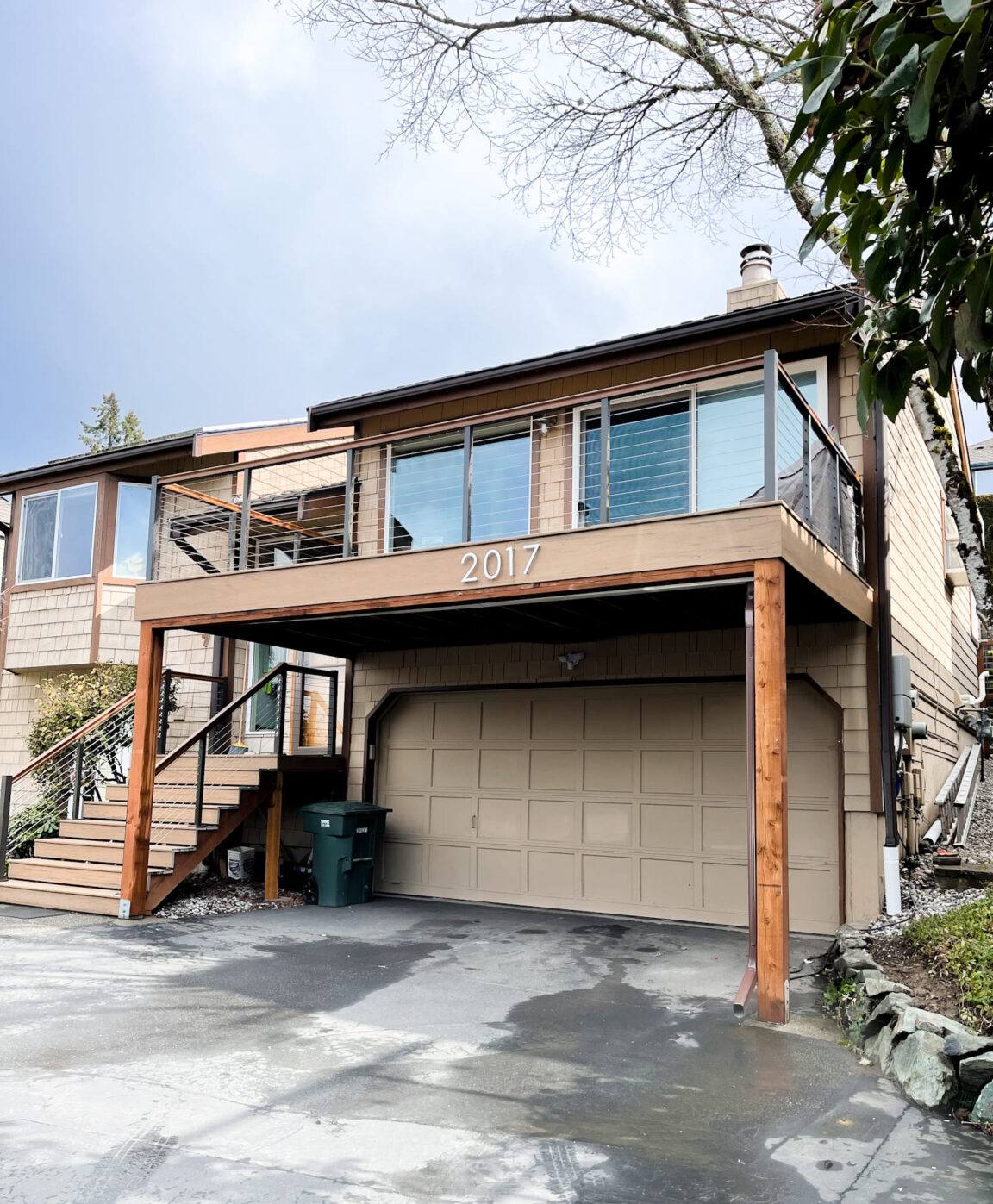
What the Local Climate Actually Does to a Deck
It helps to understand the failure modes before you understand the fix. Three environmental factors do almost all the damage to decks in this neighborhood, and they don't act alone — they compound each other.
Salt Air and Corrosion
Airborne salt doesn't need a direct ocean wave to cause trouble. It travels on humid air and settles on every exposed surface, including metal that's technically "outdoor rated" but not rated for a marine-adjacent environment. Standard galvanized fasteners, cheap post brackets, and bargain hinges will start rusting and staining the wood or composite around them well before the structure itself is old. Once a fastener corrodes, it loses holding strength — and a deck is only as strong as the metal connecting it together.
Intense, Year-Round UV
Clearwater doesn't get a real off-season for sun exposure. UV breaks down the lignin in wood fibers, fades color in both wood and composite decking, and dries out sealants and caulking faster than in northern climates. A finish or stain schedule that works in a milder climate typically needs to be tightened up here, and material choices that resist UV fading matter more than they would somewhere with a real winter.
Wind-Driven Rain and Hurricane Gusts
Water doesn't just fall straight down in a coastal storm — wind drives it sideways and up underneath structures, into ledger connections, post bases, and any gap that wasn't properly flashed or sealed. Add hurricane-force wind gusts, and uplift becomes a real structural load, not a theoretical one. Railings, stair stringers, and the ledger board attachment to the house all need to be engineered for wind, not just for standing weight.
Choosing Materials That Make Sense for This Location
There's no single "best" decking material — there's a best material for this climate, this budget, and how much maintenance you're honestly willing to keep up with. Here's how the common options actually compare for a home in this part of Clearwater.
| Material | How It Handles Salt Air & UV | Maintenance | Typical Lifespan Here |
|---|---|---|---|
| Pressure-treated wood | Needs sealing/staining to resist UV fade and moisture cycling; fasteners must be corrosion-resistant | Re-seal every 1-2 years in this sun | 10-15 years with upkeep |
| Composite decking | Strong UV and moisture resistance; won't rot, but can still show mineral/salt residue on the surface | Periodic washing, no staining/sealing | 20-25+ years, warranty-backed |
| PVC/capped polymer | Fully sealed surface, best resistance to salt residue and UV fading of the common options | Lowest maintenance, occasional washing | 25+ years, warranty-backed |
| Tropical hardwoods (e.g., ipe) | Naturally dense and rot-resistant, but still needs oiling to hold color under this UV load | Regular oiling to prevent graying/checking | 20-25 years with diligent upkeep |
Cost is part of this decision too, but the more useful question is cost per year of service, not sticker price. A cheaper material that needs re-staining every year and replacing corroded hardware every few years can end up costing more over a decade than a composite or PVC system with a longer warranty. We'll walk through this trade-off honestly based on your budget and how the deck will actually be used — we're not going to push the most expensive option if it doesn't fit your situation.
Getting the Structure Right Below the Boards
The decking surface is what you see, but the framing underneath is what determines whether the deck is still safe in ten years. This is where corners get cut, and it's usually invisible until there's a problem.
- Fasteners and connectors: stainless steel or coated fasteners rated for coastal/salt exposure, not standard interior-grade galvanized hardware
- Ledger attachment: properly flashed and lag-bolted (or through-bolted) into the home's structural framing, not just nailed to siding or trim
- Post bases and footings: footings sized and set to local frost-free depth and soil conditions, with post bases that keep wood off standing water
- Joist spacing: tightened up where the decking manufacturer or wind exposure calls for it, rather than defaulting to the widest allowed spacing
- Railing and guard attachment: engineered to resist lateral load from wind, not just rated for a person leaning on it
None of this is exotic — it's standard good practice. But it's also the first thing skipped by a crew trying to hit a lower price, because it's the part a homeowner can't easily inspect once the decking boards are down.
Permits and Wind Load Requirements
Deck construction in Clearwater and unincorporated Pinellas County requires a building permit, and inspections are tied to Florida Building Code wind load provisions given the area's hurricane exposure. That means ledger attachment, post footings, and railing systems all need to meet documented load requirements — not just "look sturdy." If a contractor offers to skip the permit to save time or money, that's a red flag, not a convenience: it usually means the work won't hold up to inspection, and it can create real problems later with insurance claims or when you go to sell the home.
If your property is on a canal or otherwise close to the water, it's also worth knowing that any dock, seawall, or over-water structure is regulated separately from the deck itself. We handle the deck; if your project touches those other structures, that typically involves a different permitting path, and we'll tell you plainly if that's the case rather than blur the two together.
How We Approach a Custom Deck Build Here
Every project starts with an honest look at the specific conditions on your property — how exposed it is to sun and wind, how close to the water, what the existing structure (if any) is attached to, and what you actually want to use the space for.
- On-site assessment: we look at sun exposure, wind exposure, drainage, and the condition of the house structure the deck will attach to
- Design and material selection: layout, railing style, and decking material chosen against your budget and maintenance preference — not a one-size-fits-all package
- Permitting: we pull the required permits and build to the load requirements that apply to this area
- Construction: corrosion-resistant hardware, proper flashing at the ledger, and framing built to the actual spans and spacing the design calls for
- Final inspection and walkthrough: we go over the finished deck with you, including what maintenance it actually needs going forward
We don't upsell add-ons you don't need, and we don't cut structural corners to hit a lower number on the estimate. If a cheaper material or design will genuinely work for how you'll use the space, we'll say so.
Maintenance That Actually Matters in This Environment
Every material above needs some upkeep — the question is how much, and how often, given the salt air and UV load here. A short, realistic maintenance routine will add years to any deck:
- Rinse the deck surface periodically to remove salt residue and pollen buildup, especially after dry, windy stretches
- Inspect visible fasteners and connectors once or twice a year for early rust staining
- Check that gaps between boards stay clear of debris so water can drain instead of pooling
- Re-seal or re-stain wood decking on a schedule tightened for this UV exposure — don't wait for visible graying
- After any major storm, do a quick visual check of railings and stair connections before heavy use
None of this is complicated, but skipping it is the single biggest reason decks in this area age faster than they should.
Why Local Experience in This Neighborhood Matters
A crew that already works in Island Estates and the surrounding Clearwater waterfront has already seen how salt air, sun, and storm exposure affect decks in this exact setting — not decks in a drier inland suburb. That means we're not guessing at fastener grades, flashing details, or material choices; we're applying what already holds up here. It also means we understand the practical realities of working on this kind of property: tighter lots in some cases, proximity to canals, and the general expectation homeowners in this area have that outdoor structures need to earn their keep against real coastal weather, not just look good on install day.
Getting an Estimate
If you're considering a custom deck for your Island Estates home, we're happy to walk the property, talk through material options honestly, and put together a clear, no-pressure estimate. There's no obligation — just a straightforward look at what your project actually needs. Use the form below to get started.