 Clearwater Roofing
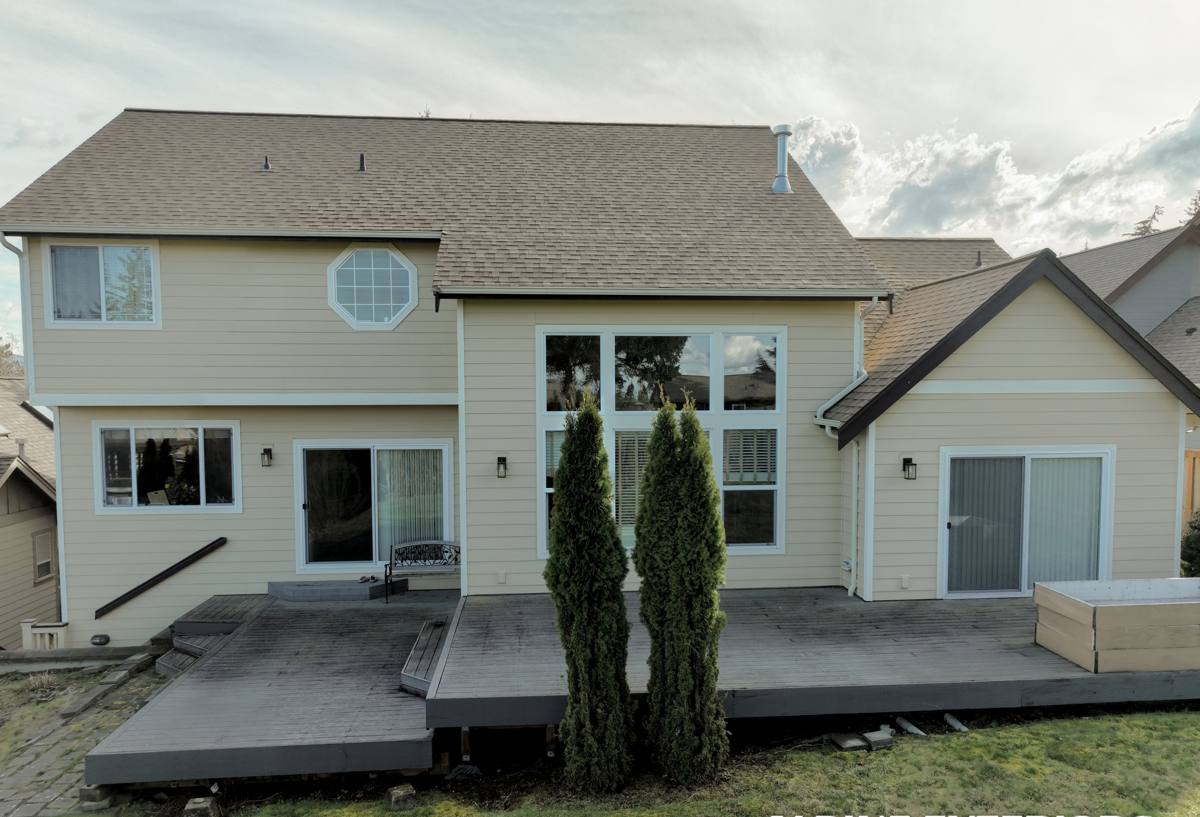
 Deck Replacement Built for Indian Rocks Beach Conditions
A deck on Indian Rocks Beach lives a harder life than a deck almost anywhere else in the Tampa Bay area. You're on a narrow barrier island with salt air rolling off the Gulf on one side and the Intracoastal on the other, direct sun exposure most of the year, and the kind of wind-driven rain and hurricane-force gusts that come with every serious storm season. Fasteners corrode faster here. Wood checks and cups faster here. Framing that would last two decades inland can start showing real trouble in half that time a few blocks from the water. When a deck on this stretch of the coast needs replacing, it needs to be replaced with that reality in mind, not with a generic approach borrowed from a subdivision ten miles inland.
This page covers what deck replacement actually involves for a home in Indian Rocks Beach, what we look at before recommending a full tear-out versus a repair, and how our process works from first look to final walkthrough.
Why Barrier Island Decks Wear Out Faster
Several conditions stack up against any exterior structure this close to the water, and they compound each other:
- Salt air corrosion — airborne salt attacks metal fasteners, joist hangers, and structural connectors well before the wood itself gives out. A deck can look solid on the surface while its hidden hardware is quietly failing.
- Year-round UV exposure — Florida's sun breaks down wood fibers, dries out natural oils, and fades or chalks composite and PVC surfaces faster than manufacturers' ratings assume for cooler climates.
- Wind-driven rain — storms here don't just fall straight down; rain gets pushed sideways into ledger connections, under railing posts, and into any gap in the decking where it shouldn't be able to reach framing.
- High humidity and ground moisture — even without a direct storm, Pinellas County's baseline humidity keeps wood framing damp longer after every rain, which speeds up rot in anything that isn't properly ventilated or sealed.
- Storm-force wind loads — a deck attached to the house has to resist uplift and lateral load during named storms, not just support foot traffic on a calm day.
None of these factors are unique to Indian Rocks Beach, but the combination and intensity are more concentrated here than a few miles inland. A deck built to a generic spec, or one that's simply patched year after year, tends to reach the point of no return sooner on the barrier island than elsewhere in Clearwater.
Repair vs. Replace: How We Decide
Not every aging deck needs a full replacement. We look at the structural framing first — ledger board attachment, joists, beams, and footings — because that's what actually holds the deck up and keeps it safe. Surface boards can be replaced individually if the framing underneath is sound. But if the ledger connection has water damage, if joists are soft or rotted in multiple spots, or if the footings have shifted or deteriorated, patching the surface just delays a bigger problem and hides it under new boards. We'll always tell you honestly which category your deck falls into.
What a Correct Deck Replacement Involves
A deck replacement isn't just pulling up old boards and screwing down new ones. Done right, it's a structural project with a decking surface on top. The parts that matter most, especially in a coastal wind zone, are the parts you don't see once it's finished:
- Ledger board attachment — where the deck ties into the house. This connection carries a large share of the structural load and has to be properly flashed to keep water from getting behind the siding.
- Footings and posts — sized and set to local frost-free, corrosion-resistant standards, deep and wide enough for the soil conditions and the loads involved.
- Joists and beams — spaced and sized for the actual span and load, not just "what was there before," especially since older decks in this area were sometimes built to lighter, pre-code standards.
- Fasteners and connectors — corrosion-resistant hardware rated for coastal exposure. This is one of the most common places we find shortcuts on older decks, and it's usually the first thing to fail near saltwater.
- Railings and guards — built to current code height and baluster spacing requirements, which matters both for safety and for passing final inspection.
- Decking surface — the material homeowners see and touch every day, chosen based on maintenance tolerance, budget, and how the space gets used.
Skipping or shortcutting any of these doesn't just risk a shorter lifespan — near the water, it risks a structural failure during exactly the kind of storm event the deck is supposed to survive.
Decking Material Options for Coastal Homes
There's no single "right" material for every home. The right choice depends on your budget, how much upkeep you're willing to do, and how close you are to the water. Here's an honest comparison of the main options we install:
| Material | Coastal Durability | Maintenance | Typical Lifespan |
|---|---|---|---|
| Pressure-treated wood | Good structurally, decking surface more sensitive to salt/UV | Regular sealing and staining needed | 10–15 years for decking, longer for framing if maintained |
| Composite decking | Strong resistance to moisture and salt exposure | Occasional cleaning, no sealing/staining | 20–30 years |
| PVC decking | Excellent resistance to moisture, salt, and UV | Very low — mostly rinsing | 25–30+ years |
| Tropical hardwoods | Naturally dense and rot-resistant | Periodic oiling to maintain color and prevent checking | 20–25 years with upkeep |
We generally steer coastal homeowners toward composite or PVC decking for the wear surface, and we're upfront about why: they hold up to salt air and UV with far less ongoing maintenance than natural wood, and their moisture behavior is more predictable over time. That doesn't mean wood is a bad choice — some homeowners genuinely prefer the look and feel and are willing to keep up with sealing on a regular schedule. We'll walk you through the real trade-offs for your situation rather than pushing one product on everyone.
Framing Material Still Matters
Even when the decking surface is composite or PVC, the structural framing underneath is almost always wood or, less commonly, engineered alternatives. Framing choice, fastener selection, and moisture management at every connection point matter just as much as what's on top — a beautiful composite surface over undersized or corroding framing is still a deck with a short remaining life.
Our Deck Replacement Process
We keep the process straightforward and communicate at each step, especially since a deck project touches both the exterior of your home and, often, its structural connection to the house itself:
- On-site assessment — we inspect the existing deck's framing, footings, ledger connection, and surface condition to determine what's salvageable and what isn't.
- Honest scope and estimate — you get a clear picture of what needs replacing, what materials we recommend and why, and a straightforward cost range.
- Permitting — deck replacements in Pinellas County typically require a permit, and we handle that process so you don't have to navigate it yourself.
- Demolition and disposal — old decking, framing, and any damaged fasteners are removed and hauled off.
- Structural rebuild — footings, posts, beams, joists, and ledger connection are built or replaced to current code with coastal-rated hardware.
- Decking, railings, and finish work — surface material and railings are installed to spec, with attention to drainage and airflow underneath.
- Final walkthrough and inspection — we review the finished deck with you and coordinate any required inspection sign-off.
Permits and Wind Codes in Pinellas County
Deck replacements are structural work, which means Pinellas County permitting and inspection requirements apply. Depending on the scope, this can include structural plans, footing inspections before decking goes down, and a final inspection. Requirements also account for the wind-load standards that apply to structures in this part of Florida, since a deck attached to your home needs to hold up to the same wind forces the rest of the structure is built for. We manage this process as part of the job rather than treating it as an extra homeowners have to sort out themselves.
Signs Your Indian Rocks Beach Deck Needs Replacing
Some warning signs are obvious; others hide underneath the surface boards. Watch for:
- Soft, spongy, or springy spots when you walk across the deck
- Visible rot, splitting, or cupping in the boards
- Rust staining around fasteners or metal connectors
- Wobbly railings or posts that move when pushed
- Gaps, cracks, or separation where the deck meets the house (ledger area)
- Footings that appear to have shifted, sunk, or cracked
- A deck that's more than 15–20 years old and hasn't had structural components inspected recently
If you're seeing more than one of these, it's worth having the structure evaluated before it becomes a safety issue rather than just a cosmetic one.
What Drives the Cost of a Deck Replacement
Every project is different, but the same handful of factors drive most of the cost variation we see on barrier island homes:
| Factor | Why It Affects Cost |
|---|---|
| Deck size and shape | More square footage and complex angles mean more material and labor |
| Decking material chosen | PVC and premium composites cost more upfront than pressure-treated wood |
| Framing condition | Extensive rot or undersized existing framing adds structural rebuild work |
| Height and stairs | Elevated decks and multi-level stairs add framing and railing complexity |
| Permit and inspection scope | Larger or higher decks may require more detailed structural documentation |
| Railing style | Cable, glass, or custom railing systems cost more than standard baluster railings |
We give straightforward, itemized estimates so you can see where the cost is going and make informed decisions about where to spend and where to save.
Why Hiring a Crew That Already Works Indian Rocks Beach Matters
Barrier island construction isn't identical to inland Clearwater or the mainland side of Pinellas County. Wind exposure is higher, salt air is more concentrated, and access to some properties can be tighter than a typical suburban lot. A crew that already works this specific stretch of coastline has a practical sense of what fastener grades hold up, which construction details actually keep water out of a ledger connection here, and what the permitting process looks like for this part of the county. That experience shows up in fewer surprises during the project and a deck that's built for the conditions it will actually face, not just the conditions written into a generic spec sheet.
If your deck in Indian Rocks Beach is showing its age — or you just want an honest opinion on whether it needs repair or full replacement — we're happy to take a look. Reach out for a free, no-pressure estimate using the form below.