 Clearwater Roofing
 Deck Replacement Built for Safety Harbor's Climate
Safety Harbor sits right on Old Tampa Bay, which means homes here get a steady dose of salt-laden air on top of everything else Pinellas County throws at outdoor structures: intense year-round UV, sudden wind-driven downpours, and the occasional hurricane-force wind event. A deck that was built to a generic spec, or one that's simply aged out after fifteen-plus years of that combination, doesn't just look tired — it becomes a real safety liability. Soft boards, corroded fasteners, and a substructure that's lost its grip are common findings once we actually get underneath an older deck in this area.
Replacing a deck isn't just swapping old boards for new ones. It's a chance to correct whatever the original build got wrong — undersized footings, the wrong fastener metal, poor drainage under the frame — and put down something that's actually matched to a bayfront Florida property. That's the job we specialize in, and it's worth understanding what "correct" looks like before you sign off on any bid.
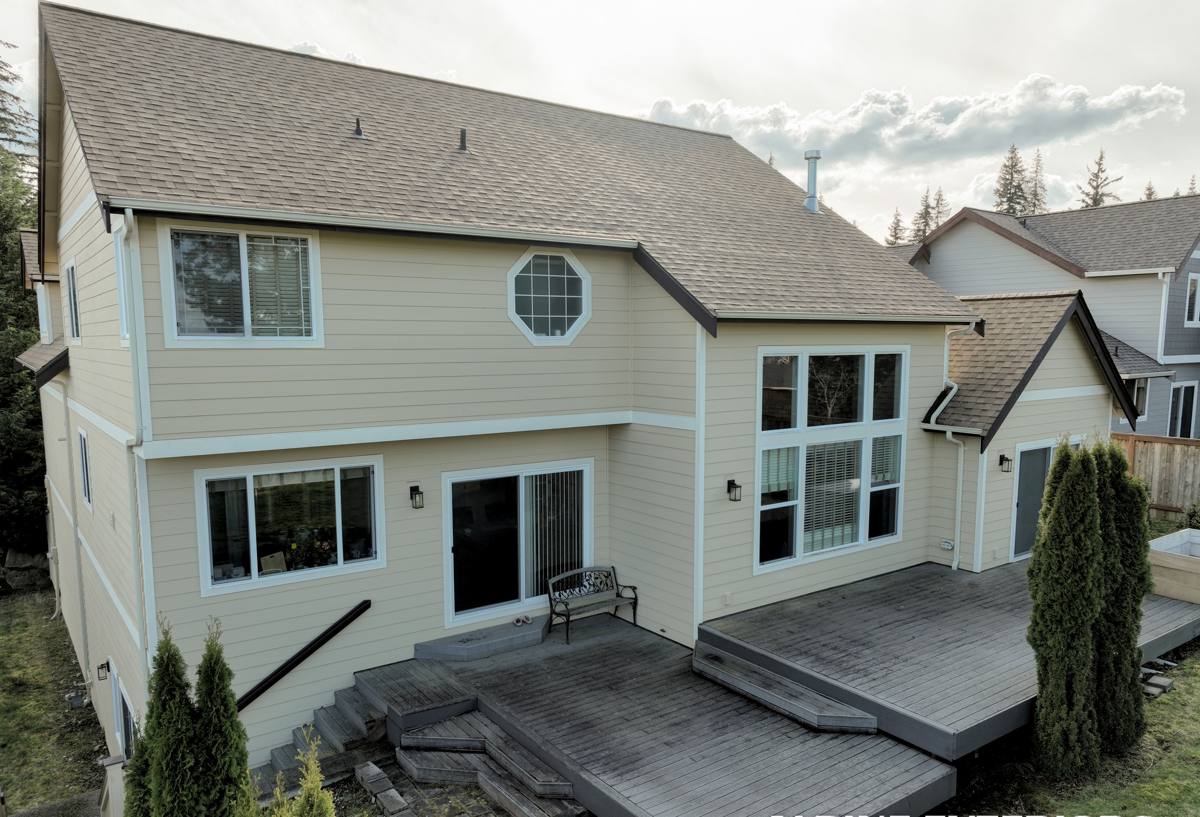
Why Decks Near the Bay Fail Faster
Every coastal Pinellas neighborhood deals with salt air, but proximity to open water like Old Tampa Bay accelerates the timeline. A few specific failure patterns show up again and again on decks we're asked to evaluate in the Safety Harbor area:
- Fastener corrosion: Standard or mismatched screws and nails rust and weaken years before the boards around them look bad, which is why a deck can seem fine on top while the connections underneath are failing.
- Ledger board rot: Where the deck attaches to the house is the single most safety-critical connection on the structure. Trapped moisture behind an improperly flashed ledger is a slow, hidden problem — and it's the spot most responsible for full deck collapses nationally.
- UV-driven surface breakdown: Florida sun is relentless. Wood fibers gray and splinter, composite caps can chalk or fade unevenly, and any surface coating degrades faster than manufacturers' national averages suggest.
- Wind uplift at the rail and stair connections: Gusts don't need to reach named-storm strength to work loose an under-fastened railing post or stair stringer over enough seasons.
- Substructure movement: Florida's mix of sandy soil and heavy seasonal rain can shift undersized or shallow footings over time, especially on decks that weren't engineered with local soil conditions in mind.
None of these are exotic problems. They're the predictable result of standard construction meeting a demanding climate, and they're exactly what we look for during a replacement evaluation.
Signs Your Safety Harbor Deck Needs Replacing, Not Patching
Not every issue calls for a full tear-off. But there's a point where repair stops being the honest recommendation. Here's how we draw that line during an inspection:
- Soft or spongy spots in the decking, especially near the house or around post bases
- Visible rust streaking from fastener heads, or fasteners that back out easily
- A ledger board that shows gaps, staining, or soft wood when probed
- Wobble or noticeable movement in railings when pushed firmly
- Footings that have shifted, cracked, or no longer sit level
- Boards that have cupped, split lengthwise, or delaminated (common with older composite generations)
- A deck older than 15-20 years that has never had its structural connections inspected
If you're seeing two or more of these, it's usually cheaper long-term to replace than to keep chasing repairs on a frame that's already compromised.
What a Correct Deck Replacement Actually Involves
Full Structural Assessment First
Before any demo starts, we evaluate what's actually happening underneath the visible deck: footing condition, ledger attachment, joist spacing and span, and how water has been draining (or not draining) around the frame. This tells us whether the existing footings and ledger connection can be reused safely or need to be rebuilt — reusing a sound footing saves you money; reusing a compromised one just delays a bigger repair.
Correct Ledger Flashing
Because ledger rot is the most common source of catastrophic deck failure, we treat this connection as non-negotiable. That means proper flashing that sheds water away from the house wall, correct fastener spacing and type, and a connection engineered to actual load — not just what "looks" attached.
Fastener and Hardware Selection
In a salt-air environment like Safety Harbor's, hardware choice matters more than most homeowners realize. We use fasteners and structural connectors rated for coastal/corrosive exposure — the extra cost up front is small compared to what it costs to re-open a deck in eight years because standard hardware failed. This is a professional standard we hold to, not an upsell.
Framing to Local Code and Wind Load
Pinellas County has wind-load requirements that reflect its hurricane exposure. Joist spacing, post sizing, and railing attachment all get built to that standard, with permitting and inspection handled as part of the job — not treated as optional paperwork.
Drainage and Ventilation Under the Deck
Standing water and trapped humidity under a low deck accelerate rot regardless of what decking material sits on top. We grade and, where needed, add drainage detailing so water moves away from the structure instead of sitting under it through Florida's rainy season.
Decking Material Options for Bayfront Conditions
There's no single "best" decking material — there's a best fit for your budget, maintenance appetite, and how close the home sits to open water. Here's how the common options actually compare in this climate:
| Material | Salt Air Performance | Maintenance | Typical Lifespan Here |
|---|---|---|---|
| Pressure-treated pine | Fair — needs sealing to hold up | Annual cleaning/sealing recommended | 10-15 years |
| Composite decking | Good — resists rot and salt corrosion | Occasional washing, no sealing | 20-25+ years |
| Tropical hardwoods (e.g., ipe) | Very good — dense, naturally resistant | Periodic oiling for color; low structural maintenance | 25+ years |
| PVC/capped polymer | Excellent — fully sealed surface | Minimal; occasional cleaning | 25-30 years |
Whatever surface material you choose, it's only as good as the frame underneath it — a premium composite deck on a rotting substructure with corroded hardware is still a bad deck. We'll walk you through the honest trade-offs (upfront cost vs. maintenance vs. lifespan) for your specific situation rather than pushing whatever has the best margin.
Our Replacement Process, Start to Finish
- On-site evaluation: We inspect the existing deck's frame, footings, and ledger connection, and give you a straight answer on repair vs. replace.
- Written estimate: A clear scope covering demo, materials, hardware grade, permitting, and timeline — no vague allowances.
- Permitting: We pull the required Pinellas County/City permits and schedule inspections; this protects you at resale and on insurance claims.
- Demo and disposal: Full removal of the old structure, including footings that don't meet current standards.
- Framing and ledger work: Built to local wind-load code with corrosion-resistant hardware throughout.
- Decking, railing, and stairs: Installed per manufacturer spec for whichever material you've chosen.
- Final walkthrough and inspection sign-off: You see the finished deck and the permit closes out clean.
Why Hire a Crew That Already Works in Safety Harbor
A contractor who's worked the Pinellas County bayfront neighborhoods already knows what a generic national spec sheet doesn't tell you: which hardware grade actually holds up this close to the water, how the local permitting office wants ledger connections detailed, and what soil conditions to expect when setting footings. That local knowledge shows up in fewer surprises during the job and a deck that's actually built for where it sits, not a climate-neutral average.
It also matters for accountability. A crew based in the area is the one you can call back next season if something needs a look, and the one whose work is visible to neighbors — which keeps standards honest in a way a here-today, gone-tomorrow storm-chasing outfit never has to answer for.
Cost Factors to Understand Before You Compare Bids
Deck replacement estimates in the Safety Harbor area vary widely, and the differences usually come down to a handful of factors:
- Square footage and deck shape: Multi-level decks, curves, and built-in features cost more than a simple rectangle.
- Decking material: Pressure-treated lumber sits at the low end; PVC/capped composite and hardwoods cost more upfront but less over the deck's life.
- Substructure condition: If footings and framing need full replacement (common on older decks), that's more work than a case where the frame checks out and only the surface needs redoing.
- Railing style and stairs: Custom railing, glass panels, or multiple stair runs add labor and material cost.
- Permitting and inspection: A properly permitted job has a fee built into the estimate — this is a sign of a legitimate contractor, not a cost to avoid.
Be cautious of any bid that's dramatically lower than the others without explaining why — it's usually a sign that hardware grade, permitting, or footing work has been left out of the scope.
Questions to Ask Before You Hire
Whoever you choose for a deck replacement in Safety Harbor, these are worth asking directly:
- Are you licensed and insured to do structural exterior work in Pinellas County?
- Will this job be permitted and inspected, or handled off the books?
- What fastener and connector grade are you using, and is it rated for coastal exposure?
- How will you handle the ledger board connection to the house?
- What's your plan for drainage under the deck?
A contractor who answers these clearly and specifically, without hedging, is one worth trusting with the job.
Ready to Talk About Your Deck?
If your deck is showing its age or you're just not sure whether it's a repair or a replacement situation, we're happy to take a look and give you a straight answer. Request a free, no-pressure estimate using the form below, and we'll walk you through exactly what your Safety Harbor home needs.