 Clearwater Roofing
 Composite Decking Built for Downtown Clearwater's Climate
Downtown Clearwater sits close enough to the Gulf that salt air, humidity, and sun exposure are part of daily life for every deck, porch, and outdoor living space in the area. A composite deck installed here has to handle more than foot traffic — it has to hold up against intense year-round UV, wind-driven rain that finds its way into every gap and seam, salt-laden air that corrodes hardware over time, and the occasional hurricane-force wind event that puts real uplift and lateral load on the structure. Composite decking is a strong fit for this environment when it's specified and installed correctly, but "correctly" is doing a lot of work in that sentence. A lot of decking problems we get called out to fix in Pinellas County aren't material failures — they're installation shortcuts that only show up a year or two later.
This page covers what a composite deck project for a Downtown Clearwater home should actually involve: the structural work under the boards, how the deck ties into the house, what separates composite from wood and PVC, and what our process looks like from first visit to final walkthrough.
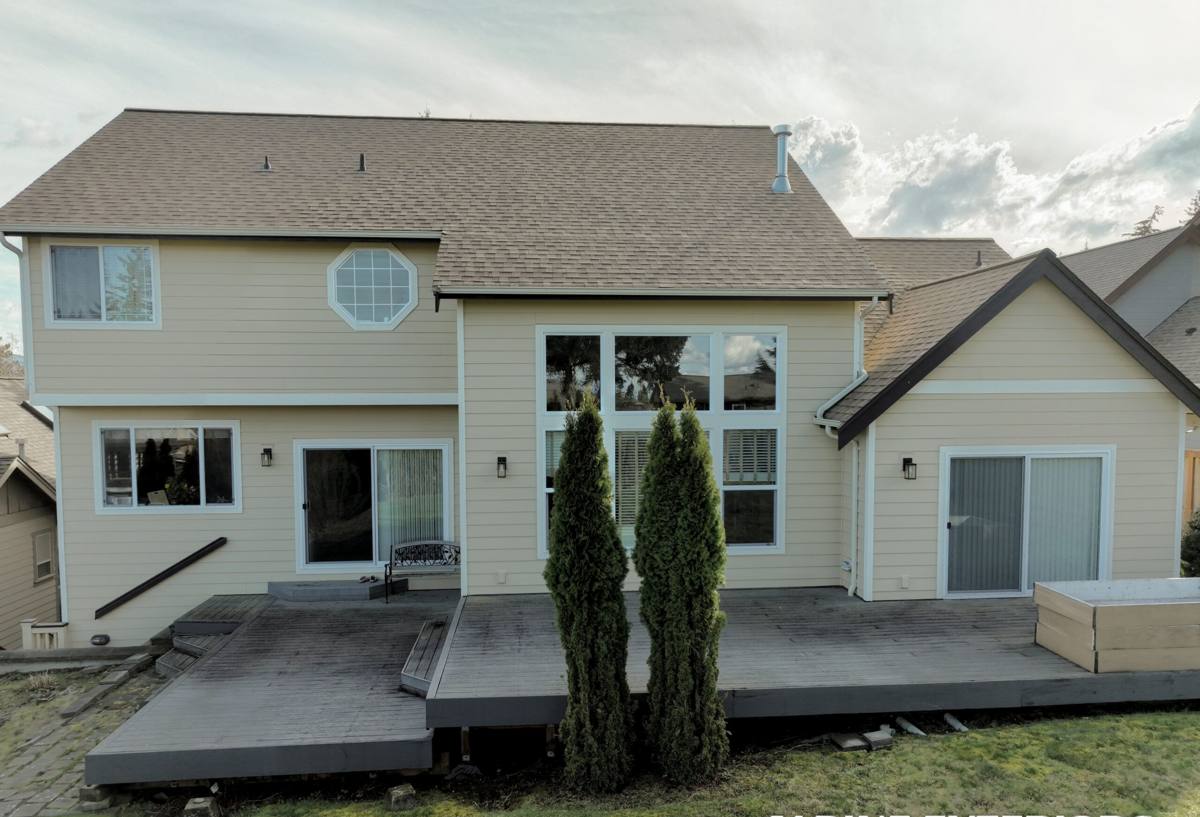
Why This Climate Is Hard on Decks
Every material choice and detail decision on a Clearwater deck traces back to four stressors that are more constant here than in most of the country:
- UV exposure. Florida sun is intense for most of the year, not just summer. Boards, fasteners, and finishes that aren't rated for sustained UV will fade, chalk, or become brittle faster than the same products would inland or up north.
- Wind-driven rain. Storms here don't just drop rain straight down — wind pushes it sideways and up under boards, into ledger connections, and behind fascia. Drainage and flashing details matter more than they would in a drier climate.
- Salt air. Even away from the immediate waterfront, airborne salt accelerates corrosion on fasteners, brackets, and any exposed metal. Hardware grade is not a place to cut corners on a Clearwater project.
- Wind load. Pinellas County sits in a wind-exposed coastal area, and Florida Building Code wind provisions apply to structural attachments — ledger boards, post connections, and railing anchorage all have to be sized for real uplift and lateral forces, not just static weight.
None of this means composite decking is a poor choice for Downtown Clearwater — it's actually one of the better options precisely because it doesn't absorb water and rot the way untreated wood does. But it does mean the substructure, fasteners, and flashing details need to be right, because the composite boards themselves are only as good as what they're fastened to.
What a Correct Composite Deck Installation Involves
Framing and Substructure
The visible composite boards get the attention, but the framing underneath is what determines whether a deck lasts. Joist spacing has to match the manufacturer's specification for the board profile being used — composite boards typically require tighter joist spacing than traditional lumber decking, and going wider to save material creates a soft, bouncy deck that will eventually show board deflection. In our coastal environment, we favor pressure-treated framing lumber rated for ground contact where it's near grade, or engineered/composite substructure components where budget allows, paired with corrosion-resistant fasteners and joist tape to keep moisture off the top of the joists.
Fastening and Board Layout
Most composite decking today uses a hidden fastener system that clips boards to the joists from the side, leaving no exposed screw heads on the walking surface. This matters in a sun-heavy climate for two reasons: fewer surface penetrations mean fewer points for water to enter the board core, and a clean surface without exposed fastener heads holds up better cosmetically under UV exposure over the years. Board layout also needs to account for thermal expansion — composite material moves more than wood with temperature swings, and gapping that's correct in cooler months can bind in peak summer heat if it wasn't calculated properly.
Flashing Where the Deck Meets the House
The single most common failure point we see on older decks isn't the decking material at all — it's a ledger board that was never properly flashed against the house. Wind-driven rain works its way behind an unflashed or poorly flashed ledger and rots the rim joist or sheathing behind it, sometimes for years before it's visible. A correct installation uses proper flashing, and in most cases mechanical fasteners with a code-compliant connection rather than relying on lag screws alone — this is one of the areas where Florida's wind provisions are stricter than what you'd see in a lot of other states.
Railings, Stairs, and Structural Connections
Railing posts and stair stringers take direct lateral load, and in a wind event they're often the first thing tested. We size post connections and use hardware rated for the exposure category rather than standard interior-grade brackets, and we check that guard height and baluster spacing meet current code before calling a job finished.
Composite vs. Wood vs. PVC Decking
Homeowners in Downtown Clearwater usually narrow the decision down to these three options. Here's how they actually compare for a coastal Florida application:
| Material | Upfront Cost | Maintenance | UV/Heat Behavior | Moisture & Salt Resistance |
|---|---|---|---|---|
| Pressure-treated wood | Lowest | Annual sealing/staining recommended | Fades, splinters, and checks under sustained sun | Absorbs moisture; prone to rot and fastener corrosion over time |
| Composite | Mid-range | Occasional cleaning; no sealing or staining | Fade-resistant capped boards hold color well | Doesn't absorb water into the core; performs well in salt air |
| PVC/cellular | Highest | Minimal; occasional cleaning | Very stable in heat; some products can feel hot underfoot | Fully synthetic; excellent moisture and salt resistance |
We don't push one product line over another — the right choice depends on budget, how the space will be used, and how much upkeep the homeowner actually wants to do. What we won't do is install any of these materials with shortcuts on the substructure or flashing, because that's what determines whether the deck is still solid in ten years, regardless of which decking material sits on top.
What Drives the Cost of a Composite Deck Project
Every deck quote we write is specific to the job, but the same handful of factors move the number up or down on most Downtown Clearwater projects:
| Factor | Why It Matters |
|---|---|
| Deck height and footings | Elevated decks need engineered footings and often a permit review for structural attachment to the house |
| Board tier and brand | Composite lines range from entry-level capped boards to premium multi-tone profiles with longer warranties |
| Railing and stair complexity | Multiple stair runs, angled sections, and cable or glass rail systems add labor and hardware cost |
| Substructure condition | Rebuilding a rotted or undersized existing frame costs more than framing new, but skipping it isn't an option |
| Access and site conditions | Tight lot access or existing landscaping around the deck footprint can add labor time |
We'd rather walk a homeowner through these variables during the estimate than throw out a number that doesn't hold up once we're actually on site.
Our Process for Downtown Clearwater Deck Projects
- On-site assessment. We look at the existing structure (if there is one), house connection point, drainage, and sun/shade exposure before recommending anything.
- Written estimate. A clear scope of work and price range based on the board tier, footprint, and structural work involved — no vague allowances.
- Permitting. Deck projects in Clearwater and Pinellas County typically require a permit, and elevated or attached decks need to meet Florida Building Code wind and load requirements. We handle this as part of the job rather than leaving it to the homeowner.
- Demolition and framing. Removal of any failing structure, followed by framing built to code-correct joist spacing and ledger flashing.
- Decking, railing, and finish work. Hidden-fastener board installation, railing and stair assembly, and trim/fascia detailing.
- Final walkthrough. We go over the finished deck with the homeowner, including basic care guidance, before calling the job complete.
Caring for a Composite Deck in a Coastal Climate
Composite decking is low-maintenance compared to wood, but "low-maintenance" isn't "no-maintenance" — especially with salt air and pollen in the mix. A little regular care keeps a deck looking and performing the way it should:
- Rinse the deck surface periodically to clear salt residue, pollen, and airborne grit before it builds up in the board texture
- Sweep debris out from between boards and off ledger and post connections so moisture doesn't sit trapped against hardware
- Clean spills and organic debris (leaves, pollen) promptly to prevent surface staining or mildew growth in shaded areas
- Check railing post connections and stair stringers annually, especially after a significant storm
- Keep gutters and nearby drainage clear so water isn't sheeting directly onto or under the deck
- Avoid pressure-washing at close range or high PSI, which can damage the board's protective cap layer
Signs an Existing Deck Needs Attention
If you're not building new but have an existing deck in Downtown Clearwater, a few warning signs are worth acting on before they become bigger problems:
- Soft or spongy spots underfoot, which usually point to a compromised joist below
- Visible gaps, staining, or a dark line where the ledger board meets the house siding
- Rust streaking from screws, brackets, or railing hardware
- Boards that have visibly faded unevenly, cupped, or pulled away from fasteners
- Railings or stair stringers that feel loose or flex under normal use
Any of these can usually be repaired if caught early. Left alone through another hurricane season, they tend to turn into full rebuilds.
Why a Crew That Already Works Downtown Clearwater Matters
Deck work in this part of Pinellas County isn't identical to deck work inland. A crew that regularly works Downtown Clearwater knows the wind and moisture exposure the area sees, has already worked with the local permitting process, and understands the older housing stock common to the neighborhood — including the kind of ledger connections and framing that were standard practice decades ago and don't meet current wind code. That familiarity shows up in fewer surprises during permitting, fewer change orders once demolition starts, and a finished deck that's actually built for the conditions it will sit in, not a generic spec sheet from somewhere with a milder climate.
If you're planning a new composite deck or need an honest look at one that's showing its age, we're glad to come take a look. Fill out the form below for a free, no-pressure estimate — we'll walk the site, answer your questions, and give you a straight assessment of what the job actually needs.