 Clearwater Roofing
 Roof Repair Built for Downtown Clearwater's Coastal Conditions
Downtown Clearwater sits close to the water, on the mainland side of the causeway that separates it from Clearwater Beach, with Clearwater Harbor right along its edge. That location is part of what makes the area desirable, and it's also exactly why roofs here take more abuse than roofs twenty or thirty miles inland. A roof repair that would hold up fine in a landlocked neighborhood can fail fast on a home this close to open water. Our repair work in Downtown Clearwater is built around that reality, not a generic checklist.
The housing stock downtown is a mix — older bungalows and mid-century homes alongside newer infill construction and low-slope additions, garages, and porch roofs tacked onto original structures over the years. Each of those roof types fails differently, and a repair crew that doesn't know the difference tends to either overtreat a simple problem or undertreat a serious one. We repair what's actually wrong, explain why it happened, and fix it in a way that holds up to the next storm season, not just the next dry spell.
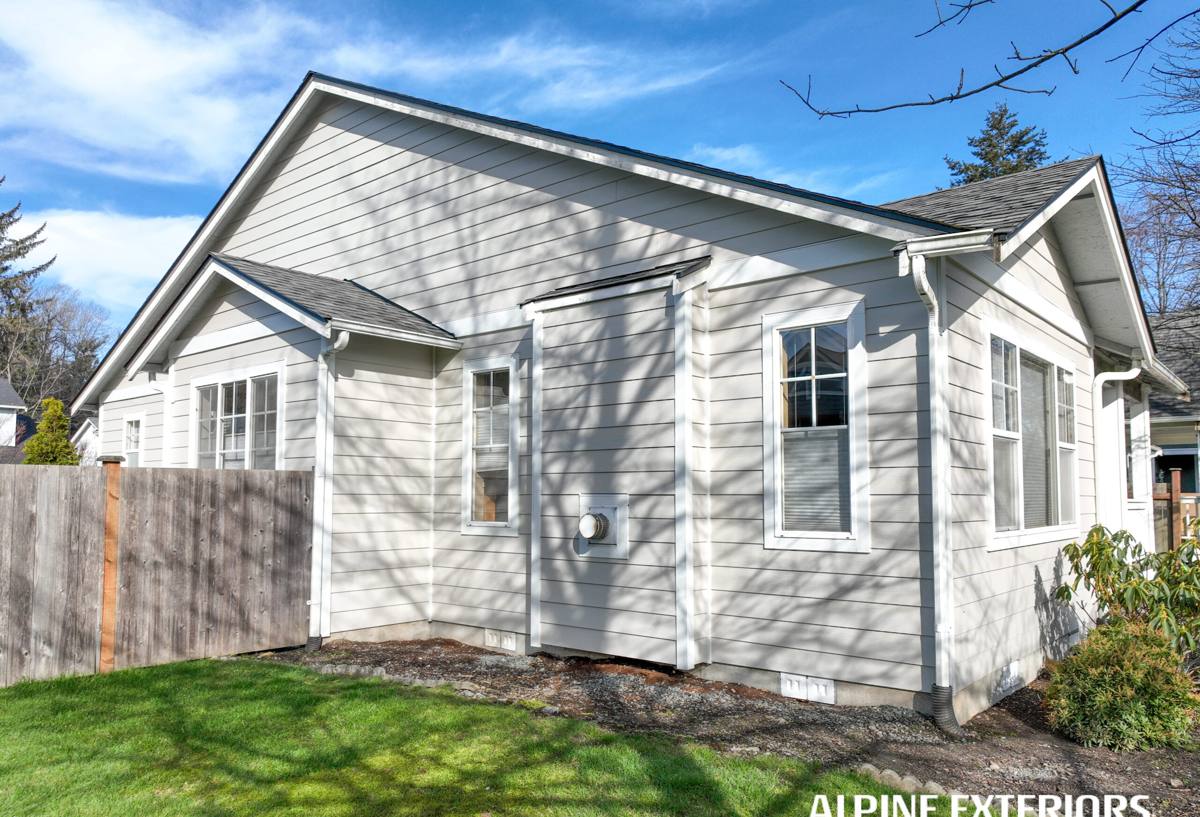
What Downtown Clearwater's Weather Does to a Roof Over Time
Pinellas County roofs age differently than roofs almost anywhere else in the country. Four conditions do most of the damage, and they compound each other.
Hurricane-Force Wind
Even when a storm doesn't make landfall directly, Clearwater regularly sits inside the wind field of passing systems. Wind doesn't just tear shingles off in dramatic fashion — it works underneath tabs and tile edges, breaks the seal, and lifts fasteners a fraction of an inch at a time. A roof can look intact after a windy season and still have a hundred small failure points waiting to leak during the next hard rain.
Year-Round UV Exposure
Florida's sun doesn't take an off-season. Asphalt shingles lose their oils and granules faster here than in most of the country, flat roof membranes stiffen and crack, and sealants that would last a decade up north can dry out and split in half that time. UV damage is slow and often invisible until a repair is already overdue.
Wind-Driven Rain
Straight-down rain and sideways rain are two different problems. Wind-driven rain gets pushed under shingle tabs, up under tile, and into flashing laps that were never designed to handle water moving against gravity. Most of the "mystery leaks" we're called out for in this area trace back to wind-driven rain finding a gap that a calm-weather inspection would never catch.
Salt Air
Being this close to Clearwater Harbor and the Gulf means the air itself carries salt. Salt accelerates corrosion on any exposed metal — flashing, fasteners, drip edge, vent stacks, and pipe boots. A fastener that rusts through years early is a leak waiting to happen, and it's one of the most common root causes we find on repair calls in this part of the county.
Common Repair Issues We See on Downtown Clearwater Roofs
The specific problem depends heavily on the roof type, which is why a proper repair starts with correctly identifying what's actually on the house.
Shingle Roofs
Lifted or missing tabs after wind events, cracked shingles from UV brittleness, and granule loss around valleys and edges where water concentrates. Flashing around chimneys, skylights, and wall transitions is a frequent failure point, especially on older homes where the flashing has never been replaced.
Tile Roofs
Cracked or slipped tiles from wind or foot traffic, and — more importantly — failed underlayment beneath tiles that still look fine on the surface. Tile can last decades, but the waterproofing layer underneath it doesn't last as long, and a lot of "tile roof leaks" are actually underlayment failures that just happen to show up under tile.
Flat and Low-Slope Roofs
Common on additions, porches, and some downtown commercial-style buildings. Ponding water, seam separation, and membrane cracking from UV are the usual culprits. Flat roofs have zero margin for error on drainage, so a repair has to address why water was sitting there in the first place, not just patch the spot that finally gave out.
What a Correct Roof Repair Actually Involves
A roof repair is more than sealing the spot where water is coming through. Water travels before it shows up as a stain, so the visible leak and the actual entry point are often in different places entirely. A correct repair means:
- Tracing the leak to its actual source, not just the ceiling stain below it
- Checking the surrounding material — decking, underlayment, flashing — for hidden damage before closing anything back up
- Matching materials appropriately so the repair doesn't create a new weak point next to the old one
- Re-sealing and re-fastening to current wind-resistance practices, not just replicating what failed
- Confirming drainage and water flow around the repair, especially on flat or low-slope sections
Skipping any of those steps is how a homeowner ends up paying for the same "repair" twice within a year or two.
Repair or Replace? How We Help You Decide
Not every roof problem needs a full replacement, and not every leak can be permanently solved with a patch. We walk every homeowner through the honest version of that decision rather than defaulting to whichever option is more profitable for us.
| Situation | What It Usually Means | Typical Direction |
|---|---|---|
| Isolated leak, roof under 10-15 years old | Localized flashing, sealant, or storm damage failure | Repair |
| Multiple leaks in different areas | Underlayment or decking breaking down broadly, not just one spot | Often points toward replacement |
| Granule loss and brittleness across the whole field | Shingles reaching end of UV-driven lifespan | Repair now, plan for replacement |
| Recurring leak in the same spot after prior repairs | Underlying cause was never fully addressed | Deeper repair or partial re-roof |
| Storm damage covering a large section | Wind or impact damage beyond one or two shingles/tiles | Depends on insurance scope and roof age |
We give you the reasoning behind the recommendation, not just the recommendation, so you can make the call with full information — including when "just repair it" is genuinely the right and more economical answer.
Our Roof Repair Process
Inspection
We get on or safely access the roof and look at the actual condition of decking, underlayment, flashing, and fasteners around the problem area — not just the surface layer. In Downtown Clearwater's salt-air environment, we pay particular attention to metal condition, since corrosion is often further along than it looks from the ground.
Written Scope Before Work Starts
You get a clear explanation of what's actually wrong, what we plan to do about it, and why — before any work begins. No vague line items, no pressure to sign on the spot.
The Repair Itself
We fix the identified problem correctly the first time, matching materials appropriately and using fastening and sealing methods suited to this area's wind exposure, not the minimum needed to pass a quick look.
Cleanup and Documentation
Job site cleaned up, debris and old material hauled off, and you get documentation of what was done — useful for your own records and often required if you're filing an insurance claim.
Signs Your Roof Needs Repair Now
Waiting on a roof problem in this climate almost always makes the eventual repair bigger and more expensive. Watch for:
- Water stains on ceilings or interior walls, even faint ones that come and go
- Missing, cracked, curling, or lifted shingles or tiles
- Granules collecting in gutters or at downspouts
- Visible rust or staining around flashing, vents, or pipe boots
- Soft spots or sagging when walking near the attic or on a flat section
- Daylight visible through the roof deck from inside the attic
- Any damage noticed right after a windstorm, even if nothing is leaking yet
Why Local Experience in Downtown Clearwater Matters
A repair crew that works this specific area regularly knows which failure patterns show up on which roof types near the water, understands Pinellas County's permitting and inspection expectations, and isn't guessing at how a repair needs to be built to hold up to the next storm season. That familiarity shows up in fewer callbacks and repairs that are sized correctly the first time — not oversold, not undersized.
It also matters for response time. A damaged roof after a wind event is not something that benefits from sitting on a waiting list for a crew driving in from another county. Being local means we can get eyes on the problem quickly and get it sealed up before a manageable repair turns into interior damage.
If you're dealing with a leak, storm damage, or a roof that's just showing its age in Downtown Clearwater, we're happy to take a look and give you a straight, no-pressure assessment. Use the form below to request a free estimate — there's no obligation, and you'll get an honest answer about what your roof actually needs.