 Clearwater Roofing
 Why Island Estates Siding Has to Work Harder
Island Estates is unlike most neighborhoods in Clearwater. It's surrounded by water on nearly every side, which means the homes here take a version of the Gulf Coast climate that's more concentrated than what you'd find a few miles inland. Salt-laden air moves across the island constantly, sun reflects off open water onto exterior walls for more hours of the day, and wind has a clear, unobstructed run at the building envelope during storms. Siding that would hold up fine in a shaded, inland Pinellas County yard can wear out noticeably faster out here.
That's the starting point for how we think about siding on this island: not "what's a good general siding product," but "what actually survives this specific combination of salt, sun, rain, and wind, year after year, without turning into a maintenance project." For us, the answer is James Hardie fiber cement siding, installed to the details that matter in this environment — not just nailed up to look good on day one.
The Climate Factors That Matter Most Here
Salt Air and Corrosion
Airborne salt from the surrounding water settles on every exterior surface on the island, including siding, trim, and fasteners. Over time it accelerates corrosion in metal components and breaks down coatings and finishes that weren't designed to handle it. Siding systems that rely on paper-thin factory coatings, or that need field-painting to look finished, tend to show chalking, fading, and edge deterioration sooner here than they would even a few miles away from open water.
Intense, Year-Round UV
Florida sun is strong everywhere, but a waterfront lot with reflected light off open water can push UV exposure even higher on certain elevations. UV breaks down pigments and resins in paint and coatings, which is why field-painted or unfinished siding on the island tends to fade unevenly and need repainting more often than the same product would need inland.
Wind-Driven Rain and Moisture Intrusion
Storms here rarely deliver rain straight down. Wind pushes it sideways, driving water into laps, seams, corners, and any gap around windows and doors. Siding that isn't installed with the right overlaps, flashing, and clearances will eventually let water behind the cladding — and on an island where humidity is already high, trapped moisture doesn't dry out quickly. That's often how rot, mold, and hidden sheathing damage get started, long before anything looks wrong from the street.
Hurricane Wind Loads
Pinellas County sits in a coastal wind-borne debris region under the Florida Building Code, and an open, waterfront location like Island Estates typically sees the higher end of local wind exposure during tropical storms and hurricanes. Siding on a home like this needs to be fastened and detailed to resist real uplift and impact forces, not just look attached.
Why We Standardized on James Hardie Fiber Cement
We only install James Hardie siding. We don't install vinyl, LP SmartSide, Cemplank, Allura, or unfinished wood siding, and on an island exposure like this, the reasons are practical rather than theoretical.
| Factor | James Hardie Fiber Cement | Vinyl Siding | Wood / Engineered Wood |
|---|---|---|---|
| Salt air & UV resistance | Non-combustible fiber cement core with a factory-baked ColorPlus finish designed to resist fading and coating breakdown | Can warp, discolor, or become brittle under sustained heat and UV | Coatings and treated surfaces degrade faster; needs more frequent repainting or resealing |
| Wind-driven rain performance | Engineered HZ product lines with installation specs built around moisture management | Lightweight panels can be more prone to wind uplift and gap intrusion in storms | Vulnerable to swelling and moisture absorption at edges and seams |
| Wind/impact resistance | Dense, rigid material that holds fasteners well and resists impact | Can crack, dent, or blow off in high wind if under-fastened | Varies by product; engineered wood is sensitive to moisture at cut edges |
| Ongoing maintenance | Factory finish reduces repainting cycles; occasional rinsing recommended near the coast | Low upkeep but appearance degrades over time with no refinish option | Regular repainting/resealing needed, more often in coastal exposure |
| Typical lifespan (installed correctly) | Multiple decades, backed by a strong transferable warranty | Shorter functional life in high-UV, coastal settings | Shortest lifespan in this climate without intensive maintenance |
None of this means other products are worthless — vinyl and engineered wood have their place in different climates and budgets. It means that for a home exposed to open water, sun, and hurricane-force wind, we'd rather install one product correctly and stand behind it than offer several and hope the cheaper ones hold up.
What a Correct James Hardie Installation Involves
Choosing the Right HZ Product Line
James Hardie engineers its siding by climate zone, called HZ5 and HZ10 formulations, matched to moisture and temperature conditions in a given region. Coastal Florida installations should use the HZ product line, which is manufactured for high-humidity, high-moisture climates like ours. Using the wrong climate formulation is one of the more common corners cut by crews unfamiliar with coastal work.
Moisture Management and Flashing
On a waterfront lot, the flashing details around windows, doors, and roof-to-wall transitions matter as much as the siding itself. Correct installation means proper weather-resistive barrier overlap, flashing tape or metal flashing at every penetration, correct lap spacing, and clearance between the bottom of the siding and grade, decks, or roof surfaces so water has somewhere to go and can't wick back into the material.
Fastening and Wind Resistance
James Hardie publishes specific fastener type, spacing, and embedment requirements, and those requirements get more conservative in higher wind exposure areas. Blind-nailing where face-nailing is called for, using the wrong fastener length, or spacing nails too far apart are installation shortcuts that won't show up as a problem until the next major storm tests them.
Our Process for an Island Estates Siding Project
- On-site assessment: We look at current siding condition, existing moisture damage, window and door flashing, and how each elevation is exposed to sun and prevailing wind off the water.
- Product and profile selection: We recommend the HardieZone product, plank profile, and ColorPlus color that fit the home's style and this specific exposure.
- Tear-off and substrate check: Old siding comes off and we inspect the sheathing underneath for rot or hidden moisture damage before anything new goes up — this step gets skipped more often than homeowners realize.
- Weather barrier and flashing installation: House wrap, flashing, and sealant details are installed to manage wind-driven rain before the first piece of siding is hung.
- Siding installation to spec: Panels or planks go up following James Hardie's fastening schedule and clearance requirements for this wind exposure.
- Trim, caulking, and final detailing: Corners, trim boards, and joints are finished and sealed to shed water correctly.
- Final walkthrough: We review the completed work with the homeowner and cover basic care going forward.
Picking Colors and Profiles That Suit a Waterfront Home
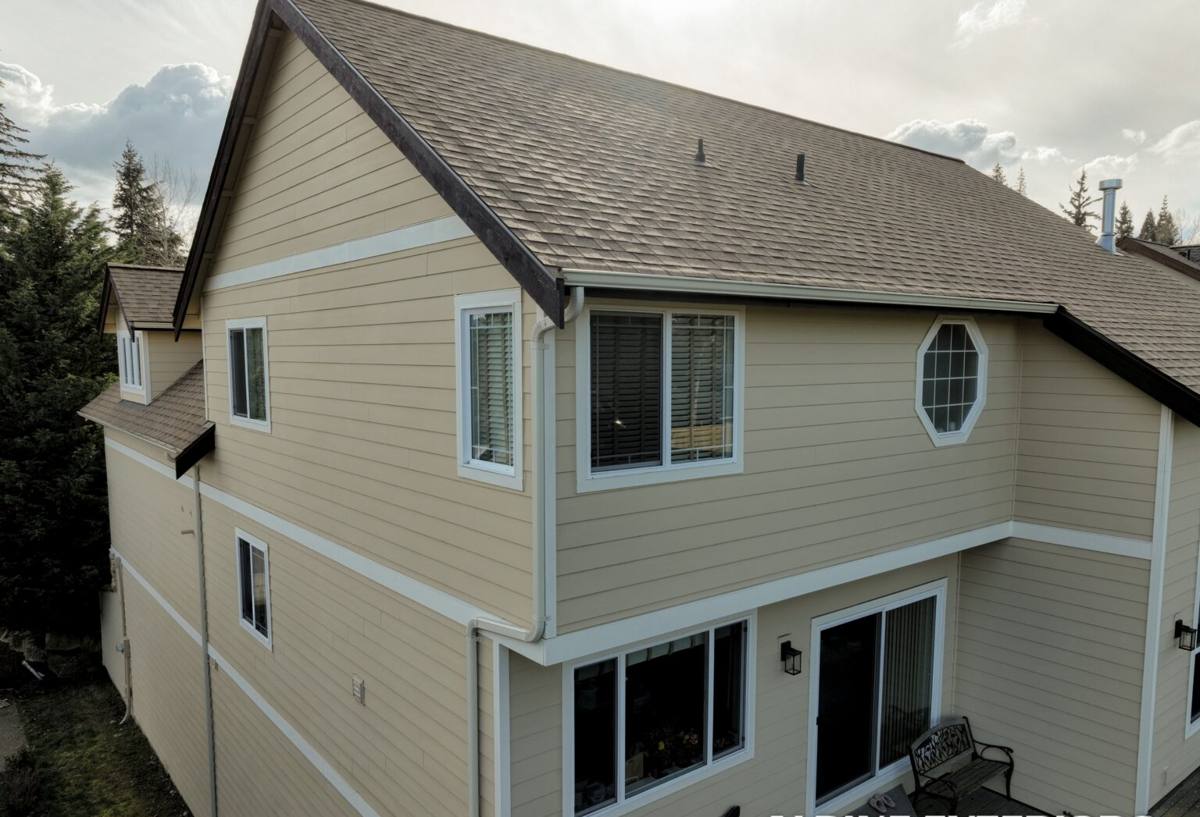
Island Estates has a strong coastal, boat-friendly character, and siding choices here tend to lean toward classic lap profiles and colors that read well against water and sky — soft neutrals, coastal blues and grays, and crisp whites are common choices, though the right pick always comes down to the individual home's roofline, trim, and stone or brick accents. James Hardie's ColorPlus finish is baked on at the factory under controlled conditions, which gives more consistent, fade-resistant color than field-applied paint, and it's available across the plank, shingle, and panel profiles most commonly used on homes in this area.
Living With Hardie Siding on the Island
Correctly installed Hardie siding is genuinely low-maintenance, but "low-maintenance" isn't the same as "no maintenance" in a salt-air environment. A short seasonal routine keeps it performing the way it's designed to:
- Rinse siding periodically with a garden hose to remove salt residue, especially on elevations facing open water
- Inspect caulking around windows, doors, and trim once or twice a year and touch up any cracked or missing sealant
- Check for signs of moisture staining or soft spots near the bottom edge of the siding, particularly near grade, decks, or irrigation spray
- Keep landscaping and sprinklers from constantly wetting the same section of wall
- After any major storm, walk the exterior for loose panels, damaged trim, or debris impact damage
- Avoid pressure washing at close range or high pressure, which can force water behind properly lapped siding
Why Hiring a Crew That Already Works This Neighborhood Matters
Island Estates presents a few practical realities that a crew unfamiliar with the area will learn on your project instead of before it. Access is limited to a causeway, which affects material staging and delivery timing. Homes are close to open water and canals, which means job-site protection and runoff control need extra attention. And the wind exposure here is genuinely higher than a comparable inland Clearwater address, which is exactly the condition James Hardie's installation specs are written to address — but only if the crew actually follows them rather than treating every job the same regardless of exposure.
A contractor who already works this specific island understands the flashing details, fastening requirements, and site logistics that this exposure calls for, instead of applying a one-size-fits-all approach to a home that doesn't have average conditions.
Get a Straightforward Estimate
If you're weighing a siding replacement or repair on your Island Estates home, we're happy to take a look, walk you through what James Hardie's HZ product line would involve for your specific elevation and exposure, and give you an honest, no-pressure estimate. There's no obligation — just a clear picture of what correct work looks like on a home like yours.