 Clearwater Roofing
 Siding Built for Palm Harbor, Not Just Sold to It
Palm Harbor sits in a part of Pinellas County where the weather doesn't take a season off. Homes here deal with hurricane-force winds during storm season, intense UV exposure nearly year-round, wind-driven rain that finds every gap in a building envelope, and a steady dose of salt air rolling in off the Gulf. Siding that was designed for a mild inland climate simply doesn't hold up the same way here, and homeowners often don't find that out until they're paying for it — peeling paint, soft spots at the bottom courses, or seams that have opened up and let moisture behind the wall.
This page is about one product, in one place: fiber cement siding, installed correctly, for homes in and around Palm Harbor. We install exclusively James Hardie fiber cement siding. Not vinyl, not engineered wood products like LP SmartSide, not primed spruce or cedar. That's a deliberate standard, not a sales preference, and it comes from what actually survives a Gulf Coast exposure over the long haul.
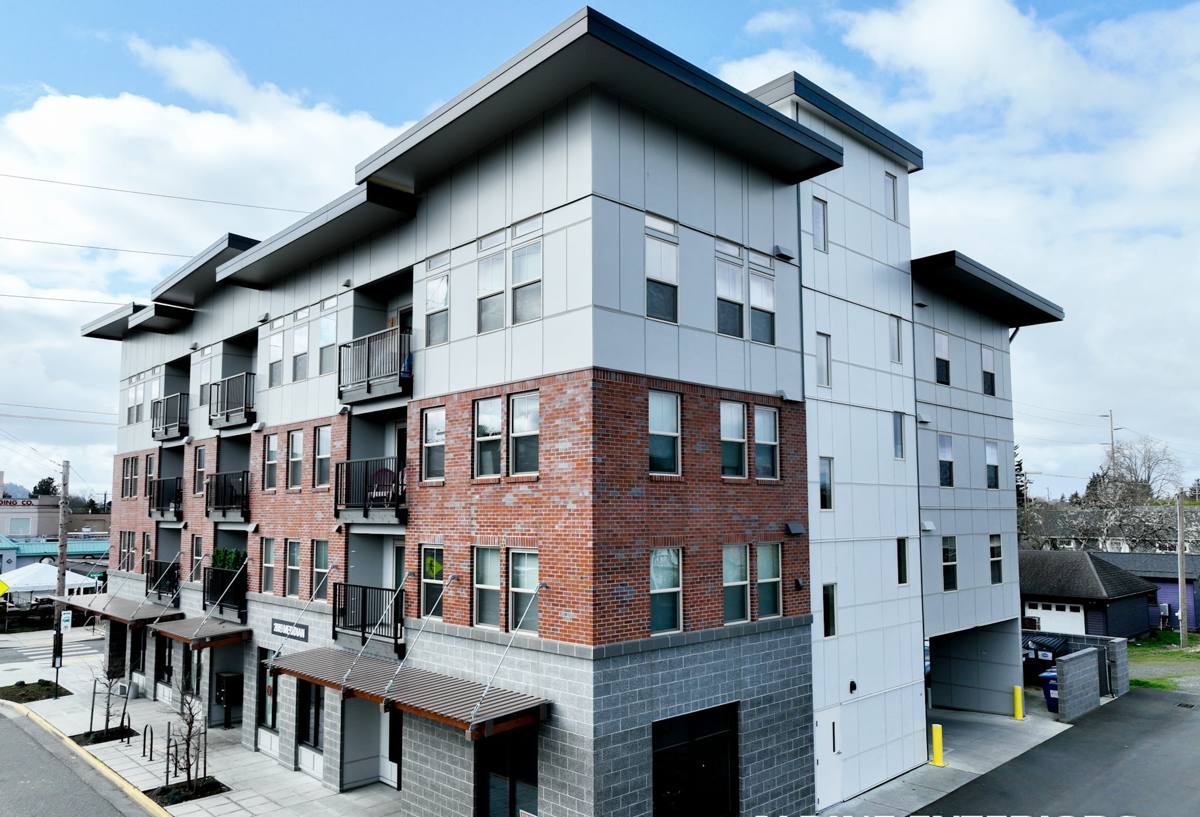
What Coastal Pinellas County Conditions Do to Siding Over Time
Before talking about what to install, it's worth understanding what the climate is actually testing for. Four things wear on exterior cladding here more aggressively than in most of the country:
- Wind: Sustained tropical-storm and hurricane-force winds put real uplift and impact load on siding panels, trim, and fasteners — not just during a named storm, but during the seasonal squall lines that pass through most summers.
- UV exposure: Florida's sun angle and day length mean siding faces near-constant UV loading. Pigments and coatings that aren't formulated to hold up to it fade, chalk, or break down faster than the manufacturer's own literature usually admits.
- Wind-driven rain: Rain in Pinellas County rarely falls straight down during a storm. It comes in sideways, which pushes water into laps, seams, and penetrations that a calm-weather installation would never expose.
- Salt air: Even well inland of the immediate coastline, airborne salt accelerates corrosion of fasteners, flashing, and any metal component that wasn't specified for a marine-grade or coastal exposure.
Individually, any one of these is manageable. Combined, and repeated year after year, they're what separates siding that looks good for five years from siding that still looks good after twenty.
Why We Standardized on James Hardie Fiber Cement
James Hardie fiber cement is a mix of cement, sand, and cellulose fiber, cured into a dense, dimensionally stable board. That composition matters for three reasons specific to a climate like this one:
It doesn't burn, swell, or rot the way wood-based products can
Fiber cement is non-combustible, which matters for insurance and fire-safety considerations independent of the weather. Just as important for a humid, storm-prone area: it doesn't absorb and release moisture the way wood or wood-fiber composite products do, so it isn't prone to the swelling, softening, and rot that repeated wetting and drying cycles cause over time.
ColorPlus factory finish is built for UV, not just applied over it
Hardie's ColorPlus finish is baked on in a controlled factory process with multiple coats, rather than field-applied paint. It's engineered specifically to resist the fading and chalking that intense, sustained UV exposure causes in ordinary paint systems. That's a meaningful difference in a market where the sun is doing damage every single day of the year, not just in July.
HZ product lines are engineered for exactly this climate
Hardie makes region-specific formulations, and the HZ5 line is engineered for higher-moisture, higher-humidity climates like Florida's — different than the formulation sold in drier northern climates. Installing the climate-correct HZ product, rather than a generic version, is part of doing the job right in Pinellas County.
What a Correct Fiber Cement Installation Actually Involves
Fiber cement siding is only as good as the installation behind it. Most of the failures we get called out to inspect on other contractors' work trace back to shortcuts in the parts nobody sees once the siding is up:
- Water-resistive barrier: A continuous, properly lapped house wrap or building paper behind the siding, with no gaps at seams or penetrations, so any water that gets past the cladding has somewhere to go besides your framing.
- Flashing at every penetration: Windows, doors, hose bibs, light fixtures, and vents all need proper flashing and integration with the water-resistive barrier — not just caulk over a gap.
- Correct clearances: Hardie specifies minimum clearance from roof lines, decks, and grade. Skipping these clearances is one of the most common ways installers void the manufacturer's warranty without the homeowner ever knowing.
- Fastener pattern and type: Corrosion-resistant fasteners, placed and spaced to the manufacturer's engineered pattern, matter enormously in a wind zone — this is what keeps panels attached during a real wind event, not just holding up a ladder inspection.
- Proper joint treatment and caulking: Butt joints, corners, and trim intersections need to be treated with the right sealant and technique so wind-driven rain doesn't find its way behind the board.
None of this is visible once the job is finished and looks good from the street. It's also exactly where an installer working outside their comfort zone, or rushing a crew through unfamiliar territory, tends to cut corners.
Comparing Siding Options for a Palm Harbor Home
| Factor | James Hardie Fiber Cement | Vinyl | Engineered Wood (LP-type) |
|---|---|---|---|
| Wind performance | Rated for high-wind installation when installed to spec | Lower impact and wind resistance; can crack or blow off in storms | Adequate when new, degrades with moisture exposure over time |
| UV/fade resistance | Factory ColorPlus finish resists fading and chalking | Prone to fading and can warp in sustained heat | Field-applied finishes fade faster and need more frequent repainting |
| Moisture behavior | Non-combustible, dimensionally stable, doesn't rot | Doesn't rot but can trap moisture behind panels | Wood-based core is vulnerable to swelling and rot if the finish fails |
| Salt air / corrosion | Cement composition unaffected by salt exposure | Plastic composition holds up but fasteners/trim still corrode | Moisture-sensitive core is a poor match for salt-humid air |
| Typical lifespan when installed correctly | Multiple decades | 15-25 years | Varies widely with maintenance and moisture exposure |
This isn't about any one product being universally wrong — it's about what performs best against this specific combination of wind, UV, rain, and salt, year after year, without asking the homeowner to babysit it.
Our Process for a Palm Harbor Siding Job
Every job starts with an on-site assessment of the home's current siding and the condition of what's underneath it, since that's what actually drives the scope of work — not just what's visible from the curb. From there:
- We evaluate the existing wall assembly, moisture condition, and any areas showing signs of past water intrusion before quoting the job.
- We spec the correct Hardie product line, profile, and ColorPlus color for the home, factoring in exposure direction and any HOA or neighborhood considerations.
- We remove old siding down to the sheathing where needed and install a continuous, properly lapped water-resistive barrier.
- We flash every window, door, and penetration before a single piece of siding goes up.
- We install to Hardie's fastening schedule and clearance specifications — the details that keep the manufacturer's warranty intact.
- We walk the finished job with the homeowner before calling it complete.
Why Local Experience in Palm Harbor Matters
Siding installation isn't one-size-fits-all, even within the same county. A crew that regularly works Palm Harbor and the surrounding Clearwater area already knows what to check for on homes exposed to this specific mix of coastal humidity, sun, and storm risk — and doesn't have to learn it on your house. A few things worth asking any contractor before you hire them for a fiber cement job:
- Are you a certified James Hardie installer, and can you explain the fastening and clearance specs you follow?
- Will you show me the water-resistive barrier and flashing details before the siding goes on, not just the finished product?
- What's your plan for wind-zone fastening on this specific home, given its exposure?
- Do you carry proper licensing and insurance for exterior work in Pinellas County?
- Can you walk me through the manufacturer's warranty and what would void it?
A contractor who answers these clearly, without hedging, is generally one who's done the work correctly before — and knows what's actually at stake in a wind- and moisture-heavy market like this one.
Maintenance and What to Expect Long-Term
One of the practical advantages of correctly installed Hardie fiber cement in this climate is how little ongoing maintenance it demands compared to wood-based alternatives. There's no repainting cycle driven by a failing factory finish, no soft spots to watch for at the base of walls, and no swelling at seams after a wet season. Periodic rinsing to keep salt residue and organic growth from building up, and a visual check after major storms for any impact damage or lifted trim, is generally all that's needed. James Hardie also backs its products with a strong, transferable warranty — worth understanding up front, since it's tied directly to installation meeting the manufacturer's specifications.
Get a Straight Answer on Your Palm Harbor Home
If your siding is showing its age, or you're planning ahead of the next storm season, we're happy to take a look and give you an honest assessment of what your home actually needs — no pressure, no inflated scope. Fill out the form below for a free estimate.