 Clearwater Roofing
 Palm Harbor Siding Has a Harder Job Than It Looks
Palm Harbor sits close enough to the Gulf that salt-laden air is part of daily life, and far enough into Pinellas County's open, low-tree-canopy neighborhoods that homes take direct sun and wind with little natural buffering. Add in the seasonal threat of hurricane-force gusts and the near-daily reality of wind-driven summer rain, and you have a climate that is genuinely hard on exterior cladding. Siding here isn't just a cosmetic layer — it's the first line of defense against moisture intrusion, UV breakdown, and wind uplift, and it needs to be chosen and installed with all three in mind.
We install James Hardie fiber cement siding exclusively. That's not a marketing angle — it's a professional standard we've settled on after weighing how different siding materials actually hold up under Florida's specific combination of stressors. This page focuses on one thing: what Palm Harbor homes need from their siding, what a correct Hardie installation looks like in this environment, and why local experience matters as much as the product itself.
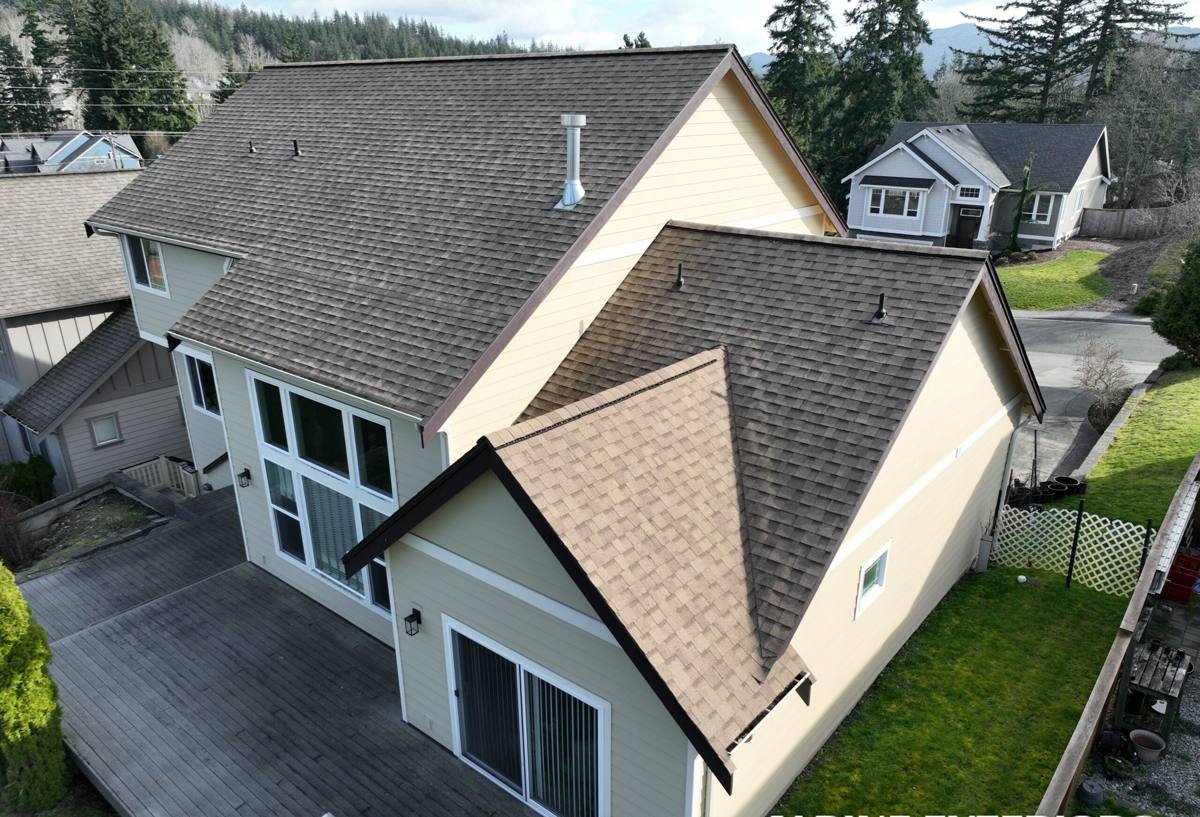
What Palm Harbor's Climate Actually Does to Siding
Wind-Driven Rain
Straight-down rain is easy for any siding to shed. Wind-driven rain is a different problem — it gets pushed sideways and upward, finding its way behind panels, into seams, and around trim if the water-resistive barrier and flashing details aren't done correctly. In Palm Harbor, where storms regularly roll in off the Gulf with lateral force, the quality of the moisture-management system behind the siding matters as much as the siding itself.
Intense, Year-Round UV
Florida doesn't get a real off-season for sun exposure. South- and west-facing walls in particular take a beating year-round, and any siding with a factory finish that isn't engineered for UV resistance will start to chalk, fade, or degrade unevenly within a few years — leaving some walls of a home visibly older than others.
Salt Air
Even a few miles inland from the coast, airborne salt accelerates the breakdown of certain materials and finishes, and it can be especially hard on fasteners and trim components that aren't rated for the exposure. Over time, salt air also affects how paint and coatings adhere and hold color.
Hurricane-Force Wind
Wind load isn't just about the siding surviving a named storm — it's about how the panels are fastened, how the corners and edges are detailed, and whether the whole assembly is designed to stay put under sustained pressure and gusts, not just wind from one direction.
Why We Standardized on James Hardie for This Environment
We don't install LP SmartSide, vinyl, Cemplank, Allura, primed spruce, or cedar. Each of those products has legitimate strengths, but none of them line up as well with the specific combination of UV load, wind-driven moisture, and storm wind exposure that Palm Harbor homes deal with. Fiber cement, and James Hardie's version of it specifically, addresses the parts of this climate that cause the most trouble:
- Non-combustible material — fiber cement doesn't feed a fire the way wood-based products can, which matters for both safety and, in many cases, insurance considerations.
- ColorPlus factory finish — a baked-on finish engineered to resist UV fading and chalking better than field-applied paint, which matters enormously under Florida's sun.
- HZ5 product engineering — Hardie's HZ5 line is formulated specifically for high-humidity, moisture-prone climates like Florida's, as opposed to their HZ10 line built for freeze-thaw regions. Using the climate-correct product line is not optional in our process.
- Dimensional stability — fiber cement doesn't expand, contract, warp, or absorb water the way wood-based composite products can, which matters when panels are cycling through Florida's humidity swings and sudden downpours.
- A strong, transferable warranty — backed by a manufacturer with decades of specific engineering focus on fiber cement, not a secondary product line.
None of this means other products are without merit. It means that, weighing maintenance burden, moisture behavior, and long-term performance against Palm Harbor's specific climate, Hardie is the product we're willing to put our name behind.
What a Correct James Hardie Installation Actually Involves
The product only performs as well as the installation. Fiber cement siding failures in Florida are very often installation failures, not product failures — and in a wind-driven-rain climate, the details behind the panels matter as much as the panels themselves.
Moisture Management First
Before a single piece of siding goes up, the wall needs a properly lapped water-resistive barrier and correctly flashed openings — windows, doors, penetrations, and transitions. This is the layer that actually stops wind-driven rain from reaching the sheathing, and it's also the layer that's invisible once the job is done, which is exactly why it can't be shortcut.
Fastening and Clearances
James Hardie specifies fastener type, spacing, and placement for a reason — under-fastened or improperly placed panels are far more vulnerable to wind uplift. Correct clearances from grade, roofing, and other surfaces also matter for keeping moisture from wicking into panel edges over time.
Joints, Caulking, and Trim
Butt joints, corners, and trim intersections are where most long-term problems start if they're rushed. Proper caulking, correctly primed cut edges, and manufacturer-specified gaps all factor into how the assembly handles Florida's humidity and rain over the years — not just how it looks on installation day.
The Climate-Correct Product Line
As noted above, using HZ5-engineered products rather than a freeze-thaw-oriented line is part of doing the job correctly here. It's a detail that's easy for a less experienced installer to overlook, and it has real consequences for long-term performance in a humid coastal climate.
Our Process for Palm Harbor Homes
| Step | What Happens |
|---|---|
| 1. On-site assessment | We inspect existing siding, sheathing, and moisture barrier condition, and check for any underlying damage that needs to be addressed before new siding goes on. |
| 2. Product and color planning | We walk through James Hardie's HZ5 lines, textures, and ColorPlus finish options suited to the home's exposure and the homeowner's preferences. |
| 3. Tear-off and prep | Old siding is removed, sheathing is inspected and repaired as needed, and a correctly lapped water-resistive barrier is installed. |
| 4. Flashing and detailing | Windows, doors, and penetrations are flashed to manufacturer specification before panels go up — the step that determines how well the wall handles wind-driven rain. |
| 5. Installation | Panels, trim, and fasteners are installed to James Hardie's published specifications for fastening, clearance, and joint treatment. |
| 6. Final inspection and walkthrough | We review the completed work with the homeowner and confirm every detail meets both manufacturer and our own standards before calling the job done. |
Why Local Palm Harbor Experience Matters
A siding crew that regularly works in Palm Harbor and the broader Clearwater and Pinellas County area brings more than familiarity with the neighborhood — they bring working knowledge of local wind-load requirements, permitting expectations, and the specific failure patterns that show up on homes exposed to this coastal climate. That's different from a crew installing Hardie occasionally as one of several products in their lineup. Consistency in product and process, repeated across many local jobs, is what makes an installation crew genuinely good at handling Florida's specific demands rather than just generally competent at siding.
Working locally also means faster response for follow-up questions, easier scheduling around Florida's rainy season, and a crew that's accountable to a community they actually work in — not a name that shows up for one project and disappears.
Cost Factors for a Palm Harbor Siding Project
Every home is different, and specific pricing depends on a site visit, but the main factors that affect the cost of a James Hardie installation include:
| Factor | Why It Matters |
|---|---|
| Home size and wall complexity | More square footage, corners, gables, and architectural detail all increase labor time. |
| Existing siding removal | Tear-off of old siding and any needed sheathing repair adds time before new siding can go up. |
| Product line and profile | Lap siding, shingle-style panels, and board-and-batten looks vary in material and labor cost. |
| Color and finish | ColorPlus factory-finished options versus field-painted finishes affect both cost and long-term maintenance. |
| Underlying damage | Moisture or wood damage found once old siding comes off can add scope once it's identified. |
A Homeowner's Maintenance Checklist
Correctly installed James Hardie siding is low-maintenance, but "low" isn't "none." A short annual routine keeps it performing as designed in Palm Harbor's climate:
- Rinse siding periodically to clear salt residue and airborne grime, especially on sides of the home most exposed to wind.
- Inspect caulking at joints, trim, and window/door intersections yearly, and have any cracked or missing caulk addressed promptly.
- Walk the exterior after major storms to check for impact damage, loose trim, or displaced panels.
- Keep irrigation heads and sprinklers from spraying directly on siding, which can cause mineral staining over time.
- Trim back vegetation that holds moisture against the wall or restricts airflow along the siding.
- Address any signs of soft or discolored trim boards quickly — small issues caught early are far cheaper to fix than deferred ones.
Ready to Talk About Your Palm Harbor Home?
If your current siding is showing its age — fading, cracking, soft spots, or recurring moisture issues — or you're planning ahead for storm season, we're happy to take a look and talk through what James Hardie siding would involve for your specific home. There's no pressure and no obligation: just a straightforward, no-cost estimate from a crew that installs this product, and only this product, throughout Palm Harbor and the surrounding Clearwater area. Use the form below to get started.