 Clearwater Roofing
 Composite Decking for Safety Harbor Homes
Safety Harbor sits right on Old Tampa Bay, which means homes here deal with a specific combination of stressors that inland Pinellas County properties don't face as intensely: near-constant humidity, salt-laden air blowing off the water, intense UV exposure most of the year, and the real possibility of hurricane-force wind and wind-driven rain during storm season. A deck built for a subdivision forty miles inland doesn't need to survive the same conditions as one built two blocks from the harbor. We build composite decks specifically with Safety Harbor's climate in mind, not a generic spec sheet.
This page covers what we actually do differently here — the substructure choices, the fastener selection, the drainage and ventilation details — so you know what a correctly built deck looks like before you sign a contract with anyone.
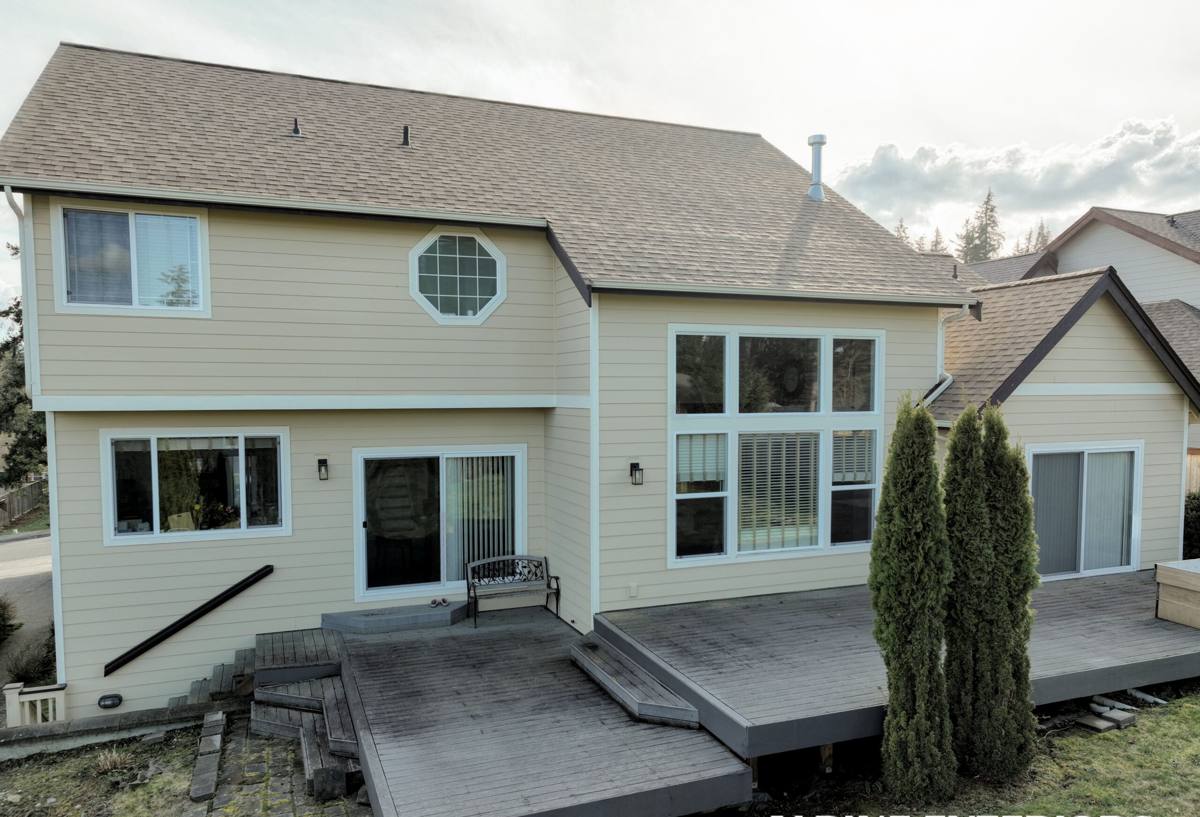
What the Local Climate Does to a Deck Over Time
UV and Heat
Florida sun is relentless on exterior materials, and a deck gets it from above and, depending on orientation, reflected off the water for a good part of the day. Cheap composite boards without adequate UV inhibitors will fade unevenly and can go brittle at the surface years before a quality board would. This is a material-selection issue as much as an installation one — we'll walk you through which board lines hold color and surface integrity best in full Florida sun.
Wind-Driven Rain and Humidity
Composite decking doesn't rot like wood, but the structure underneath it still can if it's built wrong. Wind-driven rain during summer storms gets pushed sideways and up under boards, into ledger connections, and around posts. If the substructure isn't properly flashed, ventilated, and protected, moisture gets trapped and you end up with hidden problems under a deck surface that looks fine on top.
Salt Air and Corrosion
Being close to the bay means airborne salt settles on everything, including every screw, bracket, and post base on your deck. Standard zinc-coated fasteners corrode faster in this environment than they would inland. We spec stainless or coated fasteners rated for coastal exposure, because a deck is only as strong as its weakest connection, and a corroded ledger bolt or joist hanger is exactly the kind of failure point that doesn't show up until it's a real problem.
Composite vs. Wood: Why It Makes Sense in This Climate
Wood decking has its place and its fans, but in a coastal Pinellas County environment it asks a lot of a homeowner in ongoing maintenance. Here's an honest comparison for our conditions specifically:
| Factor | Composite Decking | Pressure-Treated Wood |
|---|---|---|
| Salt air / humidity resistance | Doesn't absorb moisture into the board itself; resists cupping and splintering | Absorbs moisture, can swell, split, and gray faster near the bay |
| UV fading | Fades slowly and evenly with a quality board and proper capstock | Grays and roughens without regular sealing |
| Annual maintenance | Periodic washing; no sealing or staining required | Sealing or staining every 1-2 years to hold up in this climate |
| Upfront cost | Higher material cost | Lower material cost |
| Long-term cost | Lower over 15-20 years due to minimal upkeep | Adds up with recurring maintenance and earlier replacement of boards |
| Splinter/heat underfoot | Varies by board — some capstock lines stay cooler than others | Can splinter as wood ages and dries |
Composite isn't automatically the right call for every budget or every homeowner, but for a deck that's going to sit in full sun near open water, it removes a lot of the maintenance burden that wood decking creates in this specific environment.
What a Correctly Built Composite Deck Involves
Substructure and Framing
The composite boards get the attention because they're what you see, but the framing underneath is what determines whether the deck lasts. We size joists and beams to the actual span and load, not just to what the boards will visually cover, and we use framing lumber or engineered material rated for the moisture exposure a Safety Harbor site sees.
Fasteners and Hardware
Every screw, bracket, hanger, and bolt gets specified for coastal exposure — stainless steel or a coating rated for it, not the standard hardware that's fine forty miles from the water but corrodes faster here. This is a small line item on an estimate and an easy thing to shortcut. It's also the difference between hardware that lasts the life of the deck and hardware that needs replacing in a few years.
Ventilation and Drainage
Trapped moisture under a deck is where problems start, even with composite boards on top. We build in proper airflow beneath the deck surface and make sure water sheds away from the house and off the site instead of pooling against the ledger board or posts. Ledger attachment to the house gets flashed correctly so wind-driven rain can't work its way behind it during a storm.
Our Process
- On-site assessment — we look at your existing structure (if replacing a deck), site drainage, sun exposure, and proximity to the water to understand what the deck actually needs to handle.
- Design and material selection — we walk you through board options, railing systems, and layout, with honest trade-offs on cost and performance for your specific site.
- Permitting — decking work in Pinellas County typically requires a permit; we handle the application and inspections as part of the job.
- Demolition and substructure build — old decking removed if applicable, framing built or reinforced to current load and coastal fastener standards.
- Composite installation — boards, fascia, and railing installed per manufacturer spec, which matters for both performance and warranty coverage.
- Final walkthrough — we go over the finished deck with you, including basic care so it holds up in this climate long-term.
Choosing a Board: What Actually Matters Here
Not all composite decking is built the same way, and the differences matter more in a coastal climate than a mild one. Capped composite boards, where a protective outer layer surrounds the wood-plastic core, generally hold up better against moisture intrusion at cut edges and fastener holes than uncapped boards. Color and finish also affect heat absorption underfoot — lighter, lower-gloss finishes tend to stay cooler in direct Florida sun than dark, high-gloss ones. We'll talk through the board lines that have performed well for us on other Pinellas County installs and explain the real differences in warranty terms, since composite warranties vary quite a bit between manufacturers on things like fade coverage and structural defects.
Permits, Codes, and Wind Load
Pinellas County and the City of Safety Harbor have permitting and inspection requirements for deck construction, and wind load is a real design factor here given the area's hurricane exposure. Railing height, guard spacing, ledger attachment, and footing depth all get inspected against code — this isn't paperwork for its own sake, it's what keeps a deck structurally sound in a storm. We pull the permits and coordinate inspections as part of the build so you're not left managing that process yourself.
Maintenance Checklist for Composite Decks in This Climate
One of the appeals of composite is how little upkeep it needs compared to wood, but "low maintenance" isn't "no maintenance," especially with salt air and humidity in the mix. A short routine keeps a deck looking and performing the way it should:
- Rinse or wash the deck surface periodically to clear salt residue, pollen, and organic debris before it builds up
- Sweep out leaves and debris from between boards and along the perimeter so airflow underneath isn't blocked
- Check railing posts and connections annually for looseness, especially after a significant storm
- Inspect fastener heads and hardware for early signs of corrosion, particularly on the side of the deck facing the water
- Confirm gutters and downspouts near the deck are directing water away, not onto or under the structure
- After any named storm, do a quick visual check of the ledger board attachment and railing before heavy use
Why It Matters That We Already Work Safety Harbor
A contractor who's built and repaired decks around Safety Harbor and the wider Clearwater area already knows which fastener specs hold up near the water, how local permitting and inspection actually runs, and what wind exposure a given lot faces based on its position relative to the bay. That's not something you get from a national franchise working off a standard spec sheet, and it's not something you can fully evaluate from a set of online reviews. It shows up in the small decisions — flashing details, hardware grade, board orientation relative to sun and wind — that determine whether a deck is still solid in ten years or starting to show problems in three.
If you're planning a new composite deck or replacing an aging one in Safety Harbor, we're happy to come take a look and give you a straightforward assessment — no pressure, no hard sell. Use the form below to request a free estimate and we'll get back to you to schedule a time.