 Clearwater Roofing
 Window Replacement Built for Safety Harbor's Bayfront Climate
Safety Harbor sits along Old Tampa Bay in Pinellas County, close enough to open water that its homes take on a different kind of weather stress than inland Florida properties. Between hurricane-force wind events, near-constant UV exposure, wind-driven rain, and the slow creep of salt air off the bay, windows here age faster than the manufacturer's brochure suggests. A window that would hold up fine in a landlocked subdivision can fail years early in Safety Harbor if it wasn't specified, installed, and sealed correctly for this environment.
This page covers what window replacement actually requires for a Safety Harbor home — not generic advice, but the specific factors that matter for houses in this part of Clearwater's service area.
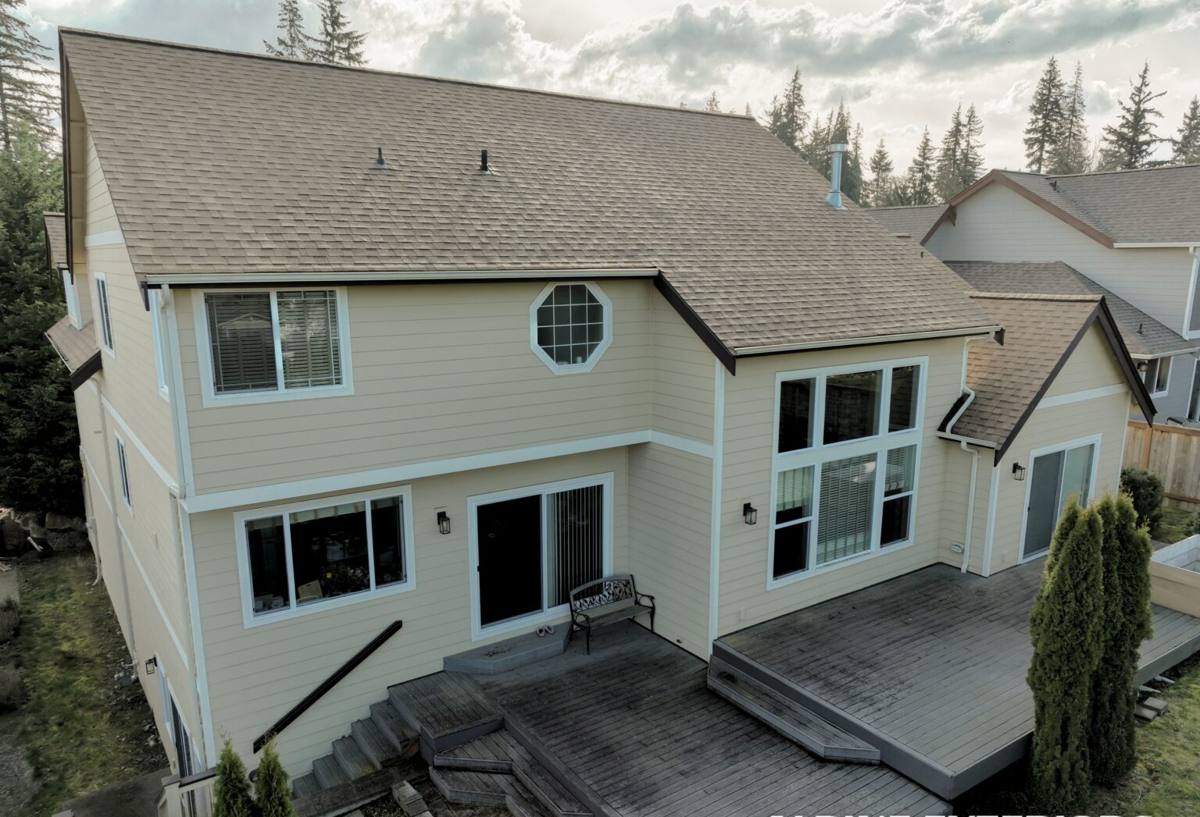
What Coastal Pinellas County Conditions Do to Windows Over Time
Every window on a Safety Harbor home is being worked on by the environment every single day, whether or not a storm ever hits. The damage is cumulative and often invisible until it isn't.
Salt air and corrosion
Airborne salt from the bay settles on window hardware, screen frames, and metal fasteners. Over time it corrodes lesser-grade hardware, pits aluminum finishes, and breaks down the seals on lower-quality vinyl and composite frames. Homes closer to the water see this faster, but it affects the whole city to some degree.
UV breakdown
Florida's UV index runs high most of the year. UV exposure degrades vinyl frames, breaks down glazing seals, and fades interior finishes near windows. Low-E glass coatings help, but the frame material and seal quality matter just as much as the glass.
Wind-driven rain intrusion
Heavy Gulf-fed storms don't just bring rain — they push it sideways, under trim, and into any gap in the window's flashing or seal. A window that "looks fine" from the outside can still be letting water into the wall cavity behind it, which is how rot and mold problems start well before anyone notices a leak indoors.
Wind load and pressure cycling
Even homes that never take a direct hurricane hit still go through repeated high-wind pressure cycling every storm season. That constant flexing works on seals, glazing, and frame corners over the years, which is part of why older, non-impact windows in this area tend to fail earlier than their age would suggest.
Florida Building Code and Impact Requirements
Pinellas County falls within Florida's High-Velocity Hurricane Zone influence area, and window replacements are governed by the Florida Building Code's wind-borne debris and pressure requirements. In practice, that means replacement windows need to be rated for the wind pressures and impact resistance that apply to your specific home, not just "hurricane-rated" in a general sense.
- Replacement windows must carry documentation (a Notice of Acceptance or equivalent) proving they meet the wind pressure and impact standards for the installation location.
- A permit is required for window replacement in most Pinellas County jurisdictions — this isn't optional paperwork, it protects you if there's ever an insurance claim or a future home sale.
- If you're using shutters or panels instead of impact glass to meet code, that's a legitimate path, but it changes what happens during a storm since someone has to deploy protection before it hits.
A contractor who pulls the correct permit and can show you the product's approval documentation is doing this the right way. One who offers to "skip the permit to save time" is setting you up for problems later.
Impact-Rated Windows vs. Standard Windows Plus Shutters
Homeowners in Safety Harbor generally choose between two approaches to meeting wind and impact requirements. Both are valid; the right one depends on budget, how the home is used, and personal preference.
| Factor | Impact-Rated Windows | Standard Windows + Shutters |
|---|---|---|
| Storm prep effort | None — protection is built in | Shutters must be deployed before each storm |
| Upfront cost | Higher per window | Lower window cost, added shutter cost |
| Daily living | No visual or access change | Shutters may block light/views when stored or deployed |
| UV and noise performance | Often better, even outside storm season | Depends on base window quality |
| Insurance considerations | May qualify for windstorm mitigation credits | Shutters can also qualify, if documented correctly |
We'll walk through both options honestly during an estimate — the goal is matching the solution to how you actually use the home, not upselling the most expensive option by default.
What a Correct Window Replacement Job Actually Involves
The window product itself is only part of the equation. Most window failures we see in this area trace back to installation shortcuts, not a bad product. A correct job includes:
Proper opening prep
Removing the old window down to the rough opening (not just cutting the new unit into the old frame), checking for existing water damage or rot in the framing, and correcting anything found before the new window goes in.
Flashing and sealing done in the right order
Flashing tape and sealants have to be layered correctly — this is what actually stops wind-driven rain from getting behind the window, and it's the step that's easiest to rush and hardest to inspect after the fact.
Correct fastening for the wind load
Impact-rated windows are only as good as their anchoring. Fastener type, spacing, and embedment depth all have to match the product's engineering, not just "however many screws seemed like enough."
Interior and exterior finish work
Trim, caulking, and paint touch-up so the finished opening looks correct and doesn't leave a gap that admits water or pests.
Frame Material: What Holds Up on the Bay
| Frame Material | Salt Air / UV Resistance | Maintenance | Notes for Safety Harbor |
|---|---|---|---|
| Vinyl (quality-grade) | Good when UV-stabilized | Low | Common, cost-effective; verify UV-inhibitor quality with your contractor |
| Aluminum | Prone to pitting/corrosion near water without proper coating | Moderate | Strong structurally; coating quality matters more this close to the bay |
| Fiberglass/composite | Very good | Low | Higher upfront cost, strong long-term performance in coastal air |
| Wood-clad | Needs consistent upkeep | High | Best suited to homes where the interior wood look is a priority |
We don't push one material as universally "best" — we tell you honestly what tends to hold up in this specific environment and let you weigh that against budget and style.
Our Window Replacement Process
- On-site assessment — we look at every opening individually, note any existing water damage, and measure for correct fit.
- Product and pricing walkthrough — impact vs. standard, frame material options, and a clear written estimate before any commitment.
- Permitting — we handle the Pinellas County permit process so the paperwork is done right the first time.
- Removal and prep — old units come out, openings are inspected and corrected as needed before new windows go in.
- Installation — proper flashing, sealing, and fastening to the window's engineering specs.
- Finish and walkthrough — trim and finish work completed, then we walk the job with you before calling it done.
- Final inspection — coordinated so your permit closes out cleanly.
What Window Replacement Typically Costs — and Why It Varies
| Cost Factor | Why It Matters |
|---|---|
| Impact vs. standard glass | Impact-rated units cost more per window but remove the need for storm shutters |
| Frame material | Vinyl, aluminum, fiberglass, and wood-clad all carry different price points |
| Window size and configuration | Larger units, sliders, and custom shapes cost more than standard single/double-hung |
| Existing damage found during removal | Rot or framing damage discovered at the opening adds repair scope |
| Number of openings | Whole-house replacements typically bring a better per-window rate than one-off jobs |
We give a firm, itemized number after seeing the actual openings — not a phone estimate — because the factors above genuinely change the price from house to house.
Why a Crew That Already Works in Safety Harbor Matters
Window replacement done right depends on knowing the local permitting process, understanding what Pinellas County inspectors expect, and having actually installed windows in homes exposed to this same bay air and storm pattern. A crew that works this area regularly already knows which flashing details and fastening schedules hold up here, has an established relationship with the local permitting office, and isn't learning the coastal-specific details on your project. That translates into fewer surprises, a smoother inspection, and windows that are actually built for what Safety Harbor throws at them — not just code-minimum for a generic Florida address.
Signs Your Safety Harbor Home Needs Window Replacement Now
- Windows are difficult to open, close, or lock — a sign frames have warped or hardware has corroded
- Visible condensation or fogging between glass panes, indicating a failed seal
- Drafts or a noticeable AC efficiency drop near specific windows
- Soft trim, discoloration, or a musty smell around window frames — possible water intrusion
- Chalky, pitted, or corroded frame hardware from salt air exposure
- Windows that pre-date current wind and impact code and have never been upgraded
- Visible daylight or gaps around the frame from outside
Any one of these on its own isn't necessarily an emergency, but a few together usually means the windows are past the point where sealing or minor repair will hold.
If you're weighing window replacement for a Safety Harbor home, we're happy to take a look and walk you through honest options for your specific property — no pressure, no obligation. Use the form below to request a free estimate.