 Clearwater Roofing
 Siding Repair Built for Indian Rocks Beach's Coastal Exposure
Indian Rocks Beach sits on a narrow barrier island in Pinellas County, which means every home there takes a different beating than a house ten miles inland. Salt-laden air rolls in off the Gulf daily, sun exposure runs close to year-round, and when a storm system pushes through, wind-driven rain gets forced sideways into every seam, joint, and fastener point on a home's exterior. Siding on the island doesn't fail the same way it does elsewhere in Clearwater — it fails faster, and it fails from directions homeowners don't always expect.
We work Indian Rocks Beach regularly, which matters more than it sounds. A crew that mostly works subdivisions a few miles from the water tends to under-scope barrier island jobs — missing how much moisture has already worked behind trim, or underestimating how brittle sun-baked caulk and fasteners have become. We come in already calibrated to what island exposure does to a home over time.
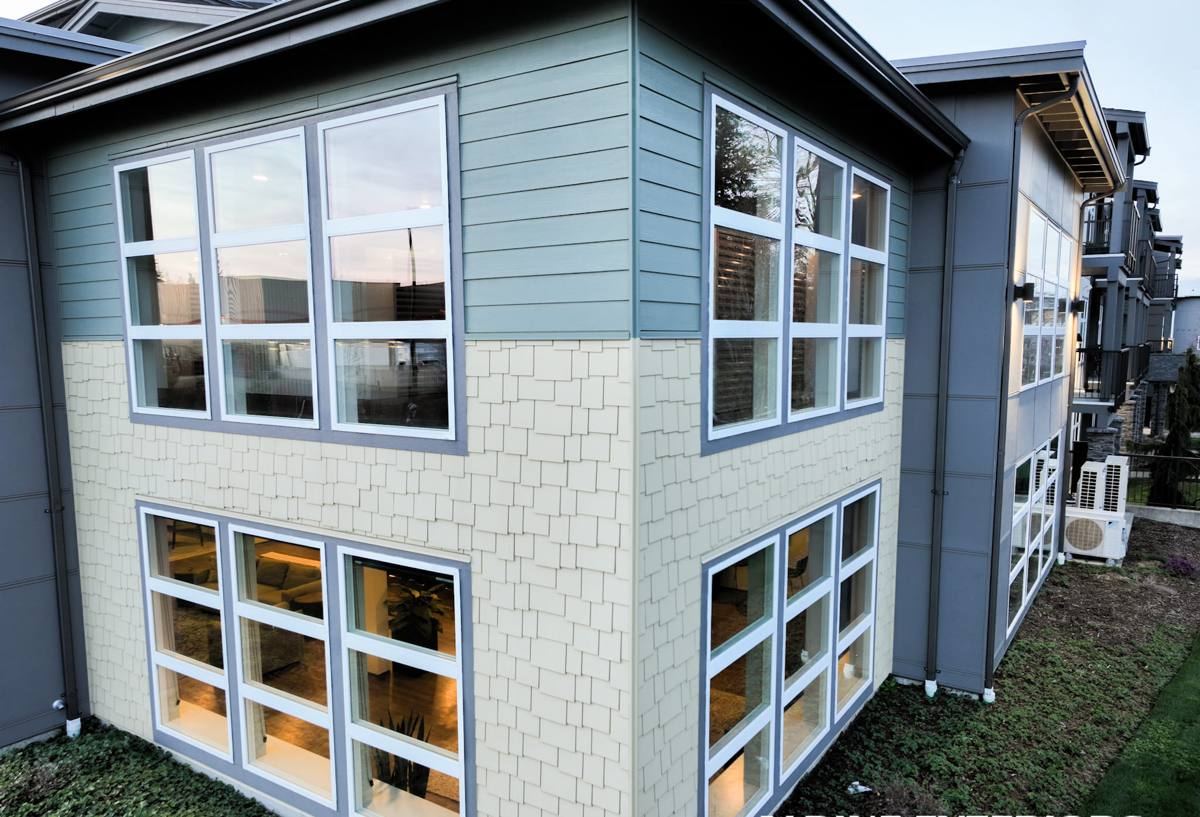
What Makes Barrier Island Siding Damage Different
Salt Air Accelerates Everything
Airborne salt is corrosive to fasteners, flashing, and any metal component tucked behind or under siding panels. On an inland Clearwater home, a nail or screw might hold its grip for decades. On Indian Rocks Beach, the same fastener can start corroding and losing holding power years sooner — which shows up as panels that flutter in wind, seams that widen, or trim that pulls loose at the edges.
UV Load Breaks Down Caulk and Finishes Faster
Direct, near-constant Gulf sun is harder on exterior materials than the same sun angle inland, partly because there's less tree canopy shading island lots and partly because reflected light and heat off open water and sand add to the exposure. Caulk joints around trim, windows, and panel seams dry out, shrink, and crack sooner here. Once a caulk joint fails, that's an open path for wind-driven rain.
Wind-Driven Rain Finds Every Gap
During tropical systems and even routine summer storms, rain on the island rarely falls straight down — Gulf winds push it sideways with real force. Water gets driven up and under panel laps, into fastener holes, and behind trim in ways vertical rain never would. A siding system that's slightly out of spec — a lap gap too tight, a J-channel not properly seated, caulk that's already failed — becomes a water intrusion point during exactly the weather it needs to resist.
Common Siding Repair Issues We See on Indian Rocks Beach Homes
- Corroded or backed-out fasteners — salt exposure weakens the nail or screw's grip, letting panels shift, rattle, or separate at the laps.
- Cracked, shrunken, or missing caulk at trim boards, window and door surrounds, and panel butt joints, usually from sustained UV exposure.
- Water staining or soft spots at the base of walls and around window sills, indicating wind-driven rain has been getting behind the siding.
- Warped or delaminating panels on older or lower-grade siding that was never rated for sustained coastal moisture cycling.
- Faded or chalking finishes where the factory or field-applied coating has broken down faster than it would inland.
- Loose or damaged trim and corner boards, often the first pieces to show fastener failure since they take direct wind load.
What a Correct Repair Actually Involves
Siding repair on a coastal home isn't just about matching a patch to what's already there. A repair that only addresses the visible symptom — a cracked panel, a gap in caulk — without checking what's happening behind it tends to fail again within a season or two on an exposure like this one. Our process on Indian Rocks Beach repairs starts by opening up the damaged area enough to see the substrate, the house wrap or weather barrier, and the fastening underneath.
Our Repair Process
- Inspect beyond the visible damage. We check surrounding panels, trim, and fasteners for related wear — coastal damage rarely stays isolated to one spot.
- Assess what's behind the siding. If there's evidence of water intrusion, we check the weather barrier and any sheathing underneath before closing anything back up.
- Replace failed materials, not just cover them. Corroded fasteners get replaced with corrosion-resistant hardware; compromised sections get cut back to sound material.
- Reseal and re-flash correctly. Caulk and flashing details get redone to current best practice, not just patched over the old failure point.
- Match and finish. Where we're repairing James Hardie fiber cement, we match panel profile and color so the repair blends rather than standing out as a patch.
Repair vs. Replacement — How We Decide
| Factor | Points Toward Repair | Points Toward Replacement |
|---|---|---|
| Extent of damage | Isolated to a few panels or one wall section | Spread across multiple elevations |
| Underlying moisture | Substrate and barrier are dry and sound | Rot, mold, or sustained water staining found behind panels |
| Siding material | James Hardie fiber cement, still within useful life | Older wood, vinyl, or lower-grade product failing broadly |
| Age of siding | Relatively recent installation | Original siding decades old, already near end of service life |
| Fastener condition | Localized corrosion | Widespread fastener failure across the home |
Why the Siding Material Matters for Island Homes
We install James Hardie fiber cement siding exclusively, and on a barrier island exposure like Indian Rocks Beach, the reasons matter more than they would on a sheltered inland lot. Fiber cement doesn't rot, doesn't attract termites, and holds up structurally under sustained moisture cycling in a way that wood-based and some engineered wood products don't. It's also non-combustible, which is a genuine plus in a state where wildfire risk gets less attention than hurricane risk but still exists.
James Hardie's ColorPlus factory-applied finish is baked on and backed by its own warranty coverage against fading and peeling — which is relevant here because we've explained above how much UV exposure this stretch of coastline gets. A field-painted finish on any siding material is going to need repainting sooner in this environment; a factory finish engineered for weather exposure holds its color and integrity longer.
Hardie also builds region-specific HZ5 product lines engineered for higher-moisture, higher-humidity climates like ours — that's not a marketing detail, it's an actual difference in how the product is formulated to perform. When we're doing a repair on Hardie siding, we're repairing a product built for this exposure. When we're repairing or eventually replacing a home currently sided in something else, part of the conversation is honest: what's on the house now, how it's held up, and what we'd put there instead.
Why a Crew That Knows Indian Rocks Beach Makes a Difference
A contractor who occasionally drives out to the island for a job is starting from scratch each time — figuring out how wind exposure differs on a Gulf-front lot versus one set back near the Intracoastal side, or guessing at how much hidden moisture damage to expect based on a home's age and orientation. We work this area regularly enough to scope jobs accurately from the first inspection, which means fewer surprises mid-repair and a more accurate estimate up front.
Local familiarity also matters for permitting and code compliance — Pinellas County and city requirements for exterior work can vary by jurisdiction, and knowing what's expected for Indian Rocks Beach specifically saves time versus learning it on the fly.
What to Watch For Between Inspections
- Panels that look slightly loose or move when pushed gently by hand
- Caulk lines that have visibly shrunk, cracked, or pulled away from trim edges
- Streaking or dark staining below window sills or at panel seams after rain
- Rust-colored streaks running down from fastener heads
- Any soft or spongy feel when pressing on siding or trim near ground level
- Visible fading or chalky residue on a finish that used to look uniform
Catching these early is the difference between a straightforward repair and a job that's grown to include hidden rot or sheathing damage. Given how fast salt air and UV work on this stretch of coast, we'd rather homeowners call about something minor than wait until it isn't.
Get a Straightforward Look at What Your Home Needs
If you're seeing any of the warning signs above, or it's just been a while since your siding was checked, we're happy to come take a look. We'll tell you plainly whether you're looking at a repair, and give you an honest read on the material you have now. Reach out for a free, no-pressure estimate using the form below.