 Clearwater Roofing
 Belleair Bluffs Sits Right in the Middle of Florida's Toughest Climate for Siding
Belleair Bluffs is a small residential community tucked between Clearwater and Largo in Pinellas County, and like the rest of this stretch of the Gulf coast, it takes a beating from weather most of the country never has to design a home around. Hurricane-force winds test every fastener and seam in a wall assembly. Intense, near year-round UV bakes paint and siding surfaces from above. Wind-driven rain gets forced sideways into laps, corners, and trim joints during storms rather than simply running down the wall. And salt-laden air, common across coastal Pinellas County, slowly corrodes metal fasteners and degrades weaker materials from the outside in.
None of that is unique to any one street or subdivision in Belleair Bluffs — it's the reality for homes across this part of Clearwater's service area. What matters is that siding installed here has to be chosen and installed with that climate in mind, not treated like it's going on a house in a drier, calmer part of the country. A lot of the siding problems we get called out to inspect trace back to a product or installation approach that simply wasn't built for what Pinellas County weather does to a wall over the course of a decade or two.
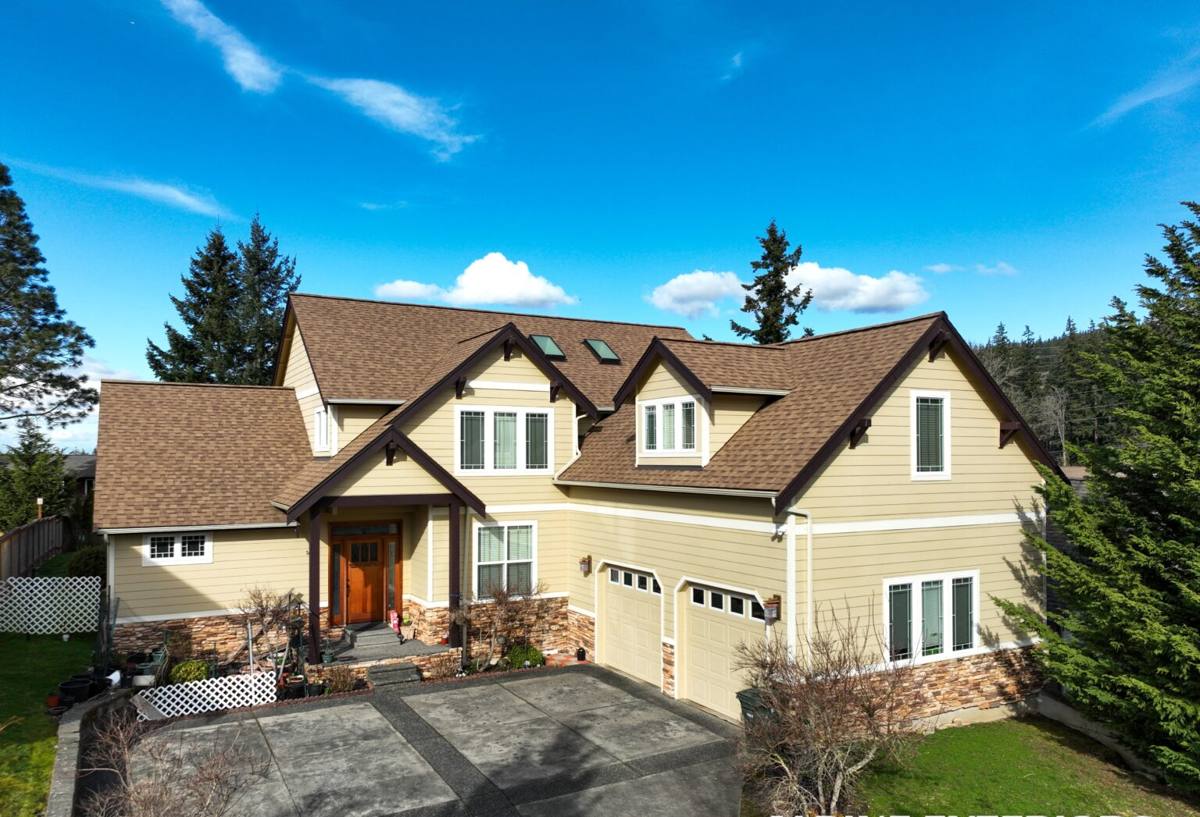
Signs Your Siding Has Moved From "Repair" to "Replacement" Territory
Homeowners often wait too long to replace siding because the damage isn't always obvious from the ground. Here's what tends to signal that patching individual boards or panels is no longer the right call:
- Soft, spongy spots when you press on the siding, especially near the bottom courses or around window and door trim
- Paint that's bubbling, peeling, or chalking heavily despite being repainted within the last several years
- Visible buckling, warping, or gaps opening up at panel seams and butt joints
- Recurring need to recaulk the same joints year after year
- Mold, mildew, or dark staining that keeps returning at seams even after cleaning
- A noticeable jump in cooling costs, which can point to moisture-compromised insulation behind the siding
If you're seeing more than one of these at once, it's usually a sign the underlying wall assembly — not just the visible siding — has been absorbing moisture for a while. That's a replacement conversation, not a caulk-and-touch-up job.
What a Correct Siding Replacement Actually Involves
A siding replacement is only as good as what happens before the new siding goes up. Rushing the tear-off and prep stage is the single most common reason siding fails early, regardless of what brand is on the wall.
Tear-off and substrate inspection
Once the old siding is off, the sheathing underneath gets inspected for rot, delamination, or insect damage — problems that are invisible until the wall is opened up. Any compromised sheathing needs to be replaced before new siding goes on, not covered over. Skipping this step is how a homeowner ends up paying for the same repair twice.
Moisture management and flashing
Correct installation means a continuous weather-resistive barrier, properly lapped and taped, plus flashing at every window, door, and roof-to-wall transition. In a climate with regular wind-driven rain, these details determine whether water gets shed away from the structure or finds its way behind the siding. This is also where corner posts, J-channel, and butt joints get detailed to keep water moving out and down rather than pooling.
Fastening and installation to manufacturer spec
Fiber cement siding has specific nailing patterns, fastener types, and clearances published by the manufacturer, and those specs exist because they've been engineered for wind and moisture performance. Installing with the wrong fastener spacing, over-driving nails, or skipping minimum clearances above roof lines and grade doesn't just look sloppy — it shortens the life of the siding and can void the manufacturer's warranty.
Why We Install Only James Hardie Fiber Cement
We get asked regularly why we don't offer vinyl siding, LP SmartSide, cedar, primed spruce, or fiber cement alternatives like Cemplank or Allura. It's a fair question, and the honest answer is that each of those products involves trade-offs we're not willing to install on a home in this climate and then stand behind.
Vinyl is affordable and low-maintenance in mild climates, but it softens and can distort under intense, sustained heat, and it's rated for a maximum wind resistance that many coastal Pinellas County exposures push right up against. Wood-based products like cedar and primed spruce look great initially, but they're organic materials in a climate with high humidity and heavy rain — they need diligent, ongoing maintenance to resist rot and insect damage, and that maintenance burden falls on the homeowner for the life of the siding. LP SmartSide is an engineered wood product with real strengths, but it's still wood-based at its core, meaning it depends on unbroken paint and caulk protection to keep moisture out; once that protective layer is compromised, wood-based siding is vulnerable in a way fiber cement isn't. Other fiber cement brands like Cemplank and Allura are legitimate products, but we've standardized on one manufacturer so our crews install one system to one spec, every time, with warranty support we know and trust.
James Hardie fiber cement is non-combustible, doesn't support rot or insect damage the way wood-based products can, and holds paint and color far longer than wood substrates because it doesn't expand and contract with moisture the same way. That combination — durability against UV, wind, rain, and salt air, plus a factory finish that isn't dependent on a homeowner's repainting schedule — is why it's the only siding we put on homes.
Matching the Right Hardie Product and Finish to a Belleair Bluffs Home
James Hardie makes several distinct product lines, and part of doing this job right is choosing the one that fits the home's style and exposure rather than defaulting to whatever's easiest to install.
| Product | Best For | Look |
|---|---|---|
| HardiePlank lap siding | Most single-family homes; the standard replacement choice | Traditional horizontal lap, smooth or woodgrain texture |
| HardieShingle siding | Accent areas, gables, or homes wanting a coastal cottage look | Staggered or straight-edge shingle profile |
| HardiePanel vertical siding | Modern facades, porch ceilings, accent walls | Clean vertical panel lines |
| Artisan lap siding | Homes wanting a premium, deeper-shadow board profile | Thicker board with a more dimensional reveal |
Hardie also engineers its siding by climate zone — homes here should be installed with the HZ5 formulation designed for humid, moisture-heavy climates like Florida's, rather than a formulation intended for drier regions. On top of that, we install with Hardie's ColorPlus factory-applied finish whenever possible. It's baked on under controlled conditions and backed by its own finish warranty, which means better fade and chip resistance than a field-applied paint job has to offer, especially under Pinellas County's UV load.
Our Siding Replacement Process, Start to Finish
- On-site inspection and estimate — we walk the exterior, check for moisture and substrate issues, and give you an honest assessment of what's actually needed.
- Product and color selection — we walk through Hardie product lines and ColorPlus color options based on your home's style and HOA requirements, if any apply.
- Permitting — siding replacement typically requires a permit; we handle that process rather than leaving it to you.
- Tear-off and substrate repair — old siding comes off, sheathing gets inspected, and any damage found gets addressed before anything new goes up.
- Weather barrier, flashing, and installation — house wrap, flashing, and new siding go on to manufacturer spec, with attention to every joint, corner, and penetration.
- Final walkthrough — we review the finished work with you before considering the job complete.
Why a Crew That Already Works Belleair Bluffs Makes a Difference
Siding installation isn't identical everywhere in the country, and it isn't even identical everywhere in Florida. A crew that regularly works in and around Belleair Bluffs already understands Pinellas County's wind-load and building code requirements, has a working relationship with local permitting, and knows how coastal exposure in this specific area tends to age different siding products and installation details. That familiarity shows up in fewer surprises during the job and fewer callbacks after it.
It also matters for response time. If a storm rolls through and something needs a look, a crew based in the Clearwater area can get to a Belleair Bluffs home a lot faster than a company working out of a distant market that only shows up for the original install.
What Siding Replacement Costs Depend On
We don't publish fixed prices because every home is different, but these are the main factors that move the number up or down on a real estimate:
| Factor | Why It Matters |
|---|---|
| Home size and wall complexity | More square footage and more corners, gables, and trim details mean more material and labor |
| Substrate condition | Rotted or damaged sheathing found during tear-off adds repair work before new siding can go on |
| Product line selection | HardiePlank, HardieShingle, HardiePanel, and Artisan carry different material costs |
| Finish choice | Factory-applied ColorPlus finish versus field-applied paint affects both cost and long-term maintenance |
| Accessibility and site conditions | Two-story sections, tight lot lines, and landscaping can affect labor time |
| Permitting and code requirements | Local wind-load and building code requirements can affect fastening details and inspection steps |
Questions to Ask Before You Hire a Siding Contractor
- Are you licensed and insured to do exterior work in Florida?
- Do you pull permits yourself, or is that left to the homeowner?
- What brand and product line of siding do you install, and why?
- Will my sheathing be inspected and repaired if needed before new siding goes on?
- What does the manufacturer's warranty cover, and does your installation method keep that warranty valid?
- Do you regularly work in my specific area, or is this a one-off job for you?
A contractor who answers these clearly and specifically, without vague reassurances, is generally one who does this work correctly and often.
If your Belleair Bluffs home's siding is showing its age or you're planning ahead of the next storm season, we're happy to take a look and give you a straightforward, no-pressure estimate. Use the form below to get started — there's no obligation, just an honest read on where your siding stands.