 Clearwater Roofing
 Board & Batten Siding for Skycrest Homes
Board and batten is one of the most requested siding profiles in Clearwater right now, and Skycrest is no exception. The look — wide vertical panels with narrow battens covering the seams — reads clean and modern on newer builds, but it also has deep roots in Florida residential architecture, which is part of why it fits so naturally on established streets throughout the neighborhood. What most homeowners don't realize is how much the material underneath that look matters. In a coastal Pinellas County climate, the siding choice determines whether that clean vertical line still looks sharp in ten years or starts showing seams, streaks, and soft spots.
This page is about doing board and batten right, specifically for homes in Skycrest and the surrounding Clearwater area, using James Hardie fiber cement — the only siding system we install.
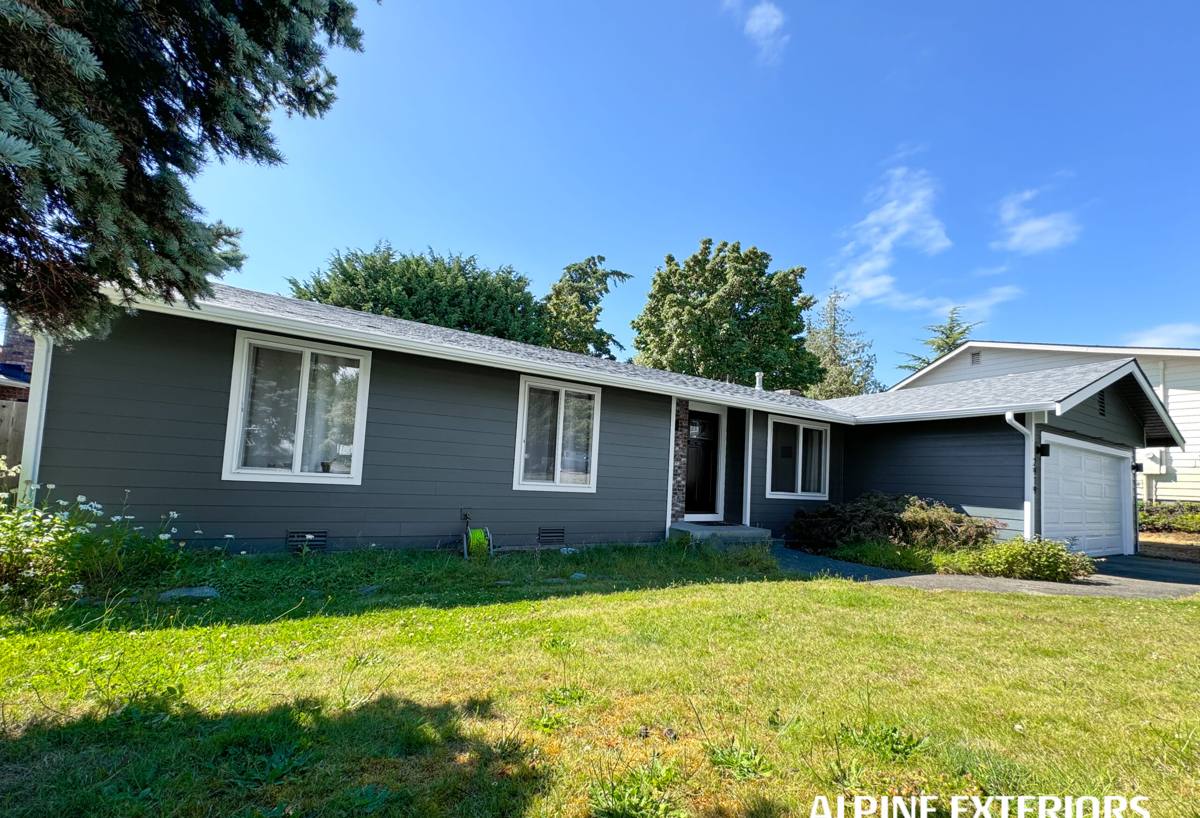
What Skycrest Homes Actually Need From Their Siding
Skycrest sits inland enough from the immediate coastline to avoid direct surf exposure, but close enough to the Gulf that homes here still deal with real coastal stress. Four forces do most of the damage to siding in this part of Clearwater:
- Hurricane-force wind: Pinellas County sits in a high-velocity hurricane zone, and vertical siding profiles like board and batten have more surface area catching gusts than horizontal lap siding — fastening pattern and panel engineering matter more here than on most other profiles.
- Intense, year-round UV: Florida sun bleaches and breaks down unprotected wood fibers and lower-grade coatings far faster than in northern climates, which shows up first as fading, then as chalking and cracking.
- Wind-driven rain: Storms in this area don't just fall straight down — wind pushes rain sideways into wall assemblies, which is exactly where board and batten's vertical seams and battens can either shed water correctly or trap it, depending on how the system was engineered and installed.
- Salt air: Even a few miles inland, airborne salt accelerates corrosion of fasteners and metal flashing and speeds up the breakdown of porous or untreated siding materials.
Any siding installed in Skycrest has to be evaluated against all four of these, not just how it looks on install day.
Why We Only Install James Hardie for Board & Batten
Board and batten can be built out of vinyl, engineered wood (like LP SmartSide), or fiber cement. We've made a professional decision to install it in James Hardie fiber cement exclusively, because it's the only one of the three that holds up consistently to the four stresses above without requiring homeowners to babysit it.
| Material | How It Handles Clearwater's Climate |
|---|---|
| Vinyl board & batten | Lightweight panels can flex, warp, or pull loose in sustained hurricane-force gusts; UV exposure causes fading and brittleness over time, and battens are often just cosmetic strips rather than a true fastened seam cover. |
| Engineered wood board & batten | Wood-based cores are vulnerable if wind-driven rain gets past the seams or fastener points; long-term performance depends heavily on maintaining an intact factory coating in a climate that's hard on coatings. |
| James Hardie fiber cement | Non-combustible, dimensionally stable cement composite that resists moisture-driven swelling, holds paint and factory finish far longer under intense UV, and is engineered with HZ5 wind and moisture performance for high-exposure regions like ours. |
We're not saying the other materials have no place — we're saying that for the wind, sun, and moisture load a Skycrest home carries, fiber cement is the standard we're willing to put our name on.
The James Hardie ColorPlus Advantage
Most of our board and batten installs use Hardie's ColorPlus factory-applied finish rather than field-painted panels. That finish is baked on under controlled conditions, adheres more consistently than a job-site paint job, and carries its own finish warranty. In a climate where UV breaks down coatings faster than almost anywhere else in the country, starting with a factory finish rather than a field-applied one is one of the simplest ways to extend the life of the look you're paying for.
What a Correctly Installed Board & Batten System Involves
Board and batten looks simple from the curb — vertical panels, battens over the seams — but it's one of the less forgiving profiles to install correctly, because every seam is a potential water entry point if it's not detailed right. A correct install includes:
- A code-compliant weather-resistive barrier installed behind the panels, lapped correctly to shed water downward
- Proper furring or a rainscreen gap where the wall assembly calls for it, so any moisture that does get behind the siding can drain and dry out instead of sitting against the sheathing
- Panels and battens fastened per James Hardie's published fastening schedule for our wind zone — not a generic pattern borrowed from a milder climate
- Correct joint and butt-seam treatment at every panel transition, sealed and flashed rather than just caulked over
- Clearance gaps at the bottom of the siding and around all penetrations (vents, hose bibs, light fixtures) so water has somewhere to go besides into the wall
- Corrosion-resistant, coastal-rated fasteners — this matters more here than almost anywhere inland, given how quickly salt air attacks standard fasteners
Skip any one of these steps and the siding can still look right for a year or two before problems start showing up as staining, soft spots, or paint failure at the seams — usually right around when the original installer is long gone.
Our Process for a Skycrest Board & Batten Project
1. On-Site Inspection and Measurement
We start by walking the exterior with you, checking the current wall condition, noting any moisture damage or rot that needs to be addressed before new siding goes on, and taking accurate measurements for material ordering.
2. Material Selection
We go over James Hardie's board and batten panel widths, reveal spacing options, and ColorPlus color selections so the final look fits the home and the character of the surrounding Skycrest streetscape.
3. Tear-Off and Wall Prep
Old siding comes off, the sheathing is inspected and repaired as needed, and a new weather-resistive barrier goes on before a single panel is hung. This step gets skipped or rushed more than any other in low-bid siding jobs — it's also the step that determines whether the wall stays dry for the next 20-plus years.
4. Installation
Panels and battens go up per Hardie's fastening and flashing specifications for our wind zone, with careful attention to every seam, corner, and penetration.
5. Trim, Caulking, and Final Detail
Trim work, corner details, and sealant are finished to match the ColorPlus system, so the whole exterior reads as one cohesive job rather than patched-together pieces.
6. Walkthrough and Cleanup
We walk the finished job with you, answer questions about care, and leave the property clean.
Board & Batten vs. Other Siding Profiles for Skycrest Homes
Board and batten isn't the right call for every home, and part of an honest estimate is telling you if a different profile actually suits your house better.
| Profile | Best Fit | Coastal Consideration |
|---|---|---|
| Board & Batten | Modern farmhouse, coastal, and craftsman-style exteriors; often used as an accent alongside lap siding | More vertical seams than lap siding, so correct flashing and fastening detail matters more |
| HardiePlank Lap Siding | Traditional and ranch-style Florida homes | Horizontal laps naturally shed wind-driven rain with a simpler, more forgiving install |
| HardieShingle | Cottage and coastal cottage styles | More labor-intensive install; strong wind and UV performance when done to spec |
A lot of Skycrest homeowners land on a mix — board and batten on gables or accent walls, paired with lap siding on the main body. We'll tell you honestly which layout makes sense for your specific house rather than pushing one look for its own sake.
Cost Factors for Board & Batten Siding in Skycrest
We don't publish flat prices because every home is different, but these are the main variables that move the number up or down:
| Factor | Why It Matters |
|---|---|
| Wall condition underneath | Rot repair or sheathing replacement adds cost but is non-negotiable for a system that's supposed to last decades |
| Home size and number of stories | More square footage and higher wall heights mean more material and labor, plus added scaffolding or lift needs |
| Trim and detail complexity | Multiple gables, dormers, and corner details take more time to flash and finish correctly |
| Full replacement vs. accent application | Board and batten used only on gables or an entry feature costs less than a full-elevation application |
| Color and finish selection | Factory ColorPlus finishes vary in cost by color line but reduce long-term repainting costs |
Maintenance and Long-Term Care in Our Climate
James Hardie siding is low-maintenance, not no-maintenance. A short annual routine goes a long way in a climate this hard on exteriors:
- Rinse the siding periodically to remove salt residue and airborne grime, especially after storms
- Inspect caulking at seams, trim, and penetrations once a year and touch up anything that's cracked or pulled away
- Keep sprinklers and irrigation pointed away from the siding to avoid constant water exposure at the base of the wall
- Trim back landscaping so foliage isn't holding moisture against the panels
- Watch for any staining, bubbling, or soft spots after major storms and have them checked promptly
Why Hire a Crew That Already Works in Skycrest
Wind-load requirements, permitting expectations, and inspection standards in Clearwater and Pinellas County are shaped by the same hurricane exposure every home here has to plan for. A crew that regularly works this area already knows the fastening schedules, flashing details, and code expectations that apply locally — instead of relearning them on your house. That familiarity shows up in fewer surprises during the permitting and inspection process, and in a finished install that's built for the specific wind and moisture load Skycrest actually sees, not a generic national standard.
If you're weighing board and batten for your Skycrest home, we're glad to walk the property, talk through where it makes sense on your specific house, and give you a straightforward, no-pressure estimate using the form below.