 Clearwater Roofing
 Windows Built for Skycrest's Coastal Climate
Skycrest sits close enough to the Gulf that salt air, humidity, and wind are part of daily life, even on a calm day. Over a full year, the windows on a Skycrest home take on more than most building materials ever have to handle: hurricane-force wind loads during storm season, wind-driven rain that gets pushed sideways into every gap and seam, intense year-round UV that breaks down seals and finishes, and a steady coating of salt-laden moisture that corrodes anything not built to resist it. Standard, off-the-shelf window products are engineered for a national average climate. Clearwater and the rest of Pinellas County are not average, and windows here need to be specified accordingly.
Custom windows aren't about luxury upgrades — they're about matching the product to the opening, the exposure, and the wind zone the home actually sits in. That's a different conversation than picking a size off a shelf, and it's one worth having before you commit to a replacement.
What "Custom" Really Means for These Homes
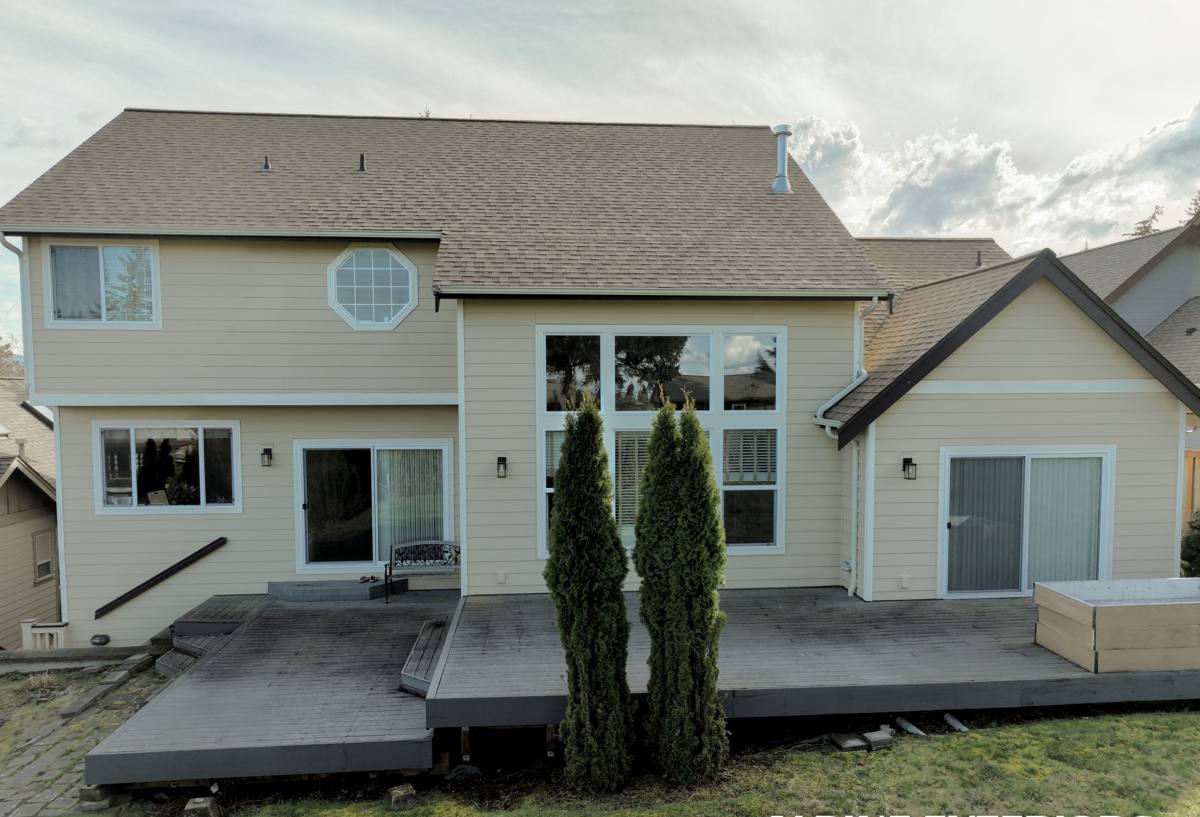
A lot of homeowners hear "custom windows" and assume it means decorative shapes or high-end finishes. In practice, most of our custom work in Skycrest is about fit and performance, not looks. Many homes in this part of Clearwater were built decades before current window sizing standards existed, which means openings are frequently a fraction of an inch off from anything a big-box retailer stocks. Older masonry openings, settled framing, and additions built at different times all add up to walls that don't measure perfectly square or level anymore.
When a window doesn't fit its opening precisely, the installer ends up compensating with extra shims, foam, or trim to hide the gap. Those workarounds are exactly where wind-driven rain finds its way in and where wind pressure during a storm finds a weak point. Custom sizing removes the guesswork — the window is built to the opening as it actually exists, not to a standard size the opening is forced to accommodate.
When Custom Sizing Is the Right Call
- Openings that are out-of-square, out-of-level, or slightly undersized/oversized compared to modern standard dimensions
- Homes with masonry or block construction where reframing the opening isn't practical or desirable
- Additions or renovated rooms with openings that don't match the original structure
- Architectural features — bays, arches, or unusual proportions — that a stock catalog simply doesn't offer
- Situations where matching sightlines and sash proportions across the front of the house matters for curb appeal
Impact-Rated vs. Non-Impact: Weighing Your Options
This is the single biggest decision for any Clearwater homeowner replacing windows, and it deserves an honest comparison rather than a sales pitch. Both approaches can meet code when paired correctly with protection requirements, but they perform very differently day to day and during a storm.
| Factor | Impact-Rated Windows | Non-Impact + Separate Protection |
|---|---|---|
| Storm protection | Built into the glass and frame; nothing to install before a storm | Requires shutters, panels, or plywood installed ahead of every storm |
| Daily living | No visual obstruction, ever — the glass is always in its normal state | Protection is stored until needed, then must be installed and removed each time |
| UV and heat performance | Laminated interlayer typically blocks significant UV and helps with heat gain | Depends entirely on the glass package chosen separately |
| Noise reduction | Laminated glass noticeably reduces outside noise | Standard glass; no added noise benefit |
| Upfront cost | Higher per-window cost | Lower window cost, but add the cost of shutters or panels |
| Insurance | Often qualifies for windstorm mitigation credits | Credit depends on the separate protection product installed and documented |
Our general recommendation for Skycrest is impact-rated glass wherever the budget allows, simply because it removes the human step of remembering to install protection before a storm arrives with little warning. That said, non-impact windows paired with a properly rated shutter system remain a legitimate, code-compliant choice, and we'll walk through both honestly rather than push whichever option costs more.
Frame Material Comparison for Salt Air Exposure
Glass gets most of the attention, but the frame is what determines how the window ages in this environment. Salt air accelerates corrosion on the wrong metals and hardware, and constant UV exposure breaks down lower-quality vinyl and finishes over time.
| Frame Material | Salt Air / Coastal Behavior | Maintenance |
|---|---|---|
| Vinyl | Won't corrode; quality varies significantly by manufacturer and UV stabilizers used | Low — occasional cleaning, no painting |
| Aluminum | Strong and slim profile, but requires marine-grade coatings and stainless hardware near the water to resist corrosion | Moderate — coatings should be inspected periodically |
| Fiberglass | Very stable in heat and humidity swings; naturally resistant to corrosion | Low — durable finish, minimal upkeep |
| Wood / wood-clad | Beautiful but vulnerable to moisture and salt exposure without diligent upkeep | High — regular sealing and finish maintenance required |
We don't install every material on this list for every home. Where a frame option is a poor match for a home's direct salt exposure or maintenance expectations, we'll say so and explain the trade-off in plain terms — moisture behavior, hardware corrosion risk, and long-term upkeep — rather than let a homeowner find out the hard way three summers later.
Signs Your Current Windows Are Working Against You
Before recommending a full replacement, we look for the specific signs that a window has stopped doing its job in this climate. A lot of these are easy to miss during a quick walkthrough but show up clearly once you know what to check.
- Fogging or a permanent haze between panes, which means the seal has failed and the insulating gas has escaped
- Visible daylight or a draft around the frame when the window is fully closed and locked
- Difficulty opening, closing, or locking — often a sign the frame has shifted or hardware has corroded
- Soft or discolored trim, drywall, or sill material near the window, which points to water intrusion
- A noticeable temperature difference standing near the window compared to the rest of the room
- Chalky, pitted, or discolored aluminum frames — a common sign of salt air corrosion
- Rattling or vibration during windy conditions, which suggests the frame is no longer sealing tightly
Any one of these on its own isn't necessarily an emergency, but a home with several of these signs is losing energy efficiency and, more importantly, losing storm resistance right when it matters most.
How Our Skycrest Window Installations Work
Every home is different, but the process we follow stays consistent because it's built around the things that actually go wrong with window installations in this climate.
- On-site assessment and measurement. We measure every opening individually rather than assuming uniformity across the house, and we check for out-of-square conditions, existing water damage, and framing condition.
- Product selection and honest trade-off discussion. We walk through impact vs. non-impact, frame material, and glass package options against your budget and how the home is exposed to sun and weather.
- Permitting. We handle the permit application and coordinate the required inspections with the local building department so you're not managing that process yourself.
- Custom fabrication. Windows are built to the exact measurements taken on site, not adjusted after the fact to fit.
- Removal and opening preparation. Old windows are removed carefully, and we inspect the opening for hidden moisture damage or framing issues before anything new goes in — a step that's easy to skip but critical near the coast.
- Installation and sealing. Proper flashing, sealant, and fastening sequence matter as much as the window itself. This is where most water intrusion problems actually originate if it's rushed.
- Final inspection and walkthrough. We confirm smooth operation, a tight seal, and code compliance, and go over care and warranty information before we consider the job finished.
Florida Building Code and Permitting in Pinellas County
Clearwater and the rest of Pinellas County fall under Florida Building Code wind-borne debris region requirements, which means replacement windows generally need to be impact-rated or paired with an approved protective system rated for the applicable wind speed. Exact wind speed and design pressure requirements can vary by the specific location and structure, and permitting is handled through the local building department rather than by choice.
This isn't a step we treat as optional paperwork. A window installed without the correct permit and inspection can create real problems at resale, with insurance claims, and with code enforcement down the line. Part of what a local crew brings to the table is familiarity with how Pinellas County permitting actually runs in practice — what documentation reviewers want to see, and how to avoid delays that come from an incomplete submission.
Keeping New Windows Performing Long-Term
Even the right product, installed correctly, still needs basic upkeep in a salt-air environment. None of this is complicated, but skipping it shortens the life of the investment.
Simple Habits That Extend Window Life Here
- Rinse frames and hardware periodically to remove salt residue, especially after storms or extended dry, windy stretches
- Check and lightly lubricate locks and hinges on operable windows a couple of times a year
- Inspect exterior sealant and caulking annually and touch up before small gaps become water intrusion points
- Watch for chalking, pitting, or discoloration on aluminum components and address it before corrosion spreads
- Keep an eye on interior sills and trim after heavy wind-driven rain events for any sign of moisture
Why a Crew That Already Works Skycrest Matters
Window performance in this climate isn't just about the product — it's about the installation details that don't show up on a spec sheet: how a specific opening type in an older Skycrest home tends to be framed, what the local building department expects in a permit submission, and how a home's orientation and exposure to prevailing wind and salt spray should factor into product recommendations. A crew that works this neighborhood regularly has already seen the common opening quirks, the typical construction era of the homes here, and the real-world way these products hold up a few years after installation — not just on a manufacturer's brochure.
That familiarity also means fewer surprises during the process. We're not learning the neighborhood on your job; we already know what to look for before we open the first wall.
Get a Straight Answer for Your Home
If your windows are original to the house, fogging, drafty, or just due for an honest evaluation, we're happy to take a look and give you a clear, no-pressure assessment of what your Skycrest home actually needs. Use the form below to request a free estimate, and we'll walk the property, answer your questions directly, and put together options that fit both your budget and this climate.