 Clearwater Roofing
 Why Decks in Skycrest Wear Out Faster Than People Expect
Skycrest is one of Clearwater's older, well-established neighborhoods, and a lot of the homes here still have decks that were built decades ago — some replaced once already, some never touched since the original build. Florida decks simply don't get the lifespan that decks in drier, cooler climates get, and Skycrest's location in Pinellas County puts local decks through a particularly rough combination of stress factors.
Year-round UV exposure breaks down wood fibers and degrades the surface finish on almost any decking material faster than manufacturers' national warranty language usually accounts for. Add in wind-driven rain that gets up under railings and into end grain, salt-laden air drifting in off the Gulf and Tampa Bay, and the occasional direct hit from hurricane-force wind, and you've got a structure that's aging on fast-forward. None of this means a deck can't last — it means it has to be built and replaced correctly for this specific climate, not treated like a generic backyard project.
When Repair Isn't Enough: Signs You Need a Full Replacement
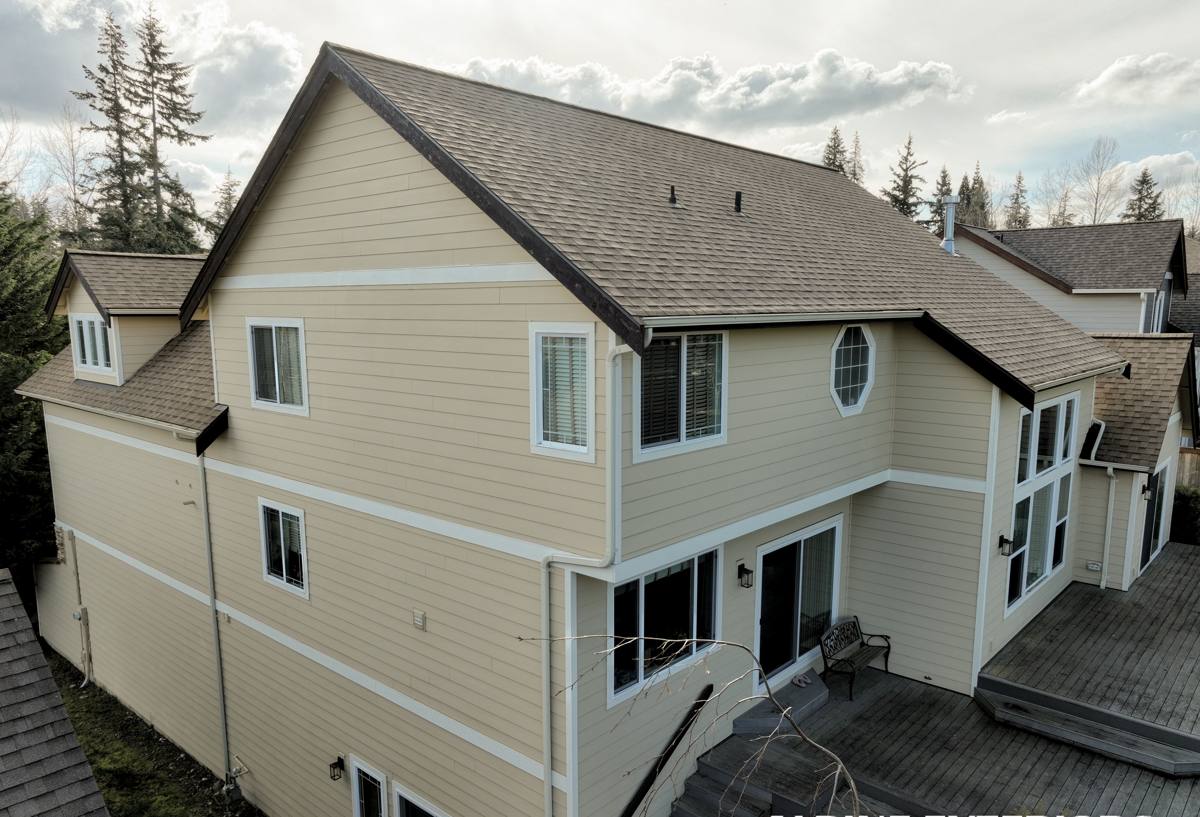
Not every tired-looking deck needs to come out. But there's a point where patching boards or re-staining stops being a real fix and starts being a way to delay an inevitable, more expensive problem. We look at a few things when we evaluate a deck in Skycrest:
- Soft, spongy, or dark-stained wood around the ledger board where the deck attaches to the house — this is one of the most common failure points and one of the most dangerous to ignore
- Support posts or footings that have shifted, cracked, or show signs of rot or corrosion at the base
- Fasteners that are rusted, popped, or corroded — a strong sign the connection metal was never rated for coastal exposure
- Boards that cup, crack, or flex noticeably when walked on, especially near the perimeter
- Railings that wiggle or feel less rigid than they used to — railing failure is a real safety issue, not a cosmetic one
- A deck that was never permitted or built to current wind load requirements in the first place
If you're only dealing with one or two isolated boards and the frame underneath is sound, repair can make sense. Once the ledger connection, the framing, or multiple structural elements are compromised, replacement is the honest recommendation — and it's usually more cost-effective than a series of repairs that keep failing.
What a Correct Deck Replacement Actually Involves
Tear-Off and Structural Inspection
A proper replacement starts with full removal of the old decking, railings, and, in most cases, the framing — not just building a new surface on top of an old structure that might already be compromised. Once the old deck is off, we can actually see the ledger board connection to the house, the condition of any existing footings, and whether there's hidden moisture damage that wasn't visible from the surface. This step matters more in Florida than almost anywhere else, because moisture problems here tend to hide until the framing is exposed.
Framing, Footings, and Fasteners Built for Florida
The framing underneath is what actually determines how long a deck lasts — the surface material gets the attention, but the structure underneath does the work. For a replacement done right, that means:
- Footings sized and set to current code depth for the local soil, not just matched to whatever was there before
- A properly flashed ledger board connection, since this is the single most common point of water intrusion and structural failure on older decks
- Corrosion-resistant, coastal-rated fasteners and structural connectors — standard interior-grade hardware corrodes fast in salt air and undermines the whole structure from the inside
- Joist spacing and beam sizing engineered for Florida wind uplift requirements, not just a generic deck plan
This is also where most corner-cutting happens on lower-cost deck jobs — the framing is invisible once the decking goes down, so it's tempting to under-spec it. We don't, because it's the part that determines whether the deck is still standing after the next serious storm.
Choosing the Right Decking Material for a Coastal Climate
There's no single "best" decking material — there's a best material for your budget, your maintenance appetite, and how close your property sits to salt exposure. Here's how the common options actually compare for a Clearwater backyard:
| Material | Upfront Cost | Maintenance | How It Handles Our Climate |
|---|---|---|---|
| Pressure-treated wood | Lowest | Regular sealing/staining, roughly annually | Affordable but most prone to UV fading, cupping, and moisture-driven rot if maintenance lapses |
| Composite decking | Mid to upper-mid | Occasional cleaning, no staining or sealing | Handles UV and moisture well; quality varies a lot by manufacturer and capping |
| Capped PVC decking | Highest | Minimal — mostly rinsing | Best resistance to moisture, UV, and salt air; strong long-term choice for exposed coastal properties |
We'll walk you through real trade-offs rather than pushing whatever has the best margin. Wood is a legitimate choice if you're comfortable with the upkeep and want that traditional look. Composite and PVC cost more upfront but remove most of the maintenance burden that wood demands in this climate — that's a fair trade for a lot of Skycrest homeowners who don't want a re-sealing project every year.
Permits and Wind Codes in Pinellas County
Deck replacement in Clearwater isn't a project you can quietly do without paperwork, and you shouldn't want to — the permitting and inspection process exists specifically because Florida Building Code sets structural and wind-load standards that matter enormously here. A permitted deck has to meet current requirements for footing depth, ledger attachment, guardrail height, baluster spacing, and load capacity, all calculated for Pinellas County's wind exposure category.
Skipping the permit might save a little time upfront, but it creates real problems down the line: it can complicate a home sale, it can void insurance coverage if the deck fails during a storm, and it means nobody with code authority ever verified the structure was actually safe. We handle the permitting and coordinate inspections as part of the job — it's not an optional add-on, it's part of doing the work correctly.
Our Deck Replacement Process, Start to Finish
- On-site evaluation. We look at the existing deck, the framing underneath if accessible, and talk through what you actually want out of the new one.
- Material and design decisions. We go over decking material, railing style, and layout options honestly, including cost and maintenance trade-offs for each.
- Permitting. We pull the necessary permits and make sure the design meets current Florida Building Code wind and structural requirements.
- Tear-off and structural rebuild. Old materials come out, framing and footings get inspected and rebuilt to spec.
- Decking, railing, and finish work. The visible surface goes in — this is the part most homeowners picture, but it's the last step, not the first.
- Final inspection and walkthrough. We confirm the county sign-off and walk the finished deck with you before calling the job done.
Why Local Skycrest Experience Matters
A deck replacement crew that regularly works in and around Skycrest and greater Clearwater already knows the practical stuff that trips up out-of-area contractors — how Pinellas County's permitting office likes plans submitted, what wind exposure category applies to this part of the county, and what framing details actually hold up against real salt air rather than just meeting the minimum code number on paper. That familiarity translates into fewer permit delays, fewer surprises during inspection, and a deck built for the conditions it will actually face, not a generic national spec.
It also means faster response when something needs attention — whether that's a follow-up question after the job, a warranty item, or a pre-storm-season check. A crew that's local to this area isn't disappearing after the invoice clears.
Keeping Your New Deck in Shape Year-Round
Even the best-built deck benefits from a little seasonal attention in this climate. A short annual routine goes a long way:
- Rinse off salt residue, pollen, and debris every few weeks, more often if you're closer to the water
- Check railing and post connections for looseness once or twice a year, especially after any major storm
- Keep gutters and downspouts clear so runoff isn't dumping extra water directly onto or under the deck
- For wood decking, re-seal or stain on the manufacturer's recommended schedule — don't wait for visible graying to start
- Trim back vegetation that's shading boards and trapping moisture against the surface
- After any named storm, do a quick visual check of fasteners, railings, and footings before heavy use resumes
None of this replaces a professional inspection every few years, but it catches small issues before they turn into structural ones.
Get a Straight Answer About Your Deck
If your Skycrest deck is showing its age — soft spots, rusted hardware, a wobbly railing, or just years of Florida sun and salt air catching up with it — we're happy to take a look and give you a straight, no-pressure assessment of whether it needs repair or a full replacement. Use the form below to request a free estimate, and we'll walk the property with you and lay out real options and honest numbers before any work begins.