 Clearwater Roofing
 Coachman Ridge Sits Squarely in Hurricane Country
Coachman Ridge is an established residential pocket of Clearwater, and like the rest of Pinellas County it sits in a stretch of Florida that takes a real beating from the outside in. Hurricane-force wind gusts, wind-driven rain that gets forced sideways into wall assemblies, sun exposure that runs strong nearly twelve months a year, and salt-laden air drifting in off the Gulf all work on a home's siding at the same time, every year, whether a named storm ever makes landfall or not. Siding here isn't just a cosmetic layer. It's the first line of defense for the wall sheathing, the framing, and everything inside the house.
That combination of stressors is exactly why we do not treat siding as a one-size-fits-all product decision. What holds up on a home in a dry inland climate can fail years early in Clearwater, and Coachman Ridge homeowners deserve a straight answer about what actually performs here, not just what's cheapest to install.
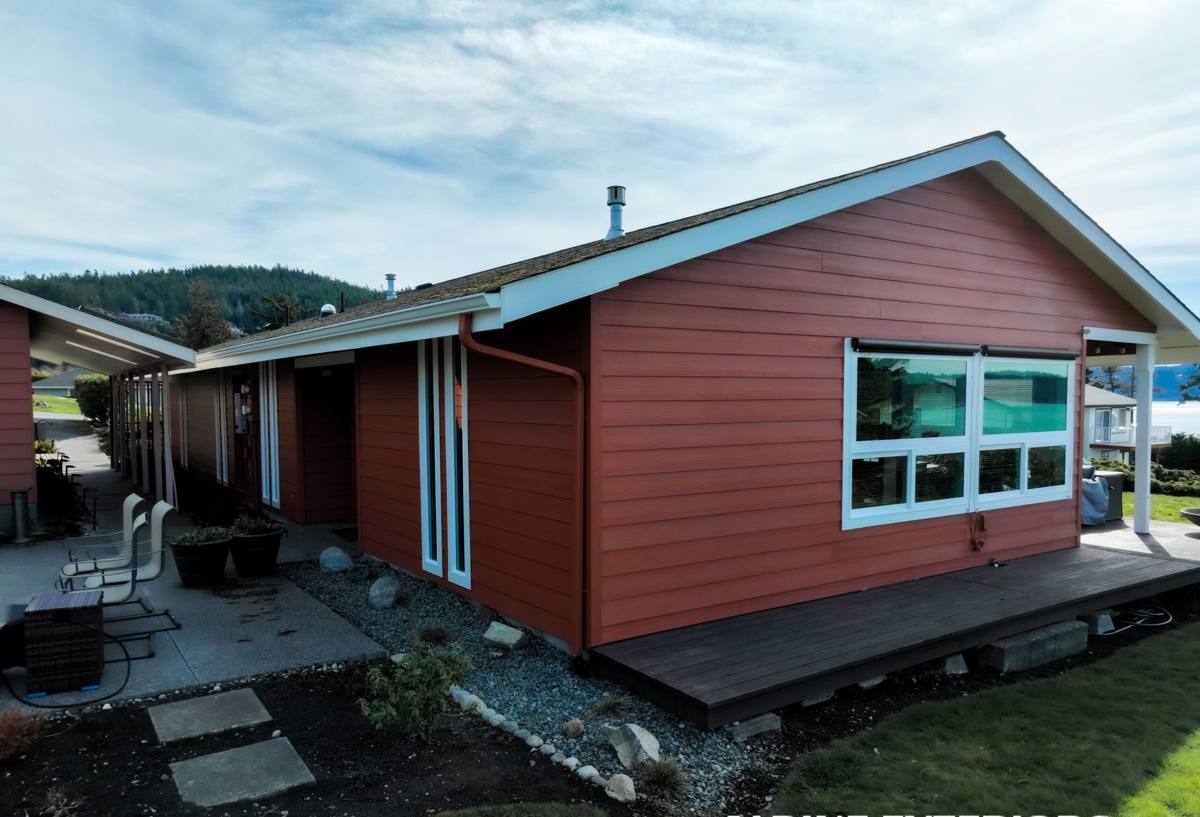
Why We Only Install James Hardie Fiber Cement
Our crews install James Hardie fiber cement siding exclusively. We don't carry vinyl, LP-style engineered wood, primed spruce, cedar, or other fiber cement brands, and that's a deliberate standard, not a limited catalog. Fiber cement is non-combustible, dimensionally stable in heat and humidity, and doesn't rot, swell, or attract termites the way wood-based products can. James Hardie specifically engineers its HardieZone system for regional climate exposure, and Clearwater falls into the HZ5 zone, which is formulated for high-moisture, high-humidity, storm-prone conditions rather than a generic national spec.
The factory-applied ColorPlus finish matters just as much as the board itself in this climate. Field-painted siding is only as good as the paint job and the maintenance schedule behind it, and intense Florida UV is hard on conventional paint. ColorPlus is baked on and warranted separately from the substrate, which is a meaningful difference when a home is getting sun exposure like Coachman Ridge sees for most of the year.
What Correct Installation Actually Involves
Fiber cement siding is only as good as the installation underneath it. A huge share of the siding failures we get called out to inspect trace back to installation shortcuts, not the product itself. A correct James Hardie install in a wind-and-moisture climate like this one includes:
- A weather-resistive barrier installed and lapped correctly before a single board goes up, so bulk water has a drainage path even if it gets past the siding
- Proper flashing at every window, door, and roof-to-wall transition — the details storms find first
- Correct fastener type, spacing, and embedment depth, matched to the wind exposure category for the site rather than a generic pattern
- Minimum clearance from grade, roof lines, and decking so boards aren't sitting in standing water or splash-back
- Properly gapped and caulked joints using sealant rated for the movement and UV exposure the boards will see
- Field-cut edges primed and sealed before installation, not left raw
Skip any one of these and you can end up with a product rated for hurricane exposure that still fails at a seam or a fastener line within a few years. This is the detail work that separates a siding job that survives its first real storm season from one that doesn't.
What Wind-Driven Rain and Salt Air Actually Do to a Wall
It helps to understand the specific failure modes we're designing against, because they're not the same in Clearwater as they are elsewhere in the country.
Wind-Driven Rain
During tropical systems and even routine summer storms, rain in this area doesn't fall straight down — sustained winds push it sideways and up under laps, trim, and penetrations. A siding system relies on shingle-style overlap and a properly integrated drainage plane behind it to shed that water back out rather than into the wall cavity. This is why flashing detail and house wrap integration matter as much as the siding material itself.
Salt Air and UV
Even homes that aren't waterfront still sit within reach of salt-laden air moving inland off the Gulf, and that salt exposure accelerates corrosion on exposed fasteners and metal trim over time. Combine that with near-constant UV load, and any product that relies on a surface-applied paint job is fighting an uphill battle. Fiber cement itself doesn't corrode, and factory-cured ColorPlus finishes are formulated specifically to resist UV fading far longer than a typical field-applied coat.
Fiber Cement vs. Other Siding Materials in This Climate
Homeowners in Coachman Ridge comparing options are usually weighing fiber cement against vinyl or engineered wood products. Here's how they actually compare under the conditions this neighborhood sees:
| Factor | James Hardie Fiber Cement | Vinyl Siding | Engineered Wood Siding |
|---|---|---|---|
| Wind resistance | Engineered and rated for high-wind zones | Can deform, crack, or blow off in sustained gusts | Adequate if installed correctly, but panels are more fastener-sensitive |
| Moisture behavior | Won't rot; engineered for humid climates | Doesn't absorb water but traps moisture behind panels if not vented properly | Wood-based core is vulnerable to swelling and rot if edges aren't sealed |
| UV/fade resistance | Factory-cured ColorPlus finish resists fading | Can fade and become brittle with sustained sun exposure | Painted finish fades and requires more frequent repainting |
| Fire resistance | Non-combustible | Combustible, can melt or warp near heat sources | Combustible |
| Typical repaint interval | Rarely needs repainting; ColorPlus warranty is separate | N/A, but color is baked into the plastic and can't be restored once faded | Every 5-8 years in this climate |
This isn't a knock on any homeowner who has vinyl or wood siding today — it's simply the reasoning behind why our crews standardized on one product line instead of offering all of them.
How the Job Runs From First Call to Final Walkthrough
Our process for a Coachman Ridge home is straightforward, and we walk every homeowner through it before any work starts:
- Site visit and assessment. We look at the existing siding, sheathing condition, exposure (corner lots and open yards see more wind load than sheltered ones), and any moisture damage that needs addressing before new siding goes on.
- Product and color selection. We go through the relevant HardieZone product line and ColorPlus color options together, factoring in HOA guidelines where applicable.
- Tear-off and substrate check. Old siding comes off and we inspect the sheathing underneath. Any rot or water damage gets addressed before anything new is installed — covering up a compromised substrate defeats the purpose of upgrading the siding.
- Weather barrier and flashing. This is the step that determines how the wall performs in wind-driven rain, and it's the one that's easiest to shortcut and hardest to inspect after the fact.
- Siding installation. Boards go up to spec — correct fastener pattern, clearances, and joint treatment for this wind and moisture zone.
- Trim, caulking, and final walkthrough. We finish the details and walk the exterior with the homeowner before calling the job complete.
Why a Crew That Already Works Coachman Ridge Matters
Siding installation quality depends heavily on local knowledge that doesn't show up in a product brochure. A crew that regularly works in and around this part of Clearwater already understands Pinellas County permitting requirements, the wind-load expectations local building officials check for, and the practical realities of working on established homes in this neighborhood — things like typical lot setbacks, mature landscaping that needs protecting during tear-off, and coordinating around neighbors in a tighter residential area. That familiarity translates into fewer surprises, fewer permitting delays, and a job that's planned around how this specific area actually sits, rather than treated like a generic install anywhere in the state.
It also means we're not guessing at wind exposure category or moisture load — we're applying what we already know from other homes nearby with similar orientation, lot coverage, and sun exposure.
Cost Factors for a Coachman Ridge Siding Project
Every home is different, but the variables that actually move the price on a fiber cement siding job are consistent. We give firm numbers after a site visit, not before, but this is what goes into that number:
| Factor | Why It Matters |
|---|---|
| Home size and wall complexity | More corners, gables, and dormers mean more cutting, flashing, and labor time |
| Current substrate condition | Rotted or water-damaged sheathing found during tear-off adds repair scope before new siding goes on |
| Siding profile and product line | Lap width, texture (smooth vs. woodgrain), and specific HardieZone product affect material cost |
| ColorPlus color selection | Standard color palette versus premium or custom-matched colors |
| Trim and accessory scope | Corner boards, window and door trim, and soffit work priced separately from field siding |
| Access and site conditions | Landscaping, fencing, second-story sections, or tight lot access affect labor time |
Maintaining Fiber Cement Siding in a Coastal Climate
One of the real advantages of fiber cement in this climate is how little ongoing maintenance it needs compared to wood or repainted surfaces — but "low maintenance" doesn't mean "no maintenance." A short annual routine goes a long way toward protecting the investment:
- Rinse the exterior periodically to clear salt residue and airborne grime before it builds up
- Inspect caulking at joints, windows, and trim once a year and re-seal any cracked or shrinking sections
- Walk the exterior after any major storm and check for loose trim, damaged flashing, or debris impact
- Keep sprinklers and irrigation heads pointed away from the base of the siding to avoid constant wetting at the bottom courses
- Trim back landscaping that holds moisture against the wall or blocks airflow along the siding
None of this is heavy work, but skipping it entirely can shorten the service life of even a well-installed system in a coastal environment.
Signs It's Time to Replace Rather Than Repair
Not every siding issue in Coachman Ridge means a full replacement, but a few signs typically point that direction rather than a patch job: soft or spongy spots when you press on the siding, visible gaps or separation at multiple joints, paint or finish failure across large sections rather than isolated spots, and recurring interior signs of moisture near exterior walls. A patch on a failing system usually just delays a bigger repair bill, and it's worth having someone look at the substrate underneath before committing either way.
If you're in Coachman Ridge and want a straight opinion on your siding — repair, partial replacement, or full re-side — we're happy to come take a look. The estimate is free, there's no pressure attached to it, and you'll get a clear answer about what your home actually needs. Use the form below to get started.