 Clearwater Roofing
 Siding That Has to Work Year-Round in Seminole
Seminole sits inland from the immediate Gulf beaches but still firmly inside Pinellas County's coastal climate zone, tucked between Lake Seminole, the Intracoastal Waterway, and a short drive from the barrier islands. That location means homes here deal with the same punishing combination of conditions as the rest of the county: long stretches of intense UV exposure, humidity that rarely lets up, wind-driven rain during summer storms, and a steady dose of salt-laden air moving in off the Gulf. Siding that was designed for a drier, milder climate simply does not hold up the same way here, and homeowners who replace siding once every few decades want to get the material and the installation right the first time.
When we talk with Seminole homeowners about siding, the conversation almost always comes back to the same handful of problems: paint that fades or chalks faster than it should, seams and panels that swell or cup after repeated wet-dry cycles, and trim or fascia that starts showing rot years before it should. None of that is inevitable. It is largely a function of what material went on the wall and how carefully it was installed.
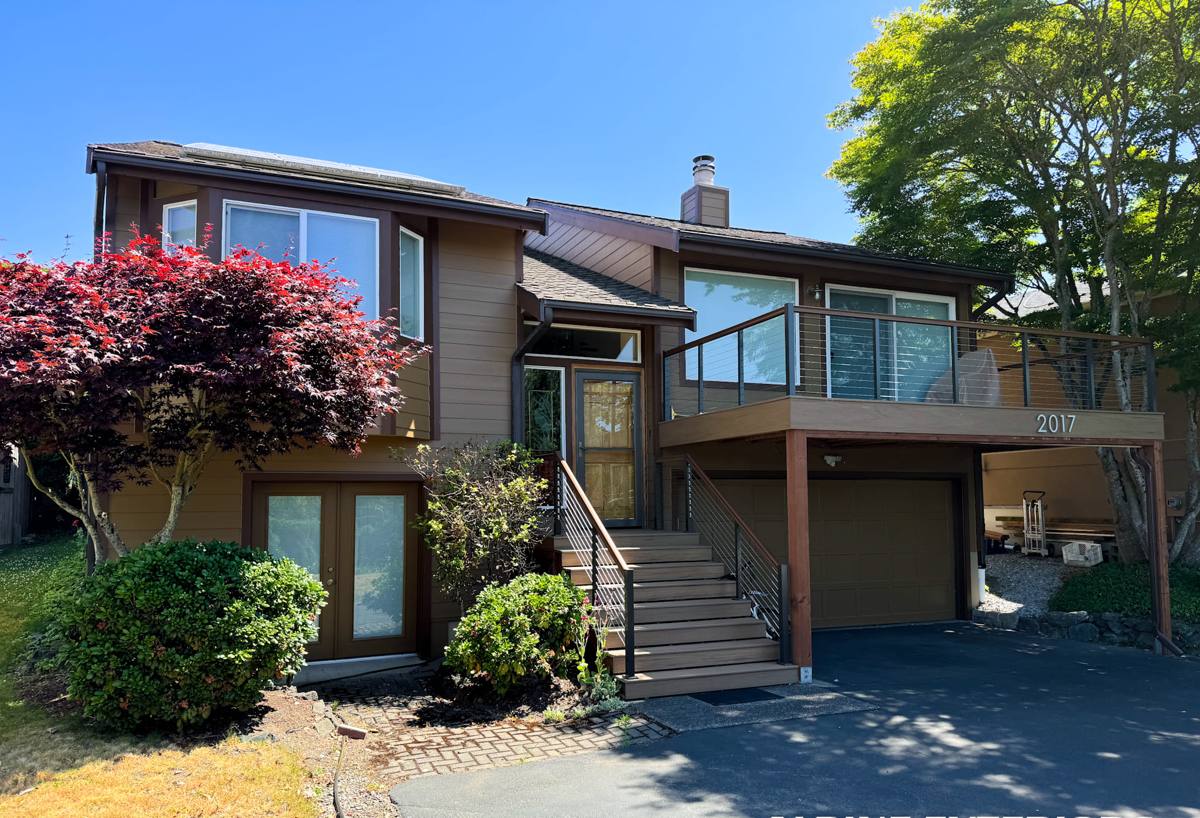
What Seminole's Climate Actually Demands From Siding
UV and Heat
Florida sun is relentless on painted surfaces. Standard field-applied paint jobs on wood or composite siding tend to fade unevenly, chalk, and require repainting on a cycle far shorter than homeowners expect going in. Over time that turns into an ongoing maintenance line item rather than a one-time investment.
Humidity and Wind-Driven Rain
Pinellas County's afternoon storms don't just drop rain straight down — wind pushes moisture sideways into wall assemblies, seams, and any gap in flashing or caulking. Siding that absorbs water, or that was installed without correct clearances and drainage, holds that moisture against the wall assembly instead of shedding it, which is where rot and hidden damage start.
Salt Air
Even set back from the beach, Seminole homes are close enough to the Gulf that airborne salt reaches painted and metal surfaces regularly. Salt accelerates corrosion of fasteners and hardware and can degrade certain finishes faster than inland climates would predict.
Storm Wind
Hurricane season means real wind-load requirements on exterior materials and fastening patterns, not just cosmetic considerations. Siding that isn't rated and installed for wind resistance is a liability during the storms that Pinellas County sees on a fairly regular basis.
Why We Install James Hardie Fiber Cement — and Nothing Else
We made a deliberate decision as a company to install only James Hardie fiber cement siding, and we don't install vinyl, LP SmartSide, Cemplank, Allura, or primed wood products like spruce or cedar. That's not a marketing position — it's a reflection of what actually holds up under the specific conditions Seminole and the rest of Pinellas County throw at a home.
Fiber cement is non-combustible, which matters in a state where wildfire and lightning-strike risk isn't zero, and it doesn't expand and contract with humidity the way wood-based products do. James Hardie's ColorPlus factory-applied finish is baked on under controlled conditions rather than field-applied on a ladder, which gives it far more consistent UV resistance than job-site paint. Hardie also engineers specific product lines, referred to as HZ5, for high-humidity, high-moisture climates like Florida's — the formulation and moisture performance are built for exactly the conditions Seminole homes face, not adapted from a product designed for a drier region.
None of that means other products are worthless — vinyl is inexpensive and easy to find, and engineered wood has a genuine fan base for its look and workability. But we've seen enough call-backs and premature failures from products not suited to Gulf Coast humidity and salt air that we no longer install them, even when a homeowner would prefer the lower up-front cost. We'd rather explain that trade-off honestly up front than install something we don't stand behind.
What a Correct Siding Installation Actually Involves
The material is only half the equation. A huge share of siding failures we get called out to inspect trace back to installation shortcuts, not the product itself. A correct James Hardie installation in a climate like Seminole's includes:
- A weather-resistive barrier installed and lapped correctly behind the siding, not just stapled up as an afterthought
- Proper flashing at every window, door, and roofline penetration, sequenced so water sheds outward and down rather than behind the siding
- Correct fastener type, spacing, and penetration depth per Hardie's published installation specifications — under-fastening or over-driving nails is one of the most common defects we find on older installs
- Minimum clearance gaps at the ground, roof lines, and butt joints so the siding isn't sitting in standing water or trapped moisture
- Caulking and sealant only where Hardie's specifications call for it — over-caulking traps moisture just as badly as under-caulking lets it in
- Field-cut edges primed or sealed per manufacturer instructions before installation, especially on ColorPlus product where factory-finished edges are engineered to stay protected
Skipping any one of these steps can void a manufacturer warranty even when the siding itself is a premium product. This is why we treat installation specification as seriously as material selection — a Hardie board installed off-spec fails the same way an inferior product would.
Our Process, Start to Finish
We keep the process straightforward and communicate at each stage rather than disappearing between the estimate and the finish work.
- Initial walkaround and assessment — we look at your current siding, trim, and any moisture or rot damage, and talk through what's driving the need for replacement
- Product and color selection — we walk you through the relevant James Hardie lines and ColorPlus color options suited to your home and HOA or neighborhood expectations, where applicable
- Written estimate — scope, materials, and price laid out clearly, with no vague allowances
- Tear-off and substrate check — old siding comes off and we inspect sheathing underneath for hidden rot or moisture damage before anything new goes up
- Weather barrier and flashing — installed to spec before a single piece of siding goes on
- Hardie installation — fastened, spaced, and sealed per manufacturer specification
- Final walkthrough — we review the finished job with you directly before calling it complete
What Drives Siding Installation Cost in Seminole
Every home is different, but the main variables that move price are consistent enough to lay out plainly:
| Cost Factor | Why It Matters |
|---|---|
| Home size and wall complexity | More square footage, corners, and architectural detail mean more material and labor hours |
| Substrate condition | Rot or moisture damage found under old siding requires repair before new siding can go on correctly |
| Hardie product line selected | Lap siding, panel siding, and shingle-style products differ in material and installation cost |
| Trim and accessory work | Fascia, soffit, and trim replacement alongside siding adds scope but improves the overall envelope |
| Access and site conditions | Two-story sections, tight setbacks, or landscaping obstacles affect labor time |
We provide an itemized estimate so you can see exactly where the cost is going rather than a single lump-sum number.
Signs a Seminole Home May Need New Siding
Not every siding problem is obvious from the street. Some of the most common warning signs we see on inspections around the area include:
- Visible warping, buckling, or gaps between siding panels or planks
- Soft or spongy spots when you press on the siding near the base of the wall
- Paint that's peeling, bubbling, or chalking heavily on your hand after touching it
- Rot or discoloration around window and door trim
- Increasing interior humidity, musty odors, or unexplained utility bill increases, which can point to moisture getting behind the siding
- Visible mold or mildew streaking that returns quickly after cleaning
If you're seeing more than one of these, it's worth having someone look at the wall assembly, not just the surface — surface repairs on a failing system tend to be short-lived.
Why It Matters That We Already Work in Seminole
Siding installation isn't just about the product — it's about a crew that understands the humidity, storm exposure, and building patterns specific to this part of Pinellas County. Knowing how homes in this area are typically built, what moisture issues tend to show up first, and how to sequence a job around Florida's summer storm patterns comes from working here consistently, not from a generic install crew passing through. We also understand local permitting expectations and wind-load requirements that apply to exterior work in this county, which keeps your project compliant without surprises partway through.
Get a Straightforward Estimate
If your Seminole home's siding is showing its age or you're planning ahead of the next storm season, we're happy to take a look and give you an honest read on what's going on and what it would take to fix it right. Reach out for a free, no-pressure estimate using the form below.