 Clearwater Roofing
 Composite Decking Built for Belleair Bluffs' Climate
Belleair Bluffs is a small, tightly packed Pinellas County community wedged between Clearwater and Largo, close enough to the Intracoastal Waterway and the Gulf beaches that salt air is a fact of life for every outdoor structure. A deck here isn't just furniture for your backyard — it's a piece of exterior construction that has to survive intense year-round UV, wind-driven rain, humidity that never really lets up, and the occasional hurricane-force wind event. Wood decking in this environment has a well-known failure pattern: it dries, cups, splinters, and eventually rots at the fasteners no matter how often it's sealed. Composite decking, installed correctly, is built to shrug off most of what this climate throws at it — but "installed correctly" is doing a lot of work in that sentence, and it's the part most homeowners never get to see until something goes wrong.
This page covers what composite decking actually involves for a home in Belleair Bluffs specifically: the material choices, what a correct substructure and installation look like in a coastal Florida environment, how our process works, and why local experience with this exact climate matters more than a lot of homeowners expect going in.
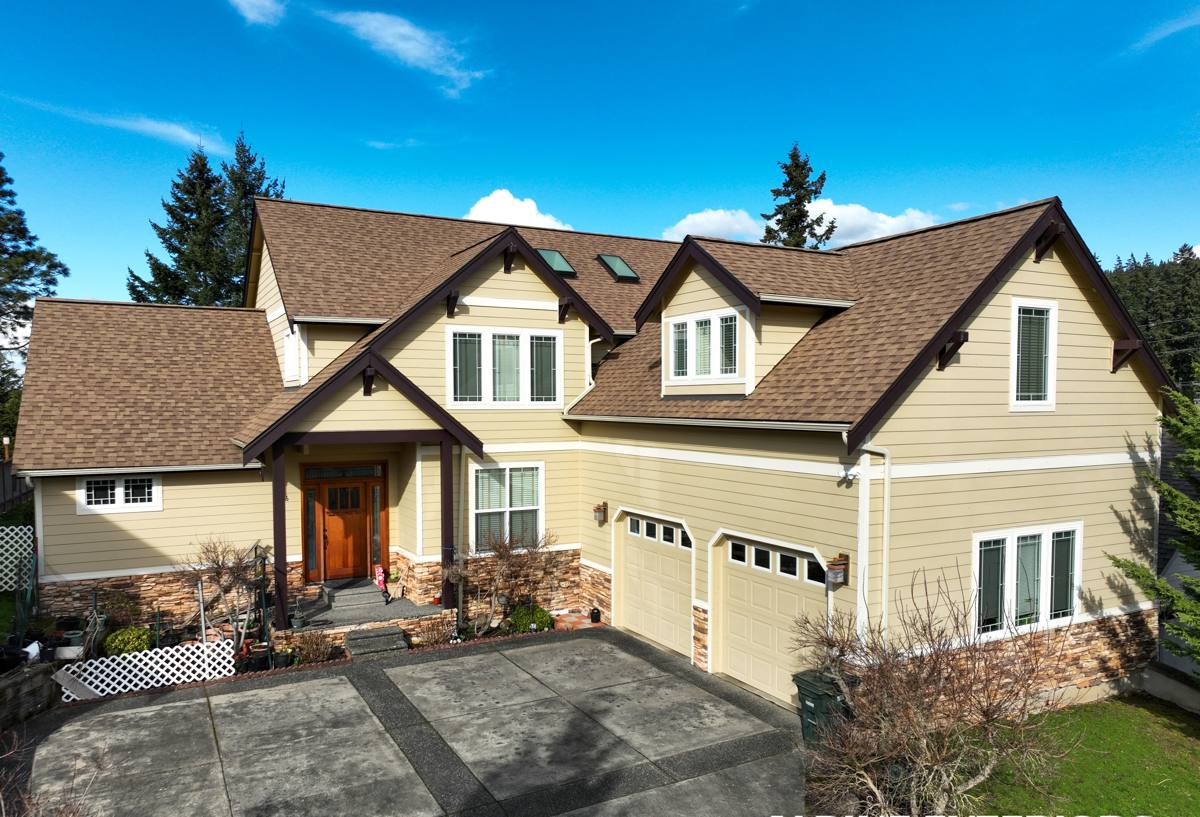
What Local Homes Actually Need From a Deck
Every material decision on a Belleair Bluffs deck traces back to the same handful of climate stressors:
- UV exposure: Florida sun is relentless nearly all year, which fades and degrades untreated wood fibers and lower-grade plastics faster than most homeowners expect.
- Salt air: Proximity to the Intracoastal and Gulf means airborne salt accelerates corrosion on fasteners, brackets, and any exposed metal hardware.
- Wind-driven rain: Summer storms don't fall straight down here — they blow in at an angle, which means ledger boards, board gaps, and drainage all have to be designed for water hitting the deck from the side, not just from above.
- Hurricane-force wind events: Structural attachment points — ledger boards, joist hangers, post connections — need to hold up to uplift and lateral loads, not just support foot traffic.
- Humidity and poor airflow: Ground-level moisture and limited ventilation under a low deck invite mold, mildew, and substructure rot if the framing isn't built to breathe and drain.
None of this is unique to composite decking — it applies to any decking material — but composite done right addresses several of these stressors at the surface level while the substructure underneath still has to be engineered for the rest.
What "Composite Decking" Actually Means
Capped vs. Uncapped Composite
Composite decking is a blend of wood fiber and plastic, but not all composite is built the same way. Uncapped composite has exposed composite material on all sides, which means it can still absorb some moisture and is more prone to staining and mold growth over time, especially in a humid coastal climate. Capped composite has a polymer shell wrapped around the core, sealing it against moisture absorption and giving it much better resistance to fading, staining, and mold. In a Pinellas County climate with year-round humidity and salt air, we generally steer homeowners toward fully capped boards — the extra upfront cost is usually worth it in reduced maintenance and longer real-world lifespan.
PVC Decking as an Alternative
Some homeowners ask about all-PVC decking instead of wood-plastic composite. PVC contains no wood fiber at all, so it's essentially immune to rot and insect damage, and it tends to run cooler and lighter than composite. The trade-offs are a different look and feel underfoot (some homeowners find it less "wood-like") and typically a higher price point. We'll walk through both options honestly based on your budget and how the space will be used — there's no single right answer for every home.
Composite vs. Wood vs. PVC: A Straight Comparison
| Factor | Wood | Composite (Capped) | PVC |
|---|---|---|---|
| UV/fade resistance | Poor without regular sealing | Good to very good | Very good |
| Salt air/moisture resistance | Weak — prone to rot at fasteners | Strong | Strongest |
| Maintenance | Annual sealing/staining | Occasional soap-and-water cleaning | Minimal |
| Upfront cost | Lowest | Mid-range | Highest |
| Typical lifespan (Florida coastal) | Shorter, variable | Long, consistent | Longest |
| Look/feel | Natural wood grain | Wood-look, wide color range | Uniform, lighter underfoot |
We don't push every homeowner toward the most expensive option. If a deck is going to see heavy sun and salt exposure and you want the lowest long-term upkeep, capped composite or PVC earns its price. If budget is the priority and you're willing to maintain a wood deck properly, that's a legitimate choice too — we'll give you the honest trade-offs rather than a sales pitch.
What a Correct Composite Deck Installation Involves
The Substructure Matters More Than the Boards
The composite decking itself gets all the attention, but the framing underneath is what determines whether the deck survives a Florida storm season. That means pressure-treated or better yet, corrosion-resistant framing rated for coastal environments, joist spacing tightened to the manufacturer's spec (composite boards typically need closer joist spacing than wood), and hardware — screws, hangers, brackets — rated for high-moisture, salt-air exposure. Standard galvanized hardware can corrode faster than expected this close to the water; we use fasteners and connectors rated for coastal conditions.
Drainage and Ventilation
Wind-driven rain finds its way under and around a deck surface, so proper board spacing and slope away from the house are essential to keep water from pooling against the ledger board or foundation. Low decks especially need enough airflow underneath to let framing dry out between rain events — trapped moisture under a deck with poor ventilation is one of the most common causes of hidden rot we find on older installs.
Ledger Board Attachment
Where the deck attaches to the house is the single most critical structural connection, and it's also the point most exposed to wind-driven rain intrusion into the house's framing if it's flashed incorrectly. Correct flashing and fastening here isn't optional — it's the difference between a deck that holds up in a wind event and one that doesn't, and between a dry wall cavity and a hidden moisture problem behind your siding.
Installation Checklist We Follow on Every Job
- Confirm joist spacing meets the specific composite board manufacturer's requirements
- Use coastal-rated, corrosion-resistant fasteners and joist hangers throughout
- Flash and seal the ledger board connection properly against wind-driven rain
- Grade and slope the substructure for drainage away from the home
- Leave adequate ventilation clearance beneath low or ground-level decks
- Set board gapping per manufacturer spec for expansion and drainage
- Verify post and railing connections meet wind load requirements for the area
- Walk the finished deck with the homeowner before calling the job done
Our Process, Start to Finish
1. On-Site Assessment
We start with an in-person look at your property — existing deck condition if there is one, drainage patterns, sun exposure, and how close you are to salt air and prevailing wind. This shapes our material recommendation more than anything else.
2. Design and Material Selection
We talk through composite vs. PVC vs. wood honestly, walk through color and board profile options, and settle on a layout that fits how you'll actually use the space.
3. Permitting
Deck construction in Pinellas County generally requires a permit, and we handle that process as part of the job rather than leaving it on the homeowner's plate.
4. Build
Framing first, inspected before boards go down, then the composite decking, railing, and any finish trim. We keep the site clean and communicate on timeline as we go.
5. Final Walkthrough
We walk the finished deck with you, point out anything you should know for maintenance, and make sure you're satisfied before we consider the job complete.
Maintenance in a Coastal Pinellas County Climate
One of the real advantages of composite decking is how little upkeep it needs compared to wood — but "little" isn't "none," especially this close to the water. A periodic wash with soap and water clears salt residue, pollen, and mildew before it sets into the surface texture. Keeping furniture feet and planters from trapping moisture against the boards helps avoid staining. And an annual look at the fasteners, railing connections, and ledger board flashing catches small issues — a loosening bracket, a hairline gap in flashing — before they become expensive ones. None of this is heavy labor; it's the kind of light attention that keeps a well-built composite deck looking and performing like new for many years.
Cost Factors to Expect
| Factor | Impact on Cost |
|---|---|
| Deck size and shape | Larger and more complex layouts (multiple levels, angles) increase material and labor |
| Board tier (capped vs. uncapped vs. PVC) | Higher-grade, more moisture-resistant boards cost more upfront |
| Substructure condition | Replacing an old or undersized frame adds cost but is not optional for safety |
| Railing and stair details | Composite or metal railing systems, stairs, and lighting add to the total |
| Site access and existing deck removal | Tear-off of an old deck or difficult site access affects labor time |
We give a firm, itemized quote before any work starts — no vague ranges once we've actually seen the site.
Why Hiring a Crew That Already Works in Belleair Bluffs Matters
A deck built to a generic national spec sheet doesn't automatically hold up in a Pinellas County backyard a few blocks from the Intracoastal. Crews who work this specific area regularly know which fastener grades actually hold up to the salt air here, how local wind exposure should factor into railing and post connections, and what the permitting process for this part of the county actually looks like in practice — not just in theory. That local pattern-recognition is what keeps small details from becoming callbacks two summers later, when a homeowner who hired an out-of-area crew is dealing with corroded hardware or a ledger board that was never properly flashed against wind-driven rain.
If you're weighing composite decking for a home in Belleair Bluffs, we're happy to walk the site, talk through material options honestly, and put together a clear, no-pressure estimate. There's no obligation — just a straight assessment of what your property actually needs. Use the form below to get started.