 Clearwater Roofing
 Deck Replacement Built for Belleair's Coastal Conditions
Belleair sits close enough to the water that every deck in the area is dealing with the same slow, steady attack: salt-laden air, intense year-round UV exposure, wind-driven rain that finds its way into every joint and seam, and the occasional hurricane-force wind event that tests every fastener and connection you have. A deck that would last decades in a dry inland climate can start failing structurally in Pinellas County within half that time if it wasn't built or replaced with these conditions in mind.
That's the difference between a deck that gets replaced and one that gets replaced correctly. We see a lot of decks in this area that were built to a reasonable general standard but not to a coastal Gulf Coast standard — and it shows up first in the fasteners, then in the framing, and eventually in the surface itself.
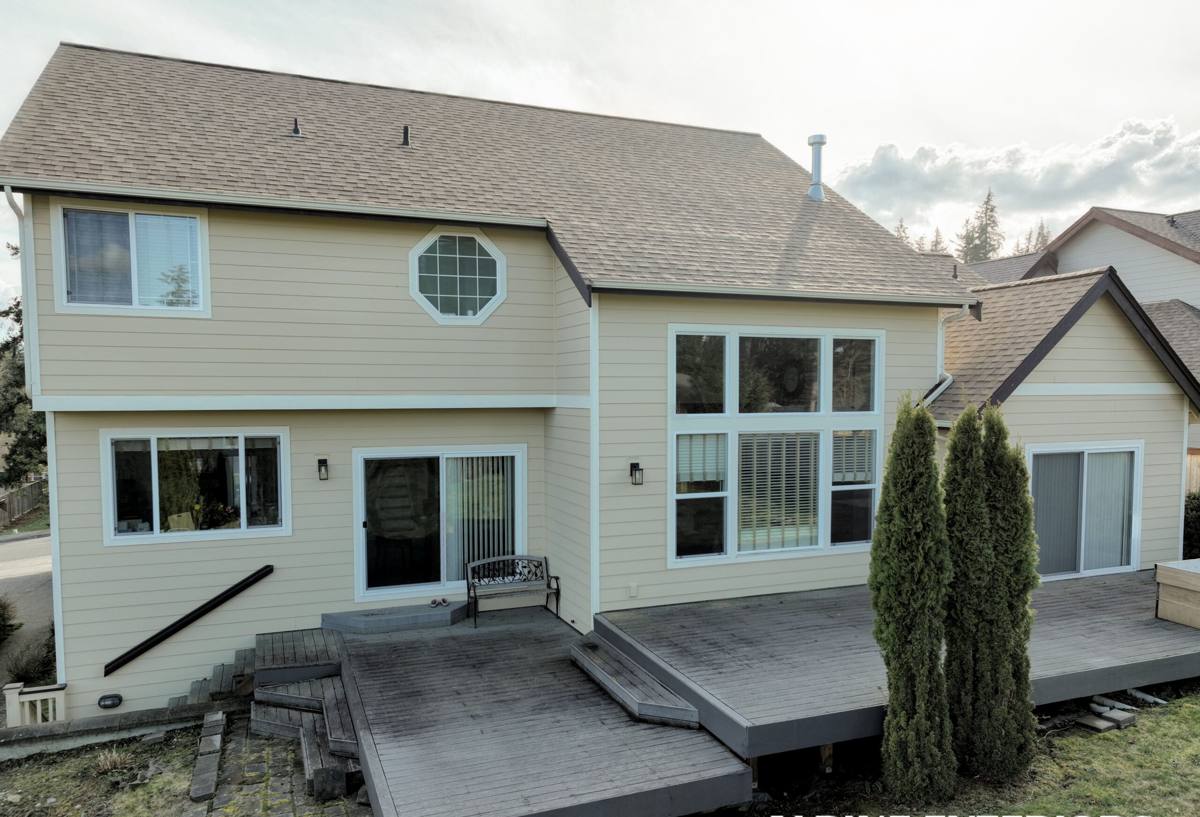
Why Repair Isn't Always the Answer
Homeowners often call us wanting a repair quote and end up needing a conversation about replacement instead. That's not us trying to sell a bigger job — it's usually because the damage that's visible on the surface is only part of what's happening underneath. Salt air accelerates corrosion in fasteners and hardware long before the wood around them shows obvious rot, and by the time boards are visibly cupping, splitting, or spongy underfoot, the structural members below often have similar issues.
A deck built or last replaced more than 15-20 years ago in this climate, especially one using older fastener technology, is a strong candidate for full replacement rather than patchwork repair. Repairing individual boards on a structure with compromised framing or corroded hardware just delays the real fix and can create a false sense of security.
Signs It's Time for Replacement, Not Repair
- Soft, spongy, or bouncy spots when you walk across the deck
- Visible rust staining around fasteners or connectors
- Cracked, split, or badly cupped boards across multiple areas, not just one or two
- Railings or posts that wobble or flex when pushed
- Gaps opening up at the ledger board where the deck meets the house
- Wood that's gray, checked, and dry despite regular sealing or staining
- Visible sagging along joists or beams when viewed from underneath
- A deck that hasn't been re-fastened, re-flashed, or structurally inspected in over a decade
What a Correct Deck Replacement Actually Involves
A deck replacement done right is a structural project, not a cosmetic one. The decking boards are the part everyone sees, but the framing, connections, and moisture management underneath are what determine whether the deck holds up through the next decade of Gulf Coast weather.
Framing and Structural Connections
We start from the ground up: footings, posts, beams, and joists all get evaluated and rebuilt to current structural standards, not just matched to whatever was there before. In a wind-driven climate like ours, the connections matter as much as the lumber itself — joist hangers, hurricane ties, and ledger attachment all need to be sized and fastened correctly to resist uplift and lateral loads, not just vertical weight.
The ledger board — where the deck attaches to the house — is one of the most common failure points we find on older decks. Proper flashing at this connection keeps water from tracking behind the siding and into the house framing, which is a much bigger and more expensive problem than the deck itself if it's left unaddressed.
Decking Material Choices
There's no single right answer for every home, but there are real trade-offs worth understanding before you decide. We'll walk through these honestly rather than push whatever happens to be easiest for us to install.
| Material | Coastal Performance | Maintenance | General Cost Range* |
|---|---|---|---|
| Pressure-treated wood | Fair — needs consistent sealing to resist moisture and salt air | Annual cleaning and resealing recommended | Lower upfront cost |
| Composite decking | Good — resists rot and doesn't absorb salt moisture like wood | Periodic cleaning, no staining or sealing | Mid to higher upfront cost |
| PVC/capped polymer | Very good — fully resists moisture intrusion and salt exposure | Low — occasional washing | Higher upfront cost |
| Tropical hardwoods | Good if properly maintained — naturally dense and rot-resistant | Requires regular oiling to prevent graying and checking | Higher upfront cost |
*Cost ranges vary significantly based on deck size, framing condition, and site access — we'll give you an exact number after we see the deck, not before.
Fasteners and Hardware for Salt Air
This is where a lot of decks quietly fail, and it's the part most homeowners never think to ask about. Standard fasteners corrode fast in salt air, and once a fastener starts rusting, it loses holding strength long before it looks obviously bad. We use fasteners and structural connectors rated for coastal and treated-lumber exposure, because the cost difference between corrosion-resistant hardware and standard hardware is small compared to the cost of redoing a deck that fails at the connections in five years instead of twenty.
Our Deck Replacement Process
- On-site evaluation. We inspect the existing deck, framing, ledger connection, and footings to understand what's actually happening structurally, not just what's visible on the surface.
- Honest scope and estimate. You get a clear breakdown of what needs replacing, what materials we recommend for your situation, and why — no upselling, no vague allowances.
- Permitting. We handle the permit process required for deck replacement work, including anything tied to structural changes or footing work.
- Demolition and disposal. The old deck comes down and old materials are hauled off — we don't leave debris behind for you to deal with.
- Structural rebuild. Footings, framing, ledger flashing, and connections are built or replaced to current standards suited for coastal wind and moisture exposure.
- Decking installation. Boards, railings, and stairs are installed to your chosen material with attention to proper spacing and fastening for drainage and expansion.
- Final walkthrough. We go over the finished deck with you, point out any maintenance recommendations specific to your material choice, and make sure everything meets what was scoped.
Permits and Building Requirements
Deck replacement work in this part of Florida generally requires a permit, especially when it involves structural elements like framing, footings, or attachment to the home. Requirements can vary depending on the scope of work and the specifics of your property, so we handle the permitting process as part of the job rather than leaving it for you to sort out. Skipping required permits on structural work isn't a shortcut worth taking — it can create real problems at resale or insurance time down the line.
Cost Factors Worth Understanding
Every deck is different, and the honest answer is that an accurate number requires seeing your specific deck, but these are the main factors that move the price:
| Factor | Why It Matters |
|---|---|
| Deck size and shape | More square footage and complex shapes mean more material and labor |
| Framing condition | Rotted or undersized framing that needs full rebuilding adds cost beyond surface decking |
| Decking material | Wood, composite, and PVC carry different material costs and installation labor |
| Height and stairs | Elevated decks with railings and stairs require more structural work and code compliance |
| Site access | Tight side yards or obstructed access can add time and labor |
| Permit and inspection scope | Larger structural changes may require more inspection steps |
Why Local Experience in Belleair Matters
A crew that regularly works in Belleair and the surrounding Clearwater area already understands the practical realities of building here — the way salt air accelerates hardware corrosion, the way summer humidity and afternoon storms affect curing and scheduling, and the way hurricane-force wind events during the season put real stress on connections that inland contractors might under-build. That local familiarity shows up in the small decisions: which fasteners to spec, how to detail the ledger flashing, and how to sequence the job around Florida's weather rather than around a generic construction calendar.
It also means we're not guessing at what holds up here — we're building to what we've seen actually perform through Gulf Coast summers, storm seasons, and years of UV exposure, not just to a minimum code checkbox.
What a Well-Built Deck Should Give You Going Forward
A properly replaced deck in this climate should give you a stable, safe structure that doesn't require constant worry after every storm season. That means solid footing connections, corrosion-resistant hardware throughout, correct ledger flashing, and a decking material chosen with an honest understanding of the maintenance you're willing to keep up with. We'd rather talk you through the trade-offs upfront than have you surprised by a maintenance burden two years in.
If your deck is showing its age or you're just not sure whether it needs repair or full replacement, we're happy to take a look and give you a straight answer. Fill out the form below for a free, no-pressure estimate — there's no obligation, just an honest assessment of what your deck actually needs.