 Clearwater Roofing
 Deck Repair Services for Coachman Ridge Homeowners
A deck in Coachman Ridge earns its keep — it's where morning coffee happens, where the grill lives, where kids and pets spend half the year. But it's also one of the hardest-working structures on a Clearwater property, sitting outside year-round and taking direct hits from sun, humidity, and storms that a roof or siding never has to deal with in quite the same way. When a deck starts to sag, squeak, or show soft spots, it's rarely a cosmetic problem alone. It's usually the wood, fasteners, or framing telling you something about moisture or age that needs a real look, not just a coat of stain.
We repair decks throughout Coachman Ridge and the surrounding Clearwater area, and the work here has its own rhythm. Homes in this part of Pinellas County deal with a specific combination of stressors — intense UV exposure nearly every month of the year, wind-driven rain that gets under railings and ledger boards, salt-laden air moving inland off the Gulf, and the periodic hurricane-force winds that test every connection point a deck has. A repair plan that ignores any one of those factors tends to fail early. This page covers what we actually look for, how we decide what to fix versus replace, and what a correct repair looks like in this climate.
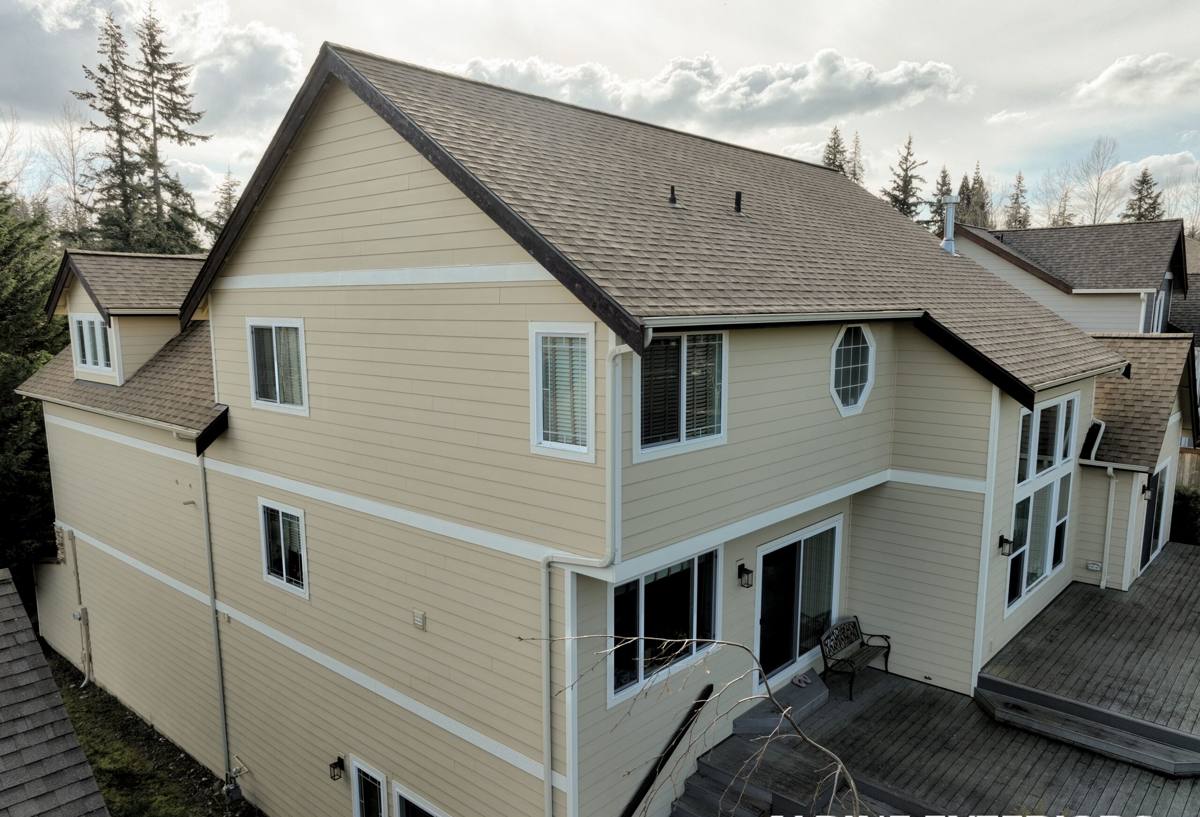
How Clearwater's Climate Wears Down a Deck
UV and heat
Florida sun is relentless on exposed wood and composite decking alike. UV breaks down the lignin in wood fibers, causing graying, splintering, and surface checking, while also drying out the natural oils that keep boards flexible. On composite and PVC products, prolonged heat and UV exposure can accelerate fading and, on lower-grade materials, surface degradation faster than the manufacturer's published warranty terms assume for cooler climates.
Wind-driven rain and humidity
Clearwater's rain rarely falls straight down. Wind-driven rain gets pushed sideways into railing joints, under fascia boards, and into the gap between a deck's ledger board and the house — exactly the spots that are hardest to inspect and slowest to dry. Combined with Pinellas County's year-round humidity, that trapped moisture is the single biggest driver of rot we see in deck framing.
Salt air corrosion
Even away from the immediate coastline, salt air travels inland and settles on metal hardware — joist hangers, bolts, screws, and railing brackets. Standard zinc-plated fasteners corrode faster here than in inland states, and once a fastener weakens, the connection it's holding becomes the weak point in the whole structure.
Hurricane-force wind loads
A deck attached to a house has to resist uplift and lateral loads during high wind events, not just hold up foot traffic. Loose ledger connections, under-sized post footings, or missing hurricane straps that were fine for everyday use can fail under storm-force wind, which is why repair work here has to think about wind resistance even when the original complaint is something as simple as a wobbly railing.
Common Deck Problems We Find in Coachman Ridge
Ledger board and house connection issues
The ledger board — where the deck bolts to the house — is the most safety-critical connection on most decks, and it's also the one most exposed to trapped moisture if flashing was skipped or installed incorrectly. We check this connection closely on nearly every repair call, even when the visible complaint is somewhere else on the deck.
Post and footing deterioration
Wood posts sitting in or near ground contact take on moisture from below, and footings that were undersized or poured shallow can shift over years of Florida's wet-dry cycles. A deck that feels like it's "bouncing" more than it used to is often telling you a post or footing has moved.
Fastener and hardware corrosion
Rust streaks running down a board from a screw head, or a joist hanger with visibly corroded nails, are early warning signs. Left alone, corroded fasteners lose their grip on the wood fibers around them and the connection weakens well before it becomes visually obvious.
Railing and stair safety issues
Railings take a lot of lateral load from people leaning on them, and repeated wetting and drying loosens the connections at posts and balusters over time. Stair stringers exposed to standing water at the base are also a common failure point we see on older decks in this area.
Repair or Replace? How We Make the Call
Not every deck problem means starting over, and not every deck is worth patching. We look at the whole structure — framing, connections, and decking surface — before recommending either path.
| Signal | Usually points to repair | Usually points to replacement |
|---|---|---|
| Framing condition | Joists and beams are sound, isolated soft spots | Widespread rot or soft wood throughout the frame |
| Ledger connection | Solid, properly flashed, no moisture trapped | Rotted, improperly flashed, or missing hardware |
| Age of structure | Under roughly 12-15 years, built to current practices | Original construction decades old with outdated framing |
| Decking surface | Isolated damaged boards, rest is stable | Widespread cupping, splintering, or fastener failure |
| Code compliance | Meets current railing height and spacing rules | Railings or stairs are undersized for current code |
When a deck is a borderline case, we'll walk you through exactly what we found and what each option costs to do correctly, rather than defaulting to the more expensive answer.
Our Deck Repair Process
- Inspection. We check the ledger connection, posts, footings, joists, fasteners, and decking surface, probing suspect wood for soft spots rather than judging by appearance alone.
- Written scope. You get a clear explanation of what's damaged, why, and what fixing it involves — no vague line items.
- Structural repairs first. Framing, ledger connections, posts, and footings get addressed before any surface or cosmetic work, since a good-looking deck on a weak frame isn't a repair, it's a delay.
- Hardware upgrades. Corroded fasteners and connectors get replaced with hardware rated for coastal exposure, not the standard zinc-plated parts that struggle in this air.
- Decking and railing work. Damaged boards, balusters, and rail sections are replaced and matched as closely as possible to the existing deck.
- Final check. We test railings for movement, confirm stairs are solid, and walk the deck with you before calling the job done.
Decking Materials: What Holds Up Best Locally
Material choice matters more here than in milder climates, because the combination of UV, humidity, and salt air punishes weak points quickly.
| Material | Strength in this climate | Trade-off |
|---|---|---|
| Pressure-treated pine | Affordable, easy to repair in sections | Needs regular sealing; UV and moisture cycles cause checking over time |
| Composite decking | Resists rot, low maintenance surface | Higher upfront cost; quality varies significantly by product tier |
| Cedar or tropical hardwoods | Naturally rot-resistant, attractive grain | Cost and availability; still needs periodic sealing in full sun |
| PVC decking | Handles moisture well, doesn't rot | Can show more thermal expansion; installation sensitivity to gapping matters |
For framing and structural members, we favor materials and fastener systems rated for coastal or high-moisture use regardless of what the decking surface is made of, since the frame is what actually holds the deck up in a storm.
Permits, Code, and Hurricane Strapping in Pinellas County
Deck repairs that touch structural elements — framing, footings, or the ledger connection — typically require a permit and inspection under local building code, even in an established neighborhood like Coachman Ridge. This isn't paperwork for its own sake: it's the mechanism that confirms hurricane strapping, railing height, and baluster spacing meet current wind and safety standards, not just the standards from whenever the deck was originally built. We handle the permitting process as part of the job so you're not left navigating it alone, and so the repair holds up to inspection, not just to a quick look.
Keeping Your Deck Ready for the Next Storm Season
A little seasonal attention goes a long way toward avoiding bigger repairs later. Between visits from a contractor, these are the checks worth doing yourself:
- Look for soft or spongy spots underfoot, especially near the house connection and stair landings
- Check railings and posts for any wobble or give when you lean on them
- Watch for rust streaks running down from screw heads or hardware
- Clear leaves and debris from between boards so water doesn't sit and trap moisture
- Reseal wood decking on the schedule the product calls for, not just when it looks faded
- After any major storm, walk the deck and check fasteners, railings, and the ledger area before resuming normal use
Why Hire a Crew That Already Works in Coachman Ridge
Deck problems in this neighborhood tend to share common threads — similar construction eras, similar exposure patterns, similar spots where moisture gets trapped. A crew that already repairs decks around Coachman Ridge and the wider Clearwater area has seen those patterns enough times to know where to look first, what hardware actually holds up here, and how Pinellas County inspectors expect structural repairs to be documented and built. That local familiarity tends to mean a faster, more accurate inspection and fewer surprises once the work is underway.
If your deck has a soft spot, a loose railing, or just feels different than it used to, it's worth having someone look before the next big storm rolls through. We offer free, no-pressure estimates for deck repair in Coachman Ridge — use the form below to get one scheduled.