 Clearwater Roofing
 Siding Built for Countryside's Specific Conditions
Countryside sits inland from the immediate coastline, but "inland" in Pinellas County still means salt-laden air, punishing summer UV, and the same hurricane-season wind and rain exposure that hits the rest of Clearwater. Homes here go through a brutal annual cycle: months of high humidity and intense sun that bake and fade lesser siding materials, followed by tropical storms and hurricane remnants that drive rain sideways into every seam and gap. Whatever is on the exterior walls of a Countryside home needs to survive that cycle year after year without curling, rotting, or losing its finish.
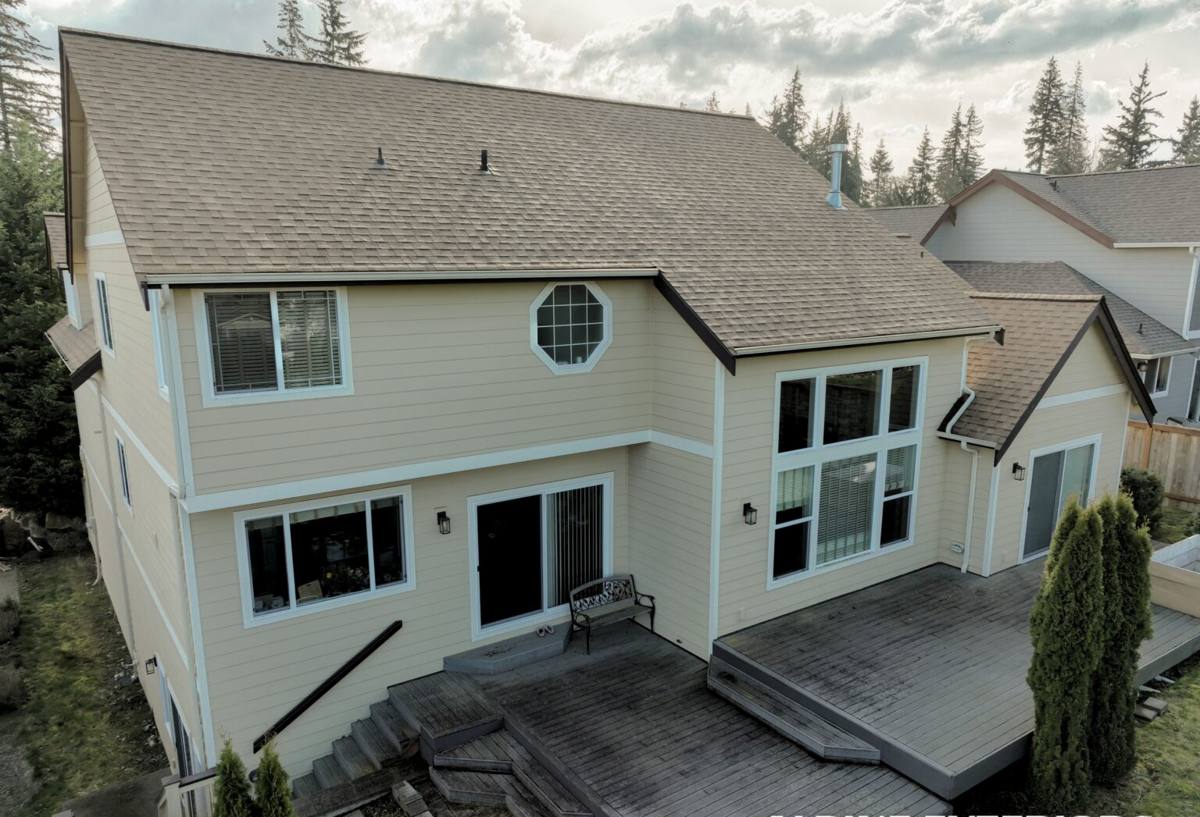
This is why we only install James Hardie fiber cement siding. It's not a marketing preference — it's a decision built around what actually holds up in this climate versus what looks fine in a showroom and fails five years into Florida sun and storms.
What Clearwater's Climate Does to the Wrong Siding
Before talking about the right product, it's worth being specific about what local homes are actually up against, because it explains every decision in a correct installation.
Humidity and Moisture Cycling
Pinellas County's humidity doesn't let up for most of the year. Siding that isn't dimensionally stable expands and contracts with moisture swings, which over time works fasteners loose, opens seams, and lets water behind the cladding. Wood-based and composite products are especially prone to swelling at cut edges and butt joints if they aren't sealed correctly at installation.
UV Exposure
Florida sun is intense and constant. Paint and factory finishes that aren't formulated for this UV load chalk, fade, and break down faster than the same product would in a milder climate. A finish rated for "average" conditions elsewhere in the country often underperforms here.
Wind-Driven Rain
During tropical storms and hurricanes, rain doesn't fall straight down — it's pushed horizontally into walls, soffits, and every horizontal siding joint. Flashing details, house wrap, and butt-joint treatment matter more here than in drier, calmer regions, because water intrusion happens at the details, not through the field of the siding itself.
Salt Air
Even set back from the water, Countryside gets salt-laden air carried inland off Tampa Bay and the Gulf. Salt accelerates corrosion on fasteners and trim and degrades finishes that aren't built to resist it.
Why James Hardie Fits This Environment
James Hardie fiber cement is a cement, sand, and cellulose fiber composite — not wood, not vinyl, not a wood-plastic composite. That composition matters directly for the four issues above:
- Dimensionally stable — it doesn't swell, warp, or expand and contract with humidity the way wood-based sidings can.
- Non-combustible — an added layer of protection, particularly relevant given how dry lightning-season conditions can get between storms.
- ColorPlus factory-baked finish — engineered to resist UV fading and hold color longer than field-applied paint, which matters under Florida's sun load.
- Climate-engineered HZ5 product line — Hardie's HZ5 designation is built specifically for higher-moisture, higher-humidity regions like ours, as opposed to the HZ10 line used in colder, drier climates.
- Resists rot and pest damage — cement-based composition doesn't feed termites or absorb water the way wood fiber products can.
We do not install LP SmartSide, vinyl siding, Cemplank, Allura, or primed spruce and cedar. Some of those are reasonable products in the right context, but none of them match Hardie's combination of moisture stability, factory finish durability, and long-term performance specifically for Gulf Coast conditions. That's a professional standard we hold across every job, not a judgment on every homeowner who has one of those products already installed.
What a Correct Installation Actually Involves
The siding material is only part of the equation. Most siding failures we get called to look at in Clearwater neighborhoods trace back to installation shortcuts, not the product itself. A correct James Hardie job on a Countryside home includes:
Proper Weather Barrier and Flashing
House wrap installed correctly, with flashing at every window, door, and penetration, so that any water that does get behind the siding has a path to drain out rather than sit against the sheathing.
Correct Fastener Pattern and Type
Hardie specifies fastener type, spacing, and placement for a reason — under-driven or over-driven nails, wrong fastener spacing, or the wrong fastener material (especially given local salt air) all shorten the life of the installation.
Proper Clearances
Siding needs the correct clearance from the roofline, grade, decks, and patios so that water doesn't wick up into the bottom edge of the boards. This is one of the most commonly skipped details on rushed jobs.
Caulking and Joint Treatment Done to Spec
Butt joints, corners, and trim intersections need to be treated exactly as Hardie specifies — not just caulked generically — to keep wind-driven rain from working its way in during storm season.
Factory-Finish Touch-Up Done Right
Where boards are cut and fastened, exposed edges need factory-matched touch-up so the ColorPlus finish's UV resistance isn't compromised at cut lines.
Our Process for Countryside Jobs
| Step | What Happens |
|---|---|
| 1. On-site assessment | We walk the exterior, check current siding and substrate condition, and identify any moisture or rot issues hiding behind existing cladding. |
| 2. Product and color selection | We go over Hardie's siding profiles and ColorPlus color options so the finished look fits the home and the neighborhood. |
| 3. Written estimate | Clear scope, materials, and timeline before any work starts — no vague allowances. |
| 4. Substrate prep | Any damaged sheathing or framing found during removal gets addressed before new siding goes on — covering it up is how problems get worse. |
| 5. Weather barrier and flashing | House wrap and flashing installed to manufacturer spec at every opening and penetration. |
| 6. Hardie installation | Installed to Hardie's fastening, clearance, and joint-treatment specifications — not shortcuts. |
| 7. Final walkthrough | We review the finished work with the homeowner before calling the job done. |
Why Local Experience in Countryside Matters
Countryside's mix of home styles and lot layouts — varying setbacks, mature landscaping, attached garages, and lanais — all affect how siding meets trim, roofline, and grade. A crew that already works in this part of Clearwater has seen those conditions repeatedly and knows where water tends to find its way in on homes built to this area's common styles and eras. That's different from a crew that installs siding occasionally and treats every Pinellas County home like a generic textbook install.
There's also a practical, unglamorous reason local experience matters: permitting and inspection. Pinellas County and City of Clearwater requirements for exterior work don't change from job to job, and a crew that pulls permits here regularly moves through that process without it becoming a delay for the homeowner.
Signs Countryside Homeowners Should Watch For
If your current siding is showing any of the following, it's worth having it looked at before it turns into a bigger repair:
- Soft or spongy spots when pressed, especially near the bottom edge or below windows
- Visible warping, buckling, or gaps opening at seams
- Paint that's chalking heavily or peeling in sheets rather than just fading
- Dark staining or streaking that keeps returning after cleaning
- Soft trim or fascia at corners and under windows
- Increased pest activity around exterior wall penetrations
Cost Factors for a Countryside Siding Project
Every home is different, but the main variables that drive cost on a Hardie siding project here are consistent:
| Factor | Why It Matters |
|---|---|
| Home size and wall complexity | More corners, gables, and dormers mean more cutting, fitting, and trim work. |
| Current substrate condition | Rotted sheathing or framing found during tear-off adds repair scope before new siding goes on. |
| Siding profile chosen | Lap siding, shingle-style panels, and board-and-batten all have different material and labor costs. |
| Trim and accessory scope | Full trim replacement versus reusing sound existing trim changes the total. |
| Access and site conditions | Landscaping, fencing, and tight setbacks affect how quickly a crew can work. |
We give a specific number after seeing the home in person — broad online estimates for siding jobs are rarely accurate once someone actually looks at the walls.
Get a Straight Answer on Your Siding
If you're in Countryside and dealing with aging, damaged, or failing siding, we'll come take a look, tell you honestly what condition it's in, and walk you through what a proper James Hardie installation would involve for your home. No pressure, no inflated scope — just a clear estimate based on what your house actually needs. Reach out below to schedule a free consultation.