 Clearwater Roofing
 Clearwater's Climate Puts Countryside Roofs to the Test
Countryside sits inland from the beach, but that doesn't spare it from what Pinellas County weather dishes out. Hurricane-force wind events, tropical storm bands, and the plain wear of intense year-round Florida sun all pass through this part of Clearwater the same as anywhere else in the county. A roof here has to handle sustained wind loads, wind-driven rain that gets pushed sideways under normal flashing lines, and UV exposure that breaks down asphalt shingles and sealants faster than it would in a milder climate. Add in the salt-laden air that drifts inland from Tampa Bay and the Gulf, and you've got a combination that ages metal fasteners, flashing, and vents well before their rated lifespan.
None of this means every roof in Countryside is in bad shape. It means storm damage here rarely announces itself with a dramatic hole in the roof. More often it's a lifted shingle tab, a bent piece of flashing, or a soft spot in the decking that started as a small leak months ago. Left alone, that's how a $400 repair turns into a $4,000 one.
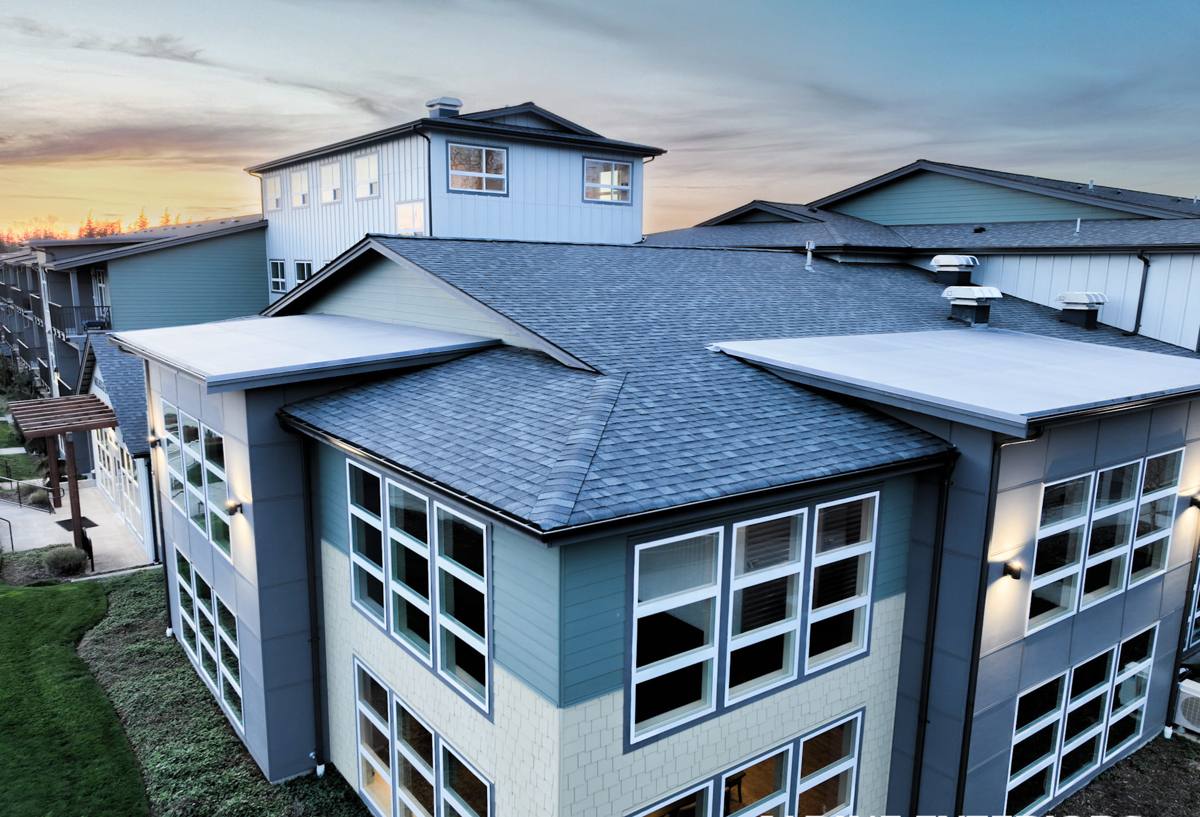
What Counts as Storm Damage on a Countryside Roof
Homeowners often assume "storm damage" means missing shingles or a tarp-worthy hole. In practice it's a broader category, and knowing the difference matters when you're deciding whether to call someone out.
Wind Damage
Sustained winds don't have to reach hurricane strength to lift shingle tabs, crease them, or break the sealant bond that keeps them flat. Once a shingle's seal is broken, it can flap in every wind event after that, wearing a groove into itself and the shingles around it until it eventually tears loose.
Wind-Driven Rain Intrusion
This is the damage type that causes the most confusion, because it often shows up with no visible exterior sign. Wind pushes rain sideways and upward under shingle edges, around vent boots, and along flashing at walls and chimneys. Water finds its way into the decking and attic space, and by the time a homeowner sees a ceiling stain, the moisture has usually been working on the wood underneath for a while.
Impact Damage
Debris carried by wind — branches, loose gutters from a neighboring property, even hail in less common events — can bruise or puncture shingles. Bruised shingles (soft spots where the mat underneath is cracked but the surface looks intact) are easy to miss on a casual look from the ground.
Signs Your Countryside Roof May Have Storm Damage
After any significant wind or rain event, it's worth a quick check. You don't need to get on the roof yourself — most of these are visible from the ground or the attic.
- Shingles that look lifted, curled, or out of alignment with the rest of the roof plane
- Granules collecting in gutters or at downspout outlets, especially after a storm
- New or worsening ceiling stains, particularly near exterior walls, chimneys, or skylights
- Soft or spongy spots when walking the attic decking (viewed, not walked on, if you're not sure it's safe)
- Visible gaps or lifted metal at roof-to-wall flashing, valleys, or vent boots
- Musty smell in the attic or upper rooms after rain, which often points to trapped moisture
- Daylight visible through the roof deck from inside the attic
What a Correct Storm Damage Repair Actually Involves
A storm repair that's done right is more than swapping a few shingles. It's a sequence, and skipping steps is how the same leak comes back a year later.
Inspection and Documentation
We start by getting a full picture of the damage, not just the spot the homeowner noticed. Wind and rain rarely damage a roof in exactly one place — we check the whole plane, the flashing details, and the attic side, and we document what we find with photos before anything is touched. That documentation matters whether or not you end up filing an insurance claim.
Temporary Mitigation
If there's active water intrusion or exposed decking, the first job is stopping further damage — tarping, sealing, or covering the affected area. This isn't the fix; it's what keeps a bad situation from getting worse while the permanent repair is scheduled.
Structural and Decking Check
Any area that took water needs the decking underneath checked for soft spots or rot. Repairing shingles over compromised decking is a shortcut that fails — the new roofing has nothing solid to hold onto, and the problem resurfaces from the inside.
Matching Materials and Flashing Detail
Shingle repairs should match the existing roof in profile and, as closely as possible, in color and age — a repair that stands out isn't just a cosmetic issue, it can also mean a poor seal at the transition. Flashing at valleys, walls, and penetrations gets rebuilt to correct spec, not just re-caulked, since caulk is a temporary patch, not a flashing detail.
Repair or Replace?
Not every storm-damaged roof needs a full replacement, and not every roof that "just needs a few shingles" should stop there. The right call depends on the roof's age, the extent of the damage, and what's happening underneath the surface.
| Factor | Leans Toward Repair | Leans Toward Replacement |
|---|---|---|
| Roof age | Under 12-15 years, otherwise healthy | Nearing or past expected shingle lifespan |
| Extent of damage | Isolated to one section or detail | Spread across multiple planes or repeated leak history |
| Decking condition | Solid, no rot found | Soft spots or rot in more than a small, contained area |
| Shingle availability | Matching shingles still obtainable | Discontinued profile or badly weathered mismatch |
| Insurance scope | Adjuster scopes a repair | Adjuster scopes full slope or full roof |
We'll tell you honestly which side of that table your roof falls on. A repair that's genuinely sufficient is the right answer more often than people expect — but we won't recommend patching a roof that's going to need full replacement within a year or two anyway, since that just spends money twice.
How We Handle Insurance-Related Storm Repairs
A good number of storm repairs in this area involve an insurance claim. We're not a public adjuster and we don't promise a claim outcome — that's between you and your carrier. What we do is give you an accurate, documented scope of the damage, provide photos and a written estimate that an adjuster can work from, and repair to the scope that's approved. If an adjuster's assessment misses damage we found during our inspection — a common issue with wind-driven rain intrusion that isn't visible from the roof surface — we can point to our documentation so you have something concrete to bring back to them.
Our Process, Step by Step
- You call or request an estimate, and we schedule a roof inspection, usually within a day or two
- We inspect the full roof and attic, not just the reported problem area, and document everything with photos
- We walk you through what we found in plain terms, including whether it's a repair or a replacement situation
- If there's active leaking, we handle temporary mitigation the same visit where possible
- You get a written estimate with the scope of work spelled out before anything is scheduled
- We complete the repair, matching materials and rebuilding flashing to proper detail, not just patching the surface
- We do a final walk-through so you can see what was done and ask questions before we consider the job finished
Why a Local Countryside Crew Matters
Storm damage repair isn't a job you want handed to whoever answers the phone fastest from three counties away. A crew that already works in Countryside and the surrounding Clearwater area knows the housing stock here — the common roof ages, the typical shingle profiles used in this area's developments, and how Pinellas County's wind-uplift and building code requirements apply to a repair versus a full re-roof. That familiarity means fewer surprises once we're on the roof, and it means we're not learning the area's building department requirements on your dime.
It also means a faster response after a storm, when half the county is trying to get someone out to look at their roof at the same time. Being local isn't a marketing line here — it's the difference between a next-day inspection and a two-week wait while water keeps finding its way into your decking.
If you've had a recent storm come through and you're not sure whether what you're seeing is worth worrying about, we're happy to take a look. The estimate is free, there's no pressure to sign anything on the spot, and you'll get a straight answer about whether this is a repair, a bigger job, or nothing to worry about at all. Use the form below to get started.