 Clearwater Roofing
 Building Decks That Actually Hold Up in Coachman Ridge
Coachman Ridge sits inland enough from the Gulf to feel like it's spared the worst of coastal weather, but Clearwater's climate doesn't work that way. Every deck in this Pinellas County neighborhood still deals with hurricane-force wind gusts during storm season, months of intense subtropical UV, wind-driven rain that finds its way into every seam and joint, and a steady dose of salt-laden air blowing in off the Gulf. A deck built to a generic national spec, without those four forces in mind, will show problems within a few seasons — not decades from now, but soon. Loose railings, cupped boards, corroding hardware, and soft spots around posts are the most common calls we get on decks that were built fast instead of built right.
A custom deck done correctly for this area isn't about upgrading everything to the most expensive option. It's about matching the structure, the fasteners, the fastening pattern, and the surface material to what Coachman Ridge's weather actually does to a deck year-round, and being honest with homeowners about the trade-offs of each choice.
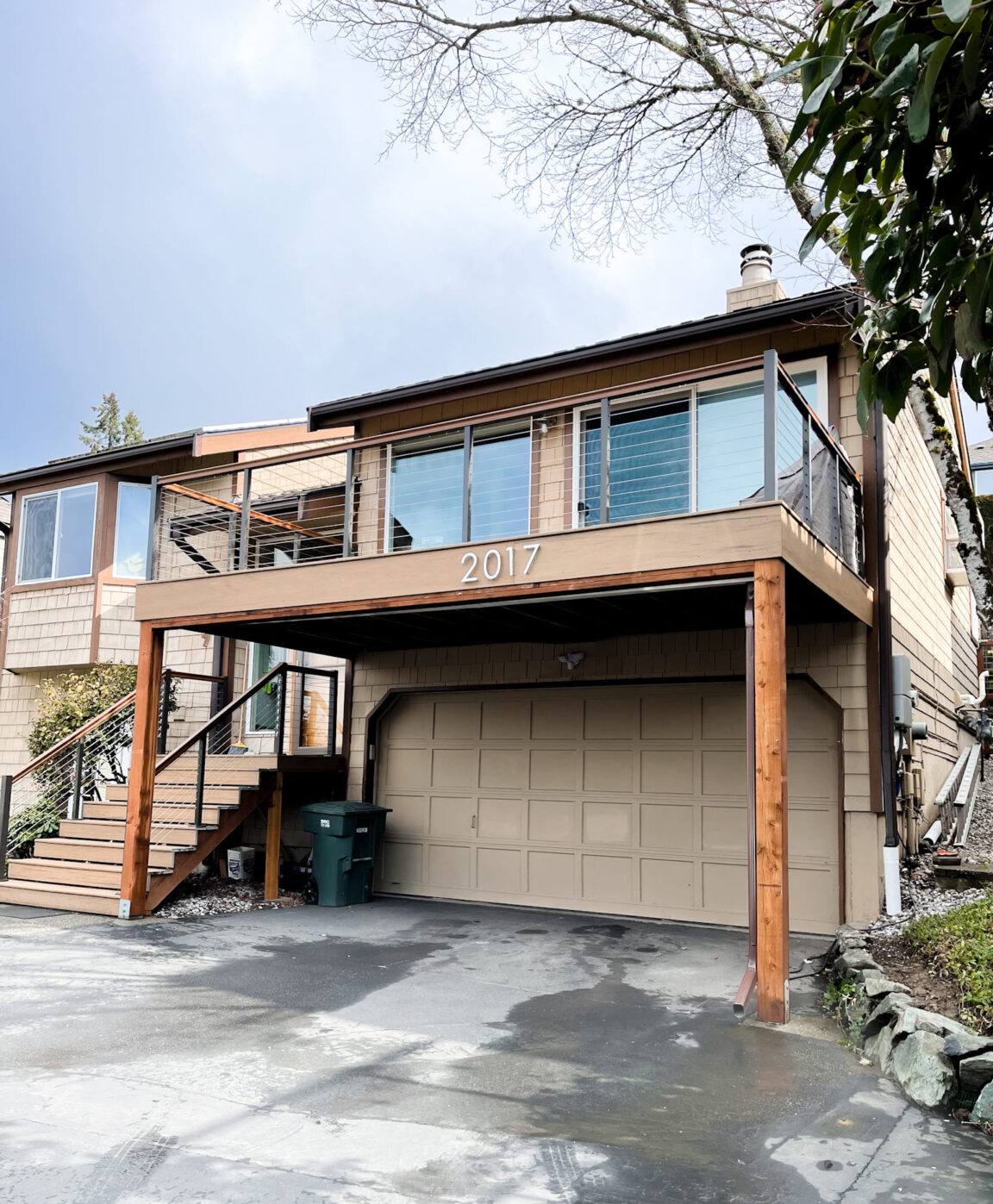
What Coachman Ridge's Climate Actually Does to a Deck
Wind
Clearwater sits in a hurricane-exposed part of the Florida Gulf coast, and Pinellas County's building code reflects that with wind-load requirements well above what you'd see inland in most of the country. A deck's structure — footings, post connections, joist hangers, and railing attachment — has to be engineered and fastened to resist uplift and lateral load, not just support foot traffic. This matters most at the ledger board (where the deck attaches to the house) and at guardrail posts, which are the two failure points we see most often after a windstorm.
UV Exposure
Florida sun is intense nearly year-round, not just in summer. UV breaks down the lignin in wood fibers, fades stains and finishes, and degrades lower-quality composite and vinyl products faster than their marketing suggests. Surface material choice and finish maintenance both need to account for this, or you're refinishing or replacing boards far sooner than you should have to.
Wind-Driven Rain and Humidity
Storms here rarely fall straight down — wind pushes rain sideways and up under railings, into fastener heads, and behind fascia boards. Combined with Pinellas County's high ambient humidity, any spot where water can collect and not dry out becomes a rot or corrosion risk. Proper flashing, drainage gaps, and fastener selection matter more here than in drier climates.
Salt Air
Coachman Ridge isn't beachfront, but salt-laden air still travels well inland along the Gulf coast, especially with onshore wind. Standard steel hardware corrodes faster here than the box label suggests. Fasteners and connectors rated for coastal exposure cost a little more up front and save a full hardware replacement down the road.
What a Correctly Built Deck Needs Here
A deck built for Coachman Ridge conditions needs to get several structural details right that a lower-bid, cut-corner build often skips:
- Footings sized and depth-set for Florida's sandy soil and local frost-free requirements, not a generic minimum
- A properly flashed ledger board connection, since this is the single most common point of water intrusion and structural failure on attached decks
- Corrosion-resistant, coastal-rated fasteners and structural connectors throughout — not just at the visible surface
- Joist spacing and beam sizing calculated for the actual wind and load requirements of our area, not a one-size-fits-all span table
- Railing posts through-bolted into structural framing, not just screwed to fascia, since guardrails take the brunt of wind load
- Drainage gaps between deck boards sized to let wind-driven rain shed and dry quickly rather than pool
None of this is visible once the deck is finished, which is exactly why it's the part homeowners should ask the most questions about before signing a contract.
Choosing the Right Decking Material for This Climate
There's no single "best" decking material — every option is a trade-off between upfront cost, maintenance commitment, and how it handles Gulf coast sun, moisture, and salt air. We walk every Coachman Ridge homeowner through these trade-offs honestly rather than steering toward whatever has the best margin.
| Material | Upfront Cost | UV & Fade Resistance | Moisture/Humidity Behavior | Maintenance |
|---|---|---|---|---|
| Pressure-treated wood | Lowest | Fades and grays without regular finish | Prone to cupping/splitting if not sealed and maintained | Annual cleaning, periodic re-staining or sealing |
| Composite (standard) | Mid-range | Good, but lower-tier products can fade faster in intense sun | Resists rot; needs proper ventilation underneath | Periodic washing, no staining/sealing |
| Capped composite / PVC | Highest | Strong fade and stain resistance with a protective cap | Excellent moisture and humidity performance | Occasional washing only |
| Tropical hardwood | High | Naturally dense, but still grays without oiling | Naturally rot-resistant when properly installed | Regular oiling to maintain color and grain |
We don't push capped composite or PVC on every project — a well-built, well-maintained wood deck can serve a Coachman Ridge home for many years. What we won't do is install a lower-tier composite product in full-sun exposure without telling a homeowner up front what its fade and heat-retention behavior will realistically look like in a few Florida summers. That's a maintenance and expectations conversation we have before, not after, the build.
Our Deck-Building Process
Every custom deck project follows the same core sequence, whether it's a simple rear platform or a multi-level outdoor living space:
- On-site assessment. We walk the property, check drainage, sun exposure, and how the deck will tie into the home's structure.
- Design and material discussion. We go over layout, railing style, and material options with honest cost and maintenance trade-offs for each.
- Permitting. We pull the required permit through the applicable local building department and handle the paperwork.
- Footings and framing. Structural work is built to current wind-load requirements, with inspections at the framing stage before decking goes down.
- Decking, railing, and finish work. Surface material, railing, stairs, and any lighting or built-in features are installed.
- Final walkthrough and inspection. We confirm the finished deck passes final inspection and walk the homeowner through care and maintenance specific to their material choice.
We don't skip the framing inspection step even when a homeowner is eager to see the finished product sooner — it's the one point in the process where a structural issue is cheap to fix and, once boards are down, expensive to fix.
Permits and Local Code in Clearwater and Pinellas County
Custom decks in Clearwater and unincorporated Pinellas County almost always require a building permit, and for good reason — an unpermitted deck can create real problems at resale, with insurance claims after storm damage, and with code enforcement. Permit review confirms footing depth, structural connections, guardrail height, and stair geometry all meet current code. We handle the permitting process as part of the project rather than leaving it to the homeowner, and we don't recommend skipping this step to save time, even on smaller deck projects. A permitted, inspected deck is also documentation you'll want on hand if you ever sell the home or file an insurance claim after a storm.
Common Problems We See on Existing Decks in This Area
When we're called out to repair or replace an older deck in Coachman Ridge, the same handful of issues show up repeatedly:
- Ledger board rot from missing or improperly installed flashing
- Rusted or corroding fasteners and joist hangers not rated for coastal humidity and salt exposure
- Wobbly or unsafe railings from posts that were screwed to fascia boards instead of bolted into framing
- Cupped, splitting, or badly faded boards from sun exposure with no maintenance plan
- Soft or spongy decking near ground contact points from inadequate drainage or ventilation underneath
Almost every one of these traces back to a build-stage shortcut rather than normal wear. Building it correctly the first time, with the climate factored in, is what prevents these calls five or ten years down the road.
What Deck Ownership Actually Takes in a Gulf Coast Climate
Whatever material you choose, a Coachman Ridge deck needs some level of ongoing attention to hold up through Florida's sun, humidity, and storm seasons. A realistic maintenance routine looks like:
- Rinse or wash the deck surface periodically to clear pollen, mildew, and salt residue
- Inspect railings and stair connections for looseness at least once a year, especially after storm season
- Check for signs of moisture trapped under the deck or around ledger board flashing
- Re-stain or reseal wood decking on a schedule appropriate to sun exposure — often more frequently on south- and west-facing decks
- Clear leaves and debris from between boards so water can drain and wood or composite can dry properly
- After major storms, check hardware, fasteners, and post connections for any movement or corrosion
Composite and PVC decking cut down on several of these tasks but don't eliminate the need for periodic inspection, particularly around fasteners and structural connections.
Why a Crew That Already Works in Coachman Ridge Matters
Deck-building requirements aren't identical across Pinellas County — soil conditions, local permitting processes, and even typical yard drainage patterns vary by neighborhood. A crew that already works regularly in Coachman Ridge and the surrounding Clearwater area knows the local permitting office's expectations, has a track record with the specific wind and moisture conditions of this part of the county, and isn't learning Florida's coastal-adjacent code requirements on your project. That familiarity shows up in fewer surprises during permitting, fewer inspection callbacks, and a deck that's built to actually perform in the conditions it will sit in for years, not just pass inspection on day one.
If you're planning a new custom deck, or need an honest look at whether an existing deck was built to hold up to Clearwater's weather, we're glad to come take a look. Reach out for a free, no-pressure estimate using the form below, and we'll walk the property with you and talk through what a correctly built deck looks like for your home.