 Clearwater Roofing
 Siding Built for Del Oro's Specific Climate Load
Del Oro homes sit inside one of the toughest exterior environments in the country. Pinellas County properties absorb a combination of stressors that most of the U.S. never has to design around at the same time: hurricane-force wind events, wind-driven rain that gets pushed sideways into wall assemblies, near-constant UV exposure that doesn't ease up in winter the way it does farther north, and a steady drift of salt air off the Gulf that settles on every exterior surface in the neighborhood. Siding that works fine in Ohio or even inland Florida can fail here years ahead of schedule if it wasn't chosen and installed with this specific combination in mind.
We install James Hardie fiber cement siding exclusively. Not as one option among several, but as the only product we put our name behind for homes in this area. This page covers what Del Oro homes actually need from their siding, what a correct installation involves, how our process works from first visit to final walk-through, and why hiring a crew that already works this specific neighborhood matters more here than in most parts of the country.
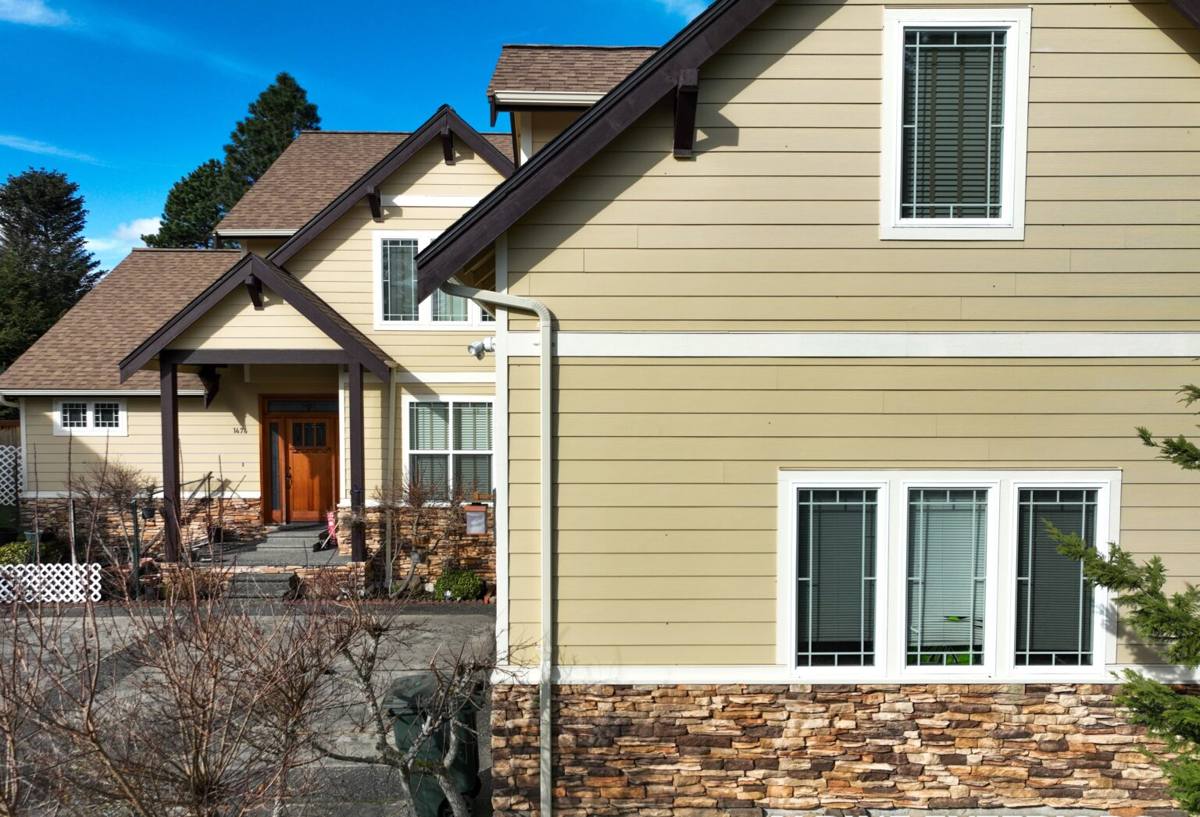
What Del Oro Homes Are Up Against
Wind-Driven Rain and Water Intrusion
The biggest threat to siding in this part of Clearwater isn't rainfall totals — it's the angle. When wind pushes rain sideways during a squall or tropical system, water gets forced up under laps, into joints, and behind trim in ways that gravity-fed drainage systems were never designed to handle. Siding that relies on caulk alone to keep water out, rather than a properly engineered drainage plane behind it, is a slow-motion problem in this climate. It's not a question of if water gets behind the cladding, it's a question of whether the wall assembly is built to let it drain and dry out before it causes damage.
UV Exposure, Twelve Months a Year
Florida sun doesn't take a break in December the way it does in most of the country. Siding finishes here take a UV dose most manufacturers never account for in their standard warranties. Paint fades, chalks, and breaks down faster; substrates that aren't dimensionally stable under heat cycling can warp, cup, or crack at the fastener points. Over years, this shows up as color mismatch, visible seams, and a home that looks tired well before its structure actually is.
Salt Air and Corrosion
Even homes that aren't waterfront in Del Oro sit close enough to the Gulf that airborne salt is a constant. Salt accelerates corrosion of exposed fasteners, degrades certain finishes faster than fresh-air environments would predict, and adds a fine residue to exterior surfaces that has to be accounted for in both material choice and maintenance expectations.
Wind Load and Fastening
Clearwater sits in a wind-borne debris region under Florida's building code, and siding attachment has to be engineered for that — not just nailed up the way it might be in a calmer climate. Fastening pattern, fastener type, and how the siding is integrated at corners, openings, and transitions all affect whether it stays put in a real wind event.
Why We Standardized on James Hardie
James Hardie fiber cement is engineered around exactly these pressures. It's non-combustible, dimensionally stable in heat and humidity swings, and manufactured in HZ5 formulations specifically for climates like ours — meaning the product itself is designed for high-moisture, high-humidity coastal exposure rather than adapted after the fact. The ColorPlus factory finish is baked on under controlled conditions and backed by a real finish warranty, which matters enormously in a market where UV bleaches out field-applied paint faster than almost anywhere else in the country.
We don't install LP SmartSide, vinyl, Cemplank, Allura, or unfinished wood siding, and we're upfront about why. Each of those products has legitimate strengths — vinyl is inexpensive and low-maintenance in mild climates, engineered wood has a warm appearance, other fiber cement brands compete on price. But when we weigh moisture behavior, UV performance, wind attachment, and long-term warranty support specifically for Gulf Coast exposure, Hardie is what we're willing to warranty our labor against. That's a professional standard we hold, not a claim that every alternative fails on every home.
What a Correct Installation Actually Involves
Siding installation is where most long-term problems in this climate actually originate — not in the product itself, but in shortcuts taken during the install. A correct job on a Del Oro home involves several steps that are easy to skip and hard to notice until years later.
- Substrate inspection: checking the existing wall sheathing for rot, delamination, or prior water damage before anything new goes up
- Weather-resistive barrier: a continuous, properly lapped water-resistive barrier installed shingle-style so water sheds outward, not into the wall
- Flashing at every penetration: windows, doors, hose bibs, vents, and any other wall penetration flashed individually, not just caulked
- Correct fastener spec: corrosion-resistant fasteners at the manufacturer-specified pattern and depth — over-driven or under-driven nails are a leading cause of premature siding failure
- Proper clearances: siding held off rooflines, decks, and grade per Hardie's published specifications so it isn't sitting in standing water or trapped moisture
- Caulking and sealant at the right joints only: sealant is a backup, not the primary water management strategy
Our Process, Start to Finish
1. On-Site Assessment
We walk the home, assess the existing siding and substrate condition, note any problem areas (soft spots, prior water intrusion, trim damage), and take measurements.
2. Product and Profile Selection
We go over Hardie's plank, panel, and shingle profile options, and help you choose a ColorPlus finish that fits the home and the neighborhood's general look, without overcommitting to trends that will feel dated in a decade.
3. Written Scope and Estimate
You get a clear, itemized scope of work — what's being removed, what substrate repair (if any) is included, what's being installed, and the fastening and flashing details specific to your home.
4. Tear-Off and Substrate Repair
Old siding comes off, the wall is inspected in daylight (not just from the ground), and any compromised sheathing is repaired or replaced before a single new panel goes up.
5. Weather Barrier and Flashing
This is the step that determines whether the home stays dry for the next 30 years, and it's the step that's invisible once the siding is on — which is exactly why it has to be done right the first time.
6. Installation
Hardie planks or panels go up to manufacturer spec, with attention to fastener pattern, joint treatment, and clearances at rooflines, decks, and grade.
7. Trim, Caulk, and Touch-Up
Final trim details, factory-matched caulk at the specified joints only, and a full walk-through with you before we consider the job finished.
Comparing Siding Options for This Climate
| Factor | James Hardie Fiber Cement | Vinyl | Engineered Wood (e.g. LP SmartSide) |
|---|---|---|---|
| Moisture tolerance | Engineered for high-humidity coastal exposure (HZ5) | Doesn't absorb water but can warp/buckle in heat | Vulnerable if moisture reaches the wood-based core |
| UV/fade resistance | Factory ColorPlus finish, warrantied against fading | Can fade and become brittle under constant sun | Field-applied finishes fade faster; needs repainting |
| Wind performance | Rated for high-wind attachment per code | Can crack or blow off in severe wind events | Performs adequately when installed to spec |
| Fire resistance | Non-combustible | Combustible | Combustible |
| Maintenance | Occasional wash; no repainting for years under the ColorPlus warranty | Low maintenance, but limited repair options if damaged | Requires more diligent moisture monitoring and repainting |
Signs Your Current Siding Is Failing
If your Del Oro home has aging siding, a few warning signs suggest it's past due for replacement rather than another round of patching:
- Visible cracking, buckling, or warping, especially on wind-exposed elevations
- Soft spots or a "give" when you press on the siding near the base of the wall
- Persistent staining or streaking that suggests water is tracking behind the surface
- Paint that's chalking, peeling, or badly faded despite recent repainting
- Visible gaps at seams, corners, or trim that weren't there a few years ago
- A musty smell or interior wall staining that could indicate moisture behind the exterior cladding
Why Local Experience in Del Oro Specifically Matters
A siding crew that already works in this neighborhood knows the practical realities that generic experience doesn't cover: how close homes sit to the coast and what that means for corrosion-resistant fastener choices, how the local wind exposure category affects attachment requirements, what permitting looks like through the applicable jurisdiction, and what typical wall assemblies in homes of this age and construction type actually look like once the old siding comes off. That local pattern recognition shortens the assessment phase and reduces surprises mid-project — because we've already seen the version of this problem that shows up on homes like yours.
It also means we're not guessing about how a given Hardie profile and color will hold up against this specific combination of salt air, sun, and storm exposure — we're basing it on how the product has performed on homes we've already installed nearby.
Cost Factors to Expect
Every home is different, but a few factors consistently drive the price of a siding replacement in this area up or down:
| Factor | Impact on Cost |
|---|---|
| Substrate condition | Hidden rot or water damage found during tear-off adds repair cost |
| Home size and wall complexity | More corners, gables, and penetrations increase labor time |
| Siding profile chosen | Lap, shingle, and panel profiles carry different material and labor costs |
| Trim and accessory scope | Full trim replacement adds cost versus reusing sound existing trim |
| Access and site conditions | Tight lot lines, landscaping, or multi-story walls affect labor time |
We don't quote off square footage alone — every estimate is based on an actual on-site walk of your home, so the number you get reflects your specific wall condition and scope, not a generic average.
Get a Straightforward Estimate
If your Del Oro home's siding is showing its age, or you're planning ahead of the next storm season, we're happy to come take a look and walk you through what we'd recommend and why. There's no pressure and no obligation — just a clear assessment from a crew that installs James Hardie siding on homes like yours and knows what this climate demands. Use the form below to request a free estimate.