 Clearwater Roofing
 Downtown Clearwater's Siding Problem Isn't Like Inland Florida's
Homes just a short walk from Clearwater Harbor and the Gulf take a different kind of beating than houses ten or twenty miles inland. The combination is what does the damage: intense, nearly year-round UV breaking down pigments and sealants, salt-laden air working into every seam and fastener, wind-driven rain pushed sideways into wall assemblies during summer storms, and the outright hurricane-force wind loads that Pinellas County design codes are built around. Siding here isn't just cosmetic — it's the first line of defense for the wall behind it, and in Downtown Clearwater it has to hold up to all four stresses at once, every year, not just during a named storm.
That's the lens we use on every siding job in this part of Clearwater: not "what looks good going up" but "what's still doing its job in fifteen years."
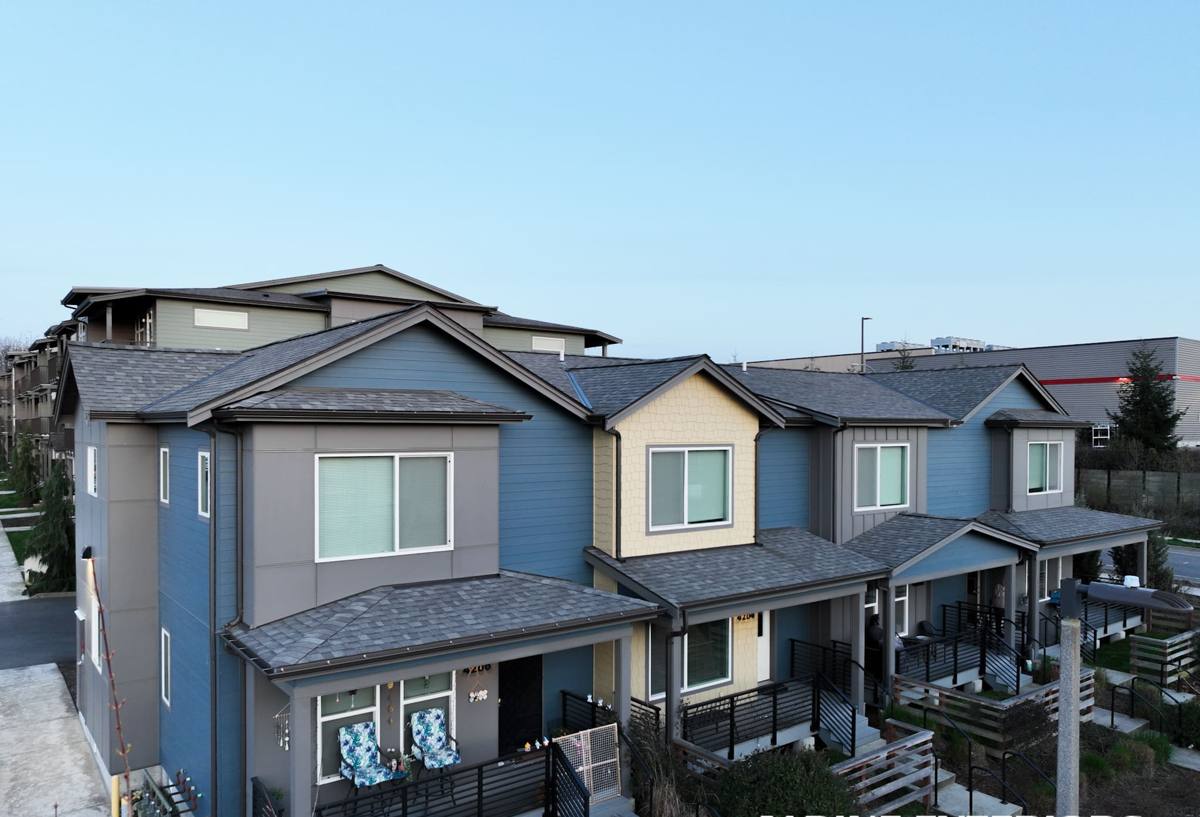
What Downtown Clearwater Homes Actually Need From Their Siding
Constant UV load
Florida sun is different from sun almost anywhere else in the country in terms of sheer annual exposure. Paint-grade siding and lower-grade composite products chalk, fade, and lose adhesion faster here than in almost any other climate zone in the continental U.S. A siding product's finish has to be engineered for this, not just rated for it on paper.
Wind-driven rain and moisture intrusion
Downtown Clearwater's proximity to the water means storms arrive with rain pushed horizontally into walls, not falling straight down. Any siding system with weak lap joints, poor flashing details, or a moisture-absorbent core is going to let water track behind the cladding eventually — and once moisture gets behind siding in a humid climate, it doesn't dry out on its own the way it might in a drier region.
Hurricane-force wind resistance
Pinellas County sits in a high-velocity hurricane zone, and Clearwater's building code reflects that. Siding has to be rated and fastened for real wind loads, not just installed the way it would be in a calmer inland market. Fastener spacing, clip systems, and product wind ratings all matter more here than in most of the country.
Salt air corrosion
Even homes that aren't waterfront still sit close enough to the Gulf and the harbor to catch airborne salt. Salt air accelerates corrosion on exposed metal fasteners, trim edges, and any material that isn't specified for coastal exposure.
Why We Install Only James Hardie Fiber Cement
We made a deliberate decision years ago to install exactly one siding brand: James Hardie. Not because it's the cheapest option on the market — it isn't — but because it's the product we can put on a Downtown Clearwater home and stand behind for the long haul. Fiber cement is non-combustible, doesn't provide a food source for pests or mold the way wood-based products can, and holds paint and factory finish far longer under intense UV than vinyl or engineered wood.
Built for this specific climate
James Hardie engineers its HZ5 product line specifically for humid, high-moisture climate zones like ours — Florida, the Gulf Coast, and the Southeast generally fall into this category. That's different from a one-size-fits-all siding spec used nationwide. The HZ5 formulation is designed to resist moisture-related damage and perform in exactly the humidity and rainfall conditions Downtown Clearwater sees most of the year.
ColorPlus factory finish
Rather than relying on job-site paint, Hardie's ColorPlus finish is baked on in a controlled factory environment, which gives it better UV and fade resistance than field-applied paint — a meaningful advantage in a market with this much annual sun exposure. It also comes backed by its own finish warranty, separate from the product warranty on the siding itself.
A warranty that's actually transferable
Hardie backs its products with a strong, transferable limited warranty, which matters in a market like Clearwater where homes change hands regularly. A warranty that follows the house — not just the original owner — is worth more at resale than most homeowners realize going in.
What a Correct Fiber Cement Installation Actually Involves
Fiber cement siding is only as good as the installation behind it. Hardie's own installation instructions are detailed for a reason — skipped steps are where failures start, especially in a coastal wind and moisture environment. A correct job includes:
- Proper weather-resistive barrier installed and lapped correctly behind the siding, not just "a wrap" thrown up before boards go on
- Correct starter strip installation at the base of every wall so the first course sits at the right angle and drains properly
- Manufacturer-specified fastener type, spacing, and embedment depth — corrosion-resistant fasteners appropriate for coastal exposure
- Proper clearance between the bottom of the siding and grade, roofing, decks, and patios to prevent wicking moisture
- Correctly flashed and caulked butt joints, window and door trim, and penetrations, using sealants rated for exterior UV exposure
- Field-cut edges sealed or back-primed per manufacturer spec, especially around openings
- Fastener patterns and clip systems that meet the wind load requirements for our specific wind zone, not a generic inland spec
Any one of these steps done wrong won't necessarily show up as a problem in year one. It shows up in year five or ten, as water staining, panel movement, or fastener failure — usually after the workmanship warranty from whoever installed it has already expired.
Our Process for a Downtown Clearwater Siding Project
Assessment and moisture check
We start by walking the exterior and checking for existing moisture damage, soft sheathing, or prior repair work that needs to be addressed before new siding goes on — covering a moisture problem with new siding just delays the damage, it doesn't fix it.
Removal and sheathing inspection
Once old siding comes off, we inspect the sheathing and weather barrier underneath. This is the one point in the project where hidden problems are visible and fixable — it's not a step we shortcut.
Installation to manufacturer and code spec
Hardie boards go up following manufacturer instructions and local wind load requirements — correct fastener schedule, correct clearances, correct flashing details at every penetration and joint.
Trim, caulking, and final finish
Trim work, caulking, and touch-up finishing get the same attention as the field of the siding — these are the details that determine how the job looks and performs five years out, not just on install day.
Walk-through
We walk the finished job with the homeowner before calling it done, so nothing gets discovered after the fact.
Fiber Cement vs. Other Siding Options in a Coastal Climate
| Factor | James Hardie Fiber Cement | Vinyl | Engineered Wood (e.g. LP SmartSide) |
|---|---|---|---|
| UV / fade resistance | Strong — factory ColorPlus finish | Moderate — can chalk and warp in intense sun | Depends on field-applied paint quality and upkeep |
| Moisture behavior | Engineered for humid climates (HZ5) | Doesn't absorb water, but seams can trap it | Wood-based core can swell or degrade if moisture gets in |
| Wind resistance | High, with correct fastening for local wind zone | Can crack or blow off in high wind if under-rated | Generally solid when installed to spec |
| Combustibility | Non-combustible | Combustible | Combustible |
| Typical maintenance | Low — occasional cleaning and caulk checks | Low, but limited repair/color options over time | Higher — coatings need monitoring and recoating |
Vinyl and engineered wood both have legitimate uses elsewhere in the industry. We simply don't install them, because in our professional judgment they don't hold up as consistently as fiber cement under the specific combination of sun, salt, and wind that Downtown Clearwater homes face year-round.
What Drives Cost on a Downtown Clearwater Siding Job
| Cost Factor | Why It Matters |
|---|---|
| Home size and number of stories | More square footage and multi-story access both add labor time |
| Existing siding removal | Tear-off, disposal, and sheathing repair add scope beyond the new install |
| Siding profile and accessories | Lap width, panel vs. plank, and HardieTrim accents affect material cost |
| Color and finish | ColorPlus factory finishes vs. field-primed for paint carry different price points |
| Underlying repairs found | Rotted sheathing or trim discovered during tear-off needs to be fixed before new siding goes on |
We don't quote a job until we've actually looked at the house — broad ranges without an on-site assessment aren't useful to homeowners trying to budget accurately.
Why Hire a Crew That Already Works This Neighborhood
Siding installed correctly on paper still has to account for what's actually true on the ground in a given neighborhood — how close homes sit to the water, the typical age and construction of the housing stock, and how Clearwater's permitting and wind-load requirements get applied in practice. A crew that already works Downtown Clearwater regularly isn't guessing at any of that. We know what correct coastal-grade fastening and flashing looks like here, we're used to Pinellas County's inspection process, and we're not learning the neighborhood's quirks on your project.
If you're considering fiber cement siding for a home in Downtown Clearwater, we're glad to come take a look and give you a straightforward, no-pressure estimate — no invented urgency, just an honest read on what your home needs and what it would take to do it right.