 Clearwater Roofing
 Asphalt Shingle Roofing Built for Dunedin's Coastal Conditions
Dunedin sits close to the Gulf on the Pinellas County coastline, which means homes here take a different kind of beating than roofs just a few miles inland. Salt-laden air accelerates corrosion on fasteners and flashing, intense year-round UV breaks down shingle granules and asphalt oils faster than in cooler climates, and wind-driven rain finds every weak seam in an underlayment or flashing detail. Add the very real possibility of hurricane-force gusts during storm season, and it becomes clear why a generic roofing job doesn't hold up long term in this area.
This page is about one thing: asphalt shingle roofing for homes in and around Dunedin. Not a general overview of every roofing material we offer — just what a correctly installed, correctly maintained shingle roof needs to look like here, and what separates a roof that lasts from one that starts failing in year six or seven.
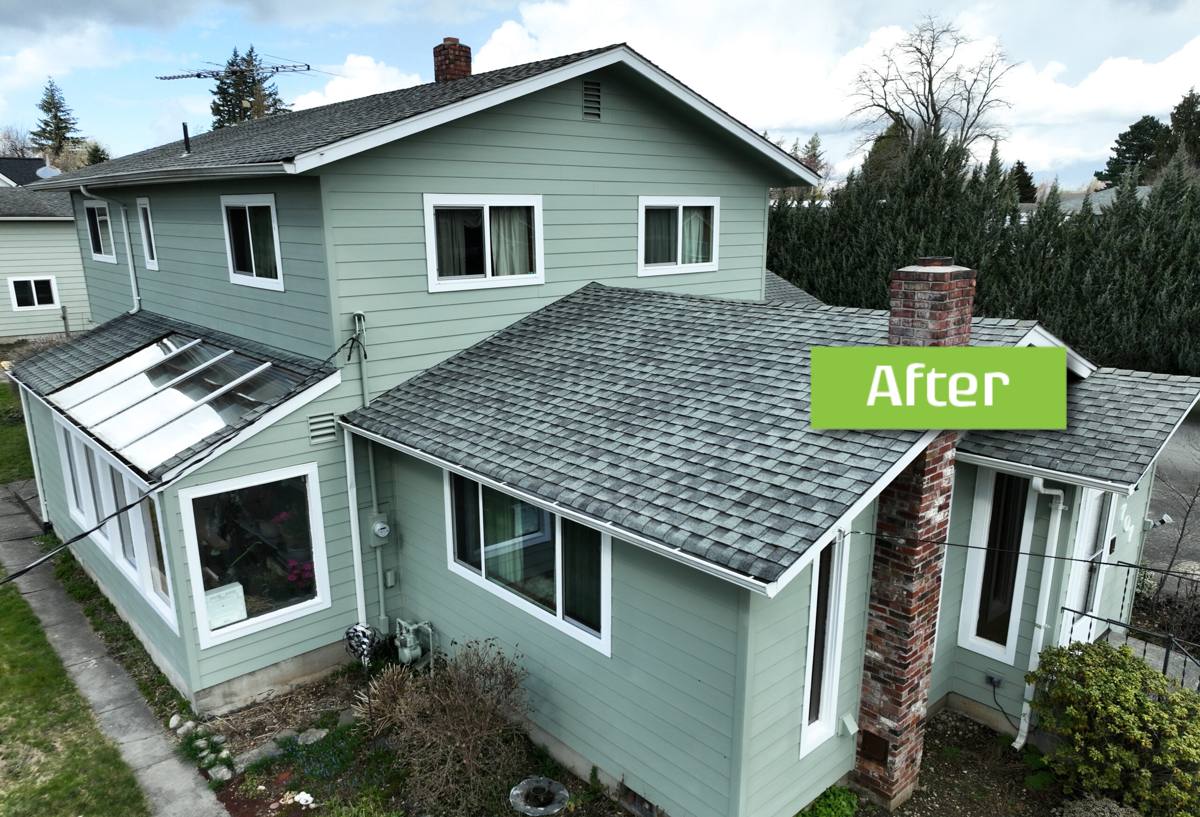
What Dunedin's Climate Actually Does to a Shingle Roof
It helps to understand the specific stresses at play before talking about solutions.
UV and Heat Cycling
Florida sun is more intense and more constant than in most of the country. Asphalt shingles rely on granules to shield the underlying asphalt from UV degradation. Once those granules wear thin — which happens faster on south- and west-facing slopes — the asphalt underneath dries out, becomes brittle, and starts to crack. Daily heat cycling (roof surfaces can swing 50-plus degrees between early morning and mid-afternoon) also stresses the shingle's flexibility over time.
Wind-Driven Rain
Rain rarely falls straight down here during a storm. Wind pushes it sideways and up under shingle edges, ridge caps, and around any penetration — vent pipes, chimneys, skylights. A roof can look intact from the ground and still be letting water in at these transition points if the underlayment and flashing weren't installed correctly the first time.
Salt Air Corrosion
Being close to the Gulf means airborne salt settles on exposed metal — nail heads, drip edge, flashing, and any exposed fastener. Standard fasteners corrode faster here than they would inland, which is why fastener choice and coverage (not just shingle brand) matter for how long a roof actually performs.
Hurricane and Tropical Storm Wind Loads
Pinellas County sits in a high-wind zone, and Dunedin's coastal exposure means roofs need to be installed to hold up under sustained high winds and gusts, not just rated for them on paper. This affects everything from nailing pattern to shingle class to how ridge caps are secured.
What a Correct Asphalt Shingle Installation Involves Here
A shingle roof is a system, not a single product. Skipping or shortcutting any layer is where most premature failures start.
- Deck inspection and repair — the plywood or OSB underneath has to be sound, properly fastened, and free of soft spots before anything goes on top of it.
- Underlayment — a synthetic or self-adhering underlayment that actually seals around fastener penetrations, since this is the roof's real waterproof layer if wind ever lifts a shingle.
- Drip edge at eaves and rakes — metal edging that directs water off the roof instead of letting it wick back under the shingles or into the fascia.
- Ice-and-water or high-wind underlayment at vulnerable areas — valleys, eaves, and penetrations get extra protection since these are where wind-driven rain concentrates.
- Correct nailing pattern and fastener count — high-wind installations call for more nails per shingle, placed in the manufacturer's specified nailing zone, not just "enough to hold it down."
- Proper flashing at every penetration and wall intersection — step flashing, counter-flashing, and pipe boots that are sealed and won't work loose as materials expand and contract in the heat.
- Balanced attic ventilation — intake at the eaves and exhaust at the ridge, sized to the attic's square footage, so heat and moisture don't build up under the deck and shorten shingle life from underneath.
- Ridge cap installation matched to wind exposure — the ridge is one of the first places a roof fails in high wind if it isn't fastened correctly.
Any one of these done wrong doesn't necessarily show up on day one. It shows up as a leak two years later, or as shingles peeling back in the next tropical storm.
Choosing the Right Shingle for a Dunedin Roof
Not every asphalt shingle product is a good fit for a Gulf-coast, high-wind environment. We look at wind rating, algae resistance, and warranty structure together — not just price per square.
| Shingle Type | Typical Wind Rating | Best Fit For |
|---|---|---|
| 3-tab (standard) | Lower wind rating | Budget-conscious jobs on lower-exposure roof planes; least suited to Dunedin's full coastal exposure |
| Architectural / laminate | Higher wind rating, varies by product and install | Most Dunedin homes — better wind performance and a longer realistic service life in this climate |
| Impact-resistant architectural | Higher wind rating plus impact class rating | Homes seeking possible insurance credits and added protection against wind-blown debris |
We also favor shingles with algae-resistant granules (often marketed as "streak resistant"), since Florida's heat and humidity encourage the algae growth that causes dark staining on roofs that don't have that protection. It's a cosmetic issue, not a structural one, but it's avoidable with the right product choice.
Color and Heat Considerations
Lighter shingle colors reflect more solar heat, which can modestly reduce attic temperatures and cooling load. It's a smaller factor than ventilation and insulation, but worth discussing if energy efficiency is a priority for your household.
Repair or Replace? How We Evaluate a Dunedin Roof
Not every issue means a full replacement, and we won't push a replacement when a targeted repair is the honest answer. Here's generally how we think about it:
Signs a Repair Is Usually Enough
- Isolated shingle damage from a fallen limb or a single storm event, with the rest of the roof in good condition
- A leak traced to one flashing detail or penetration rather than widespread wear
- A roof under roughly two-thirds of its expected service life with only localized wear
Signs Replacement Makes More Sense
- Granule loss and shingle brittleness spread across most of the roof
- Multiple past repairs in different areas, suggesting the underlayment and flashing system as a whole is aging out
- Visible sagging, soft decking, or evidence of long-term moisture intrusion in the attic
- A roof nearing or past its expected lifespan heading into another hurricane season
We inspect from the attic side as well as the roof surface whenever possible, because what's happening underneath the deck often tells us more than what's visible from a ladder.
Our Process, Start to Finish
- On-site inspection — we walk the roof and check the attic, documenting current condition, ventilation, and any problem areas.
- Written estimate — a clear scope of work and price, explained in plain terms, with shingle and underlayment options laid out.
- Permitting — we pull the required permit through the appropriate local building department before work begins; roofing work in Pinellas County requires it, and skipping it isn't a shortcut we take.
- Tear-off and deck inspection — old material comes off down to the deck, and any damaged decking is identified and repaired before anything new goes down.
- Underlayment, flashing, and drip edge installation — the waterproofing system goes in first, correctly detailed at every valley, penetration, and edge.
- Shingle installation — installed to the manufacturer's high-wind specification, including nailing pattern and ridge cap fastening.
- Ventilation check — intake and exhaust ventilation confirmed or corrected as part of the job, not treated as an afterthought.
- Cleanup and magnetic sweep — job site cleared of debris and nails before we consider the work done.
- Final walkthrough — we go over the finished roof with you and answer any questions before closing out the permit.
Hurricane Season and Insurance Considerations for Dunedin Homeowners
Because Pinellas County is a high-wind zone, roofing work here is governed by Florida's high-velocity and wind-borne debris building code provisions, which affect nailing patterns, underlayment requirements, and permitting. A roof installed to code isn't just a formality — it's the difference between a roof that stays intact in a strong storm and one that doesn't.
Many insurance carriers also offer premium credits for wind mitigation features tied to roof age, shape, and installation method. If that's relevant to your policy, we can document the roof's construction details at completion so you have what you need to provide to your insurer or a wind mitigation inspector.
Maintenance That Actually Extends Roof Life Here
Salt air and UV exposure mean Dunedin roofs benefit from more frequent attention than roofs in milder climates.
- Have the roof visually inspected after any major storm, even if no leak is apparent
- Keep gutters and valleys clear so water isn't pooling or backing up under shingle edges
- Trim back overhanging branches that drop debris and hold moisture against the shingles
- Check attic ventilation isn't blocked by insulation or debris, since poor airflow shortens shingle life from underneath
- Address small flashing or sealant issues promptly rather than waiting for them to become active leaks
What a Rough Cost Estimate Depends On
We don't quote pricing without seeing the roof, but these are the main factors that move the number up or down on most Dunedin jobs:
| Factor | Why It Matters |
|---|---|
| Roof size and number of planes | More square footage and complexity mean more material and labor |
| Roof pitch and accessibility | Steeper or harder-to-access roofs take longer and require more safety setup |
| Existing deck condition | Rotten or soft decking found during tear-off needs repair before shingles go on |
| Shingle class chosen | Higher wind-rated and impact-resistant products cost more per square than standard 3-tab |
| Number of penetrations and valleys | Each one needs proper flashing detail, which adds labor time |
| Ventilation upgrades needed | Adding or correcting intake/exhaust vents is sometimes needed alongside a re-roof |
Why Hiring a Crew That Already Works in Dunedin Matters
Roofing code requirements, permitting steps, and wind exposure considerations aren't identical everywhere in Florida — even within the same county, conditions shift based on how close a property sits to open water. A crew that regularly works Dunedin and the surrounding Clearwater area already knows the local permitting process, understands how coastal exposure should influence material and fastening choices on a given roof, and isn't learning these details for the first time on your project. That familiarity shows up in fewer surprises, fewer callbacks, and a roof installed to hold up against what this specific stretch of coastline actually deals with.
If you're weighing a repair, a full replacement, or just want an honest read on where your roof currently stands, we're glad to take a look. Reach out for a free, no-pressure estimate using the form below — we'll walk the roof, explain what we find in plain terms, and give you options rather than a single hard sell.