 Clearwater Roofing
 Harbor Oaks and the Climate Your Siding Actually Has to Survive
Homes in and around Harbor Oaks sit close enough to the water that siding does a different job here than it does inland. The combination of salt-laden air, near-constant UV exposure, wind-driven rain, and the threat of hurricane-force gusts during storm season puts a level of stress on exterior cladding that most siding products simply weren't engineered to handle for the long haul. Pinellas County's building code reflects that reality with wind-load and water-intrusion requirements that are stricter than what you'll find in most of the country, and for good reason.
Siding on a Harbor Oaks home isn't just decorative. It's the first line of defense against moisture getting into wall assemblies, and it's asked to do that job through decades of sun bleaching, salt exposure, and the occasional direct hit from tropical weather. When we talk about a "correct" siding replacement in this neighborhood, we mean one that's specified and installed with all of that in mind — not a generic install that happens to be located near Clearwater.
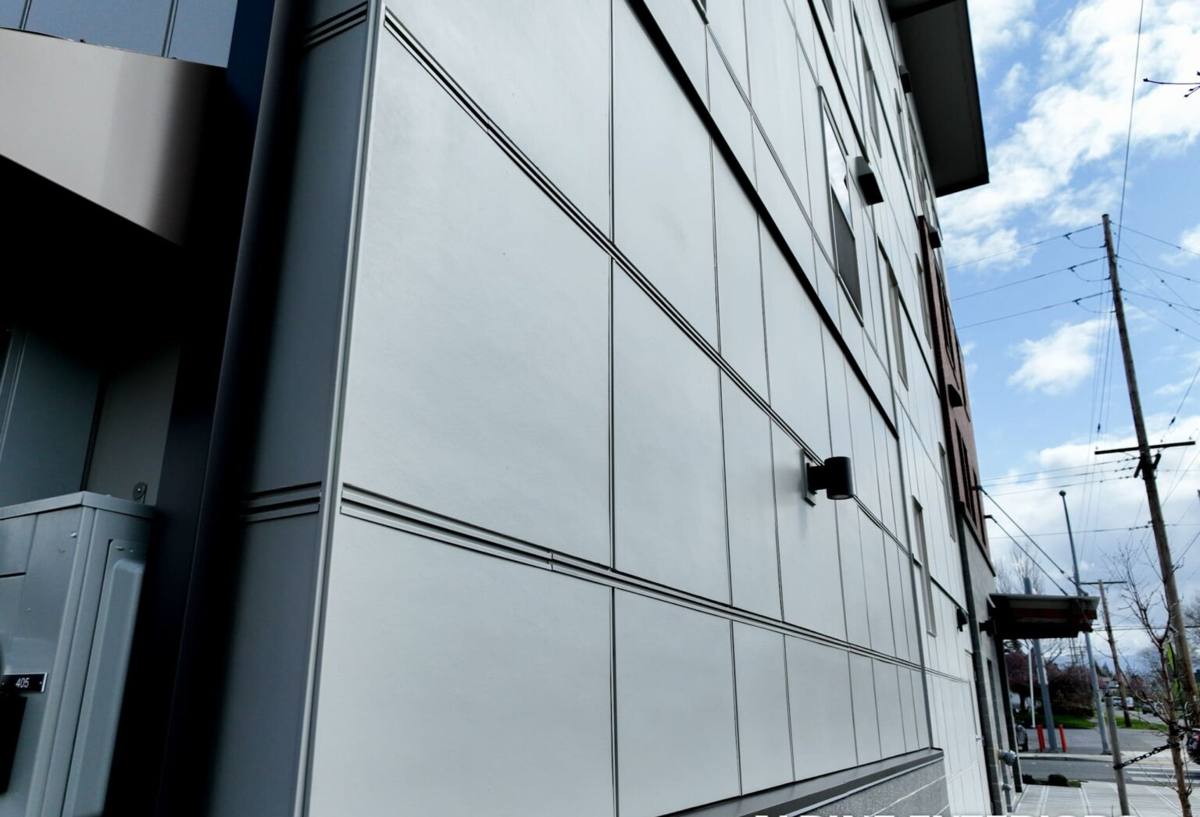
Signs a Harbor Oaks Home Needs Replacement, Not Another Patch
A lot of homeowners in this area have already had one or more rounds of caulking, spot-painting, or board replacement done on their siding. That buys time, but it doesn't fix an underlying problem. Here's what tells us a full replacement is the honest recommendation rather than another patch job:
- Soft or spongy siding when pressed, especially near the bottom courses and around window and door trim — a sign moisture has gotten behind the material
- Visible cupping, buckling, or warping across multiple boards or panels, not just one or two isolated spots
- Paint that won't hold anymore no matter how well the surface is prepped — often a sign the substrate underneath is failing
- Persistent staining or streaking that comes back within a year or two of cleaning
- Gaps opening up at seams and corners that keep reappearing after caulking
- Visible storm damage — cracked, missing, or lifted sections after a wind event
If you're seeing one or two of these in a contained area, repair may still make sense. If you're seeing several of them spread across the house, or the siding is original to a home built more than 20-25 years ago, replacement is usually the more honest answer than continuing to chase individual failures.
What a Correct Siding Replacement Involves
It Starts Underneath the Siding, Not With It
The single biggest mistake in siding work — anywhere, but especially in a wind-and-rain climate like this one — is treating the siding itself as the whole job. The water-resistive barrier (house wrap), flashing at windows, doors, and penetrations, and the condition of the sheathing underneath all matter more to the long-term performance of the wall than the siding product on top of it. Old or damaged sheathing gets replaced, not covered over. Flashing gets installed or corrected at every window and door opening, not just wherever the old flashing happened to be. This is the part of the job a homeowner never sees once it's finished, which is exactly why it has to be done right the first time.
Fastening and Clearances Matter More Near the Water
Fastener spacing, fastener type, and butt-joint treatment all affect how well siding holds up to sustained wind loads. We also pay close attention to ground clearance and clearance at roof lines, decks, and patios — spots where splashback and standing moisture do the most damage over time. None of this is visible in a "finished" photo, but it's the difference between siding that lasts and siding that fails quietly from the inside out.
Why We Install James Hardie Fiber Cement — and Nothing Else
We get asked fairly often why we don't offer vinyl, LP SmartSide, or other fiber cement brands as cheaper alternatives. The honest answer is that we made a standard for ourselves and we stick to it, because in a climate like Clearwater's, the product choice has real consequences years down the road.
Non-Combustible and Built for Heat and Moisture
James Hardie fiber cement is non-combustible, which matters in a state where we get wind-driven wildfire embers during dry stretches and where insurance carriers increasingly care about exterior material class. It doesn't rot, and it doesn't provide a food source for the pests that thrive in Florida's humidity. Vinyl can soften, warp, or become brittle under intense, sustained UV exposure over years; engineered wood products depend heavily on perfect installation and maintenance to keep moisture out, which is a hard standard to hold for 20+ years in a coastal environment.
Climate-Engineered HZ Product Lines
Hardie manufactures HZ5 formulations specifically engineered for hot, humid, high-moisture climates like ours — this isn't a one-size-fits-all product shipped in from a colder-climate spec. That matters in Pinellas County, where a product built for a dry climate simply doesn't perform the same way over time.
ColorPlus Finish and Warranty
The factory-applied ColorPlus finish is baked on under controlled conditions, which gives it better fade and wear resistance than field-applied paint, and it comes backed by its own finish warranty separate from the substrate warranty. Combined with Hardie's transferable product warranty, that's a real, backed guarantee — not just a sales claim — which matters to a homeowner who may sell the house before the siding's functional life is over.
Our Process, Start to Finish
- On-site assessment — we look at existing siding condition, sheathing, flashing, and any storm or moisture history specific to the home
- Honest scope discussion — repair vs. full replacement, with the reasoning explained, not just a number
- Material and color selection — walking through Hardie board profiles and ColorPlus options that suit the home and the neighborhood
- Tear-off and substrate inspection — old siding comes off, sheathing and framing get inspected and repaired as needed before anything new goes up
- Water-resistive barrier and flashing installation — the part of the job that determines whether the house stays dry for the next few decades
- Hardie installation to manufacturer spec — correct fastening, clearances, and joint treatment throughout
- Final walkthrough — we go over the finished work with the homeowner before calling the job done
Cost Factors for Harbor Oaks Siding Replacement
Every home is different, so we won't quote a number without seeing the property, but these are the variables that actually move the price on a job like this:
| Factor | Why It Affects Cost |
|---|---|
| Extent of substrate/sheathing damage | Rot or moisture damage found underneath the old siding adds repair work before new siding can go on |
| Home size and wall complexity | More corners, dormers, and trim details mean more labor and material cuts |
| Board profile and finish selection | Lap width, trim details, and ColorPlus color affect material pricing |
| Story height and access | Two-story sections and tight lot access require more setup time and equipment |
| Existing flashing and window trim condition | Failing flashing at openings needs correction as part of a proper install, not a bypass |
Why a Crew That Already Works Harbor Oaks Matters
A crew that regularly works this part of Clearwater has already seen how homes here age under salt exposure, how the local wind patterns tend to stress certain elevations more than others, and what Pinellas County's permitting and wind-load requirements expect on a re-side. That's not something you can fully substitute with a generic installation crew coming from outside the area, no matter how skilled they are in general. Familiarity with the neighborhood's housing stock — common construction eras, typical existing siding types, common trouble spots — means fewer surprises once tear-off starts, and a scope estimate that holds up once the old siding is off the wall.
After Installation: What Keeps Hardie Siding Performing Long-Term
Fiber cement is low-maintenance compared to most alternatives, but "low-maintenance" doesn't mean "no maintenance," especially this close to the water. A little attention keeps the product performing the way it's designed to:
- Rinse salt residue and grime off periodically with a garden hose or gentle wash — avoid high-pressure washing directly at seams and joints
- Keep an eye on caulking at trim and penetrations and have it refreshed if it starts to crack or pull away
- Trim back landscaping and irrigation heads that spray directly onto siding, which accelerates staining and moisture exposure
- After major storms, do a visual check for cracked boards, lifted trim, or displaced flashing
- Keep gutters clear so water isn't sheeting down the wall face during heavy rain
If your Harbor Oaks home's siding is showing its age or storm wear, we're happy to take a look and give you a straightforward, no-pressure assessment of what it actually needs. Use the form below to request a free estimate.