 Clearwater Roofing
 Island Estates: A Different Kind of Exposure
Island Estates sits surrounded by water on a barrier island connected to mainland Clearwater by causeway, and that setting changes what siding has to survive. Homes here don't just deal with Florida sun and the occasional storm — they take on salt-laden air off the open water, wind that isn't broken up by inland tree cover or blocks of houses, and driving rain that hits siding at angles inland homes rarely see. Add in Pinellas County's long, humid summers and the periodic direct hit or near-miss from a tropical system, and it's easy to see why siding on an island lot tends to show wear years before a comparable product would on a home a few miles inland.
That doesn't mean every problem calls for a full re-side. A lot of the damage we see on Island Estates siding is real, but localized — and repairing it correctly, rather than patching it superficially or replacing more than necessary, is its own skill. This page walks through what actually goes wrong with siding in this environment, how we decide between repair and replacement, and what a correct repair job looks like.
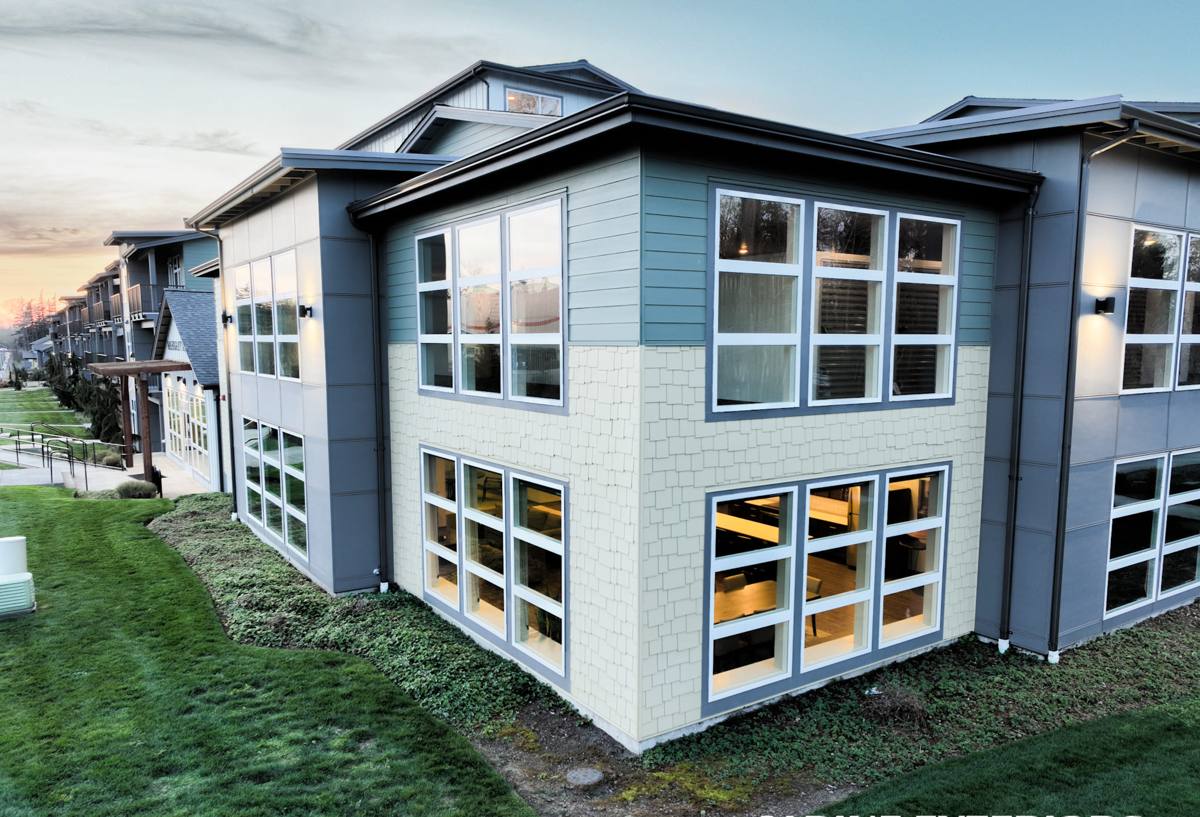
Signs Your Siding Needs Attention
Most siding problems don't announce themselves with a hole in the wall. They show up as smaller signals that are easy to write off as cosmetic — until moisture has been working behind the surface for a season or two. On a waterfront property, we'd rather you call about something that turns out to be minor than let one of these sit through another hurricane season:
- Cracked, split, or visibly warped boards, especially on the sides of the house that face open water or prevailing wind
- Soft or spongy spots when you press on the siding, which usually means moisture has reached the substrate underneath
- Paint or finish that's peeling, bubbling, or flaking away from the board itself rather than just fading
- Buckling, bowing, or panels that no longer sit flush against the wall
- Gaps opening up at seams, corners, window and door trim, or wherever siding meets flashing
- Rust streaks or dark staining running down from fastener heads
- Chalky, powdery residue or blotchy fading concentrated in specific sections rather than the whole elevation
Any one of these on its own might be a straightforward patch. Several of them together, or damage that's spread across more than one elevation, usually means it's worth a closer look before deciding on a fix.
What's Actually Causing the Damage
Wind and Wind-Driven Debris
Sustained coastal wind and gusts during storms put more lateral stress on siding than most homeowners realize, and on an island with open water exposure that stress is close to constant. Loose branches, palm fronds, and airborne debris during squalls or tropical weather can crack or puncture boards, and repeated wind loading over years can work fasteners loose even without a single dramatic event.
Moisture Intrusion at Seams and Penetrations
Wind-driven rain doesn't fall straight down — it gets pushed sideways into every seam, corner, and penetration (hose bibs, vents, light fixtures) that isn't properly flashed and sealed. Once water gets behind the siding, the damage is often worse than what you can see from the outside, because it's the sheathing and framing behind the boards that take the real hit.
Salt Air and Fastener Corrosion
Salt aerosol carried off the water accelerates corrosion on anything metal — fastener heads, flashing, trim connectors. Corroded fasteners lose their grip and can stain the siding around them, and once corrosion starts it doesn't stop on its own. This is one of the clearest differences between repairing siding on Island Estates versus a home well inland.
UV Fade and Finish Breakdown
Florida's year-round sun breaks down paint and factory finishes faster than in most of the country. On siding that isn't UV-stable, this shows up as chalking, uneven fading, and eventually a finish that no longer sheds water the way it should — which opens the door to the moisture problems above.
Repair or Replace? How We Make That Call
Not every damaged section needs to come off the house. But patching over a problem that's really a sign of broader failure just delays a bigger repair — and on a waterfront lot, delays tend to get more expensive, not less. Here's the general framework we use when we're standing in front of a wall:
| Factor | Repair is usually sufficient | Replacement is usually the better call |
|---|---|---|
| Extent of damage | Isolated to one or two boards or a single area | Spread across multiple boards, corners, or elevations |
| Moisture behind the siding | None detected once damaged boards are removed | Sheathing shows rot, staining, or soft spots |
| Age of the siding | Well within its expected service life | Near or past the age where the whole run is due for replacement |
| Cause of damage | A single event (impact, isolated failed seal) | Ongoing exposure issue (chronic UV fade, systemic fastener corrosion) |
| Finish match | Color and texture can be matched closely | Existing product is discontinued, mismatched, or already inconsistent |
We'll always tell you honestly which side of that table your situation falls on. If a targeted repair will hold up, that's what we recommend — there's no reason to replace more siding than the house actually needs.
Our Siding Repair Process
- Inspection. We look beyond the visible damage — checking seams, flashing, and fastener condition around the affected area, not just the boards that look obviously bad.
- Moisture and substrate check. Once damaged boards are removed, we check the sheathing underneath for hidden rot or water damage before closing anything back up.
- Sourcing matched material. We repair with James Hardie fiber cement, matched to your existing profile and, where possible, factory ColorPlus finish, so the repair reads as part of the wall rather than a patch.
- Correcting the cause, not just the symptom. If the failure traces back to a flashing gap, an unsealed penetration, or a fastening issue, we fix that as part of the repair — otherwise the same spot fails again.
- Installation and finish work. New boards go in to manufacturer spec, seams and trim are properly sealed, and the finish is checked against the surrounding siding for a clean match.
Why We Repair Exclusively With James Hardie Materials
We install and repair with James Hardie fiber cement — full stop. We don't carry vinyl, LP SmartSide, or other fiber cement brands, and that's a deliberate standard, not a limitation of what we can source. Hardie's HZ product line is engineered for climates exactly like ours: humidity, UV, and coastal moisture exposure. It's non-combustible, holds its shape far better than vinyl under sun and heat, and the factory-applied ColorPlus finish is baked on rather than field-painted, which matters a great deal when we're trying to match a repair to existing siding years after the original install.
If your home currently has a different siding material and needs repair, we'll still take an honest look and tell you what your options are. Sometimes a like-for-like patch on non-Hardie siding is realistic. Often, though, matching an aging, faded, or discontinued product turns into a losing battle — new material next to old rarely looks or performs the same, and at that point we'll tell you plainly whether a full re-side with Hardie is the more sensible long-term move rather than sinking money into a repair that won't hold up to another storm season.
Local Considerations for Island Estates Repairs
Working on an island community changes a few practical things about how a repair job runs. Lots tend to be tighter and closer to water than typical mainland Clearwater properties, so equipment staging and access take more planning. Homes backing onto canals or seawalls need extra care to protect landscaping and hardscape near the water. And because corrosion runs faster this close to salt water, we default to corrosion-resistant fasteners and sealants rated for coastal exposure rather than standard-grade materials, even on smaller repairs.
Permitting and code requirements also follow Clearwater and Pinellas County standards for coastal wind exposure, which affects things like fastening patterns and how trim and flashing details get handled. A crew that regularly works this specific area already has that dialed in, rather than treating it as an exception to a standard mainland job.
What Affects the Cost of a Siding Repair
| Cost factor | Why it matters |
|---|---|
| Size and number of affected areas | A single board is a much smaller job than damage spread across an elevation |
| Hidden moisture or sheathing damage | Repairs that uncover rotted substrate require more work than the siding alone |
| Access and site conditions | Tight island lots, waterfront setbacks, or two-story sections can add labor time |
| Color and finish matching | Matching an older ColorPlus color may require special ordering or more careful blending |
| Underlying cause | Fixing the source (flashing, sealant, fastening) alongside the visible repair adds scope but prevents repeat failures |
We won't give you a number without seeing the actual damage — anything else is a guess. But those are the variables that move a quote up or down, and we'll walk through them with you directly.
Get an Honest Look at Your Siding
If you're seeing cracked boards, soft spots, staining, or finish breakdown on your Island Estates home, it's worth having it looked at before another storm season adds to the problem. We'll tell you plainly whether it's a targeted repair or something bigger, with no pressure either way. Reach out for a free estimate using the form below.