 Clearwater Roofing
 Building a Deck That Actually Holds Up in Palm Harbor
Palm Harbor sits close enough to the water that every outdoor structure on a property deals with the same combination of stresses: intense UV exposure nearly year-round, salt-laden air drifting in off the Gulf and the bayous, sudden wind-driven rain squalls, and the real possibility of hurricane-force gusts during storm season. A deck built with generic, big-box specifications might look fine for a season or two, but it's the fasteners, footings, and framing choices made on day one that determine whether it's still solid five or fifteen years later. We build decks in Palm Harbor with those local conditions in mind from the first conversation, not as an afterthought.
This page is specifically about deck building for Palm Harbor homes — not a generic overview of decking in general. The framing depth, fastener grade, and material choices we recommend here are shaped by what actually happens to wood and composite structures in coastal Pinellas County, and by what the local permitting process expects to see.
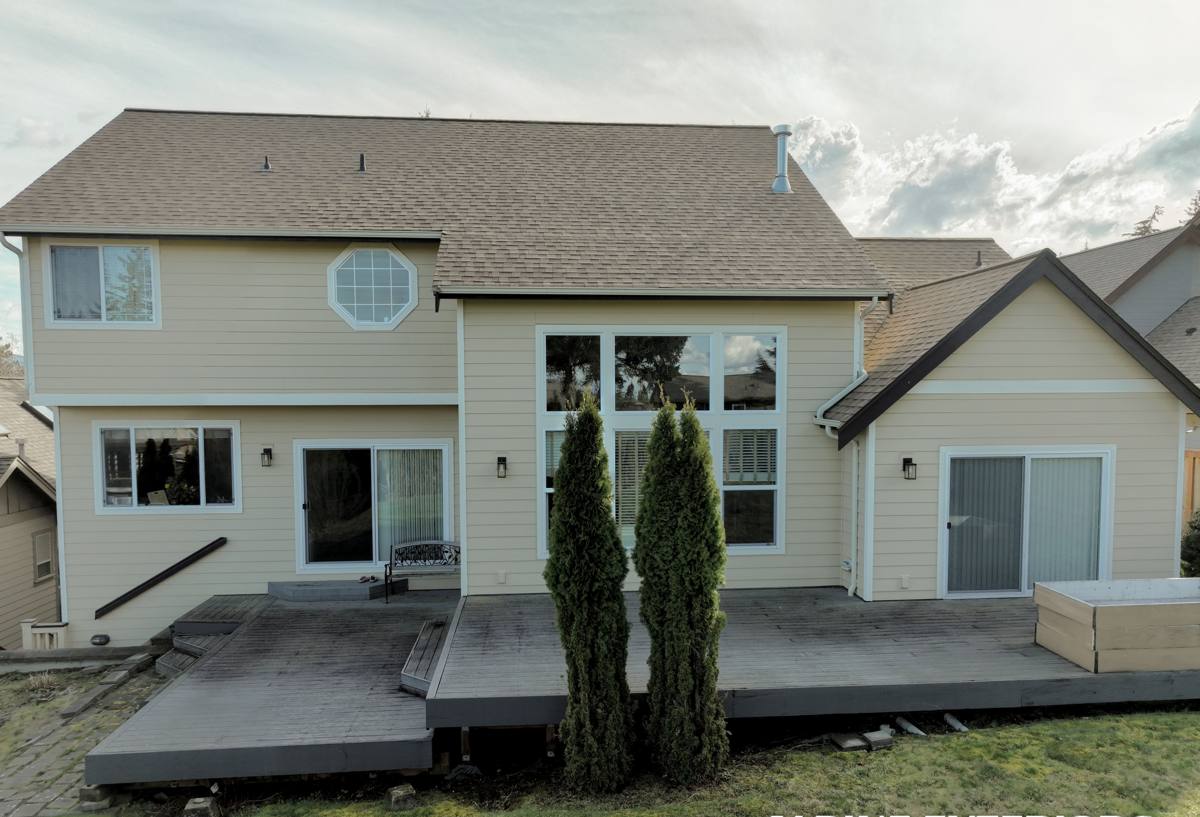
What Palm Harbor's Climate Does to a Deck
A deck in a low-humidity, low-wind climate can get away with lighter-duty construction. That's not the environment here. A few things a deck in this area has to withstand:
- Salt air corrosion — standard zinc-coated fasteners and hardware degrade faster near the coast, leading to rust streaks, weakened connections, and premature hardware failure.
- UV exposure — Florida sun breaks down untreated or poorly finished wood fibers, causing graying, splintering, and surface checking faster than in northern climates.
- Wind-driven rain — storms here don't just drop rain straight down; it gets pushed sideways into ledger connections, fastener heads, and any gap where water can find a path to trap and sit.
- Hurricane-force wind loads — a deck attached to a house has to resist uplift and lateral forces during tropical storms and hurricanes, which is a structural engineering question, not just a carpentry one.
- Humidity and moisture cycling — constant expansion and contraction of wood fibers as humidity swings puts ongoing stress on joints, fasteners, and finishes.
None of this means a deck can't be built well here — it means the build has to account for these forces specifically, rather than following a one-size-fits-all national spec sheet.
What a Correctly Built Deck Involves
Footings and Foundation
Footing depth and sizing need to match both the load the deck will carry and the soil conditions on the specific lot. Pinellas County soil can vary from sandy to more compact fill depending on the neighborhood and how the lot was originally developed, so footing specs shouldn't be copy-pasted from another job without checking the site.
Ledger Attachment and Flashing
The ledger board — where the deck attaches to the house — is one of the most common failure points nationally, and it's especially important to get right in a climate with frequent wind-driven rain. Proper flashing keeps water from working its way behind the ledger and into the house's rim joist or sheathing, which can lead to rot that's hidden until it's already serious.
Fasteners and Hardware
In a salt-air environment, fastener grade matters more than it would inland. Stainless steel or high-grade coated fasteners rated for coastal exposure cost more upfront but avoid the rust streaking, weakening, and eventual replacement that comes with using standard hardware near the coast.
Framing for Wind Resistance
Joist hangers, hurricane ties, and proper blocking all play a role in how well a deck resists uplift and racking during high winds. This is where local code requirements and honest engineering — not just what looks sturdy — determine long-term performance.
Choosing a Decking Material That Fits This Climate
There's no single "correct" decking material for every homeowner — it comes down to budget, maintenance tolerance, and how close the property is to open water or heavy salt exposure. Here's an honest comparison of the main categories we work with:
| Material | Climate Performance Here | Maintenance | Typical Lifespan |
|---|---|---|---|
| Pressure-treated wood | Good if properly sealed and re-sealed on schedule; UV and moisture cycling are the main enemies | Annual cleaning and periodic re-sealing/staining | 10–15 years with upkeep |
| Tropical hardwoods (e.g., ipe-type species) | Naturally dense and rot-resistant; handles humidity well | Occasional oiling to maintain color; low rot risk | 20+ years |
| Composite decking | Resists UV fading and moisture better than untreated wood; quality varies by product line | Periodic washing; no sealing/staining needed | 20–25+ years, product-dependent |
| PVC/synthetic decking | Fully moisture-resistant, handles salt air well | Lowest maintenance of the group | 25+ years |
Composite and PVC products have improved a lot over the years, but they vary widely between manufacturers — some early-generation composite products had real issues with moisture absorption and fading that gave the category a mixed reputation. We only install lines with track records that hold up to Florida sun and humidity, and we'll walk through the trade-offs honestly rather than pushing whatever has the best margin.
Permitting and Wind Load in Pinellas County
Deck construction in Palm Harbor falls under Pinellas County's building code requirements, and depending on the deck's size, height, and attachment method, a permit and inspection are typically required. This isn't red tape for its own sake — the inspection process for elevated structures exists because deck failures, when they happen, tend to happen suddenly and with people on the structure.
Wind load requirements in coastal Pinellas County are also more demanding than in inland, low-wind regions. A deck that would pass code in a different part of the state may not meet the uplift and lateral load requirements here. Working with a contractor who already builds decks under these specific code requirements — and pulls permits as a matter of course rather than treating it as optional — is the simplest way to avoid problems at resale, insurance claims, or future storm damage disputes.
Elevation and Drainage Considerations
Some Palm Harbor properties, particularly those closer to canals, bayous, or low-lying areas, need extra attention paid to deck elevation and how water moves underneath and around the structure after heavy rain. A deck built without accounting for standing water or poor drainage around footings can develop wood rot or foundation issues well before the decking material itself would normally wear out. We assess drainage on-site rather than assuming a standard grade will work.
Our Process, Start to Finish
- On-site assessment — we look at the house's attachment point, soil conditions, drainage, sun/shade exposure, and how the space will actually be used.
- Material and design discussion — we walk through decking material options, railing choices, and layout based on your budget and maintenance preferences, not a one-size pitch.
- Written estimate — a clear scope of work and pricing before anything is scheduled.
- Permitting — we handle the permit application and inspections required by Pinellas County so you don't have to navigate that process yourself.
- Construction — footings, framing, ledger flashing, decking, and railing installed in sequence with attention to the coastal-specific details covered above.
- Final walkthrough — we go over the finished deck with you, including any maintenance recommendations specific to the material you chose.
Maintenance Realities Homeowners Should Know
Even a well-built deck needs some ongoing attention in this climate. What that looks like depends heavily on material choice:
- Wood decks generally need periodic cleaning and re-sealing to protect against UV graying and moisture intrusion — skipping this is the single biggest reason wood decks age poorly here.
- Composite and PVC decking need far less upkeep but should still be washed periodically to remove salt residue, pollen, and mildew that can build up in humid conditions.
- Hardware and railing connections are worth a visual check after major storms, especially any deck that took direct wind-driven rain.
- Gaps between boards and drainage paths underneath the deck should stay clear of debris that can trap moisture against framing.
Why Hiring a Crew That Already Works in Palm Harbor Matters
A contractor who works regularly in this specific part of Pinellas County already knows the county's permitting expectations, has a feel for how different neighborhoods' soil and drainage behave, and has seen firsthand how decks built with the wrong fasteners or finish hold up — or don't — after a few Florida summers and storm seasons. That local familiarity translates into fewer surprises during the build and fewer callbacks after it's finished. It also means someone who understands the specific wind and moisture demands of a Gulf Coast property, rather than applying a generic national playbook to a job that needs local judgment.
A Few Questions Worth Asking Before You Hire Anyone
| Question to Ask | Why It Matters |
|---|---|
| Will you pull a permit for this deck? | Confirms the contractor is following Pinellas County code, not cutting corners |
| What fastener grade do you use? | Coastal salt air requires better hardware than inland jobs |
| How do you flash the ledger board? | This is the most common source of hidden rot on attached decks |
| What's your footing depth for this soil? | Generic footing specs don't account for site-specific soil conditions |
| What maintenance will this material need? | Sets realistic expectations for upkeep before you commit to a product |
If you're planning a new deck or replacing one that's showing its age, we're happy to take a look and put together a straightforward, no-pressure estimate. There's no obligation — just an honest read on what your Palm Harbor property needs and what it would take to build it right. You can request a free estimate using the form below.