 Clearwater Roofing
 Why Decks in Safety Harbor Take a Different Kind of Beating
Safety Harbor sits right on Old Tampa Bay, which means most decks here don't just deal with Florida sun — they deal with sun, salt-laden air, and near-constant humidity working on the wood or composite at the same time. That combination is harder on a deck than inland heat alone. Salt air accelerates corrosion on fasteners, brackets, and structural hardware, even on decks that aren't waterfront. Add in Pinellas County's wind-driven rain during summer storms and the occasional hurricane-force gust, and you get a structure that's fighting moisture intrusion, UV breakdown, and metal fatigue year-round, not just in one bad season.
A deck built to a generic national standard, or repaired with whatever fasteners were on the truck, tends to show problems faster here than in a drier, cooler climate. That's the backdrop for every repair call we get in this part of Clearwater — the issue is rarely random. It's almost always traceable to how the structure handles water, salt, and sun.
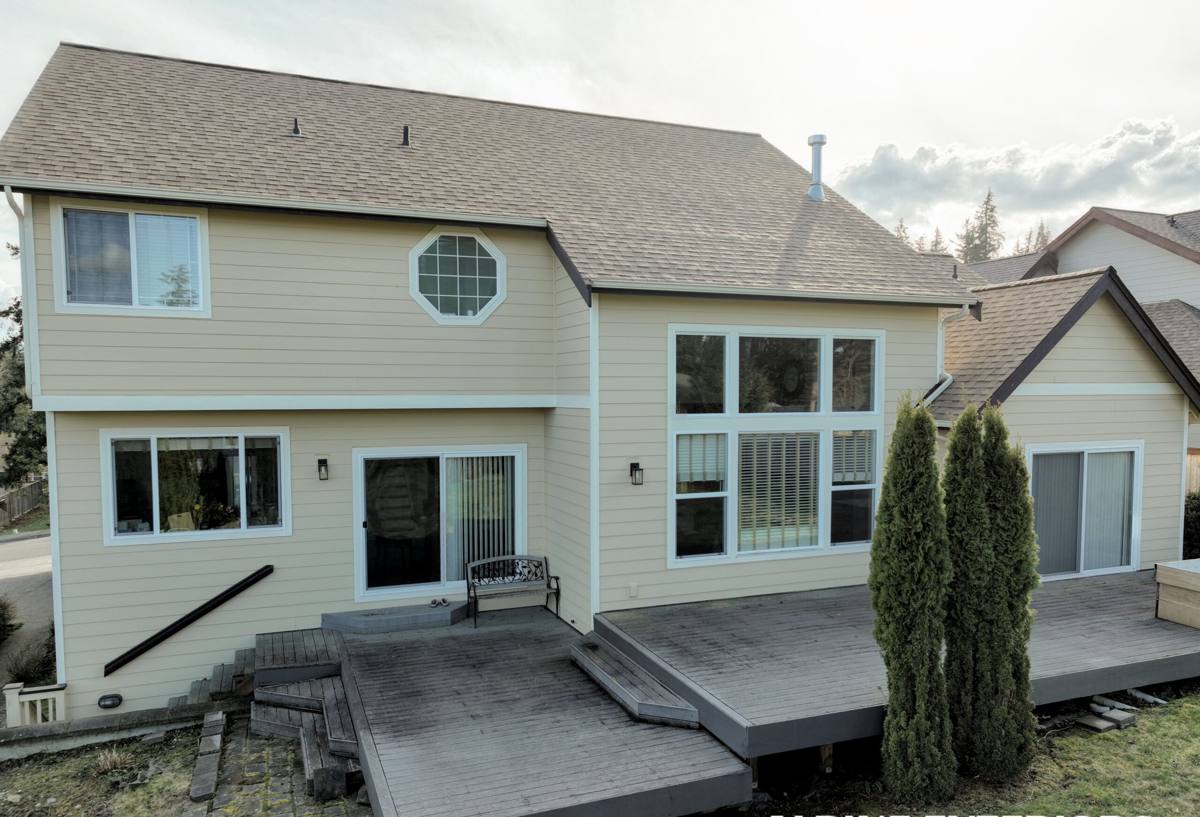
Signs a Safety Harbor Deck Needs Repair
Deck problems in this climate often start small and hidden — underneath the boards, at the ledger board, or inside a post base — before they show up on the surface. Homeowners usually catch it once it's visible, which means the underlying damage has had time to spread. Walk your deck and check for these:
- Boards that feel spongy, bouncy, or noticeably softer underfoot than the rest of the deck
- Visible gaps, cupping, or splitting in wood decking, especially near board ends
- Rust streaks bleeding out from screw heads, joist hangers, or bolts
- A railing that wiggles or flexes when you lean on it
- Stairs that feel less solid than they used to, or treads with visible sag
- Any gap or separation where the deck meets the house at the ledger board
- Discoloration, dark staining, or a musty smell near the deck's edges or under it
- Fasteners backing out or missing entirely
Any one of these on its own might be minor. Several at once, or anything involving the ledger board or main support posts, means it's time for a real inspection rather than a DIY patch.
Wood vs. Composite: What Holds Up Better Near the Bay
Both materials can perform well in Safety Harbor if they're installed and maintained correctly, but they age differently in this climate. We'll give you a straight comparison rather than push one product line.
| Factor | Pressure-Treated Wood | Composite Decking |
|---|---|---|
| Upfront cost | Lower | Higher |
| Maintenance | Needs sealing/staining every 1-2 years in this UV and humidity | Minimal — occasional cleaning |
| Moisture behavior | Can swell, cup, or split if sealing lapses | Resists rot but can trap moisture underneath if airflow is poor |
| Heat underfoot | Stays cooler in direct sun | Darker composites can get hot in full afternoon sun |
| Repair approach | Individual boards are easy to replace | Board replacement is easy; substructure repair is the same either way |
| Typical lifespan here with upkeep | 10-15 years | 20-25+ years |
One thing that doesn't change based on decking material: the framing underneath is almost always wood, and that's where the real structural risk lives regardless of what's on top.
What a Proper Deck Repair Actually Involves
A deck repair that only replaces the boards you can see is a cosmetic fix, not a structural one. The framing underneath — joists, beams, posts, and especially the ledger board where the deck attaches to the house — is what actually carries the load. If that's compromised and we only swap out decking, the underlying problem keeps progressing and the new boards inherit a weak foundation.
Ledger Board Attachment
The ledger board is the single most common source of serious deck failures, because it's bolted to the house and sits in a spot where water tends to collect if flashing wasn't installed correctly. We check for proper flashing, correct fastener type and spacing, and any rot or separation at this connection before anything else.
Framing and Support Posts
Joists and beams get inspected for soft spots, checking (long cracks along the grain), and any sign of rot, especially where wood contacts concrete footings or where water tends to pool. Post bases are checked for corrosion and proper standoff from the ground or slab.
Hardware and Fasteners
Salt air is hard on standard hardware. We look for rust bleeding, loose or backed-out fasteners, and hangers that have started to corrode, and we replace with hardware rated for coastal exposure rather than whatever matches the original spec if the original spec wasn't adequate.
Railings and Stairs
Railing posts need solid attachment to the framing, not just the decking surface, to meet load requirements. Stair stringers get the same structural check as the main deck framing since they carry concentrated weight and see heavy wear.
Common Failure Points We See on Local Decks
After years of repair work around Clearwater and the surrounding Pinellas County communities, a handful of issues show up repeatedly on decks near the bay:
- Ledger boards attached without proper flashing, letting water track behind the siding and into the rim joist
- Joist hangers installed with the wrong fastener type, which corrodes faster than the hanger itself
- Decking boards installed tight against each other with no gap, trapping moisture and debris that accelerates rot
- Post bases set directly on soil or in standing water instead of properly draining footings
- Railings that meet code visually but weren't actually load-tested during original installation
None of these are visible from a casual look at the deck surface, which is why an inspection focused on the structure, not just the boards, matters.
How Our Repair Process Works
- On-site inspection. We walk the full deck, check underneath where accessible, and test the ledger board connection, framing, and railings for movement or softness.
- Written scope and estimate. You get a clear breakdown of what's structural versus cosmetic, what needs replacement versus repair, and honest pricing before any work starts.
- Structural repairs first. Ledger board, framing, and post issues get addressed before any surface decking work, because building new boards on a weak frame just wastes material.
- Hardware upgrade where needed. Corroded or undersized fasteners and hangers get replaced with coastal-rated hardware appropriate for the salt air exposure here.
- Decking, railing, and stair work. Damaged boards, railing sections, or stair components are repaired or replaced to match the rest of the structure.
- Final walkthrough. We check for solid footing, no flex in railings, and even, secure decking before calling the job done.
Repair vs. Replace: How We Help You Decide
Not every deck problem calls for a full rebuild, and not every deck is worth patching indefinitely. The decision usually comes down to a few honest factors.
| Factor | Favors Repair | Favors Replacement |
|---|---|---|
| Ledger board condition | Solid, properly flashed | Rotted or improperly installed |
| Framing condition | Isolated soft spots | Widespread rot or checking in joists/beams |
| Age of structure | Under 10-12 years | Original construction pushing 20+ years |
| Extent of damage | Localized to a few boards or one area | Damage found throughout the deck |
| Code compliance | Meets current railing/stair requirements | Predates current code, would need major rework anyway |
We'd rather give you a straight answer on which side of that table your deck falls on than sell a bigger job than you need — or send you home with a patch job that fails again in a year.
Permits and Code Considerations in Pinellas County
Deck repairs that involve structural framing, the ledger board connection, or railing systems typically fall under permitting requirements set by the local building department, and Florida's wind-load standards apply to exterior structures like decks. This isn't paperwork for its own sake — it's the mechanism that makes sure a deck's framing and railings can actually handle the wind loads this area sees. When a repair crosses into structural territory, we handle the permitting and inspection process as part of the job rather than leaving it for the homeowner to sort out.
Why It Matters to Hire a Crew That Already Works This Area
A contractor who regularly works decks around Safety Harbor and the greater Clearwater area has already seen how the local combination of salt air, humidity, and storm exposure plays out on real structures over time — not just in a manual. That familiarity shows up in small decisions: which hardware to spec for a deck two blocks from the water versus one further inland, how much ventilation a substructure needs given local humidity, and where flashing tends to fail first on homes built to older regional standards. It also means we're not learning Pinellas County's permitting process on your job.
If your deck is showing any of the warning signs above, or it's just been a while since anyone looked at the structure underneath the boards, we're happy to come take a look. We offer free, no-pressure estimates — you'll get a straight assessment of what's actually going on and what it would take to fix it, with no obligation to move forward. Use the form below to get started.