 Clearwater Roofing
 Siding That Has to Work in Skycrest's Climate, Not Just Look Good on Day One
Skycrest is one of Clearwater's older, established neighborhoods, which means a lot of its homes are carrying siding, trim, and paint that were never engineered for what Pinellas County actually throws at a house year after year. Between hurricane-force wind events, wind-driven rain that gets pushed sideways into wall assemblies, near-constant UV exposure, and salt air drifting in off the Gulf and Tampa Bay, exterior cladding here ages faster than it does almost anywhere else in the country. We install James Hardie fiber cement siding exclusively, and on Skycrest homes specifically, that choice comes down to how the product actually performs against these four stressors — not just how it looks in a brochure.
This page is about one thing: what a correct James Hardie siding job looks like on a Skycrest home, why the details matter more here than in a milder climate, and how our process is built around that.
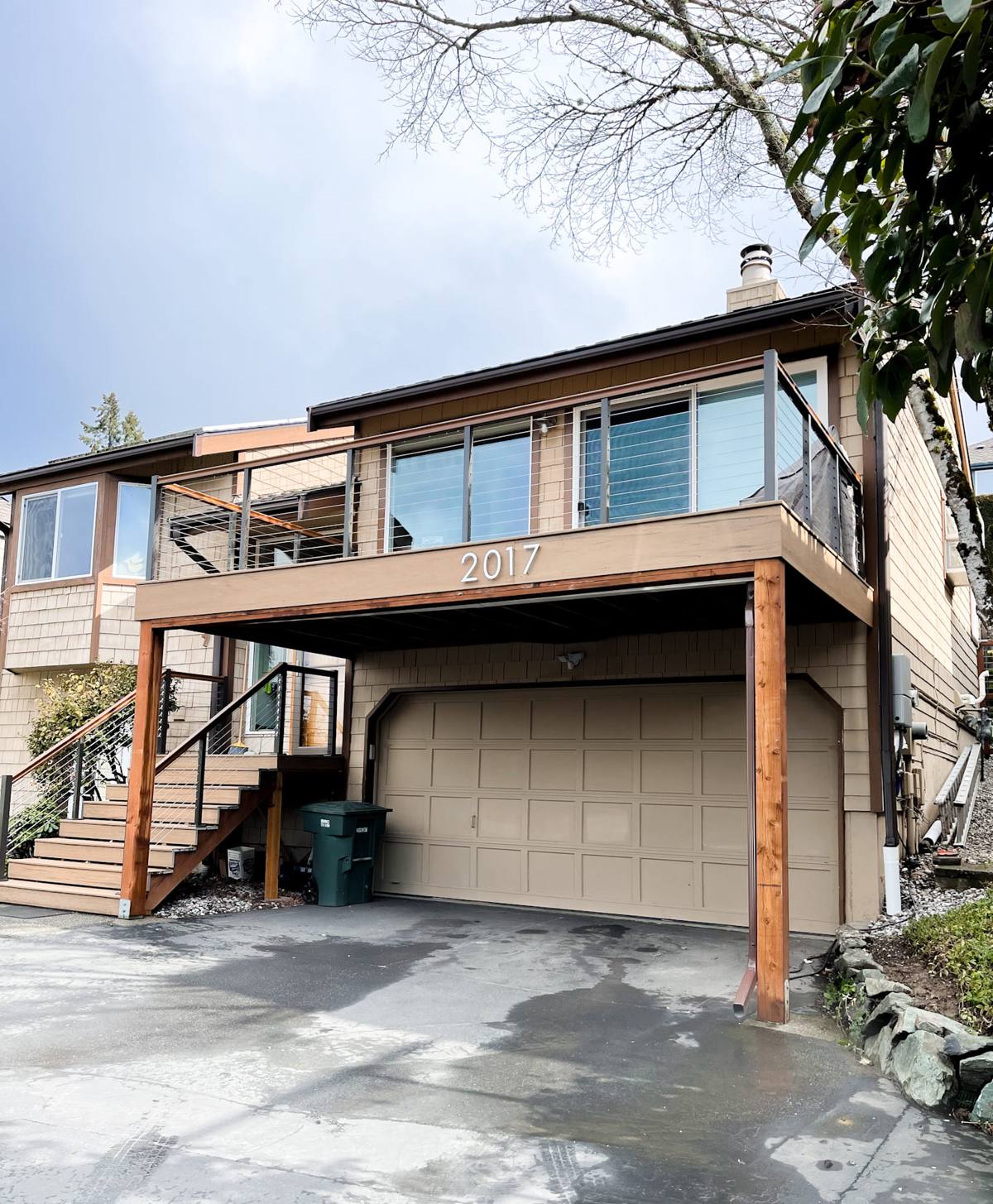
What Clearwater's Climate Actually Does to Siding
Wind
Clearwater sits in a hurricane-exposed coastal zone, and Skycrest's tree canopy and closer lot spacing mean wind-driven debris — branches, loose fencing, roofing granules — is a real, recurring impact source, not just a once-a-decade storm scenario. Siding here needs to hold a fastening pattern that resists both sustained wind load and impact, and it needs trim and corner details that don't peel back the first time wind gets up under an edge.
Wind-driven rain
Straight-down rain is easy for any siding to shed. Wind-driven rain, which comes at the wall horizontally during storms, is what actually finds the gaps — unsealed butt joints, undersized flashing, caulk lines instead of proper laps. A siding material that swells, warps, or delaminates when it takes on moisture at those joints is a slow-motion problem that shows up as soft trim and stained walls a few years later.
UV exposure
Florida's UV load is intense and essentially year-round. Paint film breaks down under it, and any siding product that depends on a field-applied paint job for its color and protection is fighting a losing battle against chalking, fading, and cracking on a much shorter cycle than the same product would see up north.
Salt air
Skycrest isn't directly on the beach, but it's close enough to Clearwater's coastline that salt-laden air is a constant, low-grade corrosive presence. It attacks fasteners, metal flashing, and any siding material with embedded organic content faster than it attacks inert materials.
Why We Install James Hardie and Nothing Else
James Hardie fiber cement is cement, sand, and cellulose fiber — it doesn't have wood content to absorb moisture, swell, or rot, and it's non-combustible. For a coastal, hurricane-exposed neighborhood like Skycrest, that combination matters more than in most parts of the country. Hardie also engineers regional product lines — its HZ5 designation is built specifically for the harsher moisture and humidity conditions found along the Gulf Coast, with adjusted formulation and installation specs for exactly this environment.
The factory-applied ColorPlus finish is the other half of the equation. Instead of a field-painted surface that starts degrading under Florida UV from day one, ColorPlus is baked on in a controlled factory process, backed by its own finish warranty, and holds color and integrity far longer under constant sun exposure than site-applied paint on comparable materials.
We don't install LP SmartSide, vinyl, Cemplank, Allura, or primed wood siding. Each of those has legitimate uses somewhere, but for a Skycrest home taking direct hits from wind, salt air, and UV, we don't think they hold up to our standard, and we'd rather tell a homeowner that up front than sell a product we don't believe in for this specific climate.
Comparing Siding Options for a Coastal Pinellas County Home
| Factor | James Hardie Fiber Cement | Vinyl | Engineered Wood (LP-Type) |
|---|---|---|---|
| Moisture/rot resistance | Inert cement composition, no organic rot risk | Won't rot, but can warp and gap in heat | Wood-based; vulnerable at cut edges and joints |
| Wind/impact durability | Rigid, holds fastening pattern under load | Can crack or blow off in high wind if under-fastened | Moderate; edges are the weak point |
| UV/color stability | Factory ColorPlus finish, separate finish warranty | Color molded in, but can fade and chalk over time | Field-painted; repaint cycle needed |
| Salt air resistance | Cement composition resists salt-driven degradation | Generally stable but joints/fasteners can corrode | Organic content more susceptible over time |
| Fire rating | Non-combustible | Combustible | Combustible |
None of this means the other products are unusable everywhere — it's why, for a house sitting in Skycrest's specific exposure, we standardized on one material and stopped installing the alternatives.
What a Correct Installation Involves
The material is only half the job. Most premature siding failures we see on inspection — regardless of brand — trace back to installation shortcuts, not the product itself. On a Skycrest home, a correct James Hardie install includes:
- Proper water-resistive barrier installed and lapped correctly behind the siding, not just stapled on as an afterthought
- Correct fastener type, spacing, and penetration depth per Hardie's published specs for HZ5 climate zones
- Flashing at every horizontal joint, window head, and roof-wall intersection — sealant is a backup, not a substitute for flashing
- Proper clearance between siding and grade, decks, and roof lines to prevent standing water and wicking
- Butt joints and corners detailed to shed wind-driven rain, not just caulked and left
- Correct nail placement to avoid blow-off risk during high-wind events
Skipping any one of these doesn't show up as a problem on install day — it shows up two, five, or ten years later as a soft spot, a stain, or siding that comes loose in the next tropical storm.
Our Process on a Skycrest Job
1. Assessment
We walk the home, check the current siding and wall assembly condition, look at drainage and grade, and identify any rot or moisture damage in the sheathing that needs to be addressed before new siding goes up.
2. Product and color selection
We help homeowners choose the right Hardie product line and ColorPlus color for the home's style and Skycrest's neighborhood character, factoring in HOA or deed restrictions where they apply.
3. Prep and repair
Any compromised sheathing or framing gets repaired before siding installation begins — covering up rot with new siding just hides the problem.
4. Installation to spec
We install to James Hardie's published fastening, flashing, and clearance requirements for our climate zone, not generic best-guess methods.
5. Final walkthrough
We review the finished job with the homeowner, covering care basics and what the warranty actually covers.
Why Local Experience in Skycrest Specifically Matters
Skycrest's mix of home ages and styles means every job has its own quirks — older framing, prior renovation patches, mature landscaping close to the walls, and lot layouts that affect drainage and wind exposure differently than a wide-open new-construction lot. A crew that already works this neighborhood recognizes these patterns quickly instead of discovering them mid-project. It also means faster access for site visits, follow-up, and warranty service, since we're not routing a crew across the county to get back to a Skycrest job.
The Warranty, in Plain Terms
James Hardie backs its siding products with a strong, transferable limited warranty, and ColorPlus finishes carry their own separate finish warranty covering color retention and finish integrity. Transferability matters in a neighborhood like Skycrest where homes do change hands — it's a real asset at resale, not just paperwork. What voids or limits warranty coverage most often isn't the product; it's installation that didn't follow Hardie's published specs, which is exactly why correct installation is the part we control most carefully.
Signs a Skycrest Home May Need New Siding Soon
- Visible warping, bubbling, or soft spots you can press in with a finger
- Paint that's chalking heavily or peeling in sheets rather than just fading
- Gaps opening up at joints, corners, or trim lines
- Staining on interior walls near exterior corners after heavy rain
- Siding that flexes or feels loose when pushed
- Visible fastener corrosion or rust streaking
If you're noticing any of these on a Skycrest home, it's worth having someone look before the next storm season adds to the damage.
If you'd like an honest look at your home's current siding and what correct James Hardie installation would involve for your specific property, we're happy to come out for a free, no-pressure estimate — just fill out the form below.