 Clearwater Roofing
 Deck Replacement in Sunset Point, Clearwater
Sunset Point sits close to the water on Clearwater Harbor, which means the homes here get more of everything that wears a deck out: salt-laden air, direct sun for most of the day, and the kind of wind-driven rain that finds its way into every seam and fastener hole a builder didn't seal correctly the first time. If you own a home in this part of Clearwater and your deck is starting to feel soft underfoot, showing gray or splintered boards, or has hardware bleeding rust stains onto the surface, you're looking at a replacement conversation, not another round of patching.
This page covers what deck replacement actually involves for a Sunset Point property, what tends to go wrong with decks in this specific environment, and how we approach the job so it holds up for the long haul instead of needing attention again in three or four years.
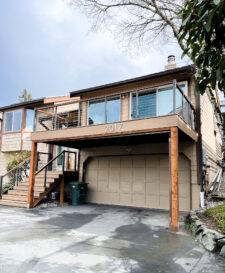
Why Decks Near the Water Fail Faster
Every deck in Pinellas County deals with heat and rain. Decks close to Clearwater Harbor deal with something more corrosive on top of that. Salt air doesn't just sit on the surface of a deck — it works its way into fastener heads, ledger connections, and any exposed metal, accelerating rust and corrosion at a pace that inland decks simply don't experience. Combine that with intense, near year-round UV exposure and you get wood fibers that dry out, gray, and crack faster than the manufacturer's warranty literature usually accounts for.
Then there's wind. Hurricane-force gusts don't have to make direct landfall on Clearwater to put real stress on an aging deck structure. Wind gets underneath loose boards, works ledger and post connections back and forth, and finds every place a fastener has already started to loosen from corrosion. A deck that's marginal going into storm season is a deck that's likely to fail — sometimes catastrophically — during it.
Wind-driven rain adds a fourth factor that's easy to underestimate: it doesn't just fall straight down, it gets pushed sideways into board gaps, ledger flashing, and post bases, which is where most of the hidden rot in Clearwater-area decks actually starts. By the time staining or soft spots show up on the surface, the framing underneath has often been wet-dry cycling for years.
What This Means for Sunset Point Specifically
Being close to the harbor means Sunset Point properties see a heavier dose of airborne salt than decks further inland in Clearwater. That doesn't mean every deck here needs to be replaced early — it means the materials, fasteners, and structural connections need to be chosen and installed with that exposure in mind from the start, not treated like a generic Central Florida deck.
Signs Your Deck Has Crossed From "Repairable" to "Replace It"
Not every deck problem means a full teardown. But there's a point where patching individual boards is throwing money at a structure that's already failing underneath. Here's what we look for:
- Soft, spongy, or bouncy spots when you walk across the deck — usually a sign of rotted joists or beams, not just surface damage
- Fasteners that have rusted, bled orange or brown streaks into the wood, or are visibly backing out
- Wood that's gray, splintering, or checking (cracking along the grain) across most of the surface, not just one or two boards
- A ledger board (where the deck attaches to the house) that shows gaps, staining, or separation from the wall
- Posts or footings that wobble, or a railing that flexes more than it should under light pressure
- A deck that's more than 15-20 years old and has never had the substructure inspected, only the surface boards replaced
- Visible insect damage or a hollow sound when you tap structural members
If you're seeing two or more of these, it's worth having someone look at the framing before deciding whether this is a repair or a replacement. A deck that looks fine on top can still have compromised joists underneath — that's exactly the kind of hidden damage wind-driven rain causes over time.
Choosing Materials for a Sunset Point Deck
Material choice matters more here than it does for an inland deck, because whatever you install is going to face salt air and intense sun exposure every single day. There's no perfect material — every option is a trade-off between upfront cost, maintenance, and long-term appearance. Here's how the common choices stack up for this environment:
| Material | How It Handles Salt Air & UV | Maintenance | Typical Lifespan Here |
|---|---|---|---|
| Pressure-treated pine | Needs sealing regularly or salt air and sun will gray and crack it quickly | Annual cleaning and re-sealing | 10-15 years with upkeep |
| Tropical hardwood (e.g. ipe) | Naturally dense and rot-resistant, but still needs oiling to hold color | Periodic oiling to prevent graying | 20-25+ years |
| Capped composite decking | Resists fading and moisture well; cap layer blocks most UV and salt intrusion | Occasional washing, no sealing/staining | 25-30 years |
| PVC decking | Fully synthetic, doesn't absorb moisture — strong choice for waterfront exposure | Low; occasional washing | 25-30+ years |
Fasteners and structural hardware matter just as much as the decking surface. For a Sunset Point job we default to stainless steel or coated fasteners rated for coastal/marine exposure, and we're careful about mixing metals — dissimilar metals in contact with each other corrode faster, especially in salt air. It's a small detail that gets skipped on a lot of budget deck jobs, and it's usually the first thing to fail.
Our Take on Standard Wood in This Location
We'll install pressure-treated pine if that's what a homeowner wants — it's a legitimate, lower-cost option — but we're upfront that it demands a real maintenance commitment this close to the water: annual sealing, not "whenever you get around to it." If low-maintenance matters more to you than upfront cost, composite or PVC is usually the better long-term value for a harbor-adjacent property, simply because it isn't fighting the same UV and moisture cycle that raw wood is.
What a Correct Deck Replacement Actually Involves
A deck replacement isn't just pulling up old boards and screwing down new ones. Done right, it starts below the surface:
- Footings and posts are inspected and, where needed, replaced or reinforced to current load requirements — this is especially important on older Clearwater homes where original footings may not meet today's standards
- Ledger board attachment to the house is corrected if it's not properly flashed and bolted — this is one of the most common failure points in coastal decks and a major factor in deck collapses nationally
- Joist spacing and beam sizing are checked against the actual span and load, not just matched to what was there before
- Flashing and waterproofing at the ledger and any post bases are installed to keep wind-driven rain from re-starting the rot cycle
- Fasteners and connectors are matched to the decking material and rated for coastal exposure
- Railings and stairs are brought up to current code height and baluster spacing requirements, which older decks often don't meet
Skipping any of these steps is how you end up with a deck that looks new for a season or two and then starts showing the same problems the old one had — just on a faster timeline, because fresh boards over a compromised structure don't buy you much.
Permits and Florida Building Code in Pinellas County
Deck replacement in Clearwater generally requires a permit, particularly when the structure is being rebuilt rather than just re-decked with the same footprint and framing. Pinellas County and the City of Clearwater follow the Florida Building Code, which includes wind load requirements relevant to this area's hurricane exposure — guardrail height, baluster spacing, and structural connection standards are all inspected, not optional extras. We handle the permitting and inspection process as part of the job, which also protects you: an unpermitted deck can complicate a home sale or an insurance claim down the road.
How Our Deck Replacement Process Works
- On-site assessment — we inspect the existing deck's framing, footings, and ledger connection, not just the surface boards, so you know exactly what's driving the recommendation to replace
- Material and design conversation — we walk through decking material trade-offs, railing style, and layout based on your budget and how you actually use the space
- Written estimate — a clear scope covering demolition, structural work, materials, and permitting, so there are no surprise change orders mid-project
- Permitting — we pull the required permits and coordinate inspections through Pinellas County or the City of Clearwater as applicable
- Demolition and structural rebuild — old decking, and any compromised framing, footings, or ledger connections, come out and get rebuilt to current code
- Decking installation — boards, railings, and stairs go in with coastal-rated fasteners and proper spacing for drainage and expansion
- Final walkthrough — we go over the finished deck with you, including any maintenance the material you chose will need going forward
Why Hire a Crew That Already Works in Sunset Point
A contractor who only occasionally works near the water tends to treat every deck the same way — same fasteners, same framing approach, same maintenance advice, regardless of how close the property sits to the harbor. That's how you end up with rust-streaked hardware and soft framing within a handful of years. A crew that regularly builds and replaces decks in Sunset Point and the surrounding Clearwater waterfront knows to spec coastal-rated fasteners by default, knows which ledger and flashing details actually hold up to wind-driven rain here, and knows what Pinellas County inspectors are going to want to see before they'll sign off.
That local familiarity also means a faster, less painful permitting process — we know the documentation the county and city expect and build the job to meet it the first time, rather than guessing and hoping.
Cost Factors Worth Understanding Up Front
Every deck replacement is different, but the same handful of factors drive most of the cost variation we see on Clearwater projects:
| Factor | Why It Affects Cost |
|---|---|
| Deck size and elevation | Larger decks and multi-level or elevated structures require more framing, footings, and labor |
| Decking material | Pressure-treated pine costs less upfront; composite and PVC cost more but need less long-term maintenance |
| Substructure condition | Rotted joists, compromised footings, or a failed ledger connection add rebuild scope beyond a simple resurface |
| Railing and stair complexity | Custom railing styles, glass panels, or multiple stair access points add material and labor time |
| Permitting requirements | Full structural rebuilds require more inspection steps than a straightforward like-for-like re-decking |
We won't quote a number without seeing the deck, but we're happy to talk through where your project is likely to land on that scale during the estimate visit — no pressure, no upsell script.
If your Sunset Point deck is showing its age — or you just want an honest second opinion before storm season — we'll come take a look and give you a straight answer about repair versus replacement. Use the form below to request a free, no-pressure estimate.